
Lineman Positions Explained: From Left Guard to Right Tackle
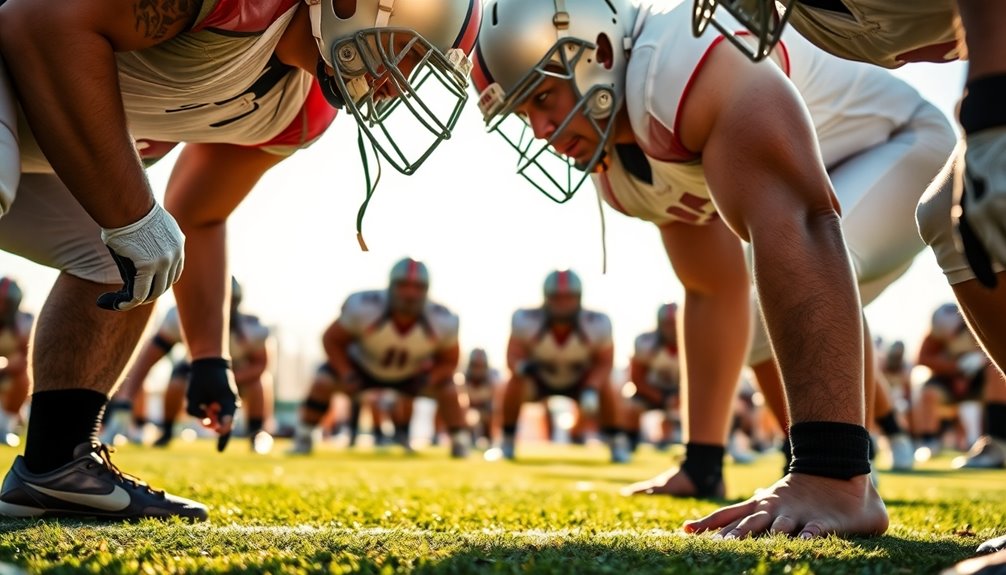
April 1, 2026In football, linemen are essential to a team’s success, especially left guards and left tackles. The left guard, positioned next to the center, blocks for runs and protects the quarterback in passing plays. Meanwhile, the left tackle safeguards the quarterback’s blind side, battling elite edge rushers. Both positions require strength, agility, and quick thinking. Understanding their roles can improve your appreciation of the game. You’ll discover even more about their strategic importance and training techniques next.
What Is the Role of a Left Guard in Football?
The left guard (LG) plays an essential role on the offensive line, positioned directly to the left of the center. You’re important for maintaining the integrity of the interior offensive line during both run and pass plays.
Your primary responsibility is to create running lanes for running backs through effective run blocking, often engaging with defensive tackles. In pass protection, you provide a stable pocket for the quarterback by blocking against interior rushers and recognizing defensive stunts.
You also execute pulling plays, moving laterally to lead block for running backs, showcasing your agility. With exceptional strength and quick footwork, you battle defensive linemen effectively, ensuring both running and passing plays succeed. Mastering your role within the team structure enhances overall offensive performance.
Your contributions are critical to the team’s success.
Understanding the Responsibilities of a Left Tackle
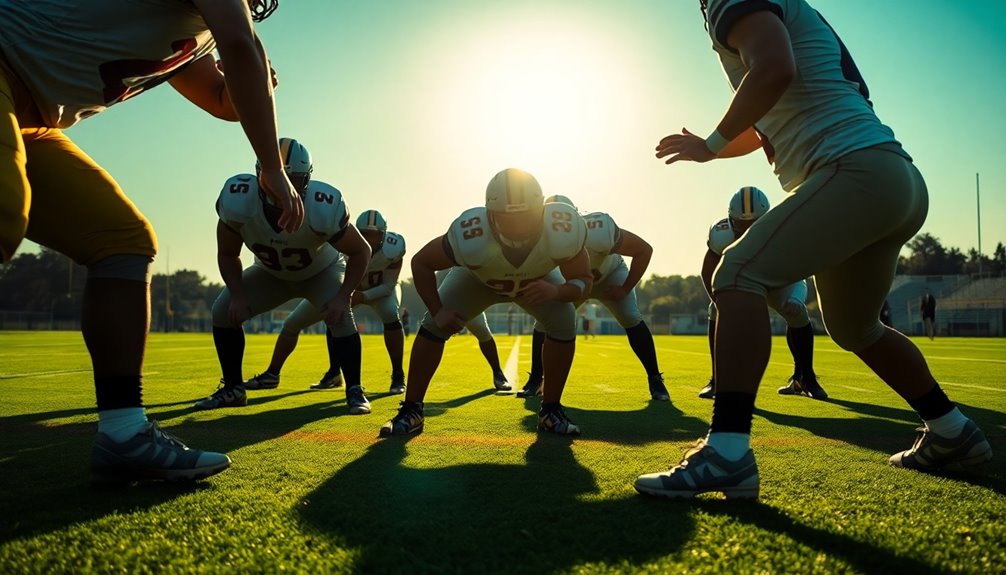
As a left tackle, you play a vital role in safeguarding the quarterback’s blind side, making your pass protection duties essential. You need quick footwork and agility to handle elite rushers effectively. Plus, your ability to adapt to different defensive strategies can make all the difference in maintaining offensive stability. Mastery of blocking techniques is critical for controlling the line of scrimmage and ensuring the success of your protection efforts.
Key Pass Protection Duties
Protecting the quarterback’s blind side is the primary duty of a left tackle, making their role critical in pass protection. You’ll face edge rushers who can quickly disrupt plays, so your agility and footwork are essential.
With quick adjustments to defensive techniques, you guarantee that you maintain balance while engaging with defenders. Anticipating their movements allows you to use effective hand techniques to control and redirect them, keeping the quarterback’s throwing lane clear.
In high-pressure moments, your performance can determine the outcome of passing plays. Communication with the center and left guard is key, as you must react swiftly to defensive alignments and adjustments, ensuring a cohesive effort within the offensive line.
Blocking Against Elite Rushers
Facing elite rushers demands a left tackle’s unwavering focus and skill. Your primary responsibility is protecting the quarterback’s blind side, essential for right-handed QBs.
To excel, you need to master:
- Exceptional footwork: Quick reactions help counter various moves.
- Strong balance: Maintain a solid stance to fend off pressure.
- One-on-one matchups: Engage with the league’s fastest pass rushers.
- Advanced hand techniques: Control defenders and disrupt their momentum.
- Effective communication: Adjust blocking schemes with the offensive line during high-pressure situations.
Importance of Quick Footwork
While you mightn’t always realize it, quick footwork is vital for a left tackle’s success on the field. Your primary job is to protect the quarterback’s blind side, and elite pass rushers are always looking to exploit that vulnerability.
With quick footwork, you can maintain balance and adjust to the unpredictable movements of defensive players. Agility becomes your ally, especially when you need to seal the edge for running backs.
Effective hand technique, paired with quick footwork, allows you to control defenders, greatly reducing the risk of quarterback sacks. Training drills focusing on footwork enhance your agility, ensuring you react swiftly in high-pressure situations.
Mastering this skill is essential for maintaining offensive stability and protecting your quarterback.
Key Differences Between Left Guard and Left Tackle
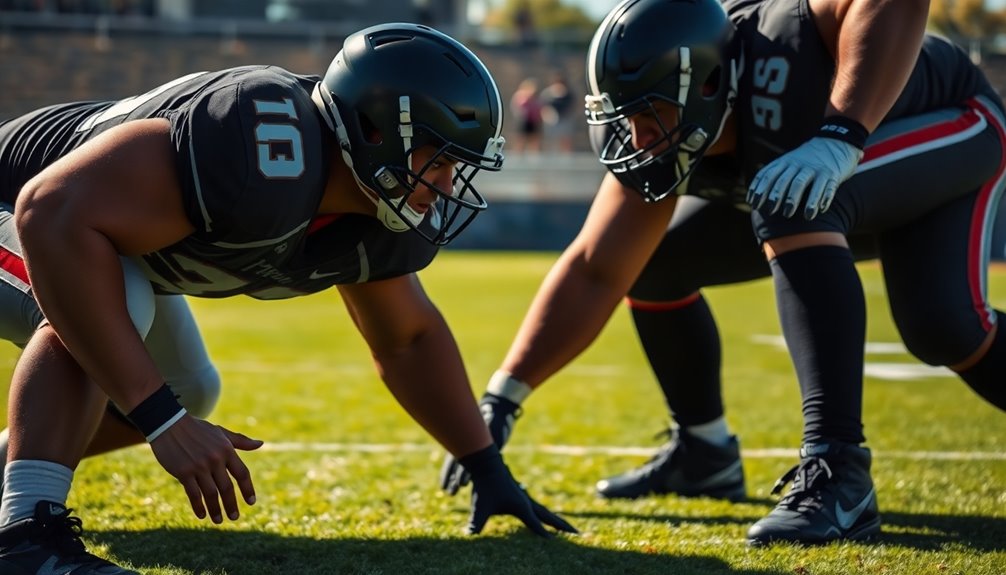
In football, understanding the key differences between the left guard and left tackle is essential for appreciating their unique roles on the offensive line.
- Left Guard (LG): Primarily engages with defensive tackles for run blocking and interior pass protection.
- Left Tackle (LT): Protects the quarterback’s blind side, vital for pass protection against edge rushers.
- Pulling vs. Sealing: Left guards often pull on running plays; left tackles focus on sealing the edge.
- Body Types: Left guards are typically more compact for strength; left tackles possess a taller, more athletic frame for agility.
- Recognition: Left guards must quickly adjust to blitzing linebackers, while left tackles counter complex rush moves from elite defenders.
- Conditioning drills tailored to position-specific training can significantly enhance the effectiveness of both left guards and left tackles.
The Importance of the Offensive Line in Team Strategy
The offensive line is the backbone of your team’s strategy, influencing everything from play calling to overall effectiveness.
When each position works in sync, it gives the quarterback time to execute plays and opens up running lanes.
Without a strong offensive line, even the best game plans can fall flat. Additionally, having essential flag football gear is crucial for ensuring player safety and performance on the field.
Offensive Line Dynamics
Understanding the dynamics of the offensive line reveals its crucial role in a team’s strategy. Each position, especially the left tackle, is essential for protecting the quarterback and paving the way for running backs.
Effective communication and teamwork are necessary for executing blocking assignments and adapting to defensive tactics.
- The left tackle shields the quarterback’s blind side.
- Each lineman’s unique skills contribute to offensive effectiveness.
- Strong communication enhances adaptability during plays.
- Cohesion helps counter complex defensive schemes.
- A solid offensive line increases scoring opportunities.
Impact on Play Calling
While you might focus on skill players for exciting plays, the offensive line’s effectiveness is essential for shaping play calling. A solid offensive line, especially the left tackle and left guard, provides important protection for the quarterback’s blind side. This allows for a more aggressive play-calling strategy, as quarterbacks can take risks without fear of immediate pressure.
Cohesion among linemen is significant; miscommunication can lead to penalties or turnovers, derailing game plans. In short-yardage situations, run-blocking execution becomes critical, often determining whether you convert key downs.
Coaches tailor their offensive strategies based on the strengths and weaknesses of their linemen, emphasizing how each position plays a role in overall game strategy.
Essential Skills for a Successful Left Guard
To excel as a left guard, you need a unique blend of physical strength and agility. Your role is vital in both run blocking and pass protection, engaging powerful defensive tackles in tight spaces.
Quick footwork helps you adapt to various defensive schemes, allowing you to intercept stunts and blitzes effectively.
- Exceptional strength for engaging defenders
- Agility to react swiftly during plays
- Proficiency in executing pulling plays
- Effective hand technique for maintaining leverage
- Ability to recognize and adjust to defensive strategies
Additionally, mastering proper grip techniques can significantly enhance your ability to maintain leverage against defenders.
What Makes a Great Left Tackle?
A great left tackle is like a fortress for the quarterback, standing strong against the relentless onslaught of elite pass rushers. Your primary job is protecting the quarterback’s blind side, making your role critical in preventing sacks and injuries.
To excel, you need exceptional footwork and quick reflexes to counter defensive schemes and adjust to complex blitzes. Strong hand technique is essential, allowing you to control defenders with a blend of strength and finesse.
Every snap, you’ll face intense pressure, requiring you to maintain balance and positioning while ensuring effective pass protection. Because of this pivotal role, left tackles often command some of the highest salaries on the offensive line, reflecting their importance to the team’s success. Additionally, incorporating leg strength training into your routine can enhance your stability and power during crucial match situations.
Common Challenges Faced by Left Guards
Here are some common hurdles:
- Quick Recognition: Adjusting to blitzing linebackers requires rapid reaction skills to modify blocking assignments.
- Pulling Techniques: You often pull to lead block, demanding both speed and precise timing.
- Defensive Schemes: Adapting to various defensive schemes is vital for recognizing stunts and twists.
- Pass Protection Integrity: Maintaining blocking integrity during pass protection can be tricky.
- Lateral Movement: Quick footwork is essential to counter aggressive inside rushers effectively.
Navigating these challenges is key to your success as a left guard. Additionally, understanding defensive formations can enhance your ability to anticipate and react to opponents’ strategies.
Navigating the Pressures of a Left Tackle Position
While protecting the quarterback’s blind side, you’ll quickly realize that the left tackle position is one of the most demanding roles on the offensive line. You need exceptional agility to counter elite pass rushers who employ complex moves.
Every snap, you’ll face some of the strongest and fastest athletes on the opposing defense, so your strength and balance are essential. Recognizing defensive schemes is imperative; you must adjust your blocking techniques in real-time to neutralize blitzes and stunts.
Your reliable protection allows for more aggressive play-calling, greatly influencing your team’s offensive strategy. Mastering these elements not only enhances your skills as a left tackle but also boosts your quarterback’s confidence, making you a key player on the field. Additionally, understanding defensive strategies can help you better anticipate and counter the moves of opposing players.
Physical Attributes: Left Guard vs. Left Tackle
When comparing the physical attributes of left guards and left tackles, strength and leverage play vital roles for both positions.
You’ll find that left guards need a more compact build to excel in close-quarters battles, while left tackles benefit from height and agility to handle speedy edge rushers. Understanding these differences helps you appreciate how each lineman contributes to the team’s success. Additionally, developing functional strength is crucial for both positions to effectively engage with opposing players and maintain performance throughout the game.
Strength and Leverage
- Left Guard: Prioritizes strength in close-quarters.
- Left Tackle: Needs agility for open-field maneuvering.
- Leverage: Left guards utilize compact builds for blocking.
- Blocking: Left tackles protect the quarterback’s blind side.
- Adaptability: Quick reactions are essential for both positions.
Understanding these nuances helps you appreciate the unique demands of each lineman role.
Agility and Quickness
In contrast, the left guard focuses on strength and stability, engaging powerful defensive tackles in close quarters. While both positions demand quick footwork, the left tackle emphasizes speed and finesse to adapt to various defensive schemes.
Training for agility is crucial, as you’ll often face complex rush moves, while left guards prioritize strength-building exercises to handle interior pressure. Ultimately, understanding these differences helps you excel in your position.
The Left Guard’s Role in Run Blocking Schemes
While many fans focus on the flashy plays of running backs, the left guard plays a pivotal role in run blocking schemes by creating essential openings. By engaging directly with defensive tackles, you help maintain protective integrity while executing blocking assignments.
Here’s what makes your role vital:
- Utilize agility and strength to lead block effectively.
- Recognize and adjust to defensive stunts quickly.
- Seal off defenders to create running lanes.
- Communicate with the center and left tackle for cohesive plays.
- Balance brute strength with the ability to pull to the perimeter.
Your quick reactions and strategic positioning greatly contribute to successful running plays, showcasing the unsung heroics of the left guard. Additionally, understanding offensive penalties can help you minimize setbacks during crucial moments.
How Do Left Tackles Protect the Quarterback’s Blind Side?
As a left tackle, your main job is to guard the quarterback’s blind side, especially when he’s right-handed.
You need to master techniques that allow you to counter defensive strategies effectively while keeping your balance and footwork sharp.
In high-pressure moments, your ability to execute complex blocking schemes can make all the difference in protecting your QB.
Key Responsibilities of Tackles
Left tackles play an essential role in safeguarding the quarterback’s blind side, ensuring he’s the time and space needed to execute plays effectively.
Your responsibilities as a left tackle include:
- Protecting against edge rushers, especially defensive ends.
- Utilizing exceptional footwork and agility during pass protection.
- Mastering hand techniques to control and redirect defenders.
- Sealing the edge in run blocking to help running backs break outside.
- Adapting to various defensive schemes and rush techniques.
With these tasks, you create a stable pocket for the quarterback and contribute to both the passing and running game.
Your ability to analyze and adjust is vital, making your position one of the most demanding on the field.
Techniques for Effective Blocking
Mastering the techniques for effective blocking is essential for left tackles tasked with protecting the quarterback’s blind side. Quick footwork and agile lateral movement allow you to mirror elite pass rushers, keeping ideal positioning.
Effective hand technique is vital; you need to engage defenders swiftly and control their movements to prevent quarterback pressure. By anticipating defensive schemes, you can adjust your blocking strategies in real-time, maintaining balance and strength during engagement.
Facing the league’s most athletic pass rushers requires a blend of strength and finesse to fend off sack attempts. Your success directly influences the quarterback’s ability to execute plays, highlighting the significant role you play in the offensive line’s effectiveness and overall quarterback protection.
Recognizing Defensive Strategies
To effectively protect the quarterback’s blind side, you must quickly recognize defensive strategies and adapt your blocking approach. The left tackle’s role is essential in countering edge rushers who aim to sack the quarterback.
Here are key aspects to take into account:
- Footwork: Develop agility to respond to various defensive rush techniques.
- Hand Technique: Master your hands to control defenders and maintain your position.
- Communication: Regularly engage with the center and guards to adjust blocking assignments.
- Quick Reactions: Be ready to adapt as defenses shift and change.
- High-Pressure Performance: Your efficiency can influence the quarterback’s ability to execute plays, especially during critical moments.
Training Techniques for Linemen: Guards and Tackles
Training linemen, particularly guards and tackles, requires a focused approach that combines strength, agility, and technique.
Prioritize strength training with compound lifts like squats and deadlifts to build the power needed for engaging defensive players in the interior offensive line. Incorporate agility drills, such as cone drills and ladder exercises, to enhance your footwork and lateral movement.
Regular technique work is vital; practice blocking techniques, focusing on hand placement and body positioning to maintain balance during plays. Additionally, conditioning is important; include aerobic and anaerobic exercises to guarantee you maintain stamina throughout the game.
Finally, don’t overlook film study—analyzing game footage helps you understand defensive schemes and improve your anticipation on the field.
Transitioning Between Guard and Tackle: What You Need to Know
After honing your skills as a guard or tackle, you might find yourself wanting to switch positions. Shifting requires a significant adjustment in footwork and blocking techniques. Here’s what you need to keep in mind:
- Focus on footwork: Tackle demands lateral movement, unlike the straight-ahead approach of a guard.
- Enhance your agility: You’ll face elite pass rushers, so quick reflexes are essential.
- Adapt to different schemes: Understand the unique defensive strategies you’ll encounter.
- Emphasize balance: Tackles need better balance to protect the quarterback effectively.
- Invest in specialized training: Different skill sets and physical demands necessitate targeted practice.
Analyzing Left Guard and Left Tackle Matchups
The left guard plays an essential role in run blocking, creating openings for running backs while battling interior defensive linemen and blitzing linebackers.
Meanwhile, the left tackle focuses on protecting the quarterback’s blind side during passing plays, needing agility and effective hand techniques to counter edge rushers.
A successful left tackle matchup can greatly enhance a quarterback’s performance by maintaining a strong pocket.
Both positions contribute to offensive line cohesion; when the left guard and left tackle work seamlessly together, they can execute pulling plays and provide vital support in both the running and passing game.
The Future of Lineman Positions in Modern Football
As the game of football evolves, lineman positions are transforming to meet the demands of modern offensive schemes. You’ll notice that today’s linemen must exhibit unparalleled versatility and agility to thrive in fast-paced environments.
Advanced analytics now evaluate their performance in pass protection and running lane creation, emphasizing athleticism and footwork to counter elite defenders.
- Increased focus on hybrid roles blending offensive and receiving skills
- Enhanced training with technology, like virtual reality, for better decision-making
- Greater emphasis on adaptability to complex blitz schemes
- Need for linemen to develop quick-thinking abilities under pressure
- Shift towards zone blocking and spread offenses requiring dynamic movements
The future demands linemen who can adapt and excel in diverse roles.
Conclusion
In understanding lineman positions, you see the strength of the left guard, the agility of the left tackle, and the unity of the offensive line. You recognize the skills needed to excel, the training required to succeed, and the strategies that shape the game. Whether you’re analyzing matchups or anticipating the future, it’s clear: each position plays a crucial role, each player contributes to the team’s success, and each decision impacts the outcome on the field.

