
Common Serve Mistakes Beginners Make
April 24, 2026Beginners often struggle with their serve due to common mistakes in grip, foot positioning, ball tossing, and timing. You might grip the racket too tightly or have inconsistent toss heights, affecting your accuracy. Your foot placement could be off, disrupting balance and power. Don’t underestimate the importance of a proper follow-through and body rotation, either. If you’re feeling mental pressure, that can sabotage your performance as well. Discovering the nuances can greatly improve your game.
The Importance of a Proper Grip
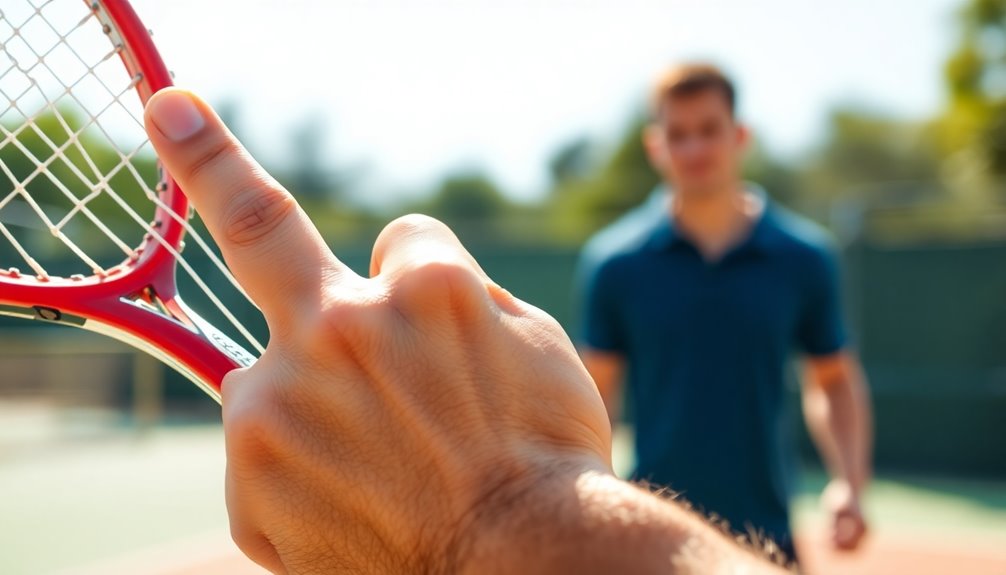
When you’re serving, the grip you use can make all the difference in your game. A proper grip sets the foundation for your entire serve, influencing both your control and power.
Pay attention to your grip pressure; it shouldn’t be too tight or too loose. A relaxed grip allows for better racket head speed, while excessive tension can lead to mistakes.
Pay attention to your grip pressure; a relaxed hold enhances racket speed, while tension can lead to costly errors.
Additionally, focus on the grip angle. Positioning your racket at the right angle helps you strike the ball cleanly and generate spin.
Experiment with different grips, such as the continental grip, to find what feels comfortable and effective for you. Mastering grip pressure and angle will greatly improve your serving technique and overall performance on the court. Remember, just as in soccer, proper equipment and attire regulations can enhance your performance and reduce the risk of injury.
How Foot Positioning Affects Your Serve
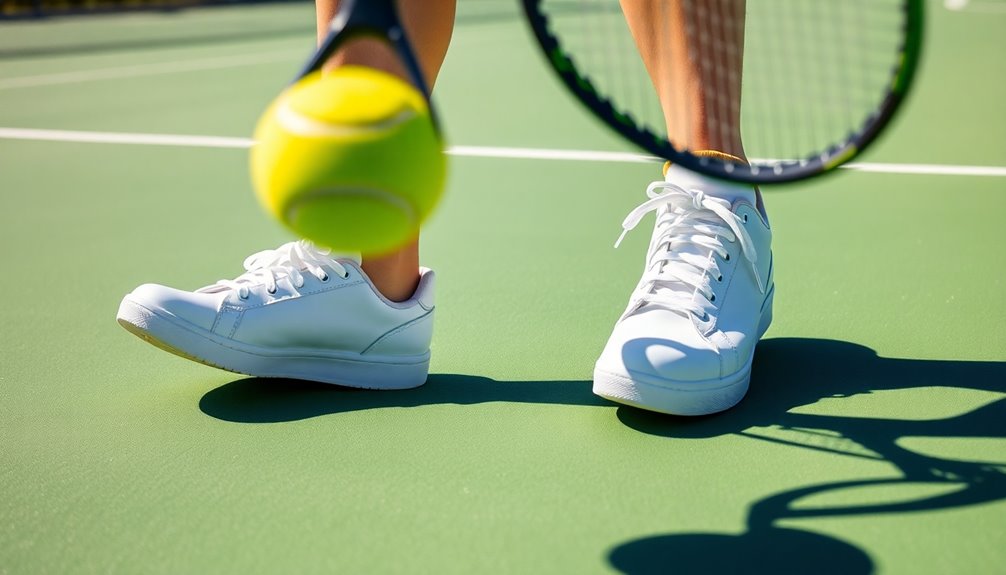
Your foot positioning plays an essential role in how effective your serve can be.
A proper stance width and precise foot alignment can enhance your balance and power. Solid defensive metrics can be likened to mastering your foot positioning, as both contribute significantly to overall performance on the court.
Let’s explore how adjusting these elements can elevate your game.
Stance Width Importance
Though it might seem minor, the width of your stance plays a crucial role in executing a successful serve. A balanced stance allows you to generate power and control, ensuring your serve is consistent and effective.
If your feet are too close together, you risk losing stability; too wide, and you might struggle to transfer your weight properly.
Implementing stance adjustment techniques can help you find that sweet spot. Start with your feet shoulder-width apart, and adjust based on what feels comfortable.
Use stance balance strategies to maintain control throughout your motion, allowing for a fluid serve. Remember, a solid foundation enhances your overall performance, so don’t overlook the significance of your stance width.
Foot Alignment Techniques
Proper foot alignment is essential for executing an effective serve. Your foot placement directly impacts your balance and power.
Start by positioning your non-dominant foot forward, pointing towards your target. This helps create a solid foundation, allowing you to transfer weight effectively during your serve. Your dominant foot should be behind, angled slightly for stability.
Remember, a good serve requires more than just arm strength; it’s about balance and focus too. When you align your feet correctly, you’re setting yourself up for a smooth, controlled motion.
Avoid common mistakes by checking your foot alignment before each serve. With practice, these techniques will help you develop a consistent and powerful serve that impresses your opponents.
Common Mistakes in Ball Tossing
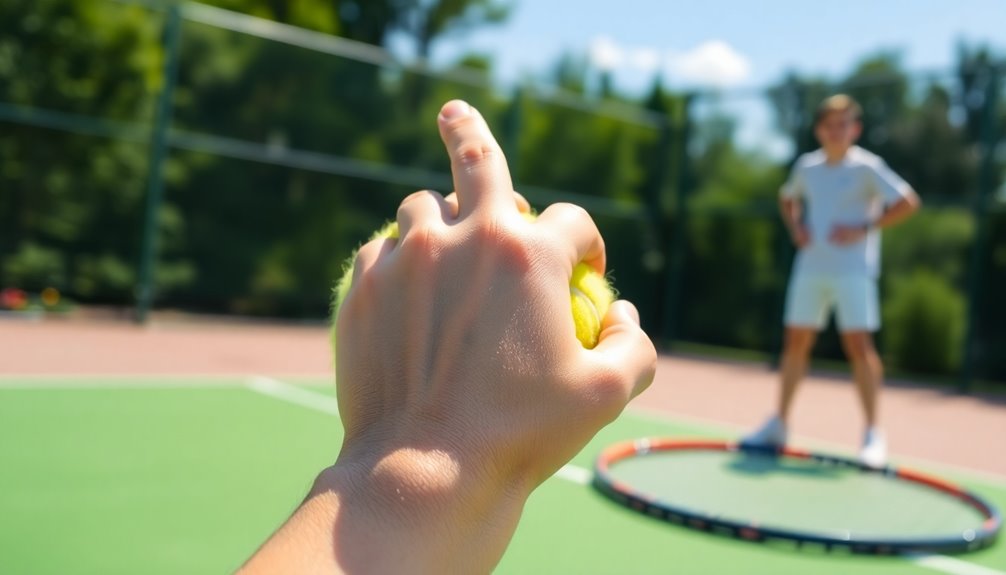
When you’re serving, the way you toss the ball can make or break your game. If your toss height is inconsistent or placed incorrectly, it throws off your entire serve. Let’s explore these common mistakes and how to avoid them. Additionally, mastering your toss can greatly influence your ability to maintain accurate stoppage time, ensuring smoother gameplay and better performance.
Inconsistent Toss Height
To improve your toss accuracy, work on your toss timing and toss rhythm. A consistent toss height allows you to establish a rhythm that feels natural, helping you connect with the ball effectively.
If you find your toss height varies, practice toss adjustments with visualization techniques to mentally picture the ideal toss. Regular toss practice can help reinforce this consistency, ensuring you get the ball where you need it each time.
Improper Toss Location
A misplaced ball toss can derail even the best serves. If your toss location is off, it disrupts your toss angle and rhythm, leading to inconsistent serves.
To improve your toss, keep these tips in mind:
- Target Spot: Always aim for a consistent spot in front of you. This guarantees a reliable toss angle.
- Height Control: Toss the ball high enough to give you time to swing without rushing your rhythm.
- Stay Relaxed: Tension can throw off your toss location. Relax your arm for a smoother release.
- Practice Routine: Develop a pre-serve routine to enhance your toss rhythm, making it automatic.
The Role of Timing in a Successful Serve
Timing plays an essential role in executing a successful serve, as it can make the difference between a powerful shot and a frustrating fault. To achieve timing consistency, you need to focus on your rhythm development.
Start by finding a comfortable pace for your serve that allows you to coordinate your toss, swing, and contact seamlessly.
Practice your timing by counting your movements: toss, step, and hit. This will help you sync your body’s actions, ensuring you’re in the right position when you make contact with the ball. Additionally, incorporating high-intensity sprints into your training can enhance your overall timing and rhythm on the court.
Understanding the Follow-Through Technique
Mastering your serve doesn’t stop at the point of contact; the follow-through technique is just as important. A proper follow-through can enhance your serve’s accuracy and power.
Here are some key follow-through benefits:
Here are essential benefits of a proper follow-through: improved accuracy, increased power, reduced injury risk, and better control.
- Improved Accuracy: A consistent follow-through helps you hit your target more reliably.
- Increased Power: A complete follow-through maximizes your energy transfer, boosting ball speed.
- Reduced Injury Risk: Proper technique lowers the strain on your arm and shoulder.
- Better Control: Follow through drills can help you maintain balance and control throughout your motion.
Incorporating these elements into your practice will elevate your serving game. Focus on your follow-through, and you’ll notice significant improvements! Additionally, implementing proper warm-up routines can further enhance your overall performance and reduce the likelihood of injury.
How to Avoid Overthinking Your Serve
Even though serving might seem straightforward, it’s easy to get caught up in your thoughts and overanalyze each step. To cultivate a better serve mindset, focus on simplifying your approach. Instead of fixating on mechanics, prioritize serve relaxation.
Take a deep breath before each serve to ease tension. Visualize your target instead of replaying past mistakes; this helps redirect your focus.
Establish a consistent routine that allows your body to move naturally. Trust your training and instincts—this will reduce the urge to overthink. Remember, a relaxed state often leads to improved performance. Embrace the process, and don’t stress about perfection. Additionally, practicing quick decision-making will help you react instinctively, reducing the likelihood of overthinking during your serve.
The Impact of Inconsistent Stance
Your stance plays an essential role in your serve’s consistency.
If your foot placement changes unpredictably, it can throw off your balance and timing. Additionally, a strong core strength is vital for maintaining stability and generating power during your serve.
Stance Stability Importance
While a powerful serve can intimidate opponents, it’s often the stability of your stance that defines your consistency on the court. An inconsistent stance can lead to errors and missed opportunities.
To improve your serve, focus on these key aspects:
- Balance Exercises: Incorporate activities like yoga or Pilates to enhance your core strength and stability.
- Stance Adjustments: Experiment with your foot positioning to find what feels most comfortable and effective.
- Weight Distribution: Verify your weight is evenly distributed to prevent wobbling during the serve.
- Practice Routine: Regularly practice your serve with attention to your stance, reinforcing good habits over time.
A solid stance will help elevate your serve and boost your confidence on the court.
Foot Placement Variability
Foot placement plays an essential role in determining the success of your serve. When your foot balance is inconsistent, it disrupts your serve rhythm, making it harder to hit accurate shots.
If your feet are too wide or too close together, you may struggle to generate the power and precision you need.
To establish a reliable serve, focus on finding a comfortable stance that feels natural. Experiment with foot placement until you discover what allows you to maintain balance while generating momentum.
Remember, consistency is key; an inconsistent stance can lead to unpredictable results.
Why You Should Focus on Your Body Rotation
Understanding body rotation is essential for an effective serve, as it directly influences both power and accuracy.
By mastering your body mechanics, you’ll enhance your serve efficiency and achieve a better swing rhythm.
Here are four key aspects to focus on:
- Core Engagement: Activate your core to maintain stability and generate rotational power.
- Fluid Motion: Make certain your movements flow seamlessly, connecting your legs, torso, and arms.
- Timing: Coordinate your body rotation with your arm swing for maximum impact.
- Weight Transfer: Shift your weight from back to front to harness the full potential of your serve. Additionally, understanding the importance of muscle memory through repetitive practice can further improve your serving technique.
Recognizing the Right Serve Speed
Finding the right serve speed is essential for effectively challenging your opponent. Too fast, and you risk sacrificing serve accuracy; too slow, and you might give them an easy return.
Focus on developing your serve technique to strike a balance between speed and consistency. As you practice, pay attention to how adjustments in your stance or grip impact your serve speed.
Regular serve practice can build your confidence, allowing you to experiment with various speeds. Seek serve feedback from coaches or experienced players to refine your approach. Incorporating high-intensity interval training into your routine can also improve your overall performance on the court.
How Can Mental Pressure Sabotage Your Serve?
Although mental pressure can often feel overwhelming, it can greatly undermine your serve. When you’re anxious, it’s easy to lose focus and let performance anxiety take over.
To combat this, you can develop mental resilience through effective pressure management. Here are four strategies to help you maintain control:
- Visualization Techniques: Picture your perfect serve to boost confidence and create a positive mindset.
- Relaxation Methods: Incorporate breathing exercises to reduce stress and enhance focus.
- Routine Development: Establish a consistent pre-serve routine to build confidence and alleviate pressure.
- Focus Strategies: Concentrate on the ball and your technique, rather than the outcome, to minimize anxiety.
Additionally, understanding the importance of field dimensions in sports can help you appreciate the technical aspects of your serve more deeply.
Tips for Practicing Your Serve Efficiently
Practicing your serve efficiently can greatly enhance your performance on the court. Start with target practice—aim for specific areas to improve accuracy.
Incorporate serve drills that focus on rhythm development; this helps you find your groove. Use visualization techniques before serving to mentally rehearse each shot, boosting confidence.
Experiment with serve variations to keep your opponents guessing and refine your skills. Schedule feedback sessions with a coach or partner to identify areas for improvement.
Don’t overlook consistency training; repetitive practice builds muscle memory. Finally, incorporate relaxation methods to stay calm under pressure.
Conclusion
Mastering your serve is like crafting a fine piece of art—it takes patience, practice, and precision. By avoiding common mistakes and focusing on grip, foot positioning, and timing, you’ll transform your serve from a shaky start to a powerful weapon on the court. Embrace the journey, shake off mental pressures, and watch your skills soar. With dedication, you’ll hit those serves with confidence, painting your success with every powerful stroke. Now, go out there and serve up some magic!