
The Center Position in Football: Role, Skills, and Communication
April 1, 2026The center position in football is crucial for the offensive line. You’re the leader on the field, responsible for directing your teammates and calling out protections based on defensive reads. Key skills include a high football IQ, accurate snapping, and quick decision-making under pressure. Your physical attributes—like strength, agility, and endurance—also play a significant role. Mastering communication is essential to avoid penalties and boost team morale. There’s so much more to explore about this critical position.
The Essential Role of the Center in Football
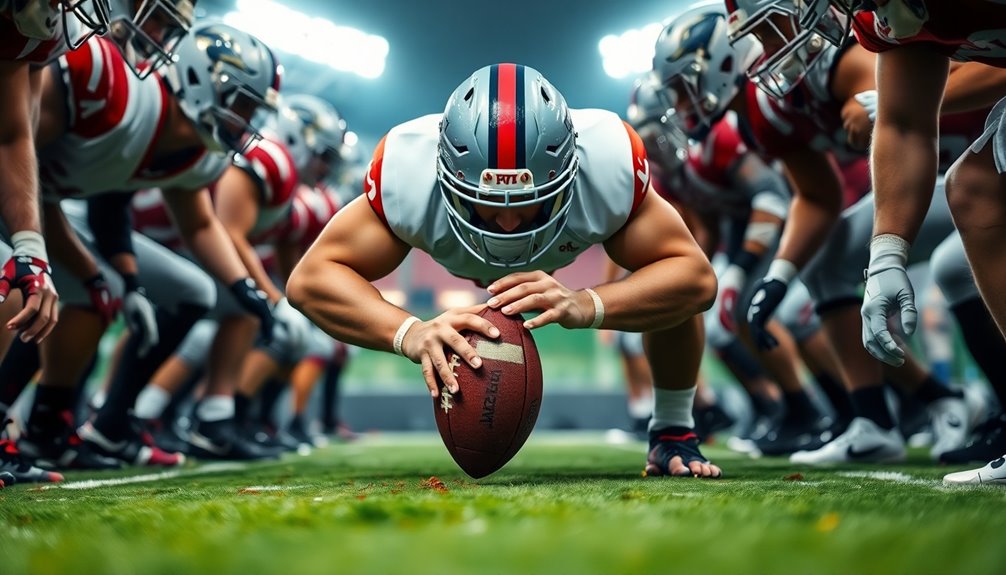
In the heart of the offensive line, the center plays a pivotal role that often goes unnoticed. You’re not just responsible for the snap; you’re the quarterback of the line, directing your teammates and calling out protections based on what you see from the defense.
Your ability to communicate effectively is essential, ensuring everyone is aligned before the play starts. A bad snap can disrupt the entire offensive execution, so precision is key.
Effective communication is essential for alignment; a single bad snap can disrupt the entire offense. Precision is vital.
Standing between 6’1″ and 6’4″ and weighing around 310 to 325 pounds, you combine strength with agility to engage defensive linemen.
Mental toughness and quick decision-making are critical, allowing you to read defenses and make adjustments under pressure, ultimately impacting the game’s outcome. Additionally, understanding defensive line formations can significantly enhance your ability to anticipate and react to opposing strategies.
Key Skills for a Successful Center

While a center’s role is demanding, mastering key skills can set you apart on the field. A high football IQ is essential; it helps you read defenses and make quick decisions on blocking assignments.
Consistent, accurate snapping the ball is critical—your reliability guarantees the quarterback gets the ball cleanly, keeping offensive flow intact. You also need to meet the physical demands of the position, utilizing quick footwork and agility to engage effectively with defensive linemen.
Strong communication skills are crucial, as you direct the offensive line, calling out protections and adjustments based on pre-snap reads. Finally, mental toughness is necessary to stay composed under pressure, especially in high-stakes situations and noisy environments. Additionally, understanding offensive roles can enhance your effectiveness in coordinating plays with your teammates.
Understanding Different Types of Snaps

Understanding the different types of snaps is essential for any center looking to elevate their game. Each snap affects the flow of play and can determine how effectively you counter defensive linemen. Here’s a quick breakdown:
- Shotgun Snaps: Positioned 5-7 yards back, these snaps enhance your quarterback’s field vision and speed up decision-making during pivotal moments.
- Behind Center Snaps: This traditional method requires precise timing and coordination, ensuring the quarterback’s hands are perfectly placed for a successful play.
- Punt Snaps: Traveling 15 yards, these demand accuracy and a tight spiral to set up a successful kick. Mastering these techniques not only improves your snap count but also boosts your team’s offensive effectiveness, as proper finger placement is critical for grip and control in snaps.
Communication and Leadership on the Offensive Line
As the heart of the offensive line, the center plays an essential role in fostering communication and leadership. You’re the vocal leader, calling out pass protections and identifying defensive players, ensuring everyone’s on the same page.
Effective communication is fundamental, especially in high-pressure situations where quick adjustments are needed based on defensive formations. Your ability to read defenses and relay those reads can make or break both run and pass plays.
Strong leadership qualities help motivate your teammates and maintain composure, building trust and coordination. Developing a shared understanding of snap counts and signals with the quarterback is critical for smooth offensive execution, preventing costly pre-snap penalties. Additionally, understanding the importance of teamwork can enhance your effectiveness in coordinating plays.
Ultimately, your leadership sets the tone for the entire offensive line.
Physical Attributes and Demands of a Center
As a center, you need a unique blend of physical attributes to excel on the field. Your height and weight provide the stability and strength to handle powerful defensive linemen, while agility and quick footwork help you adapt during plays. Plus, maintaining endurance under game pressure is essential for making smart decisions when it counts. Additionally, understanding the energy systems that fuel short bursts of activity can greatly enhance your performance during critical game moments.
Key Physical Attributes Required
The center position in football demands a unique blend of physical attributes that are essential for success on the field. You need to be strong enough to engage with hefty interior defensive linemen at the line of scrimmage, showcasing exceptional strength and stability.
Here are three key attributes you must possess:
- Height and Weight: Standing between 6’2″ and 6’4″ and weighing 280 to 320 pounds provides the compact build necessary for strength.
- Agility: Quick footwork allows you to effectively block and adjust to defensive movements.
- Power and Leverage: You must apply both while executing combination blocks and pulling for running plays.
Mastering these attributes sets the foundation for a successful offensive execution, starting with a consistent snap to the quarterback.
Strength and Agility Balance
While many positions in football require a range of skills, the center stands out for its unique balance of strength and agility. Standing between 6’2″ and 6’4″ and weighing 280 to 320 pounds, you need to engage effectively with defensive linemen.
Strong footwork and lateral movement are essential, allowing you to execute blocks and adjust quickly during plays. You must consistently snap the ball while maintaining the strength to withstand heavy contact.
Your quick reflexes are critical for responding to defensive stunts and blitzes, enabling you to balance power with agility for peak performance. Incorporating agility drills and strength training into your regimen will enhance your ability to read defenses and make split-second decisions on the field.
Endurance Under Game Pressure
Endurance is essential for a center, especially when you’re facing the relentless demands of a football game. You’ll need to maintain your stamina through an average of 55-66 snaps, all while ensuring effective communication with your teammates.
Here are three key aspects to take into account:
- Physical Resilience: You’ll face heavy interior defensive linemen, requiring robust endurance to stay competitive.
- Mental Toughness: In high-pressure moments, you must stay focused, executing your responsibilities without faltering.
- Agility Under Pressure: Quick footwork and the ability to adapt are vital when responding to blitzes and engaging in combination blocks.
With endurance, you can rise above the chaos, ensuring your team functions seamlessly even in the most intense situations.
Historical Evolution of the Center Position
As football evolved from its rugby roots, the center position transformed considerably, adapting to the game’s changing dynamics. Initially, the ball was rolled to the quarterback, but by 1892, hand-snapping became the norm. This shift paved the way for the direct snap introduced in 1940, considerably altering gameplay.
Centers need to protect the quarterback while also calling out pass protections and identifying defensive setups, reflecting their growing strategic importance. Historical centers like Jim Otto and Mike Webster set benchmarks for durability and leadership, shaping expectations for future players. Today, a center must blend physical prowess with mental acuity to thrive in this critical role, underscoring the ongoing evolution of the position in modern football. This role is further emphasized by the necessity of effective communication in maintaining team cohesion and execution.
Conclusion
In summary, being a center is like being the conductor of an orchestra, guiding the rhythm of the offense. Your role is vital; you set the tone, guarantee everyone’s in sync, and lead with confidence. Mastering the skills and communication needed can make or break a play. As the game evolves, so does the importance of your position. Embrace the challenges, hone your abilities, and you’ll be the heartbeat of your team on the field.