

How to Build a Reliable First Serve
April 23, 2026To build a reliable first serve, focus on your grip and stance for stability. Master your toss by keeping it consistent and just above your racket. Avoid common mistakes like improper grip pressure and misaligned foot placement. Tailor your serves based on court surfaces—use slices on grass and heavy spins on clay. Develop your mental game with visualization and routines to boost confidence. There’s much more to learn about enhancing your serve and game strategy.
The Importance of a Strong First Serve
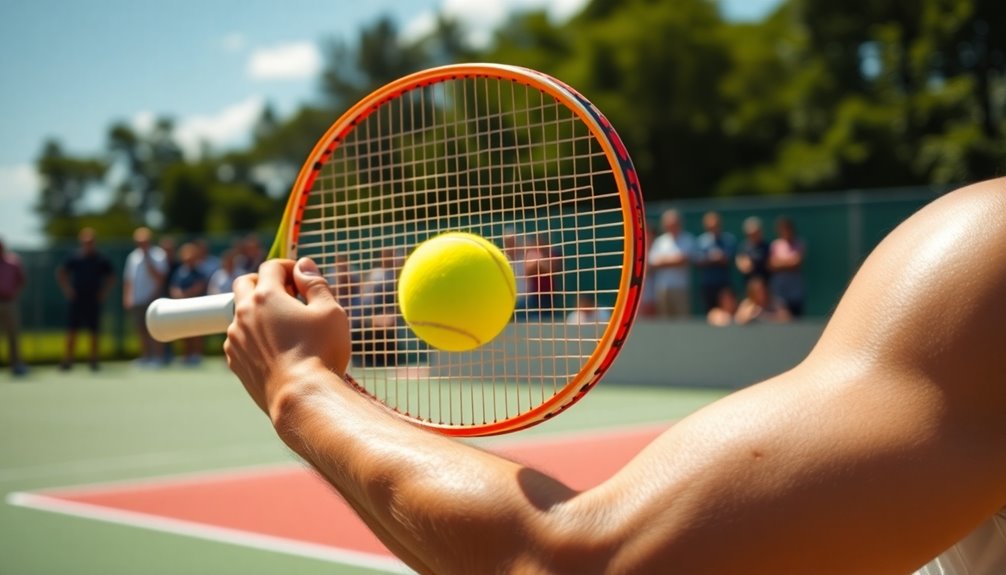
A strong first serve can set the tone for your entire match, as it not only puts pressure on your opponent but also boosts your confidence.
By focusing on your serve strategy, you can dictate the pace and direction of the game. Effective serve placement is essential; aim for the corners or right at your opponent’s weaknesses to keep them on their toes.
This isn’t just about power; precision matters just as much. A well-placed serve can lead to easy points or force your opponent into making mistakes. Additionally, understanding field dimensions and equipment requirements can help you optimize your serve strategy based on court conditions.
Key Elements of a Powerful Serve Technique
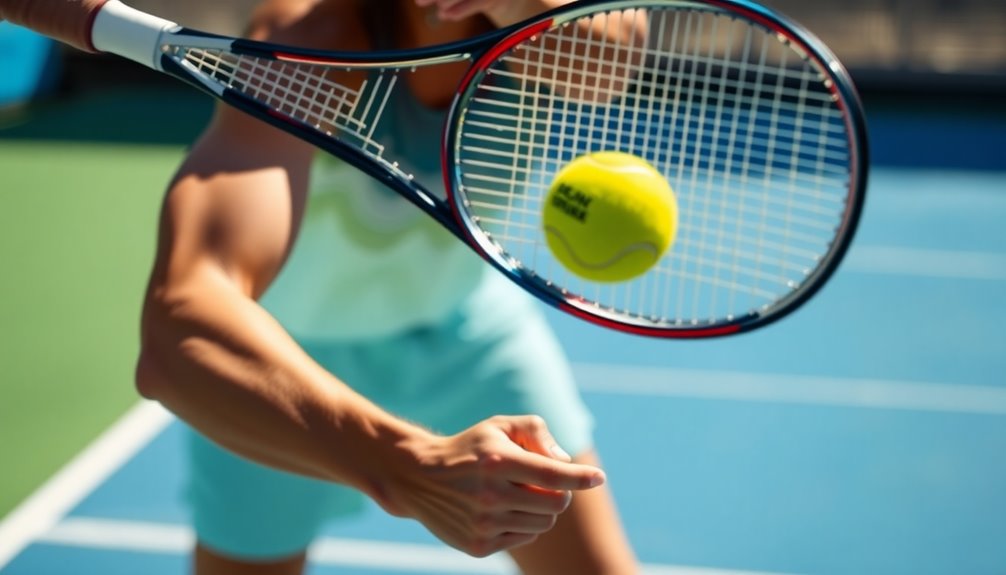
Mastering your first serve means honing in on the key elements of a powerful serve technique. Start with solid serve mechanics; your grip, stance, and ball toss are essential. Make sure your grip allows for control while generating power. A balanced stance sets you up for an explosive motion, and a consistent ball toss helps you hit the sweet spot every time.
Next, focus on your swing. Utilize your legs to drive upward and transfer that energy into your serve.
Finally, develop a serve strategy by varying your placement and spin. This keeps your opponent guessing and enhances your effectiveness. Incorporating core strengthening exercises can also improve your overall stability and power during the serve.
How to Develop Grip and Stance for Consistency

To serve consistently, you need to choose the right grip and establish a solid stance. Balancing your body weight correctly also plays an essential role in your serve’s reliability. Additionally, proper hand positioning can significantly enhance your ability to maintain control over the ball during your serve. Let’s explore how these elements work together to enhance your performance.
Choosing The Right Grip
Pay attention to grip pressure; too tight can hinder your fluid motion, while too loose may compromise your control. Make grip adjustments based on your comfort level and the type of serve you’re executing.
Prioritize grip comfort, ensuring you can maintain grip consistency throughout your match. Building grip strength will enhance your overall performance, allowing for better grip influence on ball placement.
Ultimately, mastering grip control is key to achieving a reliable first serve.
Establishing A Solid Stance
A solid stance is essential for a reliable first serve, as it sets the foundation for your entire motion. Focus on your foot positioning; your feet should be shoulder-width apart, providing a stable base. This positioning enhances your balance stability, allowing you to transfer weight smoothly during your serve.
Keep your knees slightly bent to maintain flexibility and readiness. Experiment with positioning your non-dominant foot slightly ahead to create a more dynamic angle. Make certain your weight is evenly distributed between both feet, so you’re ready to push off for maximum power.
Balancing Body Weight Properly
While you might focus on your grip and stance, balancing your body weight is just as essential for a reliable first serve. Start by ensuring your weight distribution is even between your feet. This not only stabilizes your stance but also helps you generate power.
Engage your core to maintain balance and control throughout your motion. As you toss the ball, shift your weight slightly forward, allowing your hips and shoulders to align with your target. This movement creates momentum, enhancing your serve’s accuracy and speed.
Mastering the Toss: Achieving the Perfect Height
Although the toss may seem like a simple action, mastering its height is essential for a successful serve. The right toss height gives you the ideal angle to make contact with the ball, allowing for better control and power.
Aim to toss the ball just above your outstretched racket, ensuring it’s not too high or low. Consistency is key; practice different toss heights to find what works best for you.
Try using a target zone to help maintain that toss consistency. By focusing on your grip and the release point, you’ll develop a reliable toss that enhances your serve. Additionally, practicing passing accuracy in your toss can significantly improve your overall serve quality.
Timing and Rhythm: The Secrets to a Fluid Motion
Mastering the timing and rhythm of your serve is essential for creating a fluid motion that maximizes power and accuracy.
Start with timing drills to coordinate your body movements, ensuring each part flows seamlessly into the next. Rhythm exercises can help you develop a consistent pace, allowing you to strike the ball at just the right moment.
Incorporate serve visualization into your practice, imagining the perfect execution before stepping onto the court. This mental rehearsal reinforces the connection between your mind and body, promoting a more natural, fluid motion.
Additionally, incorporating exercises that enhance cardiovascular endurance can contribute significantly to your overall performance on the court.
Common Mistakes to Avoid When Serving
When serving, you can easily undermine your success by overlooking proper grip technique and neglecting your foot placement. These simple mistakes can throw off your entire serve and lead to inconsistent results. Let’s explore how to correct these issues for a more reliable first serve. Additionally, focusing on proper body positioning can significantly enhance your serving accuracy.
Overlooking Proper Grip Technique
If you want to elevate your serve, overlooking proper grip technique can be a costly mistake. Your grip pressure plays a vital role in how effectively you hit the ball. If you’re gripping too tightly, you’ll lose fluidity and control; too loose, and you risk losing the racket. Aim for a balanced grip pressure that allows for a confident yet relaxed hold.
Additionally, grip rotation is essential for generating spin and power. If you don’t rotate your grip correctly, you might find yourself hitting flat or inconsistent serves.
Experiment with different grips, like the continental grip, to discover what feels right for you. Mastering these aspects will help you build a reliable first serve that stands out in your game.
Neglecting Foot Placement Alignment
- Your feet should be shoulder-width apart for better balance.
- Angle your back foot to enhance body mechanics during your serve.
- Keep your weight balanced on the balls of your feet for quicker movements.
- Make stance adjustments based on your serve type to improve accuracy.
- Don’t underestimate the role of foot placement in generating power.
Drills to Practice for a Reliable First Serve
Mastering your first serve requires focused practice, and specific drills can make all the difference. Start with consistency drills to build a reliable rhythm.
Mastering your first serve hinges on focused practice and consistency drills to establish a reliable rhythm.
Incorporate serve variations, like flat, slice, and kick serves, to enhance your adaptability. Set up practice routines that focus on target areas within the service box, aiming for precise serve placement.
Use mental visualization techniques to picture your successful serves, boosting your confidence. To simulate pressure scenarios, practice serving under time constraints or with a score to maintain high serve speed.
Don’t forget to evaluate your progress regularly, adjusting your drills as needed. By honing these skills, you’ll develop a first serve that instills confidence and sets you up for success on the court. Additionally, focusing on ball control techniques can significantly improve your overall serving effectiveness.
How to Adjust Your Serve for Different Court Surfaces
Adjusting your serve for different court surfaces is essential for maximizing your effectiveness during matches. Each surface presents unique challenges and opportunities. Here are some key adjustments to contemplate:
- Grass court adjustments: Focus on quick, low bounces; use slice serves for better control.
- Clay court strategies: Employ heavier spins; aim for consistency over speed.
- Hard court techniques: Mix up serves with speed and placement; utilize flat serves for quick points.
- Surface specific grips: Modify your grip based on the surface for better ball control.
- Weather considerations: Factor in wind and humidity, as they can affect ball spin variations and serve speed differences. Additionally, understanding stoppage time management can enhance your focus during critical game moments.
The Mental Game: Building Confidence in Your Serve
Success on the court isn’t just about technique; it’s also about mindset. To build confidence in your serve, start incorporating mental visualization. Picture your perfect serve before you step up to the line.
Establish serve routines that ground you and help eliminate distractions. Use positive affirmations to reinforce your belief in your ability. If anxiety creeps in, practice focus techniques like deep breathing to calm your nerves.
Develop effective pressure management strategies to handle high-stakes moments. Pre-serve rituals can create a sense of familiarity, boosting your confidence. Additionally, draw inspiration from Nera White’s unmatched skills to enhance your mental game.
Ultimately, identify your confidence boosters, whether it’s a specific drill or past successes, and lean on them to enhance your mental game. This blend of strategies will elevate your serve and overall performance.
Conclusion
In conclusion, mastering your first serve is like sculpting a masterpiece; it takes time, practice, and attention to detail. By focusing on technique, grip, toss, and mental strength, you’ll build a reliable serve that stands firm under pressure. Remember, every great player started where you are now. Embrace the process, learn from your mistakes, and soon you’ll deliver serves that not only win points but also elevate your entire game to new heights.