
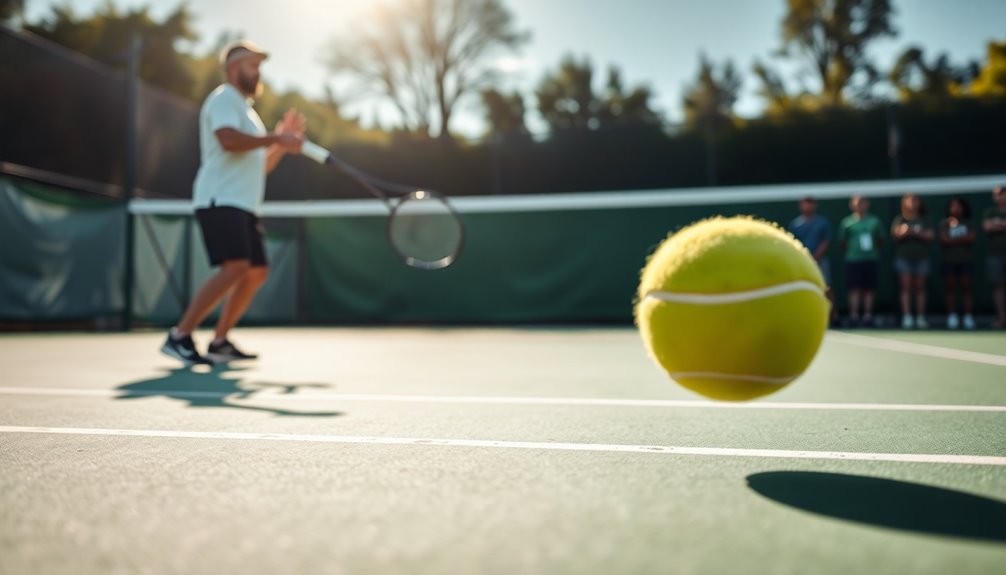
How to Teach the Serve Step by Step
April 25, 2026To teach the serve step by step, start by explaining its importance in setting the game’s tone. Focus on the grip, stance, and toss. Use a continental grip, position your feet shoulder-width apart, and guarantee a consistent toss just in front of your hitting shoulder. Practice follow-through for power and accuracy. Introduce variations like slice and topspin serves as players gain confidence. Keep the sessions fun and engaging to motivate continued improvement as you explore more effective strategies.
Understanding the Importance of a Good Serve

A solid serve is the cornerstone of successful play in tennis. It sets the tone for your entire game and can give you a significant advantage. Developing an effective serve strategy is essential; it not only helps you win points but also puts pressure on your opponent. You’ll want to think about your placement and speed, as these elements can disrupt their rhythm. Additionally, maintaining your mental focus during your serve is key. It’s easy to let nerves creep in, but staying calm and composed can elevate your performance. Furthermore, understanding the equipment and attire regulations can enhance your confidence and readiness on the court.
Key Components of the Tennis Serve Technique

To master the tennis serve, you need to focus on key components like grip, stance, toss, and swing.
Each element plays a vital role in delivering a powerful and accurate serve. Understanding the defensive strength of a team can similarly enhance your strategic approach to serving.
Let’s break down these components to help you refine your technique.
Grip and Stance
While mastering the serve, understanding the grip and stance is essential for developing a powerful and accurate shot. Start with your racket selection; a racket that feels comfortable and balanced will help you execute your serve better.
For your grip, use the continental grip, which gives you versatility and control.
Next, focus on foot positioning. Position your feet shoulder-width apart, with your non-dominant foot slightly ahead. This stance helps you maintain balance and enables an effective weight transfer during your serve.
Bend your knees slightly to stay agile and ready to move. Remember, a solid grip paired with the right stance sets the foundation for a successful serve, so practice these elements until they feel natural.
Toss and Swing
Mastering the toss and swing is essential for a successful serve in tennis. Start by focusing on your toss timing; it should be consistent and just in front of your hitting shoulder. Hold the ball lightly and release it with a smooth motion, aiming for a height that allows you to make contact at the peak of your swing.
As you toss, initiate your swing rhythm. Your racket should move smoothly in a fluid motion, with a relaxed grip. Engage your legs and core to generate power, while your arm extends to strike the ball.
Remember to follow through after contact, allowing your racket to finish high. Practicing these components will greatly improve your serve’s effectiveness and consistency.
How to Grip the Racket Properly for Serving
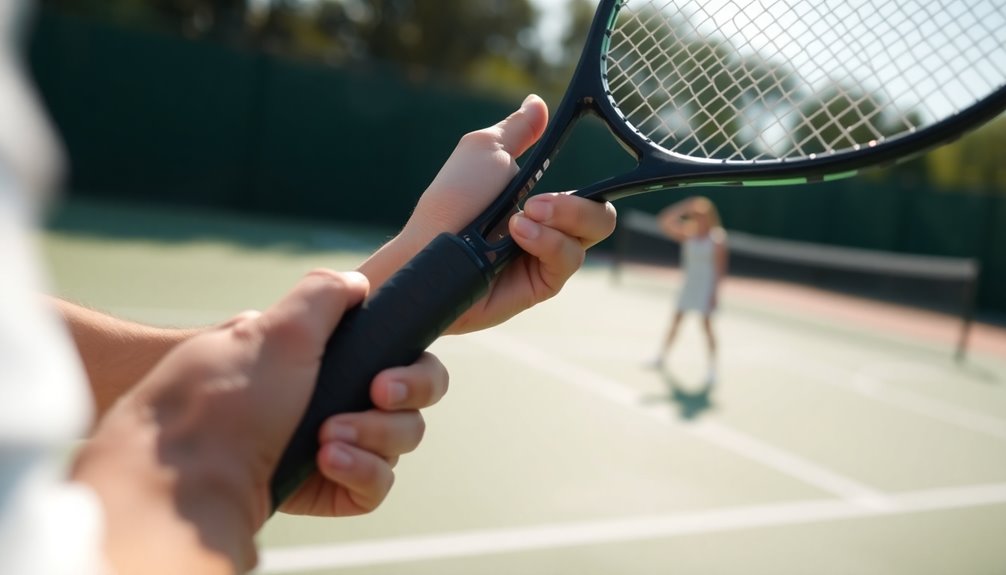
To serve effectively, you need to grip the racket correctly.
Start by choosing the right grip type and paying attention to where your fingers are placed.
The angle of your racket also plays an essential role in making sure your serve is powerful and accurate. Additionally, mastering field dimensions can enhance your overall understanding of spatial awareness in sports.
Ideal Grip Types
Choosing the right grip for serving can make all the difference in your game. Two popular grip styles for serves are the continental grip and the eastern grip.
The continental grip allows for versatility, enabling you to hit different types of serves, while the eastern grip offers more spin and control.
When holding the racket, it’s essential to find the right grip pressure. Too tight can restrict your motion, while too loose can lead to mishits. Start with a relaxed hold, adjusting as you get comfortable.
Experiment with both grip styles to see which feels best for your serving technique. Remember, the right grip sets the foundation for a powerful and effective serve.
Finger Placement Tips
While finding the right grip is essential, proper finger placement also plays a significant role in executing a successful serve. Start by ensuring your fingers are aligned comfortably along the racket handle.
Good finger strength and dexterity help you maintain grip pressure without straining. Make grip adjustments as needed to achieve the right balance between control and power.
Pay attention to your hand positioning; your fingers should wrap around the handle, allowing for wrist flexibility during the serve.
Focus on finger coordination, so each finger works together as you swing. Practice these elements consistently to enhance your serving technique and improve your overall performance on the court.
Racket Angle Importance
The angle of your racket plays an essential role in the effectiveness of your serve, as it directly influences both the trajectory and spin of the ball.
To master racket positioning, focus on these key aspects:
- Grip: Hold the racket firmly but relaxed, guaranteeing your fingers wrap comfortably around the handle.
- Angle Adjustments: Tilt your racket slightly upward to enhance loft and spin; a more horizontal angle can deliver a flatter serve.
- Follow-Through: After contact, let your racket naturally extend forward, maintaining the angle to guarantee accuracy and power.
Setting Up Your Stance for a Successful Serve
To set yourself up for a successful serve, it’s essential to establish the right stance. Start by positioning your feet shoulder-width apart, ensuring a solid base. Your front foot should point toward the net while your back foot angles slightly for balance. This foot placement allows for effective weight transfer during the serve.
Make necessary stance adjustments based on your comfort and playing style. If you feel unsteady, consider widening your stance for better stability.
Keep your knees slightly bent to maintain a low center of gravity. Remember, a well-set stance not only enhances your power but also improves your accuracy. Additionally, focusing on defensive stance mastery can enhance your overall athletic performance. Focus on these elements to lay the groundwork for a strong serving performance.
The Role of Tossing the Ball in Your Serve
Perfecting your serve hinges on the toss, as it sets the stage for everything that follows. A well-executed toss can make or break your serve. Here’s what you need to focus on:
Perfecting your serve begins with the toss; a well-executed toss sets the stage for success.
- Toss Height: Aim for a consistent height that allows you to strike the ball at the ideal angle. Too low or high can disrupt your rhythm.
- Toss Timing: Coordinate your toss with your swing. The ball should peak just as you’re ready to make contact, ensuring you hit it at the right moment.
- Toss Placement: Keep the toss slightly in front of you. This positioning helps generate power and accuracy in your serve.
Master these elements, and watch your serving game elevate! Additionally, maintaining a consistent toss can enhance your overall cardiovascular endurance and stability, much like how players improve their performance through tailored training drills.
Mastering the Motion: From Backswing to Follow-Through
Mastering the motion of your serve requires a fluid change from backswing to follow-through. Start by focusing on your backswing mechanics. As you prepare, draw your racket back smoothly, guaranteeing you maintain balance and control. This sets the stage for a powerful strike.
When you move to the forward motion, engage your core and step into the serve. Your racket should slice through the air as you make contact with the ball.
Next, concentrate on your follow-through techniques. Allow your racket to continue its path after hitting the ball, which helps assure accuracy and spin. Consistent practice of foundational skills, such as dribbling under pressure, will enhance your serving consistency and power.
Finish high, with your racket above your shoulder, signaling a complete and effective motion. Practicing this flow will enhance your serving consistency and power.
Common Mistakes to Avoid When Serving
When you’re serving, it’s easy to overlook key details that can sabotage your game.
An incorrect grip, poor ball toss, and lack of follow-through are common pitfalls that can affect your accuracy and power. Maintaining a proper grip technique is essential for a successful serve.
Let’s break down these mistakes so you can improve your serve and elevate your performance.
Incorrect Grip Technique
Even though it may seem minor, grip technique plays a crucial role in a successful serve. If you don’t get this right, it can lead to inconsistent serves and missed opportunities.
Here are three common mistakes to avoid:
- Too Much Grip Pressure: Holding the racket too tightly restricts your wrist movement, making your serve less fluid.
- Inconsistent Grip Size: Always use the same grip size. If you make grip adjustments during a match, it can throw off your timing and accuracy.
- Incorrect Grip Style: Make sure you use the proper grip for your serve. A continental grip is often best for versatility.
Poor Ball Toss
A poor ball toss can undermine your entire serve, leading to inconsistencies and frustration. One of the most common toss mistakes is tossing the ball too high or too low. If you throw it too high, you might lose control; too low, and you won’t have enough time to execute your swing.
Focus on mastering proper ball toss techniques by keeping it consistent and at a comfortable height. Aim for a toss that’s just above your hitting shoulder for ideal contact.
Additionally, avoid leaning forward or backward during the toss, as this can throw off your balance. By correcting these common toss mistakes, you’ll set yourself up for a more reliable and effective serve.
Lack Of Follow-Through
Mastering the ball toss sets the stage for a successful serve, but neglecting your follow-through can still sabotage your efforts. A solid follow-through is essential in serve mechanics to guarantee accuracy and power.
Here are three common mistakes to avoid:
- Shortening Your Swing: Don’t cut your motion short; a complete swing maximizes energy transfer.
- Lack of Body Rotation: Confirm you rotate your hips and shoulders; this adds necessary force and stability.
- Inconsistent Follow-Through: Practice follow through drills to develop a consistent finish to your serve, reinforcing proper technique.
How to Practice Serving Effectively
Practicing your serve effectively can make a significant difference in your game. Start by developing a solid serve strategy; focus on consistency and placement rather than power. Set aside time for dedicated practice sessions, ideally with a partner or a ball machine.
Begin with a relaxed stance, ensuring your grip is comfortable. Visualize your target before each serve, enhancing your mental preparation. Break down your serve into components—toss, swing, and follow-through—practicing each part separately.
Use drills that emphasize accuracy, aiming for specific areas of the service box. Record yourself to analyze your technique, making adjustments as needed. By combining physical practice with mental visualization, you’ll build confidence and improve your overall serving performance. Additionally, practicing essential skills consistently can elevate your passing game in the overall context of your performance.
Introducing Variations: Slice, Topspin, and Flat Serves
Here are three key variations to practice:
- Slice Serve Techniques: Use a side spin to pull your opponent wide, making it harder for them to return effectively.
- Topspin Serve Benefits: This serve bounces higher, pushing your opponent back and giving you time to position yourself for the next shot.
- Flat Serve Strategies: Hitting the ball with little spin can produce fast, powerful serves aimed directly at your opponent’s weak spots.
Incorporate these serve variations into your practice to improve your game and keep your rivals on their toes! Additionally, mastering different serves can enhance your overall fitness levels, allowing you to execute them with precision and power.
Building Confidence: Serving Drills for Beginners
Building confidence in your serve is essential for any beginner. Start with confidence-building exercises, like serving against a wall or targeting specific areas of the court. These drills help you develop consistency and accuracy.
Next, incorporate mental preparation techniques, such as visualization. Picture yourself executing a perfect serve before stepping up to the line. This mental practice can greatly boost your confidence during real matches.
To further enhance your skills, practice serving with a partner, focusing on communication and feedback. Celebrate small victories—each successful serve reinforces your belief in your ability. Additionally, incorporating finishing drills into your training can help improve your overall execution and confidence in match situations.
When to Transition From Practice to Real Matches?
Once you’ve developed a solid foundation and gained confidence in your serve, it’s time to reflect on stepping onto the court for real matches.
Shifting from practice to competitive play involves evaluating both your skills and mental readiness. Here are three key factors to take into account:
- Practice Matches: Engage in practice matches to simulate a competitive environment and evaluate your serve under pressure.
- Skill Evaluation: Regularly evaluate your serve confidence and tactical serving abilities during drills to guarantee you’re prepared for game situations.
- Mental Readiness: Make sure you can handle pressure and maintain game awareness when facing an opponent.
Tips for Keeping Serving Fun and Engaging
To keep serving fun and engaging, try mixing up your routines and incorporating games into your practice sessions. Use creative games and serve challenges to spark excitement.
Organize fun competitions where players can showcase their skills and encourage teamwork through team drills. Interactive workshops can help players learn while enjoying the process, making skill-building activities more appealing.
Introduce themed practices that revolve around a specific aspect of serving, adding variety to your sessions. Incorporate serve relays to promote speed and accuracy in a playful manner.
Finally, establish reward systems to celebrate achievements, reinforcing positive experiences. By weaving in engaging narratives, you’ll create a dynamic environment that keeps everyone motivated and enthusiastic to improve.
Conclusion
Mastering the serve is like revealing a secret weapon in your tennis game. By focusing on technique, grip, and practice, you’ll build a solid foundation. Remember, it takes time and patience to develop your skills, so keep things light and enjoyable. As you shift from practice to matches, trust in your abilities and stay confident. With dedication, you’ll find that serving not only enhances your game but also brings a lot of joy to your tennis experience.