
Lineman Positions Explained: From Left Guard to Right Tackle
April 1, 2026Last updated: · By Jake Turner
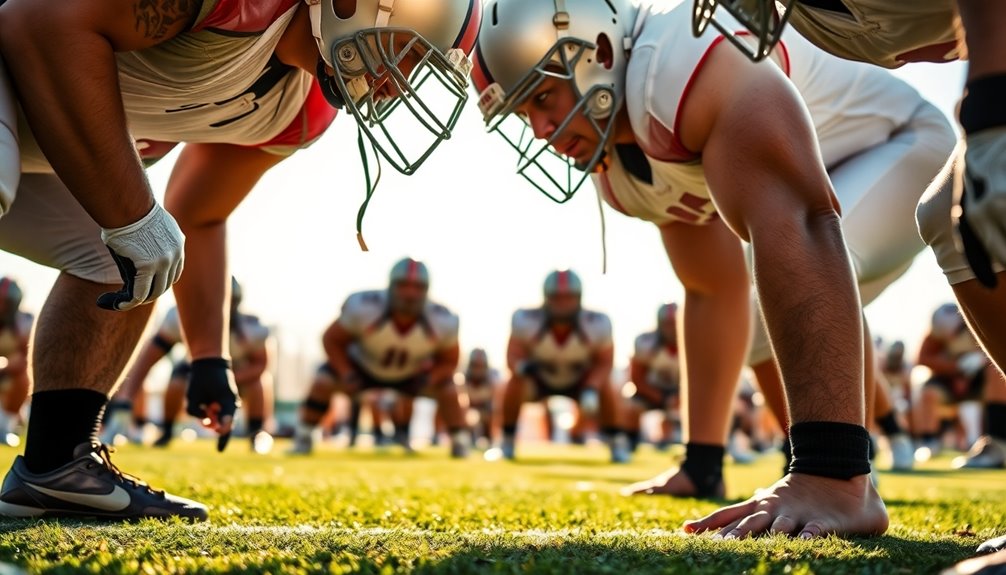
Lineman positions are the five spots on the offensive line that block for the quarterback and running backs: center, left guard, right guard, left tackle, and right tackle. The left guard lines up directly to the left of the center and works mostly in the interior, while the left tackle sits on the outside and protects the quarterback’s blind side. The right side mirrors these jobs, so the right guard and right tackle cover the same responsibilities on the other half of the formation.
Key Takeaways
- The offensive line has five positions: center, left guard, right guard, left tackle, and right tackle.
- The center passes the ball to the quarterback and usually makes the first line call because it has the best pre-snap view of the defense.
- Guards line up between the center and the tackles and are designated left guard (LG) or right guard (RG).
- For a right-handed quarterback, the left tackle guards the blind side and is usually the most skilled player on the offensive line.
- NCAA rules require the five interior linemen, numbered 50 through 79, to never line up as eligible receivers, a stricter standard than the NFL uses.
What Are the Five Offensive Line Positions?
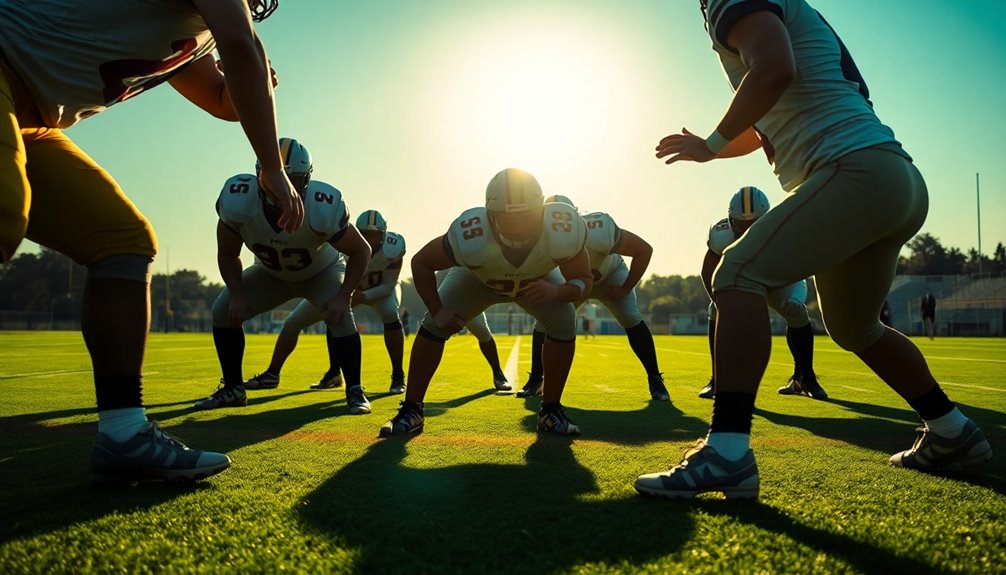
The five offensive line positions are center, left guard, right guard, left tackle, and right tackle. Each one has a fixed spot in the formation and a primary job in run blocking or pass protection. The table below shows where each lineman lines up and what he is mainly responsible for.
| Position | Alignment | Main job |
|---|---|---|
| Center | Middle of the line, over the ball | Snaps the ball to the quarterback and usually makes the first line call |
| Left guard (LG) | Between the center and the left tackle | Run blocking, interior pass protection, and pulling on some plays |
| Right guard (RG) | Between the center and the right tackle | Mirror of the left guard on the right side of the formation |
| Left tackle (LT) | Outside, at the left end of the line | Protects the blind side and handles edge rushers on the left |
| Right tackle (RT) | Outside, at the right end of the line | Mirror of the left tackle, with run blocking and pass protection on the right edge |
Why Does the Center Make the First Call?
The center is the link between the line and the quarterback. According to a summary of the center position in gridiron football, the center’s first job is to pass the ball to the quarterback. Because the center has the best pre-snap view of the defense, centers usually make the first line call, which the other linemen then adjust to.
What Does a Left Guard Do?
The left guard blocks mainly in the interior of the line, working against defensive tackles on run plays and against pass rushers who try to collapse the pocket up the middle. The left guard is one of two guards, and guards line up between the center and the tackles. The left guard is designated LG, while the right guard is designated RG.
How Does a Left Guard Block on Run Plays?
On run plays, the left guard creates running lanes by sealing defenders off from the ball carrier. On some plays he pulls, moving laterally across the line to lead block for the running back. Pulling requires quick footwork and timing, because the guard must get across the line before the play reaches the hole.
How Does a Left Guard Protect the Quarterback?
In pass protection, the left guard holds a stable pocket against interior rushers. He also has to recognize stunts, which are coordinated moves where defenders swap lanes to confuse blockers. Reacting to a stunt quickly is often the difference between a clean throw and a sack.
What Does a Left Tackle Do?
The left tackle’s main job is to protect the quarterback’s blind side, which for a right-handed quarterback is the left side. The overview of American football positions notes that the left tackle is usually the most skilled player on the offensive line. That skill is what allows him to face the defense’s best outside rushers one on one.
Why Is the Blind Side So Important?
A right-handed quarterback sees the field in front of him and to his right, so a rusher coming from his left is harder to track. The left tackle is charged with stopping that rusher before he reaches the quarterback. A single missed block on the blind side can produce a sack, a fumble, or a hit that changes the game.
What Footwork and Hand Techniques Do Left Tackles Use?
Left tackles use a kick-slide, which is a backward step with the feet kept under the body, to mirror edge rushers. They then use their hands to engage the defender, control his chest, and redirect him away from the quarterback. The defensive end or outside linebacker across from the tackle is covered in our guide to defensive line positions and techniques, which explains the moves tackles must read.
How Do the Right Guard and Right Tackle Differ?
The right guard and right tackle play the same roles as their left-side partners, just on the other side of the center. The right guard lines up between the center and the right tackle, and the right tackle holds the right edge of the line. Their assignments flip when the play goes left, so each lineman must know both directions.
- Right guard: blocks interior defenders on run plays and pulls to the left on plays run in that direction.
- Right tackle: handles edge rushers on the right side and seals the outside for runs to the right.
- Right tackle: is the lineman on the side the quarterback can see most easily, which changes how the defense attacks him.
- Both right-side linemen: must communicate with the center and the left side to keep the line’s protection calls consistent.
What Are the Key Differences Between a Left Guard and a Left Tackle?
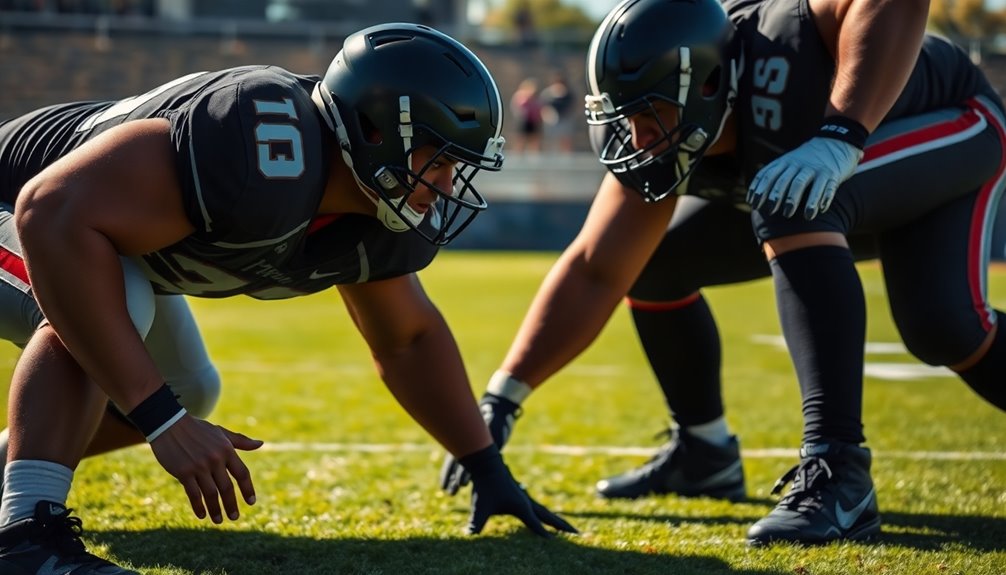
The left guard works mostly inside and blocks defensive tackles, while the left tackle works on the outside and handles edge rushers. The two positions share a side of the line, but they face different threats and move in different patterns. Understanding this split helps you see why coaches build the line the way they do.
- Alignment: The left guard sits between the center and the left tackle, while the left tackle sits at the end of the line.
- Opponents: The left guard usually faces defensive tackles and interior blitzers, while the left tackle usually faces defensive ends and outside pass rushers.
- Movement: Guards pull and move laterally inside, while tackles slide backward and sideways to mirror rushers coming around the edge.
- Typical build: Guards are often compact and strong for close-quarters work, while tackles are often taller and quick for edge work. These are common patterns, not requirements.
What Skills and Training Do Linemen Need?
Linemen need strength, footwork, hand technique, and the ability to read defenses quickly. Training should target all four, and film study connects them to real game situations. Practical drills and a regular routine will build these skills faster than practicing only in games.
- Strength: Build a base with compound lifts such as squats and deadlifts to handle contact with defenders.
- Footwork: Use cone drills and ladder exercises to improve lateral movement and quick reactions.
- Hand technique: Practice hand placement and body position to control defenders and stay balanced.
- Film study: Review game footage to recognize stunts, blitzes, and the coverage shells that set up pressure. Our guide to Cover 5 defense against modern offenses explains one common look you will see on film.
- Conditioning: Include aerobic and anaerobic work so your stamina holds through the fourth quarter.
How Do NCAA Rules Affect Interior Linemen?
NCAA rules keep the five interior linemen from lining up as eligible receivers. The rule applies to players numbered 50 through 79, and it is stricter than the NFL’s version. The tackle-eligible play article explains how these eligibility rules shape the play-calling options available to offenses.
For fans, this means the center, both guards, and any interior linemen are not expected to catch passes in NCAA games. Always check the current rulebook for your level of play, because rules change over time.
Frequently Asked Questions
Is a left guard the same as a left tackle?
No. The left guard lines up between the center and the left tackle and mainly blocks inside, while the left tackle lines up at the end of the line and mainly handles outside pass rushers. Both are on the left side of the offensive line, but their assignments and opponents differ.
Why is the left tackle called the blind side protector?
For a right-handed quarterback, the left side is the side he cannot easily see when he throws. The left tackle is responsible for stopping pass rushers coming from that side. This is why the position is often described as the blind side protector.
Who calls the blocking assignments on the offensive line?
The center usually makes the first line call because he has the best pre-snap view of the defense. Other linemen then adjust their assignments based on that call and on the defensive alignment. Good communication among the center, guards, and tackles keeps those adjustments consistent.
Are guards bigger than tackles?
Not always, and size varies widely from team to team. Guards are often more compact and tackles are often taller, but these are general patterns rather than rules. Coaches choose linemen based on their strength, footwork, and fit for the scheme.
What is the difference between the left tackle and the right tackle?
The two tackles mirror each other, with one on each end of the line. The left tackle is usually the blind side protector for a right-handed quarterback, while the right tackle handles edge rushers and run blocking on the right side. Both must handle pass rushers, but the side of the field and the quarterback’s view change their responsibilities.
Can offensive linemen catch passes?
In NCAA games, the five interior linemen numbered 50 through 79 never line up as eligible receivers. Rules in the NFL and at other levels differ, so the answer depends on the league. Check the rulebook for the level you are following before making assumptions.
Conclusion
Lineman positions are easier to follow once you see how each spot divides the work. The left guard handles interior blocking, the left tackle guards the blind side, and the right-side positions mirror those jobs. Learn the five spots and you will understand more of every snap, and you can explore the most important positions in football ranked to see how the line compares to the rest of the field.

