
Relay Races for Kids: Building Teamwork Through Track and Field
March 2, 2026Relay races for kids are a great way to build teamwork skills in track and field. You’ll learn how to communicate effectively with your teammates, whether through clear verbal cues or nonverbal signals. Trust is essential, especially during baton exchanges, as smooth handoffs can make or break your race. Practicing together fosters camaraderie and collective problem-solving. Plus, the shared goals and celebrations create lasting friendships. Stick around to discover more strategies for enhancing teamwork through relay races!
The Importance of Teamwork in Sports
When you participate in relay races, you quickly realize that teamwork is vital for success. Each runner depends on the others, making individual accountability significant. You can’t solely rely on your speed; you must also guarantee you pass the baton seamlessly and encourage your teammates.
This process strengthens group dynamics, as you learn to trust one another and work towards a common goal. The energy of the team can elevate everyone’s performance, fostering a sense of unity. By incorporating effective communication into your practices, you can enhance coordination and ensure each member understands their role.
You’ll find that when each member takes responsibility for their role, the entire team thrives. Embracing the importance of teamwork not only enhances your racing experience but also builds lasting friendships and skills that extend beyond the track.
How Relay Races Enhance Communication Skills
While competing in relay races, you quickly learn that effective communication is essential for a smooth and successful handoff. You and your teammates rely on both verbal cues and nonverbal signals to guarantee everything goes off without a hitch.
Here’s how relay races enhance your communication skills:
- Clear verbal cues help signal when to start running.
- Nonverbal signals, like eye contact, indicate readiness.
- Timing your pace with teammates creates synchronized movements.
- Listening skills improve as you focus on each other’s instructions.
- Feedback fosters improvement during practice, honing your skills.
Additionally, engaging in relay races promotes teamwork and communication among teammates, similar to the benefits seen in scrimmages.
Through these experiences, you not only enhance your athletic performance but also develop lifelong communication skills that extend beyond the track.
Trust Building Through Baton Exchanges
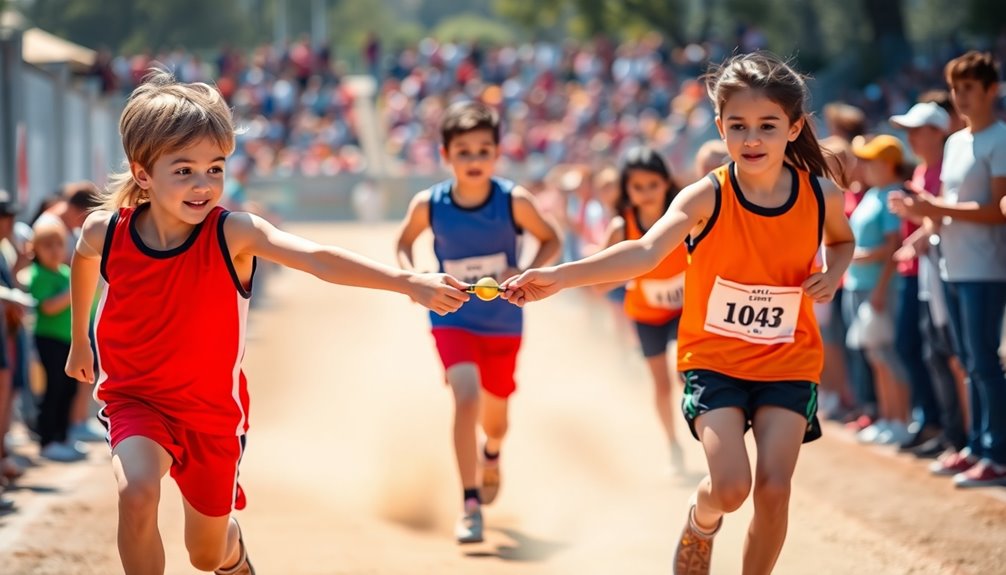
As you prepare to exchange the baton during a relay race, the trust you build with your teammates becomes evident.
It’s not just about speed; it’s about understanding and relying on one another. Practicing baton etiquette guarantees that each runner knows when to accelerate and when to receive the baton, fostering confidence in each other’s abilities.
Engaging in trust exercises before the race can strengthen these bonds, allowing you to focus on the exchange instead of worrying about mistakes.
Participating in trust exercises enhances team bonds, enabling a seamless baton exchange and reducing anxiety about potential errors.
When you hand off the baton smoothly, you’re not just passing a stick; you’re sharing the responsibility of the race. This trust transforms your team into a cohesive unit, ready to tackle any challenge on the track together. Additionally, much like in defensive drills, communication and teamwork are essential for achieving success as a relay team.
Strategies for Successful Relay Race Coordination
To guarantee your relay race goes smoothly, focus on effective baton exchange techniques and clear communication. You’ll want your team to practice the timing of their handoffs and use specific signals to keep everyone on the same page. With these strategies in place, you’ll boost your team’s performance and confidence on race day. Additionally, incorporating passing drills can enhance team dynamics and improve coordination during the race.
Effective Baton Exchange Techniques
Mastering effective baton exchange techniques is essential for a successful relay race, especially since a smooth handoff can greatly impact your team’s overall performance.
Focus on the following strategies to enhance your baton positioning and timing techniques:
- Practice the exchange zone: Familiarize yourself with the designated area for baton handoffs.
- Establish a running rhythm: Coordinate your pace with your teammate to guarantee a seamless shift.
- Maintain firm grip: Hold the baton securely, avoiding unnecessary movements.
- Visual cues: Use visual references to signal the start of your sprint.
- Rehearse frequently: Regular practice helps build muscle memory and confidence.
Clear Communication Strategies
Effective communication is essential for a winning relay team, as it guarantees everyone is on the same page during the race.
To enhance coordination, establish clear signals between runners. For instance, the outgoing runner should know when to start sprinting by the incoming runner’s verbal cues or hand gestures. Use consistent phrases like “Go!” or “Now!” to eliminate confusion.
During practice, emphasize these signals, making sure each runner feels comfortable with them. Encourage feedback so everyone can refine their timing and response.
Remember, clear communication reduces the chance of mishaps during baton exchanges, boosting your team’s overall performance.
The Role of Practice in Developing Team Dynamics
Although practice often feels repetitive, it plays an essential role in fostering team dynamics among kids in relay races.
By engaging in structured practice routines, you create opportunities for role modeling and shared learning. Here’s how practice enhances teamwork:
- Building Trust: Regular practice helps teammates rely on each other during shifts.
- Improving Coordination: Repetition allows for smoother baton exchanges.
- Encouraging Communication: Kids learn to express needs and feedback effectively.
- Strengthening Relationships: Time spent together fosters camaraderie and friendship.
- Developing Strategy: Teams refine their approach through collaborative problem-solving.
Moreover, consistent practice cultivates teamwork and communication skills essential for success in competitive environments.
Ultimately, these elements work together to create a cohesive unit, making each athlete feel valued and connected, which is vital for a successful relay race.
Encouraging Friendly Competition Among Teammates
How can you foster a spirit of friendly competition among teammates in relay races? Start by creating an environment where friendly rivalries can thrive.
Encourage each runner to set personal goals and share their achievements, making it a fun challenge among teammates. Celebrate these small victories together, fostering a sense of camaraderie.
Supportive encouragement is key; remind everyone that improvement is the main focus, not just winning. You might organize practice races where teammates can push each other while maintaining a light-hearted atmosphere.
This way, they’ll learn to appreciate each other’s strengths and motivate one another. Ultimately, this friendly competition can enhance team spirit and lead to better performance on race day. Additionally, fostering individual growth through personalized coaching can help each runner reach their potential and contribute to the team’s success.
Overcoming Challenges Together in Relay Races
Building on the friendly competition among teammates, overcoming challenges together in relay races creates a stronger bond within the team.
When you face obstacles as a unit, it fosters collective resilience. Here are some ways your team can grow through these experiences:
- Communication: Discussing strategies helps clarify roles and expectations.
- Support: Cheering each other on builds motivation during tough moments.
- Problem-Solving: Finding solutions to unexpected challenges enhances teamwork.
- Trust: Relying on each other’s strengths cultivates a deeper sense of confidence.
- Celebration: Acknowledging successes, no matter how small, reinforces unity.
Additionally, working together to improve team cohesion can significantly enhance performance in competitive situations.
Creating Lasting Friendships Through Team Activities
When you work together towards shared goals in team activities, you naturally form strong bonds with your teammates. Communication is key in building trust, allowing you to rely on one another during races. Plus, celebrating your successes together creates memories that can turn into lasting friendships. Engaging in bonding activities outside of practice can further strengthen these connections and enhance teamwork.
Shared Goals Foster Bonds
As kids participate in relay races, they quickly learn that shared goals not only enhance their performance but also forge lasting friendships.
Working towards shared objectives creates a sense of unity and trust among teammates. Here’s how these experiences foster bonds:
- Mutual support encourages kids to cheer each other on.
- Facing challenges together builds resilience and camaraderie.
- Celebrating victories, big or small, strengthens connections.
- Learning to rely on one another promotes accountability.
- Sharing the thrill of competition creates unforgettable memories.
These elements combine to form deep relationships that often extend beyond the track.
Communication Builds Trust
Effective communication plays an essential role in fostering trust among teammates during relay races. When you actively listen to each other, you create an environment where everyone feels valued and understood.
Pay attention to your teammates’ nonverbal cues, like body language and facial expressions; these signals often convey more than words. A simple nod or smile can boost morale and strengthen bonds.
By discussing your strategies and encouraging one another, you’ll build a solid foundation of trust. This trust not only enhances your performance on the track but also paves the way for lasting friendships off the field.
Celebrating Success Together
Celebrating success together fosters camaraderie and strengthens the bonds between teammates. When you recognize achievements and celebrate milestones, you create an environment where friendships flourish.
Here are some ways to make those memories count:
- Hold team awards ceremonies to acknowledge individual and group efforts.
- Celebrate personal bests, even if they don’t lead to a win.
- Organize fun team outings after successful events.
- Create a shared scrapbook to highlight your journey together.
- Encourage teammates to express gratitude for each other’s support.
These actions not only honor hard work but also cultivate lasting relationships.
Tips for Coaches to Foster Team Spirit in Kids
Fostering team spirit in kids can transform a group of individuals into a cohesive unit that thrives on collaboration and support. To build this spirit, start with team-building exercises that encourage communication and trust.
Incorporate fun and engaging motivational activities, like group challenges or relay races, to help them bond. Encourage teamwork by setting team goals, celebrating achievements, and recognizing individual contributions.
Create a positive environment where kids feel safe to express themselves and support one another. Regularly remind them of the importance of working together and celebrating each other’s successes. Additionally, consider integrating team-building activities that nurture mental toughness for high-pressure situations.
As a coach, your enthusiasm and encouragement can inspire them to foster lasting friendships and teamwork that extends beyond the track.
Conclusion
In the vibrant tapestry of youth sports, relay races weave together threads of teamwork, trust, and friendship. As kids pass the baton, they’re not just running; they’re building bonds that flourish like wildflowers in spring. Every practice transforms challenges into stepping stones, teaching valuable lessons in collaboration. So, let’s celebrate these moments of unity and joy, for in the heart of each relay, you’ll find the true spirit of sportsmanship blooming brightly.

