

Dealing With Sports Anxiety in Young Athletes: a Parent’s Guide
February 26, 2026Dealing with sports anxiety in your young athlete requires understanding the signs, like withdrawal or irritability, and knowing the causes, such as performance pressure. Create a supportive environment by encouraging open communication and setting realistic expectations. Teach them practical techniques, like mindfulness and breathing exercises, to manage anxiety. Positive reinforcement helps build their confidence too. If anxieties persist, it may be time to seek professional help. Discover more valuable insights to support your child on this journey.
Recognizing the Signs of Sports Anxiety in Your Child
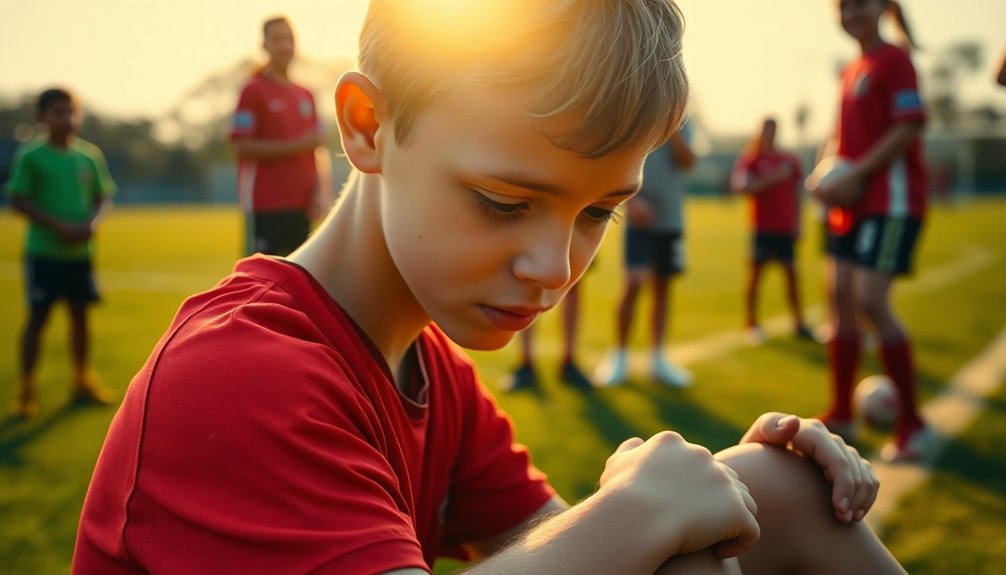
Recognizing the signs of sports anxiety in your child can feel like deciphering a complex puzzle. Start by identifying symptoms that might indicate they’re struggling.
Look for behavioral changes such as increased withdrawal from teammates, changes in sleep patterns, or reluctance to participate in practices or games. You might notice them becoming easily frustrated or overly critical of their performance.
Physical signs like stomachaches or headaches can also be red flags. Pay attention to their emotional state; if they’re frequently anxious or irritable, it’s essential to address these feelings. Additionally, understanding positional awareness can help your child feel more confident and in control during games, potentially reducing anxiety.
Understanding the Causes of Sports Anxiety in Young Athletes
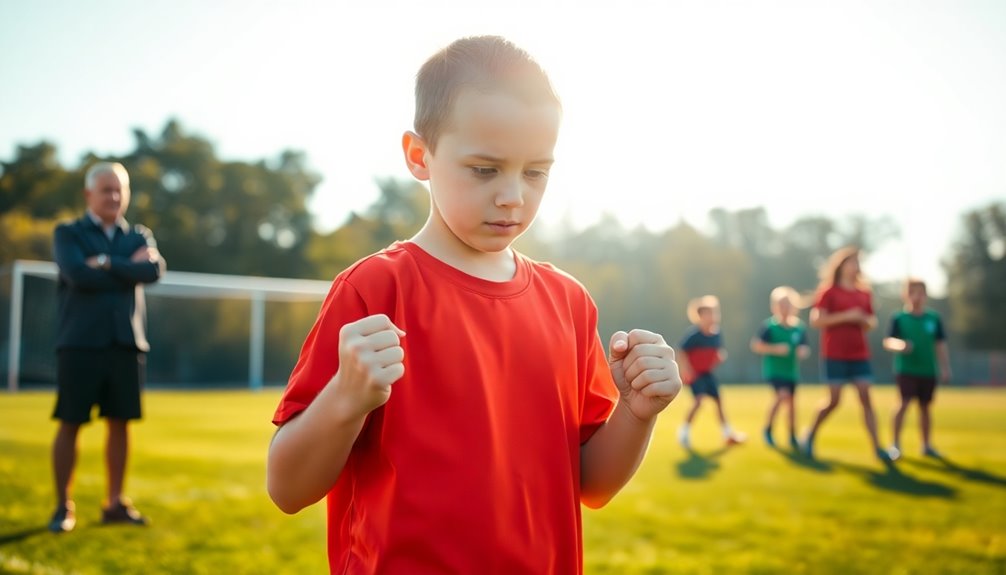
To help your young athlete, it’s essential to understand what’s fueling their sports anxiety. Performance pressure, fear of failure, and parental expectations can all weigh heavily on them. Additionally, the pressure to succeed often stems from an imbalance between teamwork and individual talents, leading to increased anxiety levels in young athletes.
Performance Pressure Factors
While many young athletes thrive on competition, the pressure to perform can often lead to anxiety that undermines their experience. Factors such as high expectations from coaches, parents, and peers can create an overwhelming sense of urgency to succeed.
This performance pressure can make your child feel like they must constantly prove themselves, which can be mentally exhausting. Additionally, comparisons with teammates or opponents can further amplify this stress.
It’s essential to encourage your child to build mental resilience by focusing on personal growth rather than solely on outcomes. Remind them that enjoying the game and doing their best is what truly matters, and support them in developing healthy coping strategies to manage the pressures they face.
Fear of Failure
Fear of failure can loom large for young athletes, often overshadowing their love for the game. This anxiety can stem from various sources, including self-imposed pressure and comparisons with peers.
As a parent, you can help your child with effective fear management techniques. Encourage them to focus on effort rather than outcomes, reminding them that mistakes are part of growth.
Introduce coping strategies like visualization, where they picture themselves succeeding, or deep breathing exercises to calm nerves before competitions.
By creating a supportive environment and discussing their fears openly, you empower your child to face challenges head-on.
Ultimately, fostering resilience and a positive mindset can help them enjoy sports without the burden of fear.
Parental Expectations Impact
Parental expectations can greatly shape a young athlete’s experience, often intensifying their anxiety about performance. When you set unrealistic expectations, it can create pressure dynamics that weigh heavily on your child.
They may feel they must meet these expectations to gain your approval or avoid disappointment, leading to heightened stress and fear of failure. Instead of fostering a love for the sport, this pressure can make them dread competition.
It’s essential to communicate openly with your child about their goals and feelings. Encourage them to focus on improvement rather than perfection.
Creating a Supportive Environment for Your Young Athlete
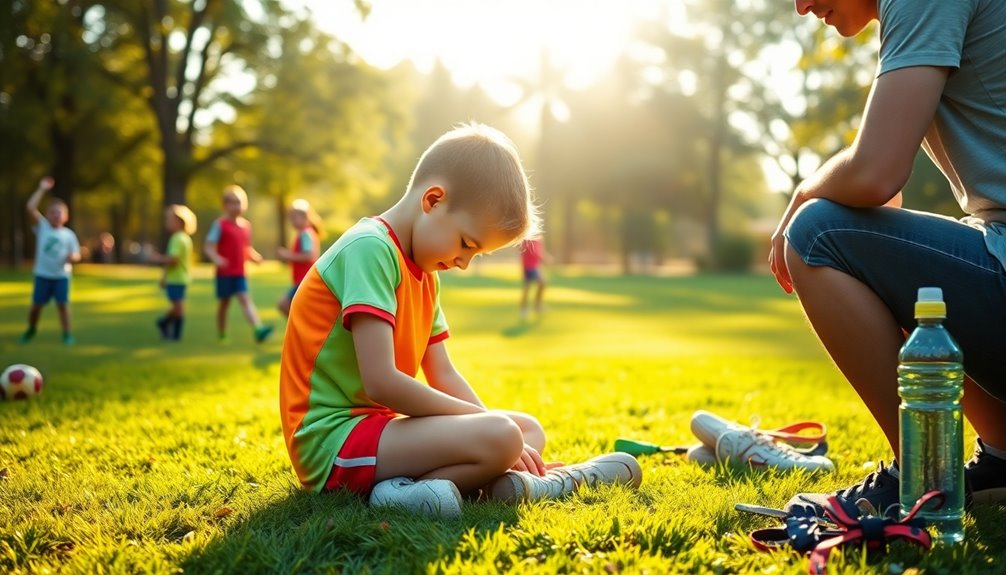
Creating a supportive environment for your young athlete starts with encouraging open communication. When they feel comfortable expressing their thoughts and feelings, it helps build trust and reduces anxiety. Pair that with positive reinforcement and realistic expectations, and you’ll set them up for success both on and off the field. Additionally, instilling a sense of teamwork and resilience can empower them to navigate challenges more effectively.
Encourage Open Communication
While young athletes often face immense pressure to perform, fostering open communication with them can greatly ease their anxiety. By creating a safe space for dialogue, you encourage emotional expression and help them articulate their feelings.
Here are some strategies to enhance communication:
- Practice active listening: Give your full attention when they speak, showing you value their thoughts.
- Ask open-ended questions: Encourage them to share their feelings and experiences instead of just yes or no answers.
- Normalize discussing emotions: Let them know it’s okay to feel anxious or stressed about sports.
- Share your own experiences: Relating your own challenges can help them feel understood and less isolated.
Foster Positive Reinforcement
Building on the importance of open communication, fostering positive reinforcement can greatly enhance your young athlete’s experience. When you offer positive feedback, it boosts their confidence and helps them associate sports with joy rather than pressure.
Celebrate small achievements and encourage effort, not just outcomes. This approach creates a supportive environment where your child feels valued and motivated.
Consider implementing motivation strategies like setting achievable goals together. This not only fosters a sense of accomplishment but also strengthens your bond.
Remember to recognize their hard work, regardless of the results. By focusing on progress and celebrating milestones, you’ll instill resilience and a love for the sport, helping them navigate anxiety and enjoy their athletic journey.
Establish Realistic Expectations
Establishing realistic expectations is essential for fostering a supportive environment for your young athlete. By setting limits and focusing on realistic goals, you can help them thrive without unnecessary pressure.
Here are some ways to achieve this:
- Understand Their Skill Level: Assess their current abilities honestly to avoid unrealistic comparisons.
- Encourage Personal Improvement: Emphasize progress over perfection; celebrate small achievements.
- Discuss Goals Together: Involve your child in setting goals that are challenging yet attainable.
- Be Flexible: Adapt goals as they develop; keep the focus on enjoyment and growth rather than solely on performance.
Encouraging Open Communication About Feelings and Fears
Creating an environment where young athletes feel comfortable sharing their feelings and fears is essential for managing sports anxiety.
Encourage open communication by regularly checking in with your child about their experiences and emotions. Practice active listening; show genuine interest in what they’ve to say without interrupting or dismissing their feelings.
Encouraging open communication fosters trust, allowing young athletes to share their feelings and experiences without fear of judgment.
When they share their concerns, offer emotional validation by acknowledging their fears and letting them know it’s okay to feel that way. This helps build trust and encourages them to express themselves more freely.
Remind them that everyone experiences anxiety and that talking about it can be a powerful first step toward overcoming it. Your support can make a significant difference in their confidence and performance. Additionally, understanding the impact of diverse athletes on the game can help them see that all players face challenges, regardless of their background.
Practical Techniques to Help Your Child Manage Anxiety
While it’s natural for young athletes to feel anxious, there are practical techniques you can use to help them manage those feelings effectively. Consider implementing these strategies:
- Mindfulness Techniques: Encourage your child to stay present and aware during games to reduce anxiety.
- Breathing Exercises: Teach them deep breathing methods to calm nerves before and during competitions.
- Visualization Strategies: Help your child visualize successful performances, reinforcing positive outcomes in their mind.
- Pre-Game Routines: Establish consistent routines that include relaxation methods and self-talk tips to build confidence and create familiarity. Additionally, emphasize the importance of mental training as it focuses on psychological readiness, which can significantly aid in managing anxiety.
Incorporating these coping mechanisms can notably ease anxiety and foster a healthier approach to sports for your young athlete.
The Role of Positive Reinforcement in Building Confidence
Positive reinforcement plays an essential role in building confidence in young athletes, as it encourages them to focus on their strengths and achievements.
By using effective encouragement techniques, you help your child develop a positive mindset and boost their self-esteem. Celebrate small victories, whether it’s a well-executed play or simply showing improvement. Acknowledging their efforts reinforces their belief in themselves and fosters resilience.
Offer specific praise, like “You did great with that pass!” rather than generic compliments. This targeted feedback helps your child understand what they’re doing well, which is key for self-esteem building. Additionally, fostering a love for soccer encourages engagement and motivation, which can further enhance their confidence on the field.
When to Seek Professional Help for Sports Anxiety?
How can you tell when it’s time to seek professional help for your child’s sports anxiety? Recognizing the signs early can make a big difference.
Consider reaching out for sports therapy or mental coaching if you notice:
- Your child avoids practices or games due to fear or anxiety.
- Their performance declines markedly, despite prior success.
- They express physical symptoms like stomachaches or headaches before competitions.
- Their anxiety interferes with daily activities or social interactions.
If you see these signs, it’s essential to discuss your concerns with a mental health professional who specializes in sports anxiety. Building strong communication skills can also be beneficial in addressing their feelings and fostering open dialogue.
Early intervention can help your child develop coping strategies and regain their confidence on and off the field.
Encouraging a Balanced Perspective on Competition and Performance
As young athletes face the pressures of competition, it’s essential to help them maintain a balanced perspective on performance. Encourage them to view competition as an opportunity for growth rather than a measure of their worth.
Discuss the importance of healthy competition, where the focus is on doing their best and enjoying the game, rather than solely on winning. Help them understand that everyone has off days, and that’s perfectly okay.
Teach stress management techniques like deep breathing or visualization to keep anxiety at bay. Reinforce that improvement comes with practice and effort, not just results. Emphasize that mental strength is crucial for overcoming challenges both on and off the pitch.
Celebrating Small Wins to Foster Enjoyment in Sports
Recognizing and celebrating small wins can greatly enhance a young athlete’s enjoyment of sports. By focusing on these moments, you help them appreciate their journey, fostering teamwork and building confidence.
Here are some ways to celebrate progress:
- Acknowledge Efforts: Praise their hard work, whether it’s mastering a skill or showing determination in practice.
- Set Achievable Goals: Create small, realistic objectives that lead to a sense of accomplishment.
- Share Success Stories: Highlight moments when they successfully collaborated with teammates, reinforcing the value of teamwork.
- Create a Celebration Ritual: Establish a fun tradition after each game or practice, like a team cheer or special snack.
Additionally, engaging in fun soccer drills can foster a positive atmosphere that enhances their overall enjoyment and development in sports.
Conclusion
In summary, supporting your young athlete through sports anxiety is essential for their overall well-being and enjoyment of the game. Remember, studies show that nearly 30% of young athletes experience anxiety related to competition. By fostering open communication, creating a supportive environment, and using practical techniques, you can help your child develop resilience. Celebrate their progress and small wins to keep the joy in sports alive, ensuring they thrive both on and off the field.