
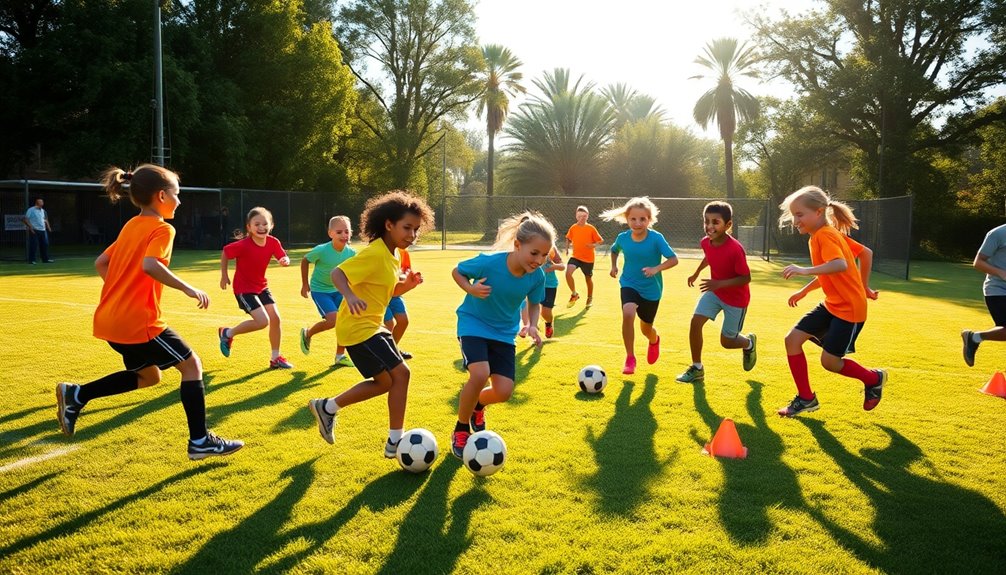
15 Fun Soccer Games That Improve Skills Without Boring Drills
February 26, 2026Last updated: · By Jake Turner
The best soccer training drills keep every player moving, competing, and touching the ball, and fun games are one of the most reliable ways to get there. This guide covers 15 games that build passing, dribbling, shooting, speed, goalkeeping, and decision-making, with setup steps and coaching tips for each. The core idea is simple: small-sided games, which are scaled-down matches with fewer players on a smaller area, give players more touches and more intensity than traditional lines-and-laps practice while keeping them engaged.
Key Takeaways
- Small-sided games allow high-intensity exercise while remaining social and enjoyable, which may improve long-term exercise adherence, according to a systematic review and meta-analysis in the Journal of Clinical Medicine.
- A systematic review in the journal Children found that recreational soccer programs run twice a week could improve general physical fitness and benefit cardiovascular health in children.
- In highly trained youth players, small-sided games outperformed circuit-based training for sprint performance, agility, technical skill development, and player enjoyment, according to a study in Scientific Reports.
- In amateur U20 players, combining small-sided games with differential learning produced greater gains in tactical behavior and technical skills, including passing, shots, and tackles, than small-sided games alone.
- The most useful drills keep every player involved, match the game to the age and skill level, and include a clear scoring or winning condition.
What Makes a Soccer Training Drill Effective?
An effective soccer training drill has a clear skill focus, plenty of touches for each player, and a built-in reason to compete. Drills that look fun but give each player only one or two touches per minute usually produce little skill gain. Use the game to target one skill at a time, then add pressure as players improve.

A small-sided game is a scrimmage played with fewer players on a smaller field, such as 3v1, 2v2, or 4v4. Because each player is involved in most of the action, these games create more repetitions than full-team play. They also allow coaches to adjust the number of players, the space, and the rules to fit the skill being trained.
When you build your session, check three things. Make sure each player has a ball or a near-constant role, set a scoring rule that rewards the target skill, and keep rest periods short enough that players stay sharp.
Why Do Small-Sided Games Build Skills Faster?
Small-sided games build skills faster because they combine technical work, fitness, and decisions in one activity. Research on youth players supports this, although most studies involve specific age groups and short training periods. The results are strongest for children and teenagers, so treat them as evidence for the approach rather than a guarantee for every team.
A systematic review and meta-analysis in the Journal of Clinical Medicine on untrained children and adolescents reported that small-sided games allow high-intensity exercise while staying social and inexpensive. The authors proposed that this combination may help children stick with exercise over time. A separate review in the journal Children, published through PubMed Central, found that recreational soccer programs run twice a week could improve general physical fitness and benefit cardiovascular health in children.
Research in highly trained youth players points to a similar pattern for skill development. A study in Scientific Reports comparing small-sided games with dribbling circuit training found that the small-sided games produced better results for sprint performance, agility, technical skill development, and player enjoyment. A separate PubMed-indexed study of amateur U20 players found that adding differential learning, an approach that varies the task and conditions so players find their own solutions, to small-sided games produced greater gains in tactical behavior and technical skills than small-sided games alone.
| Training approach | Main focus | Reported outcome in the cited research |
|---|---|---|
| Small-sided games | Touches, intensity, decisions, and enjoyment | Outperformed circuit training for sprint, agility, technical skill, and enjoyment in highly trained youth players |
| Dribbling circuit training | Repeated individual technical tasks | Produced smaller gains than small-sided games in the same comparison |
| Small-sided games plus differential learning | Tactical behavior and varied problem-solving | Greater gains in tactical behavior and technical skills than small-sided games alone in amateur U20 players |
The evidence has limits. The studies vary in age, skill level, and duration, and none of them tells you the exact field size or rule set that works best for your team. Use the research as a reason to favor games over drill lines, then adjust based on what your players actually do.
Passing and Movement Games
Passing and movement games teach players to receive, pass, and find open space quickly. Start with these three games before moving to more complex formats.
1. Circle Passing
Circle passing is a rondo-style game where players stand in a ring and pass to one another while one or two defenders try to win the ball. Keep the circle tight so players must make quick, accurate passes. Rotate defenders every minute or two so everyone gets a chance to work on pressure and first touch.
2. Four Corners
Four Corners places players in groups at four cones, one per corner. A player passes to a teammate standing at a designated corner, then moves to a new corner, which keeps the ball and players constantly moving. Call out the target corner to add a listening element for younger players.
3. Passing Through Gates
Set up several gates made from pairs of cones across the field. Teams score a point each time a teammate passes the ball through a gate to a receiver, and the gate must be passed through on the ground. Widen or narrow the gates to change the difficulty of your passes.
Dribbling Games for Ball Control
Dribbling games build close control, change of direction, and awareness of defenders. Keep the focus on the ball staying close to the feet and on looking up between touches. Good dribbling drills also add a team element, so players are not just running alone.
4. Dribbling Relay
Split players into teams and set up a course of cones. Each player dribbles the ball around the cones, then passes to the next teammate in line. Count the team’s total time, and note any lost balls, which add a few seconds to the score.
5. Obstacle Navigation
Build a short course with cones, hurdles, or agility ladders, then have each player dribble through it while keeping the ball under control. Time each run and try to beat your own time in the next round. Add a rule that the ball must stay within a step or two of the feet to keep the focus on technique rather than speed.
Shooting and Finishing Games
Shooting games work best when they add a scoring system and time pressure. Players learn to finish under the kind of pressure they will face in a match. Rotate turns so that everyone gets repeated chances, and keep a running scoreboard to build motivation.
6. Target Zone Shooting Challenge
Divide the goal into zones and assign point values, with corners worth more than the center. Players take turns shooting from a set spot and add up their points each round. Changing the shooting spot every few rounds forces players to adjust their body position and striking technique.
7. Timed Finishing Race
Set a timer for two or three minutes and have a server pass balls to a shooter from the same spot. Count the goals scored in that window and record the total. This drill rewards accuracy and quick first touches, not just power.
8. Volleys and Headers Variation
Once players have basic finishing down, add volleys or headers to the same format. For heading, follow your league’s rules for youth players, since many leagues limit heading at younger ages. Keep crosses soft and low for beginners so that technique comes before power.
Speed, Agility, and Relay Games
Speed and agility games build quickness while keeping players focused on the ball. The research on small-sided games supports adding sprint and agility work with a ball rather than running drills alone, since the games improved sprint and agility in trained youth players compared with circuit training.
9. Ball Relay Races
Divide players into teams and have each one complete a specific task before tagging the next teammate. Tasks can include dribbling through a cone line, passing to a target, or shooting from a marked spot. Vary the distances and obstacles every round to keep the game fresh and challenging.
Keep-Away and Decision-Making Games
Keep-away games teach players to make fast decisions under pressure, which is the main skill in real matches. Small teams and changing rules make these games especially useful for teaching when to pass, when to dribble, and where to move.

10. 3v1 Keep-Away
Three attackers try to keep the ball away from one defender inside a square marked with cones. Each completed set of passes earns a point, and the defender switches roles after a set time or after winning the ball. This setup teaches attackers to communicate and move to open angles, and it teaches the defender to anticipate passes.
11. 2v2 Dynamic Space Keep-Away
Start with a square and shrink or expand it during play using cones or a coach’s signal. Players must read the new space and adjust their positioning quickly. For more ideas on defensive structure, see these defensive soccer drills for strengthening your team’s backline.
Goalkeeping Games for Reflexes
Goalkeeping games develop quick reactions, handling, and decision-making under pressure. Keep sessions short and rotate keepers so no one is overloaded. Warm up the hands and legs before any shot-stopping work.
12. Reaction Ball Goalkeeping
Use a reaction ball, which bounces unpredictably, and have the keeper catch or block shots and rebounds. Partners can also toss balls from different angles so the keeper must react to the ball rather than follow a pattern. Add a rule that the keeper must deliver the ball to a target player after each save to add decision-making.
Communication and Team Games
Communication games build trust, listening, and clear calls on the field. These activities are especially useful for younger teams and for players who are shy about speaking up.
13. Human Knot
Players stand in a circle, reach across and grab two different hands, then work together to untangle without letting go. The game requires clear instructions and shared problem-solving, which mirrors the way teams need to talk through a press or a defensive shift. Keep the group small enough that everyone can hear each other.
14. Sharks and Minnows
Each player dribbles a ball inside a grid while one or two sharks try to tag the dribblers by stealing the ball or tagging them out of play. Tagged players become sharks, and the last players remaining win. This game rewards quick thinking, awareness of teammates, and calling out warnings.
Warm-Up Games to Energize Your Team
Warm-up games prepare the body while adding fun to the start of practice. Keep them short, usually five to ten minutes, so players arrive at the main drills ready to work.
15. Simon Says With Soccer Skills
Play classic Simon Says, but use soccer actions such as toe taps, inside-foot touches, and quick turns. Players who make a wrong move drop out or do a quick task. This warm-up improves focus and reaction time while keeping players moving with the ball.
Freeze Tag With a Ball
In a dribbling version of freeze tag, players dribble inside a grid while one or two taggers try to freeze them by touching them with a hand. Frozen players stop and hold a leg out until a teammate dribbles through to free them. This variation keeps every player moving and reinforces ball control under light pressure.
Scrimmage and Tournament Formats
Scrimmages and tournaments put the skills from these games into a match-like setting. Use them once players have the basics, usually at the end of a session or as a weekly event. Balanced teams and clear rules keep competition fun rather than frustrating.
Try a 4v4 scrimmage with a neutral player who always joins the team in possession. This keeps the game flowing and gives the attacking team an extra passing option. For position-specific ideas on how to set up teams, see this guide to soccer positions in 7v7, 9v9, and 11v11 formations.
For a mini-World Cup tournament, assess players’ strengths first, then group them as attackers, defenders, and goalkeepers before drafting balanced teams. Rotate captains so each player gets leadership experience. Adjust match length so each team plays several short games in one session.
How to Run These Games Well
Running games well takes planning, but a few habits make a big difference. Use the steps below to set up any game in this guide.
- Pick one skill goal, such as passing accuracy or first touch under pressure.
- Choose a game that targets that skill and set the field size so every player has a ball or a clear role.
- Explain the scoring rule and the one or two coaching points before play starts.
- Run the game for a set time, stop to coach for under a minute, then restart with a small rule change.
- End with a quick review of what worked and what players want to try next time.
For younger players, shorter games with simpler rules work best. If you coach beginners, these beginner-friendly 6U soccer drills are a good place to start. For more advanced players, add a second touch limit or a one-touch rule, and see these one-touch soccer drills for quick decision-making.
Frequently Asked Questions
How often should players train with soccer games?
The review in the journal Children linked recreational soccer programs run twice a week to improvements in general physical fitness in children. Twice a week is a practical starting point for most youth teams. Add shorter games or warm-up games on other days if your schedule allows.
What age are these soccer training drills best for?
Most games in this guide work for ages 6 and up with simpler rules and bigger spaces. Older and more advanced players benefit from added pressure, time limits, and tactical rules. The research cited here covers children, adolescents, and amateur adults, so the approach applies across those groups.
How many players do you need for small-sided games?
Many games work with as few as four players, such as a 2v2 keep-away. Larger groups can split into several small games running at the same time. Keep teams even so that competition stays fair and the scoring stays meaningful.
Can drills replace full team practice?
Drills and small-sided games cannot fully replace full-team practice, because players also need to learn team shape and set pieces. They work best as the core of a session with some full-team work added. Use the games to build individual skills, then apply those skills in team-based scrimmages.
Should youth players head the ball in drills?
Follow your league’s rules, since many youth leagues restrict heading at younger ages. If heading is allowed, start with soft, low crosses and focus on technique before adding power. Stop the drill if players show signs of discomfort or fear.
Do apps and virtual reality help with soccer training?
The studies cited in this guide do not measure apps or virtual reality, so their benefits are not established by this research. They can add variety and feedback, but field-based games with real touches remain the proven foundation. Treat technology as an optional supplement.
Conclusion
The most effective soccer training drills give every player more touches, more competition, and a clear skill goal. Small-sided games have the strongest support in the research cited here, especially when combined with varied, problem-solving tasks. Start with a few of the 15 games above, track what your players improve, and keep the fun in every session so players want to come back.
More on Soccer Training Drills
- Defensive Soccer Drills to Strengthen Your Team’s Backline
- Fun and Effective 6u Soccer Drills for Beginners
- Fun and Engaging Soccer Drills for 7-Year-Old Players
- One-Touch Soccer Drills for Quick Decision-Making
- Soccer Drills Tailored for 6-Year-Old Players
- Toe Taps in Soccer: A Simple Drill for Great Ball Control
- Toe Taps: A Beginner’s Guide to Ball Mastery
- U12 Soccer Tips and Drills for the Next Generation of Players
- U14 Soccer Drills to Prepare Players for the Next Level
- U8 Soccer Drills for Building Essential Skills
Related guides: Know Your Role: A Complete Guide to Soccer Positions in 7v7, 9v9, and 11v11 Formations · How to Coach Soccer: A Step-by-Step Guide for Beginners · Football Conditioning Drills to Build Strength and Endurance
Free tools: Keto Macro Calculator · Keto Net Carbs Chart