
What Is the Star Position in Football? Modern Defense Explained
March 18, 2026Last updated: · By Jake Turner
The star position in football is a hybrid defensive role that combines skills from cornerbacks, safeties, and linebackers. Teams use a star to match up against modern offenses that spread the field with slot receivers, tight ends, and multiple formations. The label and the job vary by program, so the exact responsibilities depend on the defensive scheme.
In most cases, the star is a defensive back who lines up near the box or in the slot and can play coverage, support the run, or rush the passer depending on the snap. Georgia’s college version and the Los Angeles Chargers’ NFL version show how the role can be built differently. This guide explains what the star does, how it differs from nickel and dime backs, and why it has become a common part of modern defense.
Key Takeaways
- The star position is a hybrid defensive role that blends cornerback, safety, and linebacker duties.
- A standard nickel defense uses five defensive backs, with four down linemen and two linebackers in its original and most common form.
- A dime defense adds a sixth defensive back and is generally used against offenses that pass more than they run.
- Georgia’s star combines the responsibilities of a weak-side linebacker and a nickel back, which helps it defend RPOs, screens, and read options without swapping players.
- A star player must handle man-to-man coverage, zone coverage, run support, and pass rush, with the assignment changing based on the offensive formation.
What Is the Star Position in Football?
The star position is a flexible defensive role rather than a fixed position with the same job description in every league or program. A star player is usually a defensive back or hybrid defender who can cover receivers, support the run, and help rush the passer. Teams use the label to describe a player who moves between spots depending on how the offense lines up.
Because the job changes from team to team, the easiest way to understand it is to compare it with the defensive packages it sits inside. The star is most often used as an extra defender added to a nickel or dime look, which gives the defense more flexibility without adding a full-time linebacker or safety.
How Does the Star Differ From Nickel and Dime Backs?
Nickel and dime are defensive packages, while the star is a role that can exist within those packages. Wikipedia’s entry on the nickel defense notes that it uses five defensive backs, and its original and most common form features four down linemen and two linebackers. The dime defense adds a sixth defensive back beyond the nickel package and is used against offenses that pass the ball more than they run.
| Defensive package | Defensive backs | Typical front seven | Common use |
|---|---|---|---|
| Base defense | 4 | 4 linemen, 3 linebackers | Balanced or run-heavy offenses |
| Nickel | 5 | 4 linemen, 2 linebackers | Three-receiver sets |
| Dime | 6 | Typically 4 linemen, 1 linebacker | Pass-heavy offenses |
The star sits in the space between these packages. Georgia’s version, as described by Sports Illustrated, combines the duties of a weak-side linebacker and a nickel back. That lets the defense add either a run-stopping body or an extra coverage defender without substituting personnel.
What Are the Key Responsibilities of a Star Player?
A star player covers receivers, supports the run, and helps rush the passer, often within the same series. The exact assignment depends on the call and the formation the offense shows before the snap. Most star responsibilities fall into three areas: coverage, run defense, and pass rush.
- Coverage: Matching up against slot receivers and tight ends in both man and zone schemes.
- Run support: Filling gaps, setting the edge, and tackling ball carriers near the line of scrimmage.
- Pass rush: Blitzing or stunting to pressure the quarterback when the call allows it.
The role demands a mix of speed, agility, and physicality. A star who is too slow will struggle against quick slot receivers, while one who lacks strength will get pushed around by blockers and running backs.
When Does a Star Play Man-to-Man vs. Zone Coverage?
A star usually plays man-to-man when the offense has a specific matchup it wants to exploit, and it plays zone when the defense needs to read the quarterback and handle multiple routes. The choice depends on the receiver or tight end the star must cover and the play call. Man coverage puts the star on one target, while zone coverage asks the star to protect an area and react to the throw.
Man-to-man coverage is most demanding against agile slot receivers or larger tight ends. In these matchups, the star must match the receiver’s speed on short routes and maintain leverage against bigger targets. For a broader look at how defenses handle this, see our beginner guide to Cover 5 defense against modern offenses.
Zone coverage asks you to read the quarterback’s eyes, recognize route combinations, and break on the ball at the right moment. This is where the star’s experience as a defensive back matters most. Because the star often lines up away from its traditional spot, reading the offense quickly is a skill that takes repetition to build.
What Is the Star’s Role in Run Defense and Tackling?
The star is a real run defender, not just a coverage player, and its tackling assignments can decide short-yardage plays. In run support, the star fills gaps, turns ball carriers back inside, and keeps the edge from getting outside. Georgia’s version of the role is built partly to help defend run plays and option looks, as well.
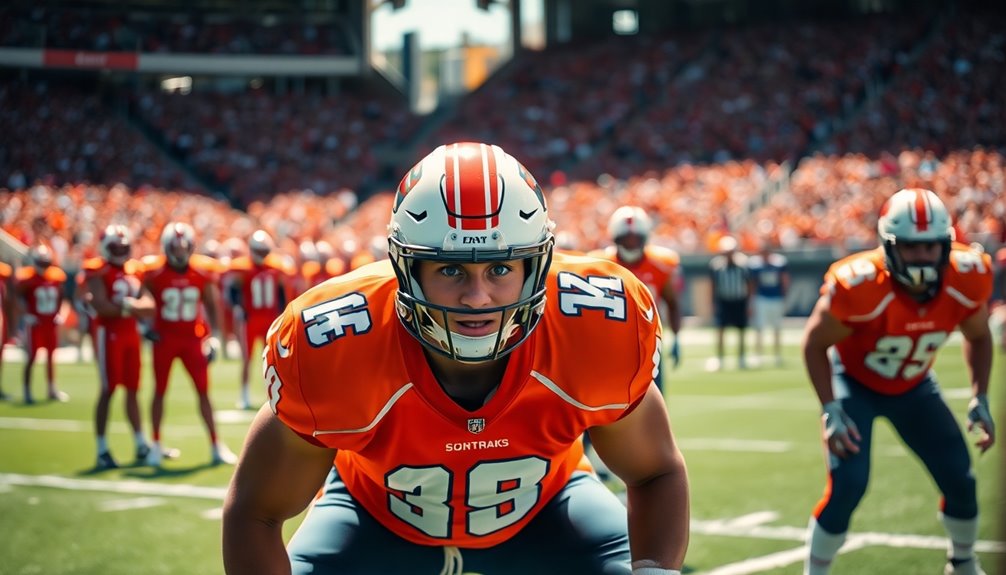
Georgia’s star helps defend RPOs, screens, and read options without swapping players, according to Sports Illustrated’s coverage of Georgia’s star position. That matters because many modern offenses use those plays to make a single defender decide between covering a receiver and stopping the run.
To play the run well from the star spot, focus on these habits:
- Stay square to the line of scrimmage and keep your shoulders level so you can react in either direction.
- Maintain leverage by keeping your pads lower than the blocker’s, which helps you stay in control at contact.
- Take the proper angle to the ball carrier so you turn him back inside instead of chasing him from behind.
- Wrap up and drive through the tackle to limit yards after contact.
How Does a Star Rush the Passer?
A star rushes the passer by using quick releases, first-step explosiveness, and a few reliable moves that create pressure without leaving the coverage unprotected. Because the star often starts near the line, it can attack the edge from a different angle than a traditional linebacker. The best pass rushers combine technique with timing so they hit the gap when the quarterback’s drop is still developing.

A solid pass-rush plan for a star includes these elements:
- First step: Explode out of your stance to beat the blocker’s initial punch.
- Hand placement: Get your hands inside the blocker’s chest early to control his frame.
- Moves: Use a few counters, such as a swim or a rip, and set them up with a bull rush or a stunt.
- Recovery: If the first move fails, reset your feet and stay on the quarterback’s path.
Pass-rush work also requires coordination with the rest of the defense. A stunt that sends a star inside can free a defensive lineman to loop outside, but only if both players know the call.
Where Do Teams Use the Star Position?
Teams use the star when they want a defender who can match the offense’s personnel without changing the front. The role appears in college and professional football, though the name and assignments differ from team to team. The label is not universal, so you should check each program’s depth chart or defensive playbook for the exact job.
The Chargers offer a useful NFL example. Sports Illustrated reported that the STAR position is described as a hybrid safety who could play outside linebacker in most 4-3 schemes, and the Chargers used it to add a stronger front in three-receiver sets. That shows how the same concept can be adjusted for a different style of defense. You can read the report in Sports Illustrated’s Chargers news on the STAR role change.
How Can You Learn to Play the Star Position?
To learn the star role, start by mastering the fundamentals of both corner or safety play and linebacker run support. Then practice switching between them so the transitions feel natural during a game. The steps below give you a practical progression.
- Learn the basics of man and zone coverage from the slot and from the boundary.
- Practice backpedal, break, and transition drills that simulate receivers running short and intermediate routes.
- Work on tackling in space and in the box, focusing on form and wrap-up.
- Add pass-rush reps that combine a first step, a hand move, and a recovery.
- Study film of your offense’s formations so you can recognize where you will be needed before the snap.
Use the same drills during practice that you would see in a game. Repetition helps you make faster decisions when the offense shifts its formation late.
Why Does the Star Position Matter for Defensive Success?
The star position matters because it gives a defense flexibility against offenses that move receivers, tight ends, and backs across the formation. Without a versatile defender, teams often have to choose between covering the pass well and stopping the run. A star helps reduce that trade-off by allowing one player to handle several jobs.
This flexibility is also useful against complicated looks. A defense that understands where its star will be on each formation can adjust its coverage and run fits more quickly. For a broader view of which defensive roles carry the most weight, see our ranking of the most important positions in football.
Because the star is a hybrid, it can also be a liability if the player is not ready for the workload. The position asks a lot of one defender, so depth and communication are important. A team that uses the star well still needs strong safeties and linebackers around it.
Frequently Asked Questions
What is a star player in football?
A star player is a hybrid defender who can cover receivers, support the run, and rush the passer. The role usually blends cornerback, safety, and linebacker skills. Its exact job depends on the team and the defensive scheme.
Is the star position the same as a nickel back?
Not exactly, though the two are closely related. A nickel back is a defensive back who plays in the nickel package, while a star may combine nickel duties with linebacker responsibilities. Georgia’s version, for example, mixes weak-side linebacker and nickel back jobs.
Is a star a linebacker or a defensive back?
A star can be either, and sometimes it is both within the same game. Many stars begin as defensive backs and move closer to the line to support the run. The label reflects the role’s hybrid nature rather than a single fixed position.
Can a star rush the quarterback?
Yes, a star can rush the quarterback when the defensive call sends it on a blitz or stunt. This requires first-step quickness, hand technique, and a few reliable pass-rush moves. A star also has to drop back into coverage if the play calls for it.
Do all teams use a star position?
No, the star is not used by every team, and its name and duties vary across programs. Some defenses use similar hybrid players without calling them stars. Check a team’s depth chart or playbook for the exact role.
What skills does a star player need?
A star player needs speed, agility, tackling ability, and the strength to hold up against blockers. Coverage skills, including the ability to read the quarterback and react in zone, are also essential. The role rewards players who can switch between positions quickly.
Conclusion
The star position in football is a hybrid defensive role that blends cornerback, safety, and linebacker duties to handle modern offenses. A star covers slot receivers and tight ends, supports the run, and helps rush the passer, with assignments that shift based on the formation. Because the job varies by team, the best way to understand it is to study how your defense uses the role in each package.