

Tennis Footwork for Beginners
April 29, 2026Tennis footwork’s essential for your game, as it builds the foundation for movement, balance, and quick reactions. Start with the basics of court positioning—keep your feet shoulder-width apart and knees bent for stability. Master the split step to react swiftly to your opponent’s shots. Incorporate agility drills and balance exercises into your routine to enhance your skills. Avoid common mistakes like improper foot placement. By focusing on these elements, you’ll improve your performance and enjoy the game even more.
What Is Tennis Footwork and Why Is It Important?
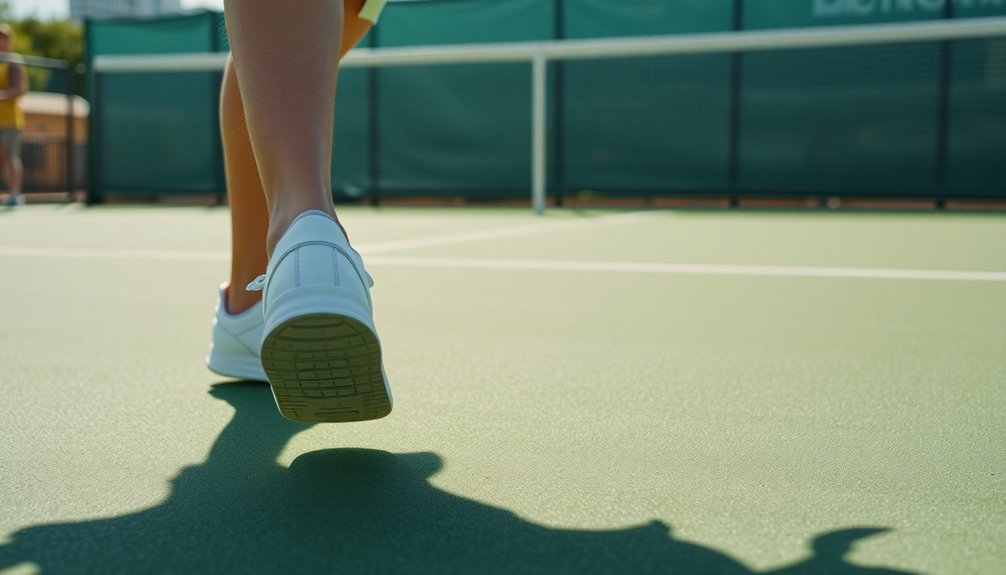
Tennis footwork is the foundation of your game, shaping how effectively you move on the court. It’s not just about running; it’s about positioning yourself to hit the ball with power and control.
Good footwork enhances your movement efficiency, allowing you to reach shots quicker and set up for your next play. Incorporating footwork drills into your practice routine is essential. These drills help you develop agility, balance, and coordination, which are vital for executing shots effectively. As you improve your footwork, you’ll notice a significant difference in your overall performance.
Additionally, incorporating agility drills can further enhance your quickness and overall movement on the court. Better movement means more opportunities to win points, so focus on mastering these skills to elevate your game and outmaneuver your opponents.
The Basics of Court Positioning
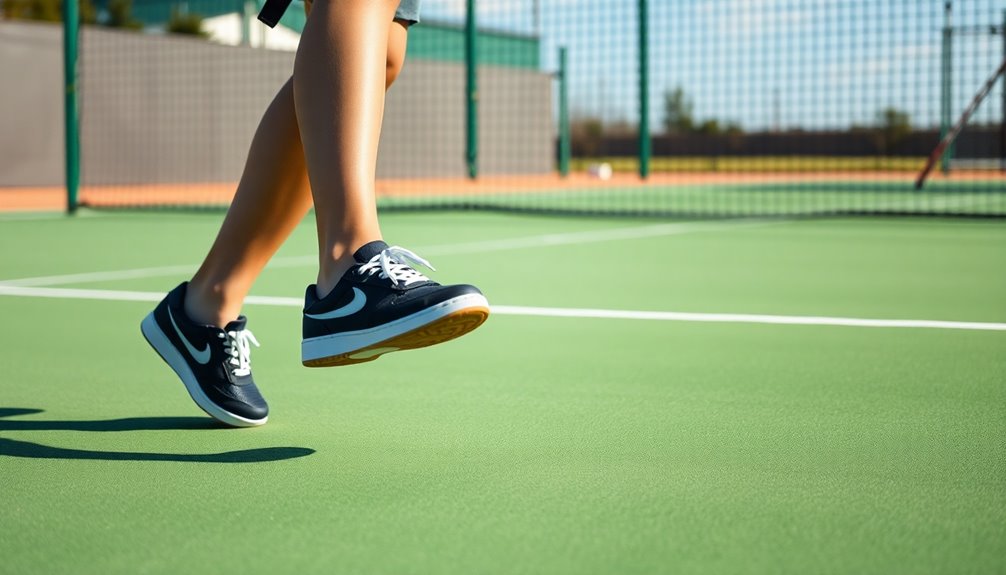
Understanding court positioning is essential for your success in tennis.
You’ll want to learn the ideal stance to maximize your balance and readiness while also mastering effective movement patterns. Incorporating drills such as Pain Shuttles Drill can significantly improve your footwork and overall agility on the court.
Let’s explore how these fundamentals can elevate your game.
Ideal Stance Overview
An ideal stance is essential for your success on the court, as it sets the foundation for your movement and shot execution. When you establish a balanced position, you’ll experience numerous ideal stance benefits, like improved stability and quicker reaction times.
Stand with your feet shoulder-width apart, knees slightly bent, and weight evenly distributed. This ready position allows you to respond effectively to your opponent’s shots.
As the game progresses, you’ll need to make stance adjustments based on the ball’s trajectory and your own positioning.
Whether you’re preparing for a forehand or backhand, being adaptable in your stance will enhance your overall performance and help you maintain control during rallies.
Movement Patterns Explained
While mastering movement patterns is essential for effective court positioning, it also enhances your ability to respond to your opponent.
To improve your court coverage, focus on three main patterns: split step, lateral movement, and recovery.
The split step prepares you to react quickly, allowing for a faster response when your opponent hits.
Lateral movement helps you cover the width of the court efficiently, ensuring you reach shots with ease.
Don’t forget about recovery; after each shot, positioning yourself for the next play is vital.
Understanding the Split Step Technique
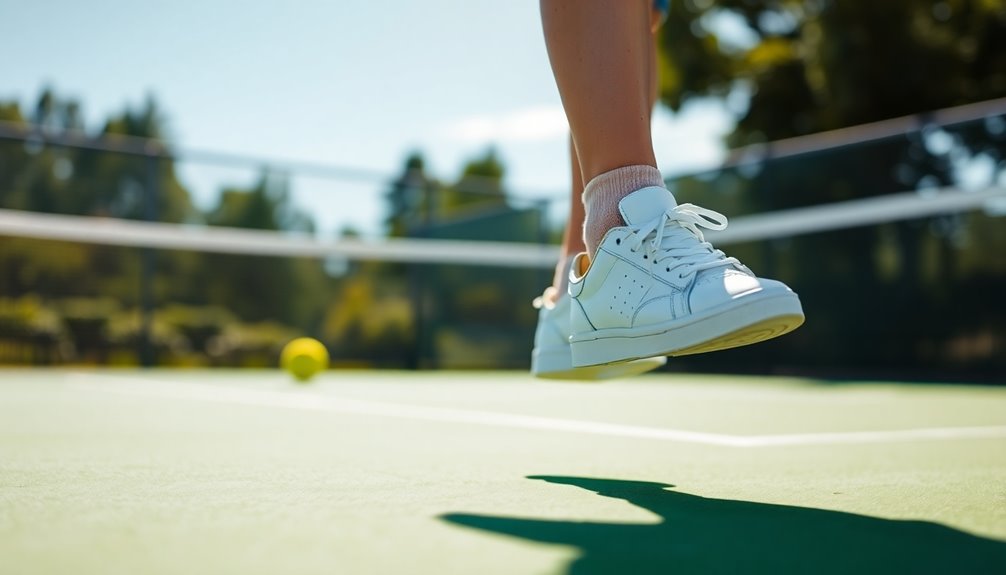
The split step is an essential part of your footwork in tennis, helping you react quickly to your opponent’s shots.
By executing this technique correctly, you’ll position yourself better for every return.
Let’s explore its importance and how to master it. Additionally, proper player conduct during matches can enhance your focus and improve your overall performance.
Importance of the Split Step
Understanding the split step technique is vital for elevating your tennis game, as it sets the stage for quick and agile movements on the court.
This key movement enhances your timing dynamics, enabling you to respond swiftly to your opponent’s shots. By mastering the split step, you improve your footwork rhythm, which helps maintain reaction readiness.
Incorporating agility drills and coordination exercises into your practice will further develop your skills. Additionally, focus on balance techniques to guarantee you stay grounded during play.
The split step greatly boosts your movement efficiency, allowing you to cover the court effectively.
Embrace this technique, and you’ll notice a marked improvement in your overall performance on the tennis court.
Executing the Split Step
Mastering the split step is essential for effective court coverage. This technique allows you to react quickly to your opponent’s shot.
To execute it, start in a ready position with your feet shoulder-width apart. As your opponent prepares to hit, perform a small hop, landing on the balls of your feet. This movement should be timed perfectly—right before they make contact with the ball.
Focus on engaging your legs and staying light on your feet. Incorporating timing drills into your practice can help sharpen your reactions.
Try pairing the split step with various court movements to enhance your agility. With consistent practice, you’ll find your court coverage greatly improves, making you a more formidable player.
Mastering the Ready Position for Quick Reactions
Achieving a solid ready position can make all the difference in your tennis game. This stance sets you up for quick reactions to your opponent’s shots.
Focus on your foot placement: keep your feet shoulder-width apart and your weight slightly forward. This promotes balance maintenance for swift movement.
Practice reaction drills to enhance your responsiveness; even simple shadow swings can help. As you adjust your stance, maintain posture awareness—your back should be straight, and knees slightly bent.
Mental readiness is essential too; visualize potential shots while staying alert. Additionally, understanding soccer field dimensions can help you appreciate the importance of spacing and positioning in any sport.
How to Approach Different Types of Shots?
Once you’ve got your ready position down, it’s time to learn how to handle different types of shots. Start by focusing on shot anticipation; this means reading your opponent’s movements and predicting where the ball will go.
Mastering shot anticipation is key; read your opponent’s movements to predict where the ball will go.
For groundstrokes, position yourself early and adjust your footwork to guarantee you’re in the right spot. Pay attention to stroke timing; hitting the ball at the right moment can make all the difference.
For volleys, get closer to the net and use quick, decisive steps to reach the ball. When it comes to serves, stay balanced and be ready to react.
Developing these skills will enhance your overall game and make you a more dynamic player on the court.
The Role of Agility in Tennis Footwork
Agility plays an essential role in tennis footwork, as it allows you to move quickly and efficiently around the court. By improving your agility, you can respond better to your opponent’s shots, positioning yourself for a stronger return.
Incorporating agility drills into your practice routine can enhance your balance and coordination, essential for executing precise footwork. Additionally, reaction training helps you anticipate your opponent’s moves, enabling faster directional changes. Consistent practice of these drills can lead to improved shooting skills on the court, similar to how soccer players enhance their finishing techniques.
When you focus on these aspects, you’ll notice a significant improvement in your overall game. Emphasizing agility not only boosts your performance but also reduces the risk of injury, keeping you on the court longer.
Essential Footwork Drills for Beginners
Improving your footwork is key to becoming a better tennis player, and incorporating specific drills into your practice can make a big difference.
Start with agility ladders to boost your speed and coordination. Include drill variations like cone drills and partner drills to challenge your movement and reaction time.
Shadow drills help you refine your technique without hitting the ball, while footwork games keep training fun and engaging.
Always begin with warm-up routines to prevent injuries. Develop a practice schedule that includes these drills, and don’t hesitate to seek technique feedback from a coach or experienced player. Additionally, focusing on agility and speed workouts will enhance your overall athletic performance on the court.
How to Improve Your Lateral Movement?
To boost your lateral movement on the court, start by mastering proper stance techniques. These fundamentals set the stage for effective drills that enhance your lateral speed. With consistent practice, you’ll notice a significant improvement in your agility and overall game. Additionally, incorporating small-sided games into your training can further develop your lateral quickness and decision-making skills.
Proper Stance Techniques
Mastering proper stance techniques is essential for enhancing your lateral movement on the tennis court. Start by positioning your feet shoulder-width apart, which helps maintain balance.
Bend your knees slightly to lower your center of gravity, making it easier to shift your weight side to side. Make certain your body alignment is squared toward the net, allowing for quick pivots and turns.
Keep a proper grip on your racket, as it helps you stay ready for any incoming shot while maintaining control. Focus on staying light on your feet, which will enable you to react swiftly.
Practicing these techniques won’t only improve your agility but also boost your overall performance during matches.
Drills for Lateral Speed
While you might feel confident in your stance, enhancing your lateral movement requires specific drills that focus on speed and agility.
Start with lateral drills, like shuffling between cones, to improve your footwork patterns. Incorporate speed exercises, such as sprinting to cone hurdles, to boost your quickness.
Agility training can include ladder drills, which sharpen your coordination and responsiveness. Add shadow swings to practice your strokes while moving laterally, helping you blend technique with movement.
For a strength component, try resistance training with bands to build muscle power.
Finally, combine all these elements into coordination drills that challenge your overall speed and agility. Mastering these drills will elevate your lateral movement on the court.
Practicing Forward and Backward Movements
As you begin to develop your tennis skills, practicing forward and backward movements is essential for improving your game.
Start with forward drills to enhance your reaction time and foot placement. Focus on agility exercises that challenge your coordination training, helping you move swiftly toward the net.
Incorporate backward drills to strengthen your overall movement rhythm, ensuring you can retreat quickly when needed. Use balance techniques while practicing these movements to maintain stability. Additionally, incorporating dynamic warm-ups can prepare your body for the physical demands of training.
The Importance of Balance in Footwork
Balance is an essential component of effective footwork in tennis. When you’re able to maintain your balance, you can react quickly and hit the ball with more power and accuracy.
Practicing balance drills helps you develop the core strength and coordination needed for those quick lateral movements on the court. Incorporating stability exercises into your routine can further enhance your footwork, allowing you to stay grounded while moving.
Whether you’re performing single-leg stands or using a balance board, these exercises build your ability to maintain stability during intense rallies. Additionally, proper conditioning not only improves your agility but also helps you recover quickly between intense movements.
Tips for Developing Consistent Footwork Habits
To develop consistent footwork habits, start by focusing on your stance and movement patterns. Pay attention to your positioning before each shot, ensuring you’re ready to move quickly.
Incorporate rhythm training into your practice; this helps you develop a natural flow while moving around the court. As you work on your footwork, visualize movement in your mind. Picture yourself stepping into shots and reacting to your opponent’s placements. This mental practice enhances your physical execution.
Also, practice footwork drills regularly, such as ladder drills or cone exercises, to build muscle memory. Consistency comes with repetition, so keep refining your movements. Engaging in dynamic stretches before your practice can further enhance your agility and readiness.
With dedication and focus, you’ll see improvement in your overall game.
Common Mistakes to Avoid in Tennis Footwork
While mastering footwork in tennis is essential, many beginners make common mistakes that can hinder their progress.
One frequent error is improper foot placement; if you don’t position your feet correctly, you’ll struggle to reach the ball effectively. Make sure to stay light on your feet and avoid planting them too far apart.
Another mistake is neglecting body alignment. If your shoulders aren’t aligned with your hips and feet, you’ll lose balance and power during your shots. Focus on keeping your body facing the net as you move.
Finally, don’t forget to use small, quick steps instead of long strides; this helps maintain your agility and readiness to react.
Correcting these mistakes will greatly improve your game.
How to Evaluate Your Progress and Set Goals?
As you advance in your tennis journey, evaluating your progress and setting concrete goals can keep you motivated and focused.
Start with a progress assessment by tracking your footwork drills, match performance, and overall movement on the court. Note areas where you’re improving and those needing attention. This reflection helps you understand your strengths and weaknesses.
Start by assessing your progress: track footwork drills and match performance to identify strengths and areas for improvement.
Next, engage in goal setting. Aim for SMART goals—Specific, Measurable, Achievable, Relevant, and Time-bound.
For instance, instead of saying, “I want to improve my footwork,” specify, “I’ll practice lateral movement drills three times a week for a month.”
Regularly revisit and adjust your goals based on your progress. This approach not only enhances your skills but also keeps your passion for tennis alive.
Conclusion
In tennis, mastering footwork isn’t just about moving; it’s about creating opportunities. When you combine the right positioning with a solid split step, you’ll find yourself in the perfect spot, almost as if the ball is drawn to you. As you practice balance and consistency, you’ll notice your game improving—coincidence? Not at all! With each drill, you’re not just working on footwork; you’re building a foundation for success on the court. Keep at it, and watch your skills soar!