
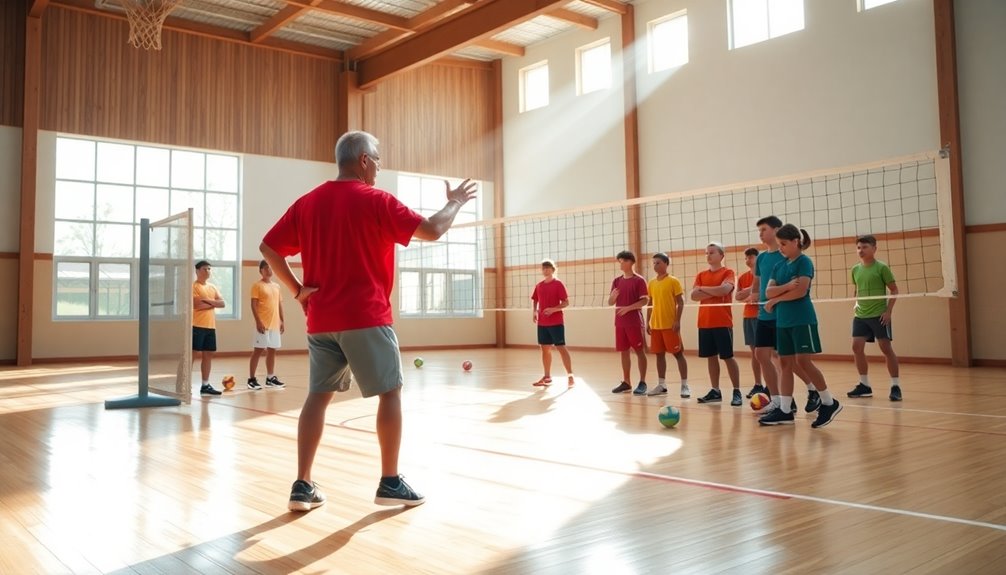
Net Play Lesson Plan for Coaches
April 29, 2026To create an effective net play lesson plan, focus on developing key skills like anticipation, quick reflexes, and proper positioning. Use engaging drills such as wall and partner volleys, along with agility exercises to sharpen footwork. Warm-up with dynamic stretches to enhance flexibility. Be sure to evaluate player progress with positive reinforcement and feedback. Tailor the drills to different skill levels to keep everyone challenged. You’ll discover even more strategies to elevate your coaching as you explore further.
Understanding the Importance of Net Play
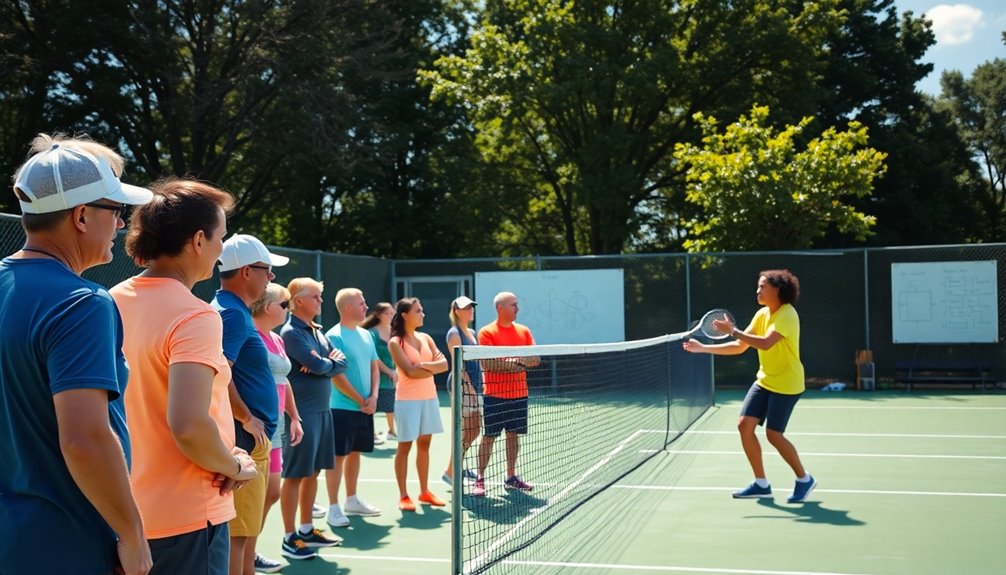
Net play is a significant aspect of your game that can make or break a match. Mastering effective net strategies helps you control the pace and dynamics, putting pressure on your opponents. You need to anticipate their moves, which means being alert and responsive.
Player communication is fundamental during these fast-paced exchanges; coordinating with your partner guarantees you can cover the court efficiently and make quick decisions. When you’re at the net, positioning becomes imperative—being in the right spot allows you to intercept shots and respond effectively.
Focus on developing your instincts and reads of the game. By prioritizing net play, you not only enhance your own performance but also elevate your entire team’s chances of winning. Additionally, understanding the offside rule can help you anticipate your opponent’s strategies and improve your overall gameplay.
Key Skills for Effective Net Play
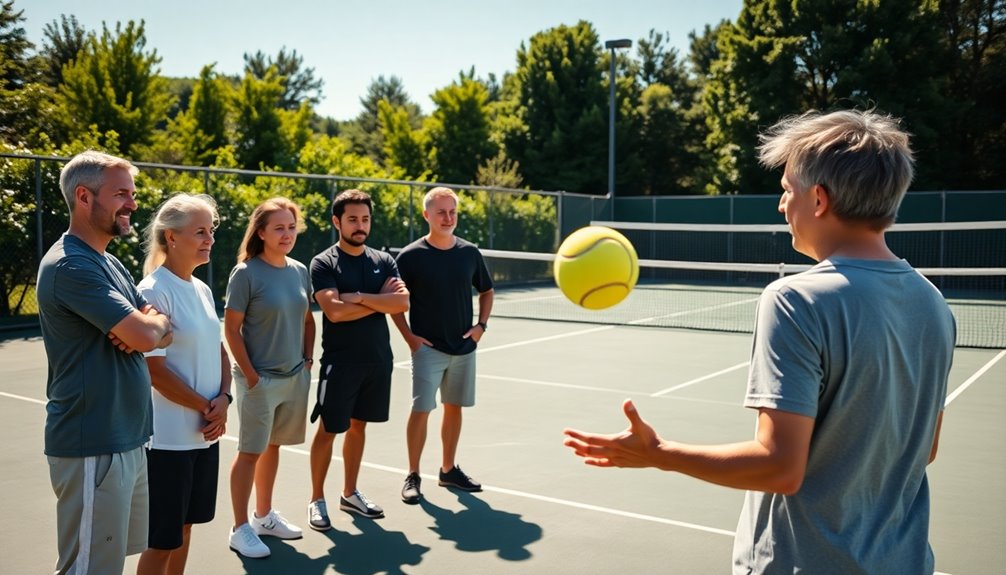
To excel at net play, you need to sharpen your anticipation and positioning skills.
Quick reflexes can make all the difference in responding to fast-paced shots.
Plus, mastering effective shot selection will help you control the game and outsmart your opponent.
Additionally, enhancing your reaction time through targeted training can significantly improve your ability to respond to unexpected plays.
Anticipation and Positioning
Anticipating your opponent’s next move can give you a crucial edge at the net. By mastering anticipation techniques, you can predict shots and react effectively.
Focus on watching your opponent’s body language and racket position; this can signal their next play. Incorporate positioning drills into your practice sessions to improve your court awareness.
Start by positioning yourself at the best spot, ready to intercept the ball. Work on lateral movements to guarantee you can cover angles quickly.
The better your anticipation and positioning, the more you can control the play at the net. Always stay light on your feet, ready to adjust, and remember that practice makes perfect.
Your ability to anticipate will elevate your game considerably.
Quick Reflexes Development
Mastering quick reflexes is essential for dominating at the net. To enhance your performance, focus on reflex training that sharpens your ability to respond to fast-paced plays.
Incorporate reaction drills into your practice routine, like partner drills where you volley back-and-forth at varying speeds. These drills help you develop muscle memory and improve your hand-eye coordination, vital for effective net play.
Additionally, try shadowing your opponent’s movements to anticipate their shots better, which will give you an edge in reacting swiftly.
Remember to keep your stance low and your body balanced, so you’re always ready to spring into action.
Effective Shot Selection
While you may have quick reflexes, effective shot selection is essential for maximizing your impact at the net. Knowing when to volley, drop, or push the ball can change the game. Focus on shot selection strategies that consider your opponent’s positioning and strengths.
For instance, if they’re leaning back, a well-placed drop shot can catch them off guard.
Understanding net play psychology helps you read your opponent’s intentions. Anticipate their next move by observing their body language and footwork. This awareness allows you to select the most effective shot in real-time.
Essential Equipment for Net Drills
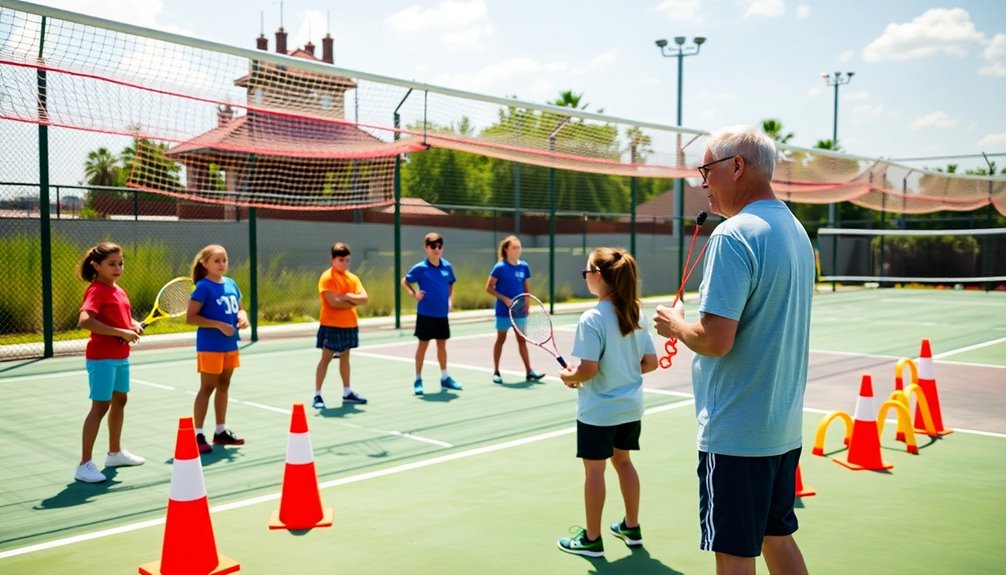
To conduct effective net drills, having the right equipment is essential. Choosing the appropriate net equipment can enhance your practice routines and guarantee safety. Here’s what you’ll need:
- Safety gear: Make sure players wear appropriate protective equipment to prevent injuries.
- Training tools: Use cones, targets, or ball machines for drill variations that keep players engaged.
- Resource materials: Having instructional guides can help you design effective drills and incorporate player feedback.
- Equipment maintenance: Regularly check your gear to confirm everything is in good condition for peak performance.
Incorporating proper flag pulling techniques can also enhance player safety and skill development during drills.
With the right tools, you’ll create a productive environment that fosters skill improvement and keeps players motivated during their net drills.
Warm-Up Exercises to Prepare for Net Play
To get your players ready for net play, start with dynamic stretching routines that enhance flexibility and mobility. Next, incorporate agility drills to sharpen their footwork and quickness on the court. These warm-up exercises set a solid foundation for effective net performance. Additionally, effective warm-ups foster team cohesion and shared purpose, which can significantly impact overall team performance.
Dynamic Stretching Routines
- Leg Swings: Boosts hip flexibility and mobility.
- Walking Lunges: Engages multiple muscle groups while promoting coordination.
- Arm Circles: Activates shoulder muscles, essential for serving and volleying.
- High Knees: Elevates heart rate and enhances muscle activation.
Agility Drills Focus
After completing your dynamic stretching routine, it’s time to ramp up your preparation for net play with agility drills.
Focus on coordination exercises that enhance your lateral movement and reaction time. Incorporate speed drills to boost your foot agility and overall quickness.
Balance training is essential; try dynamic balance exercises to improve stability during play.
Don’t forget to integrate plyometric workouts to develop core strength and explosive power.
These agility benefits will translate directly to your performance on the court, allowing you to respond swiftly to opponents and maintain control.
Aim for a mix of drills that challenge different aspects of your agility, ensuring you’re well-prepared for the rigors of net play.
Drills to Improve Volleying Technique
Mastering volleying technique is essential for players looking to elevate their net game. To improve your skills, incorporate these engaging drills into your practice:
- Wall Volleys: Stand a few feet from a wall and volley the ball back and forth, focusing on control and technique.
- Partner Volleys: Work with a partner to practice different volleying techniques, aiming for accuracy and consistency.
- Target Practice: Set up targets on the court and try to volley the ball to hit them, enhancing your precision.
- Reaction Drills: Have a partner randomly toss balls at you, requiring quick reflexes and good footwork.
Incorporating drills that emphasize dribbling under pressure will further enhance your coordination and adaptability at the net. These drills will sharpen your volleying skills and complement your footwork drills, helping you dominate at the net.
Practicing Footwork for Net Play Success
When it comes to net play, having quick feet is essential for success.
You’ll want to incorporate agility drills into your practice to help improve your movement.
Positioning yourself effectively for each shot can make all the difference in your performance. Additionally, integrating drills that enhance cardiovascular endurance can significantly boost your overall agility and responsiveness on the court.
Importance Of Quick Feet
Quick feet are essential for dominating net play, as they enable you to respond swiftly to your opponent’s shots. Mastering footwork fundamentals enhances your agility and reaction speed, allowing for quicker lateral movement.
Here are some key areas to focus on:
- Timing techniques for peak shot execution
- Coordination drills to improve your overall footwork
- Balance training to maintain stability during intense exchanges
- Explosive starts to gain the upper hand on quick volleys
Incorporating rhythm exercises can also boost your spatial awareness, making you more effective at the net.
Drills For Agility Training
To elevate your net play, agility drills are essential for honing your footwork. Start with speed drills that improve your reaction time and lateral movement.
Incorporate coordination exercises to sharpen your foot placement and enhance spatial awareness. Balance training is vital, so practice single-leg drills to develop core strength and stability.
Visual tracking drills will help you anticipate your opponent’s moves, boosting your mental agility. Mix in dynamic movements to challenge your agility further, ensuring you can pivot and adjust quickly during matches.
Positioning For Effective Shots
Positioning yourself effectively for shots at the net is essential for maximizing your play. Proper net positioning not only enhances your shot accuracy but also allows you to respond quickly to your opponent’s moves.
Focus on these key aspects to improve your footwork and overall performance:
- Stay Low: Keep your knees bent to maintain balance and readiness.
- Use Small Steps: Quick, short steps help you adjust your position without losing stability.
- Anticipate: Read your opponent’s body language to predict their shots.
- Practice Recovery: After each shot, return to a ready position to prepare for the next play.
How to Communicate With Players at the Net
How can you effectively communicate with players at the net to enhance their performance? Start by using clear verbal cues to guide them on net strategies.
Encourage player feedback, asking them what feels right during play. Incorporate communication techniques like nonverbal signals—pointing or nodding—to reinforce your messages without interrupting the game flow.
Create an atmosphere of encouraging dialogue, allowing players to express their thoughts. Use motivational phrases to boost their confidence, especially after challenging plays.
During tactical discussions, focus on specific scenarios, helping them visualize their next moves. Remember, effective communication not only improves their skills but also builds trust, making your coaching more impactful.
Incorporating teamwork and coordination into your practice sessions will further enhance their performance at the net. Keep it concise and constructive for the best results.
Strategies for Anticipating Opponent’s Shots
As you prepare to face your opponent, recognizing patterns in their shot selection can greatly enhance your play. By honing your shot prediction skills, you can develop effective offensive strategies and defensive tactics.
Here are some key points to reflect on:
- Mental preparation: Stay focused and visualize different scenarios to improve your game awareness.
- Reaction time: Work on quick responses to various shots, enhancing your ability to adjust.
- Player psychology: Observe your opponent’s body language and tendencies to anticipate their next move.
- Situational analysis: Evaluate the context of the match, which can inform your predictions and strategies.
Additionally, mastering defensive skills can significantly limit your opponent’s scoring opportunities and boost your confidence on the court.
Building Confidence Through Competitive Drills
To boost your players’ confidence, you’ll want to choose competitive drills that challenge yet motivate them. Use positive reinforcement techniques to celebrate their successes, no matter how small, and set achievable goals that keep them aspiring for improvement. Incorporating small-sided games can enhance their decision-making abilities while fostering teamwork and communication.
Competitive Drill Selection
Boosting confidence in players starts with selecting the right competitive drills. These drills not only enhance net play but also foster a strong game mindset.
Here are some effective options to contemplate:
- Drill Variations: Mix up routines to keep players engaged and challenged.
- Skill Assessment: Use drills to evaluate skills and provide targeted feedback.
- Tactical Awareness: Incorporate scenarios that require quick decision-making and strategy.
- Teamwork Dynamics: Promote collaboration through partner drills that build camaraderie.
Positive Reinforcement Techniques
Incorporate reinforcement strategies like praise effectiveness to highlight their strengths, making them enthusiastic to improve. Use encouragement methods to uplift players after challenging moments, ensuring they know you support their efforts.
Implement reward systems to recognize achievements, reinforcing their progress and dedication. While constructive criticism is essential, balance it with emotional support to foster resilience.
Employ recognition tactics to celebrate successes, no matter how small. By focusing on confidence building through these techniques, you empower players to embrace challenges and grow in their abilities, ultimately enhancing their performance on the court.
Setting Achievable Goals
While aiming for improvement, setting achievable goals during competitive drills is essential for building players’ confidence.
Implementing effective goal setting strategies can help your players stay motivated and focused. Here are some tips to establish realistic benchmarks:
- Break down larger goals: Divide them into smaller, manageable tasks to track progress.
- Focus on skill-specific targets: Concentrate on improving individual skills, like serving accuracy or net positioning.
- Encourage self-assessment: Have players evaluate their performance to identify areas for growth.
- Celebrate small victories: Recognize achievements to boost morale and reinforce positive behavior.
Incorporating Game Scenarios Into Practices
Incorporating game scenarios into your practices not only enhances players’ understanding of strategy but also simulates real match conditions. By designing practice variations that mimic actual game situations, you can help players develop their decision-making skills under pressure.
For instance, set up drills where players face specific scenarios, like defending against a strong net player or executing a quick counterattack. This approach encourages teamwork and communication, essential elements in matches.
Additionally, rotate roles so every player experiences different positions and challenges. This not only builds versatility but also keeps practices engaging. Moreover, incorporating quick decision-making drills can further elevate players’ ability to adapt during high-pressure situations.
Analyzing Common Mistakes in Net Play
When it comes to net play, identifying common mistakes can greatly enhance your players’ performance. By addressing these issues, you can provide effective feedback that fosters improvement.
Identifying common mistakes in net play can significantly boost player performance and foster meaningful improvement through effective feedback.
Here are some common errors to watch for:
- Lack of situational awareness: Players often struggle to read the game, missing opportunities to intercept or position themselves better.
- Poor player mindset: A negative attitude can hinder performance, making players less adaptable in high-pressure situations.
- Inconsistent practice: Without routine, players may not develop the necessary adaptability skills for net play.
- Limited tactical awareness: Failing to understand positioning and strategy can result in missed chances and ineffective plays.
How to Adjust Drills for Different Skill Levels?
Adjusting drills for different skill levels is essential to maximize player development and keep everyone engaged. Start by evaluating each player’s skill progression and create drill variations that cater to their needs.
Use individualized coaching to help players understand their unique strengths and areas for growth. Incorporate feedback techniques that encourage player adaptability, allowing them to adjust their approach in real-time.
Implement inclusive practices, ensuring all players feel valued and challenged at appropriate levels. As you set challenge levels, focus on confidence building; small successes lead to greater achievements.
Tips for Keeping Practices Engaging and Fun
To keep practices engaging and fun, focus on incorporating a variety of activities that maintain players’ interest and enthusiasm. Here are some tips to enhance player engagement:
- Creative drills: Mix up traditional drills with innovative techniques to keep things fresh.
- Fun challenges: Introduce playful competition through skill-based games that encourage teamwork and excitement.
- Motivational activities: Use team bonding exercises to foster a positive atmosphere, helping players feel connected.
- Practice variety: Balance serious training with enjoyable elements, ensuring practices remain dynamic and stimulating.
Evaluating Player Progress in Net Skills
As you assess your players’ progress in net skills, it’s essential to focus on specific criteria that highlight their development.
Start with skill assessment to pinpoint strengths and areas needing improvement. Utilize performance metrics to track their progress over time.
Video analysis can be incredibly effective; reviewing footage helps players visualize their techniques and understand necessary adjustments.
Encourage player feedback to foster a growth mindset and enhance their self-awareness. Incorporate peer review sessions, allowing teammates to constructively critique each other, which promotes collaboration.
Finally, implement individualized coaching strategies tailored to each player’s unique needs, ensuring they feel supported and motivated.
Conclusion
In net play, mastering the delicate balance between finesse and aggression can make all the difference. While you want your players to exhibit confidence at the net, they must also embrace the art of subtlety. By combining rigorous drills with enjoyable practices, you’ll cultivate a team that thrives under pressure yet plays with a joyful spirit. Remember, it’s not just about winning points; it’s about fostering a love for the game, one volley at a time.