
Setting Up Your Young Volleyball Player for Success (Training Tips)
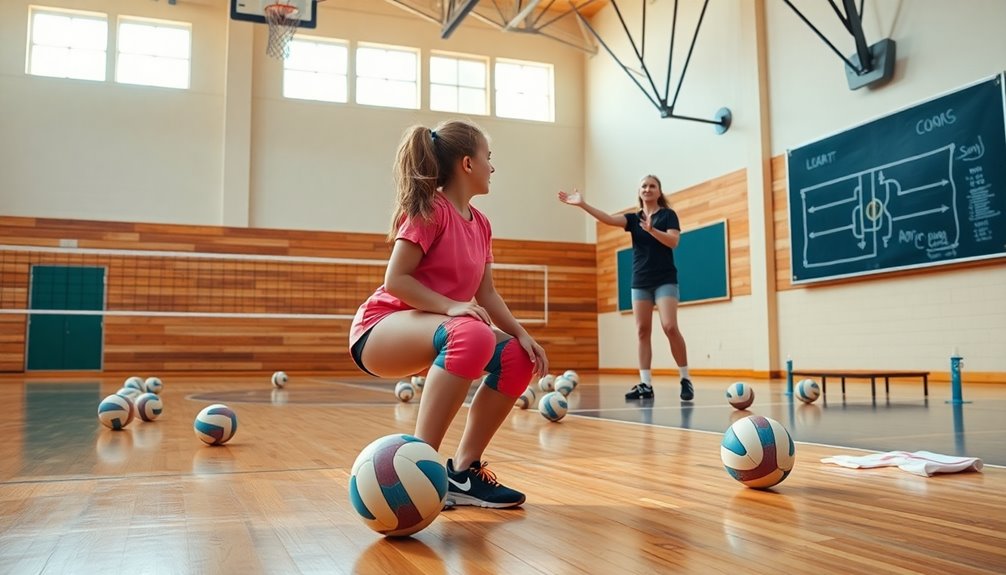
February 25, 2026To set up your young volleyball player for success, focus on mastering fundamentals and technical skills like ball handling and serving. Create a positive environment by celebrating small victories and encouraging teamwork. Set realistic goals using the SMART framework to track progress, while mixing fun drills to keep training engaging. Don’t forget nutrition plays a key role in performance too. If you want more tips on nurturing their growth, there’s so much more to explore.
Understanding the Fundamentals of Volleyball for Kids
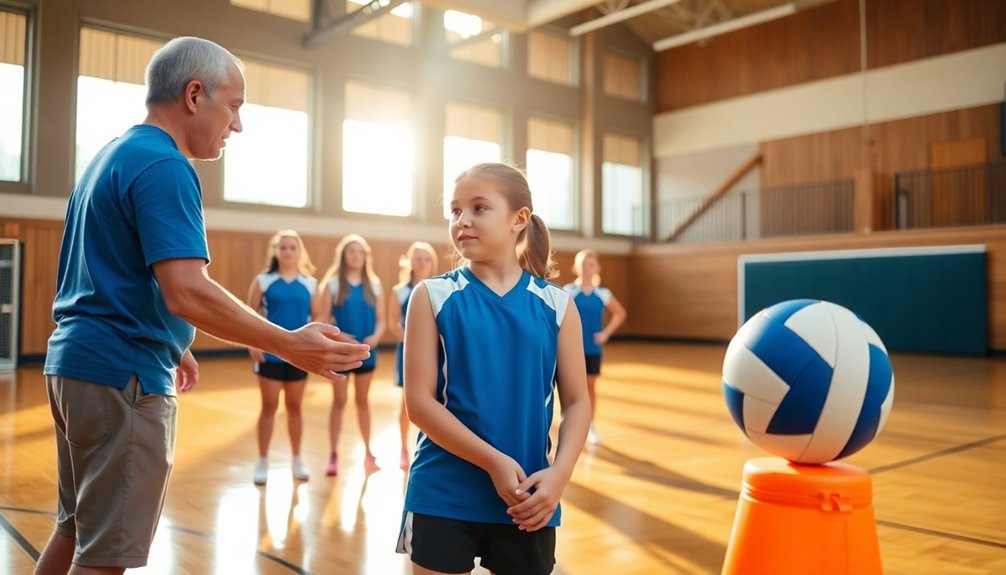
Volleyball is a dynamic sport that combines teamwork, skill, and strategy, making it perfect for young athletes. To get started, focus on mastering ball handling. This includes passing, setting, and digging, which are essential for effective play.
Encourage your young player to practice these skills regularly, ensuring they can control the ball during matches.
Next, teach them proper serve techniques. A solid serve sets the tone for the game, so emphasize the importance of a consistent and accurate serve.
Teach your young athlete the importance of mastering serve techniques for a strong start to every game.
Whether it’s an underhand or overhand serve, practicing these techniques will boost their confidence on the court. By ensuring your child grasps these fundamentals, you’re laying the groundwork for their success and enjoyment in volleyball. Additionally, incorporating communication with teammates will help them develop better coordination and understanding during matches.
The Importance of Technical Skill Development
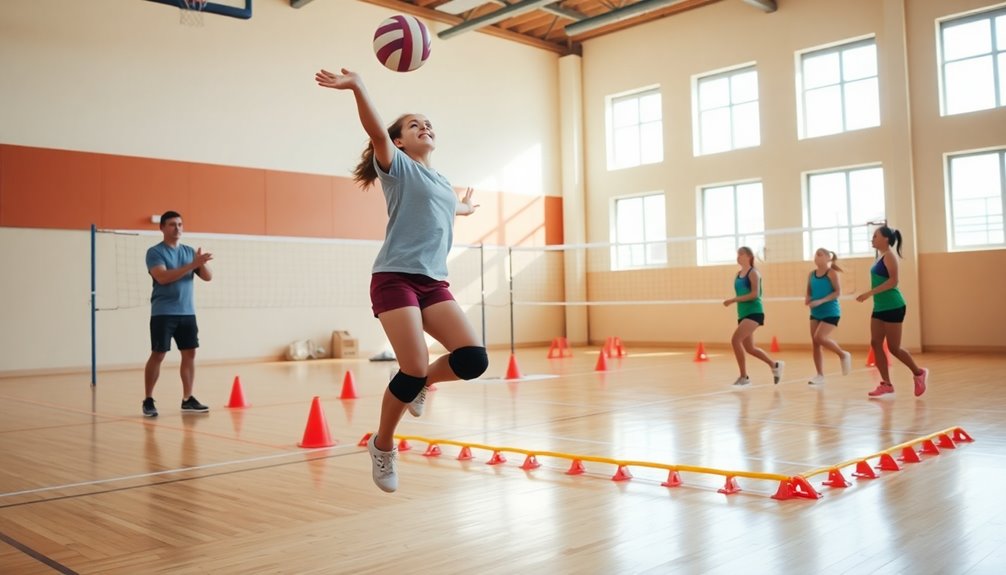
Mastering technical skills is essential for young volleyball players, as these abilities form the foundation for their overall performance. By focusing on proper techniques, you help your young athlete develop confidence and consistency on the court.
Incorporating various technical drills into their practice routine can greatly enhance their skills. These drills should target key areas like serving, passing, and hitting, ensuring your player becomes well-rounded.
Regular skill assessment is vital, too; it allows you to identify strengths and areas for improvement. By tracking progress, you can adjust training methods to meet your young player’s needs. Additionally, engaging in small-sided games can enhance decision-making abilities and keep practice enjoyable.
Prioritizing technical skill development not only boosts performance but also fosters a love for the game, setting the stage for future success.
Creating a Positive and Supportive Environment
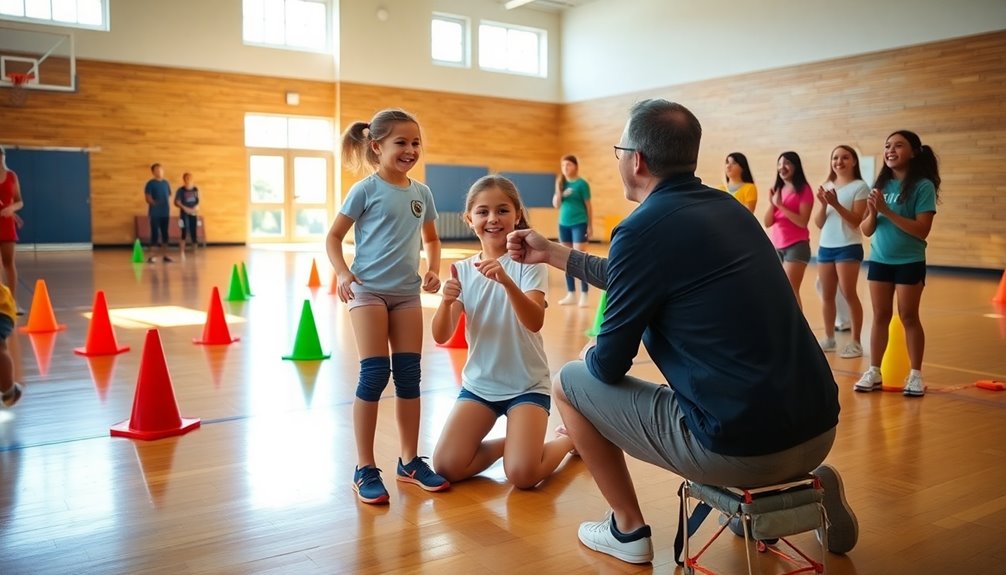
While technical skills are essential, creating a positive and supportive environment is equally important for young volleyball players.
You can foster this atmosphere by focusing on several key elements:
- Positive reinforcement: Celebrate small victories to boost confidence building.
- Emotional support: Be there for your players, listening to their concerns and feelings.
- Teamwork encouragement: Promote collaboration and camaraderie among teammates.
- Constructive feedback: Offer guidance that helps players improve without discouraging them.
- Inclusivity practices: Guarantee every player feels valued and included in the team.
Additionally, incorporating fun drills can enhance player engagement and motivation, making practices more enjoyable.
Setting Realistic Goals for Young Players
Setting realistic goals is essential for young volleyball players to stay motivated and improve their skills. You can use the SMART goal framework to create age-appropriate objectives that focus on skill development. Incorporating consistent practice routines enhances familiarity and confidence on the court.
SMART Goal Framework
When you aim to help young volleyball players improve, using the SMART goal framework can be incredibly effective.
SMART objectives guarantee that players set clear, achievable targets, and track their progress through performance metrics. Here’s how to apply the framework:
- Specific: Define exactly what you want to achieve (e.g., improve serving accuracy).
- Measurable: Set quantifiable criteria (e.g., 70% successful serves).
- Achievable: Confirm the goal is realistic based on their current skill level.
- Relevant: Align goals with their interests and team needs.
- Time-bound: Set a deadline to create urgency (e.g., by the end of the season).
Age-Appropriate Objectives
Establishing age-appropriate objectives is essential for young volleyball players to develop their skills effectively. By setting realistic goals, you create a solid foundation for their growth.
Focus on age-appropriate drills that match their developmental stage, ensuring they’re challenged but not overwhelmed. For younger players, prioritize basic skills like passing and serving, while older players can tackle more complex techniques.
Encourage gradual skill progression, allowing them to build confidence as they master each level. Celebrate small victories to keep motivation high, and adjust goals as they improve.
Focus on Skill Development
To effectively nurture young volleyball players, focus on skill development by setting realistic goals that align with their current abilities.
Start with a skill assessment to identify strengths and areas for improvement. This helps you create a tailored approach that encourages progress. Remember, technique refinement is essential; prioritize proper form over advanced maneuvers.
Here are some tips to set achievable goals:
- Break skills into smaller, manageable tasks
- Celebrate small victories to boost confidence
- Adjust goals as players improve
- Create a supportive environment for practice
- Encourage self-reflection to identify personal growth
Incorporating Fun Drills to Enhance Engagement
While young athletes often thrive on competition, incorporating fun drills into their training can greatly boost engagement and enjoyment.
Start with engaging warm-ups that energize your players, followed by creative games that spark their interest.
Implement skill challenges that test their abilities in a playful way, allowing them to learn while having fun.
Introduce interactive exercises that encourage movement and excitement, and set up obstacle courses to add an element of adventure to practice.
Team building activities not only enhance camaraderie but also make drills more enjoyable.
Finally, organize friendly tournaments and fun competitions to keep motivation high while fostering a love for the game. Engaging warm-up games will make training sessions something your young players look forward to!
Fostering Teamwork and Communication Skills
Here are some ideas to incorporate into your training:
- Team building exercises to strengthen bonds
- Communication drills that enhance verbal and non-verbal cues
- Collaborative games promoting cooperative play
- Conflict resolution strategies for handling disagreements
- Role playing scenarios to practice leadership opportunities
Additionally, consider implementing peer feedback sessions and trust building activities to encourage active listening practices. Emphasizing the power of teamwork can significantly enhance the effectiveness of these training exercises.
Hosting team bonding events can further enhance unity and improve overall performance on the court. These skills create a strong foundation for your young athletes!
Developing Physical Conditioning for Volleyball
As young volleyball players grow in their skills, developing physical conditioning becomes essential for their overall performance.
Incorporate agility drills to enhance quick movements on the court. Strength training is vital for building the power needed for spikes and blocks.
Don’t overlook endurance exercises; they help maintain energy throughout matches. Flexibility routines prevent injuries and improve range of motion.
Focus on injury prevention techniques to keep your player healthy and active. Utilize recovery techniques like stretching and hydration post-training to aid muscle repair.
Conditioning games can make training fun while boosting stamina. Finally, cross training activities, such as swimming or running, can provide a well-rounded fitness base. Additionally, incorporating endurance exercises like the Torture Run can significantly improve stamina and resilience.
Together, these elements create a solid foundation for your young athlete’s success.
Introducing Strategy and Game Awareness
Understanding your position on the court is essential for effective play.
You’ll need to read your opponent’s movements to anticipate their next move and respond quickly.
Plus, developing tactical communication with your teammates can elevate your game and create better scoring opportunities. Additionally, mastering defensive skills can significantly enhance your ability to read the game and react appropriately.
Understanding Game Positions
Every player on the volleyball court has a specific role that contributes to the team’s success.
Understanding game positions helps you maximize your player strengths and fulfill position responsibilities.
Here’s what to keep in mind:
- Outside Hitter: Focus on attacking and covering the court.
- Setter: Coordinate plays and distribute the ball effectively.
- Libero: Specialize in defense and serve-receive; no attacking from the front row.
- Middle Blocker: Block opponents and create quick attacks.
- Opposite Hitter: Attack from the back row and support the setter.
Reading Opponent’s Movements
How can you anticipate your opponent’s next move? Start by honing your skill in reading body language. Watch for subtle cues like the direction of their shoulders, the position of their hips, and where their eyes are focused. These small details can reveal a lot about their intentions.
For instance, if a player shifts their weight back, they might be preparing to spike.
Practice anticipating plays by observing your opponent’s patterns during the game. Are they consistently targeting certain areas of the court? Use this information to position yourself strategically.
Developing Tactical Communication
Recognizing your opponent’s movements is just one part of the game; effective communication among teammates is equally important for building a strong strategy on the court.
Developing tactical communication helps players stay aware and react quickly. Here are some tips to improve communication:
- Use tactical signals for quick plays.
- Share on court cues to indicate when to switch formations.
- Call out plays loudly so everyone knows their role.
- Encourage teammates with positive reinforcement during rallies.
- Practice non-verbal signals to enhance on-court awareness.
Encouraging a Growth Mindset and Resilience
While it’s easy to focus solely on winning, fostering a growth mindset and resilience in young volleyball players is essential for their development.
Encourage your player to view challenges as opportunities for growth. Remind them that mistakes are part of learning and improvement. Through resilience training, help them develop the ability to bounce back from setbacks.
Make sure to celebrate small victories along the way, reinforcing their progress and effort. Encourage them to set personal goals, emphasizing the importance of self-reflection and perseverance. Additionally, remind them that perseverance and mental toughness are key components in overcoming obstacles on their journey to success.
Balancing Competition and Enjoyment
Here is your revised article subheading content:
Encouraging a growth mindset helps young athletes understand the value of improvement, but it’s equally important to balance competition with enjoyment in volleyball.
Finding that competitive balance allows your young player to thrive without feeling overwhelmed. Here are some tips to maintain an enjoyment focus:
- Celebrate small wins, like improved teamwork or individual skills.
- Mix drills with fun games to keep practices engaging.
- Encourage friendships among teammates to foster a positive environment.
- Remind them that losing is part of learning and growth.
- Prioritize having fun over winning at all costs.
- Instilling a champion’s mindset fosters resilience and encourages players to embrace challenges with a positive attitude.
Supporting Mental Health and Well-Being
Support for mental health and well-being is essential for young volleyball players, as it helps them navigate the pressures of competition and personal development.
Encouraging mental resilience allows your player to bounce back from setbacks and learn from mistakes. Help them develop emotional regulation skills by teaching techniques like deep breathing, visualization, or positive self-talk. These strategies can empower them to manage stress during high-stakes matches.
Create an open environment where they feel comfortable discussing their feelings and challenges. Celebrate their achievements, both big and small, to boost their confidence.
The Role of Nutrition in an Athlete’s Performance
Maintaining good mental health is just one part of a young athlete’s overall performance; nutrition plays a significant role as well. A well-rounded diet helps optimize energy sources and supports performance recovery.
Focus on nutritional balance by incorporating:
- Healthy snacks for sustained energy
- Adequate protein intake to build and repair muscles
- Carbohydrate loading before intense training sessions
- Meal timing to fuel workouts effectively
- Hydration strategies to maintain peak performance
Don’t forget about nutrient timing! Consuming the right nutrients after training can enhance recovery.
While dietary supplements can be beneficial, they should complement a balanced diet, not replace it. Empower your young athlete with the right nutrition to maximize their potential on the volleyball court.
Involving Parents in the Training Process
Involving parents in your training can make a big difference in your volleyball journey.
By improving communication with your parents, you create a supportive environment that boosts your confidence and performance.
Let’s explore some effective strategies to engage them in the process.
Parent-Child Communication Strategies
How can parents effectively communicate with their young volleyball players during training? Building a strong connection through communication is essential for your child’s growth. Here are some strategies to enhance your dialogue:
- Practice active listening: Show genuine interest in what your child says about training.
- Ask open-ended questions: Encourage them to share their thoughts and feelings about their performance.
- Provide constructive feedback: Focus on what they did well and areas for improvement, ensuring it’s supportive.
- Create a safe space: Let them express frustrations without fear of judgment.
- Celebrate small victories: Acknowledge their progress, no matter how minor, to boost morale.
Building a Supportive Environment
Effective communication sets the stage for a supportive environment where young volleyball players can thrive.
As a parent, your involvement is essential. Encourage peer support among teammates by organizing small group practices or team outings. This fosters friendships and strengthens team bonding, making the sport more enjoyable for everyone.
Share your insights with coaches and participate in team meetings to reinforce your child’s commitment. Celebrate their achievements, big or small, to build their confidence.
By actively engaging in their volleyball journey, you create a positive atmosphere that motivates your child and their teammates.
Finding the Right Coaching Resources and Support
While maneuvering through the world of youth volleyball, finding the right coaching resources and support can greatly impact a player’s development.
Start by exploring various options that can enhance your child’s skills and understanding of the game:
- Coaching certifications: Seek out coaches with recognized credentials.
- Local clinics: Attend sessions that focus on specific skills.
- Mentorship programs: Pair your child with experienced players or coaches.
- Training workshops: Participate in hands-on training to refine techniques.
- Online resources: Utilize instructional videos and coaching forums for additional guidance.
Engaging with these resources not only helps your young athlete improve, but it also connects them with the volleyball community.
Don’t forget to leverage youth leagues and community outreach for further support!
Conclusion
By focusing on the fundamentals while fostering a supportive environment, you can set your young volleyball player up for success. For instance, consider a 12-year-old who, through consistent practice and encouragement, improved her serving technique and gained confidence. With the right balance of fun drills and realistic goals, she went from feeling nervous during games to leading her team in points. Remember, it’s about building skills and a love for the game that’ll help them thrive.