
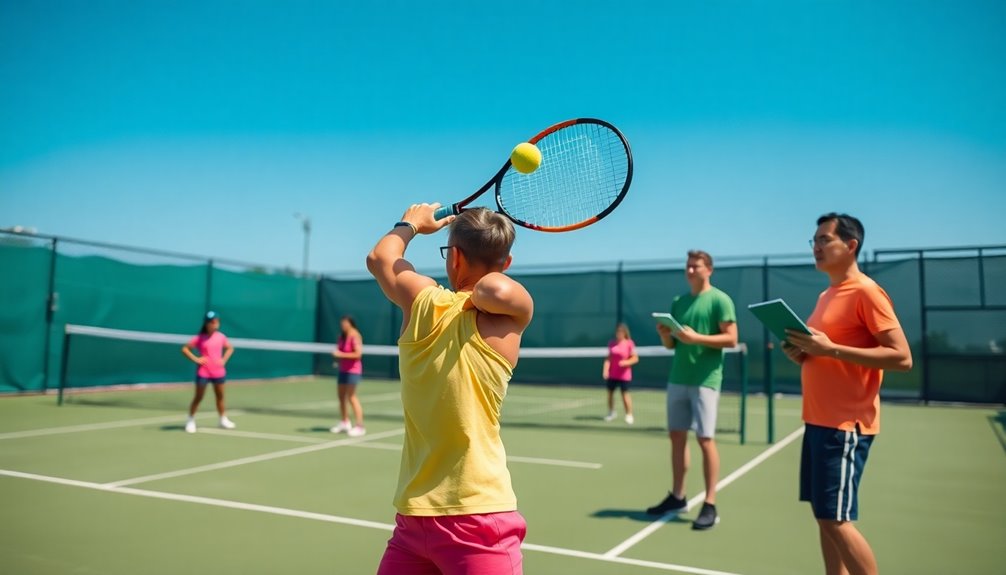
Serve Drills for Beginners
April 25, 2026To master serve drills as a beginner, focus on grip, stance, and ball toss for consistency. Start with basic warm-up exercises that enhance flexibility and core strength. Set specific targets on the court to improve accuracy and practice variations of your serve—like flat and topspin. Incorporate mental strategies, such as visualization, to boost confidence. As you continue honing these skills, you’ll soon discover effective methods to elevate your game further.
Understanding the Importance of a Good Serve

A good serve is essential, not just for scoring points but also for setting the tone of the game. Mastering serve fundamentals gives you a strong foundation to build on. When you focus on your grip, stance, and toss, you’re already ahead of the competition.
Your serve strategy should adapt to your opponent’s weaknesses; knowing when to use a powerful serve versus a strategically placed one can change the match dynamics. Practice different types of serves, like flat or topspin, to keep your opponent guessing. Additionally, understanding the field dimensions and equipment requirements can help you optimize your serve based on court size and conditions.
Key Components of a Consistent Serve Technique
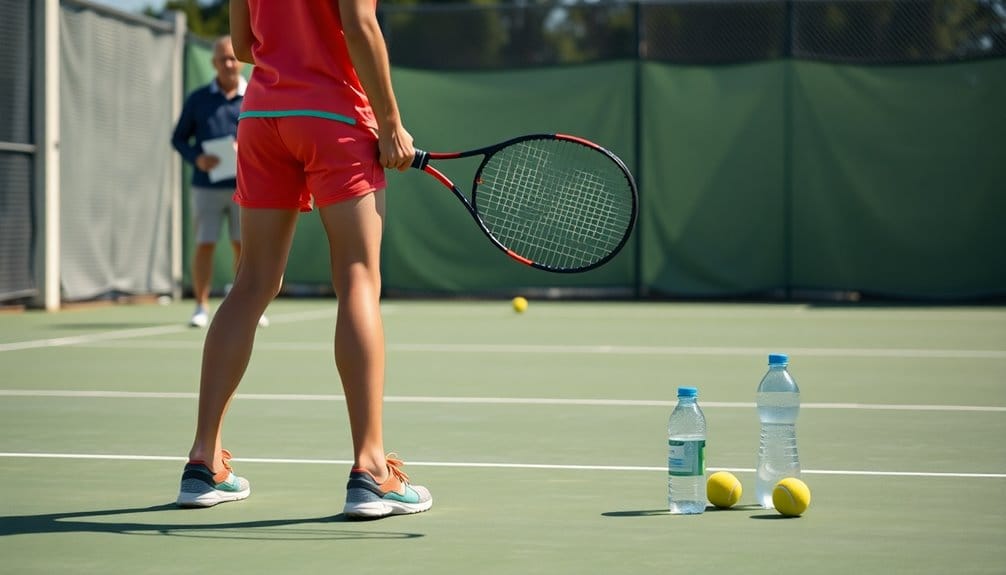
Mastering your serve hinges on several key components that guarantee consistency and accuracy.
First, focus on your grip techniques; a relaxed yet firm grip on the racket allows for better control and power. Experiment with different grips to find what feels most comfortable for you.
Focus on a relaxed yet firm grip for better control and power; experiment with different grips to find your comfort zone.
Next, pay attention to your ball toss. A consistent toss is essential for a reliable serve; aim to toss the ball in front of you and slightly to the side for ideal contact. Practice your rhythm, ensuring your toss height is uniform.
Finally, incorporate a smooth follow-through to enhance your serve’s effectiveness. Additionally, remember that maintaining consistent toss height can significantly improve your overall serve quality.
Essential Warm-Up Exercises for Serving

Before you step onto the court, warming up is vital for your serving success.
Incorporating dynamic stretching techniques, shoulder mobility drills, and core activation exercises can enhance your performance and prevent injury. Additionally, a well-rounded warm-up reduces injury risk and primes the body for training.
Let’s explore these essential warm-up exercises to get you ready to serve.
Dynamic Stretching Techniques
Dynamic stretching plays an essential role in preparing your body for serving. Incorporating dynamic warm-ups into your routine helps increase blood flow and enhances your range of motion. Focus on exercises like leg swings, arm circles, and walking lunges.
These movements not only activate your muscles but also provide flexibility benefits, ensuring you’re limber and ready to serve effectively.
As you perform these stretches, pay attention to your form and breathing. Consistency is key; aim to include dynamic stretching in every warm-up session.
This way, you’ll build a solid foundation for powerful serves while minimizing the risk of injury. By making these techniques a habit, you’ll notice improvements in your overall performance on the court.
Shoulder Mobility Drills
To guarantee your shoulders are primed for serving, incorporating targeted mobility drills is essential.
Start with shoulder stretches like the doorway stretch, which opens up your chest and improves flexibility. Next, try arm circles to enhance joint mobility; make large circles forward and backward to warm up those rotator cuffs.
You can also include cross-body shoulder stretches to target the rear deltoids, ensuring balanced mobility.
Another effective drill is the band pull-apart: use a resistance band to strengthen and activate your shoulders while promoting joint stability.
Core Activation Exercises
While many focus on upper body strength for serving, core activation is equally essential for generating power and stability. Engaging your core enhances core stability, ensuring better posture alignment during your serve.
Start with planks to build muscle engagement and support your lower back. Incorporate breath control as you hold each position, fostering a strong connection with your body.
Add balance training exercises like single-leg stands to improve your movement patterns. Don’t forget flexibility exercises, too; they’ll enhance your range of motion and aid in strength development.
Target Practice: Developing Accuracy in Your Serve
As you work on your serve, honing your accuracy is crucial for improving your overall game. Focus on these key elements to sharpen your skills:
- Serve Mechanics: Perfect your grip and stance to enhance control.
- Target Zones: Identify specific areas on the court where you want to land your serves.
- Mental Focus: Visualize successful serves to boost confidence and clarity.
- Footwork Drills: Practice moving into position efficiently to set up your serve.
Incorporate serve variations and timing techniques during drills. This can help you develop cardiovascular endurance to sustain performance through longer matches. Use visual cues to remind you of your goals.
Power vs. Placement: Finding Your Serving Style
When you’re serving, you’ll need to choose between power and placement. A powerful serve can overwhelm your opponent, while precise placement can create opportunities for easy points. Finding the right balance between these two techniques will elevate your game. Understanding player roles in soccer can also help you develop a more strategic approach to your serves.
Power Serve Benefits
Harnessing the power serve can be a game-changer for beginners looking to elevate their performance on the court. This serving style not only boosts your confidence but also enhances your overall serve strategy.
Here are some emotional benefits that come with mastering the power serve:
- Intimidation Factor: Opponents fear a strong serve, which can disrupt their focus.
- Increased Momentum: A powerful serve can energize your game and rally your spirits.
- Psychological Edge: You’ll feel more in control, leveraging serve psychology to impose your will.
- Quick Points: Winning points quickly can shorten matches, giving you an advantage.
Embrace the power serve, and watch your game transform!
Placement Serve Advantages
While a power serve can be thrilling, mastering placement serves offers unique advantages that can elevate your game. By focusing on a smart placement strategy, you can create serve variations that confuse your opponent.
Tailoring your serves to different game scenarios enhances your effectiveness on the court. Through careful opponent analysis, you can identify weaknesses and exploit them with precise serve types. This requires mental focus and intentional serve tactics, allowing you to dictate the pace of play.
Additionally, effective court positioning enables you to set up your shots better, making it harder for your opponent to return. Embracing placement serves not only sharpens your skills but also provides a strategic edge in competitive matches.
Balancing Both Techniques
To master both power and placement serves, you need to find a balance that complements your playing style. Striking this balance enhances your mental focus and helps you develop a consistent serve rhythm.
Here are four tips to guide your journey:
- Experiment with Serve Variations: Try different types of serves to discover what feels natural.
- Practice Regularly: Consistency builds confidence; make serving drills a routine.
- Visualize Success: Picture your serves landing where you want them, boosting your mental game.
- Reflect on Progress: After each practice, assess what works and what doesn’t to improve your technique.
Serving Drills to Build Confidence and Consistency
Building confidence and consistency in your serve is essential for any beginner player. Start by incorporating serve variations into your practice schedules.
Mix up your serves—try flat, spin, and kick serves to find what suits you best. Mental preparation is key; visualize your successful serves to boost confidence.
Use consistency strategies, such as targeting specific areas of the service box during drills. Regularly seek serve feedback from coaches or peers to identify areas for improvement.
Incorporate performance assessments into your routine, tracking your progress over time. Finally, practice in game scenarios to simulate pressure and enhance your focus. Additionally, prioritizing warm-ups can set the stage for improved performance during your serve drills.
These drills will build your confidence and help you serve consistently when it matters most.
How to Analyze Your Serve for Improvement?
Analyzing your serve is essential for making meaningful improvements. Start by recording your serve with video analysis. This provides a clear visual for a technique breakdown.
Analyzing your serve through video can reveal key technique insights for significant improvement.
Next, seek serve feedback from peers or coaches to gain fresh perspectives. Use performance metrics to track your progress over time, pinpointing areas that need work.
Here’s a quick checklist to guide your analysis:
- Self Assessment: Reflect on your body mechanics and stance.
- Peer Review: Ask a fellow player for their observations.
- Serve Comparisons: Compare your serves to higher-level players.
- Coaching Tips: Implement insights from your coach into your practice.
Incorporating consistent repetition of your serves into your training can significantly enhance your overall performance.
Incorporating Serve Drills Into Your Practice Routine
Set specific goals for each practice session, like improving your accuracy or speed. Use cones or targets on the court to aim for while serving, which helps sharpen your focus.
Additionally, consider recording your serves to analyze your form and technique later.
Don’t forget to mix in drills that simulate match conditions, allowing you to practice under pressure. Consistent practice of these drills will boost your confidence and effectiveness on the court, especially when incorporating quick decision-making techniques to enhance your gameplay.
Conclusion
Incorporating serve drills into your practice routine can transform your game. Just like Sarah, a beginner who struggled with her serve, you can see remarkable improvements by dedicating time to focused drills. After just a few weeks of consistent practice, she not only gained confidence but also started placing her serves with precision. So, grab your racket, commit to these drills, and watch your serve become a powerful asset on the court!