
10 Easy Tennis Drills for Beginners
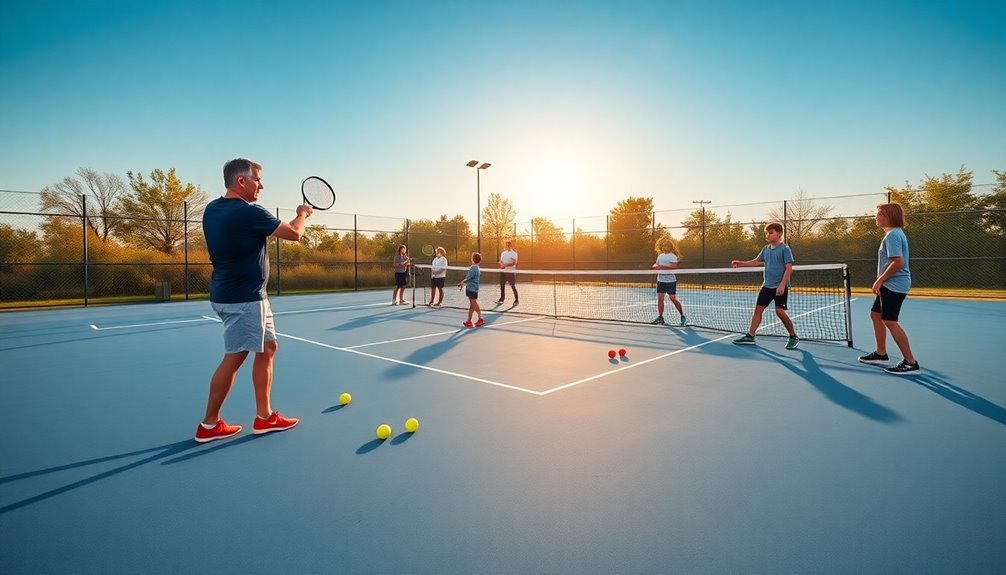
May 9, 2026If you’re starting out in tennis, mastering these ten easy drills can boost your skills and confidence. Focus on footwork drills to improve your agility, and practice your forehand and backhand strokes with shadow swings and wall drills. Engaging in target exercises will enhance your serve accuracy and hand-eye coordination. Incorporate mini-matches into your routine to get a feel for game scenarios. Stick with it, and you’ll discover even more effective strategies to elevate your game.
Understanding the Basics of Tennis
Tennis is more than just hitting a ball; it’s a sport that combines skill, strategy, and fitness. To understand the basics, you’ll want to grasp tennis history and how it shaped the game today.
Familiarize yourself with the scoring system—points, games, and sets—and know the court dimensions that dictate play. Different racket types can influence your performance, while various player styles, like aggressive or defensive, shape match dynamics.
Understand common terminology, such as “ace” and “break point,” to communicate effectively. Finally, explore match formats, whether singles or doubles, and hone your game strategies. Additionally, mastering court dimensions is essential for improving your overall gameplay.
The Importance of Footwork in Tennis
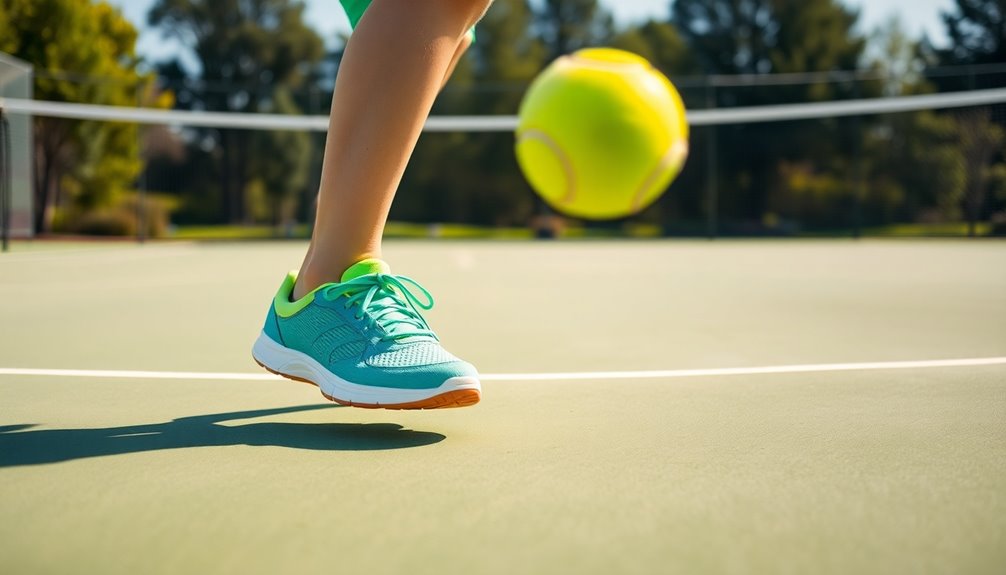
While many players focus on their strokes and tactics, footwork often determines success on the court. Mastering lateral movement is essential; it helps you cover the court efficiently and maintain ideal court spacing.
Incorporating balance training into your routine enhances stability during shots, while explosive starts allow you to react quickly to your opponent’s plays. Reaction drills sharpen your ability to respond to fast-paced situations, and rhythm exercises improve your timing.
Don’t underestimate pivot techniques and their role in making smooth directional changes. By prioritizing footwork, you’ll find yourself in better positions to execute your shots, greatly elevating your game. Additionally, agility drills can further enhance your footwork, making you more adept at navigating the court.
Drills to Improve Your Forehand Stroke
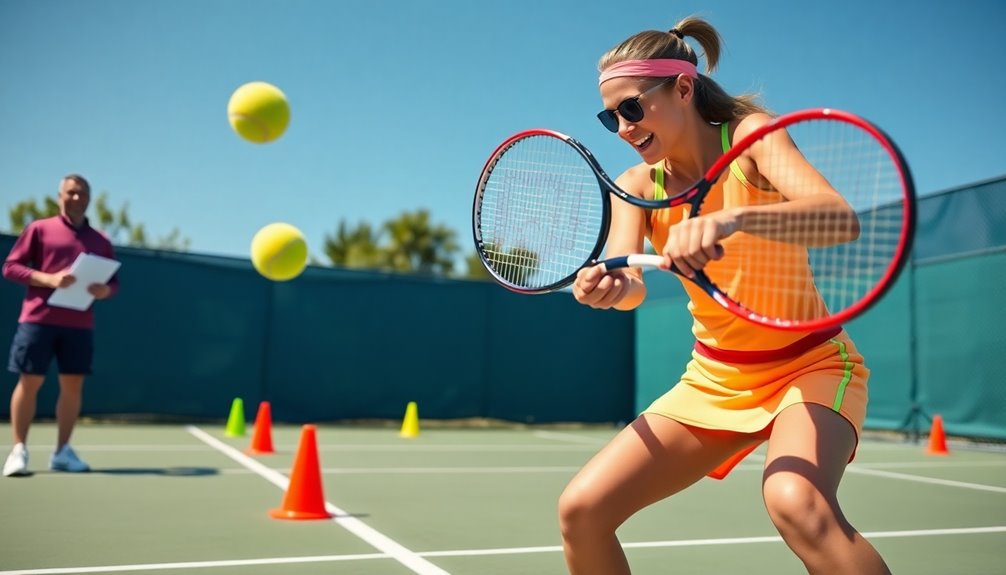
To master your forehand stroke, you’ll want to focus on grip and stance techniques first.
These fundamentals set the stage for effective footwork and timing drills that can elevate your game.
Let’s break down how these elements work together to improve your performance on the court. Additionally, understanding the soccer field dimensions can help you appreciate the importance of space and positioning in any sport, including tennis.
Grip and Stance Techniques
Mastering grip and stance techniques is essential for developing a powerful forehand stroke. By focusing on these elements, you’ll enhance your game considerably.
Here are some effective drills to get you started:
- Grip Variations: Experiment with different grips, like the Eastern or Western grip, to find what feels comfortable.
- Stance Alignment: Practice positioning your feet shoulder-width apart to maintain balance and stability.
- Shadow Swings: Without hitting a ball, practice your forehand stroke, emphasizing the grip and stance.
- Wall Drills: Hit against a wall, focusing on maintaining your grip and proper stance alignment throughout your swings.
Integrating these techniques will set a solid foundation for your forehand, allowing your strokes to become more powerful and consistent.
Footwork and Timing Drills
Improving your footwork and timing is essential for executing a powerful forehand stroke. Start with lateral movement drills to enhance your agility on the court.
Incorporate quick pivots to help you react swiftly to incoming shots. Balance drills can solidify your stance, ensuring your foot placement is precise during each swing.
Practice sprinting techniques to boost your speed, enabling you to cover more ground effectively. Work on your reaction time by having a partner hit balls to different areas, forcing you to make rapid directional changes.
Finally, rhythm exercises can help you develop a consistent flow in your movements, allowing you to sync your footwork with your swing.
These drills will elevate your forehand and overall game.
Mastering the Backhand With Simple Exercises
Perfecting your backhand can elevate your tennis game markedly. To achieve backhand accuracy and stroke consistency, try these simple exercises:
- Shadow Swings: Focus on grip adjustments and angle control without hitting the ball. This builds muscle memory.
- Partner Drills: Rally with a partner, practicing shot selection and power generation. Aim for specific targets to enhance precision.
- Wall Practice: Hit against a wall to improve your backhand’s rhythm and reinforce mental focus. Keep track of how many successful backhands you can hit consecutively.
- Target Drills: Place cones or targets on the court. This exercise will help with angle control and shot selection, making your backhand more effective.
Incorporate these into your practice routines for noticeable improvement! Additionally, utilizing interval runs can enhance your overall fitness, supporting your backhand performance on the court.
Fun Ways to Practice Your Serve
Having a solid backhand sets a strong foundation for your overall game, but don’t forget about your serve—it’s your first chance to take control of the point.
To improve your serve accuracy, try some fun challenges with friends. Set up target practice by placing cones on the court and aim to hit them with serve variations.
Incorporate group activities like technique games, where you can focus on different aspects of your serve in a relaxed setting. Engage in competitive drills, challenging each other to see who can maintain serve consistency while hitting specific targets. Additionally, effective communication during practice can enhance teamwork and elevate overall performance.
These enjoyable methods won’t only enhance your skills but also make practice sessions exciting and engaging!
Developing Your Volley Skills Through Drills
To improve your volley skills, you’ll want to focus on a few key drills. Start with basic volley techniques, then grab a partner for some dynamic practice, and finally, hit against a wall for solo training. Each method will help you build confidence and precision at the net. Additionally, incorporating dynamic stretching before drills can enhance your performance and reduce injury risk.
Basic Volley Technique Drills
Improving your volley skills is essential for any beginner looking to enhance their tennis game. Here are four basic drills to help you develop your technique:
- Wall Volleys: Practice your volley rhythm by hitting the ball against a wall, focusing on racket control and body alignment.
- Target Practice: Set up targets at the net to improve your target precision and timing awareness.
- Shadow Volleys: Without a ball, mimic the volley motion to enhance your reaction speed and net positioning.
- Solo Drills: Use a ball machine or drop balls to build confidence and communication skills with yourself, preparing you for match readiness.
Incorporating these drills will boost your overall performance on the court!
Partner Volley Drills
Start by facing your partner at the net. Focus on partner communication to decide who’ll take each volley. Practice volley placement by aiming for specific targets. Work on net positioning to guarantee you’re ready for any return.
Timing synchronization is essential; try to hit the ball at the same moment for better control. Enhance your reaction speed by varying the pace of your volleys. Anticipation skills come into play as you read your partner’s movements.
Finally, simulate pressure situations by increasing rally intensity, which helps develop your court awareness. These drills will make you a more confident and effective player!
Wall Volley Practice
After mastering partner volley drills, it’s time to take your skills to the wall. Practicing against a wall helps you refine your volley technique while improving ball control and reaction timing.
Here’s how to get the most out of your wall volley practice:
- Adjust Wall Distance: Start close, then gradually increase the distance to challenge your volley rhythm.
- Focus on Wall Angles: Aim for different spots to enhance target placement and foot positioning.
- Listen for Sound Feedback: The sound of the ball hitting the wall indicates your consistency practice and technique.
- Work on Timing: Pay attention to your reaction timing as the ball rebounds, helping you develop a smoother volley rhythm.
This drill will boost your confidence and skills on the court!
Enhancing Hand-Eye Coordination With Target Drills
While mastering tennis techniques is essential, enhancing your hand-eye coordination with target drills can greatly elevate your game.
Start with focus drills that emphasize target accuracy. Set up targets on the court and practice hitting them, which helps improve your aim.
Incorporate coordination games that challenge your reaction time and reflex training, like using two balls at once.
Precision exercises, such as volleys directed at specific spots, sharpen your ball tracking skills.
Try to maintain a steady rhythm, which aids in aim improvement. Consistent practice in finishing drills can lead to improved shooting skills and overall performance in various sports.
As you consistently work on these drills, you’ll notice better control over your shots and an overall boost in your performance.
Keep practicing, and watch your coordination soar!
Building Stamina and Agility on the Court
To excel on the tennis court, you need to build both stamina and agility. Start with dynamic warm-up exercises to get your body ready, then focus on footwork drills to enhance your quickness. These drills won’t only improve your performance but also keep you energized throughout the match. Incorporating data-driven strategies into your training can help tailor workouts for optimal results.
Dynamic Warm-Up Exercises
- Dynamic Stretching: Engage in movements like leg swings to enhance flexibility and mobility.
- Mobility Exercises: Perform arm circles and hip openers to improve joint function.
- Muscle Activation: Include lunges and high knees to activate key muscle groups.
- Coordination Drills: Use lateral shuffles to sharpen your footwork and coordination.
Footwork Drills For Agility
After completing your dynamic warm-up, it’s time to focus on footwork drills that enhance agility and stamina on the court.
Start with agility ladders to improve your lateral movement and quick starts. Incorporate cone drills to sharpen your reaction time and change of direction.
Balance drills will help you maintain stability during quick movements. Practice shadow strokes to simulate real-game scenarios, allowing you to develop fluidity in your footwork.
Don’t forget sprint drills to boost your speed and endurance. Each of these exercises will build your agility, making you a more effective player.
Consistency is key; incorporate these drills into your routine to see significant improvements in your game.
Incorporating Game Scenarios Into Your Practice
While you might focus on mastering basic strokes, incorporating game scenarios into your practice can elevate your skills considerably. By simulating match situations, you’ll develop tactical awareness and improve your shot selection under game pressure.
Try these drills to enhance your training:
- Mini-Matches: Play short sets with a friend to practice scoring strategies and opponent analysis.
- Target Practice: Aim for specific areas on the court to improve strategic positioning.
- Pressure Points: Set up scenarios where you must win a point to simulate game pressure, enhancing your mental focus.
- Game Variations: Change rules (e.g., only using certain shots) to encourage adaptability and creativity.
These drills will make your practice more engaging and effective! Additionally, focusing on fun practices can help maintain your enthusiasm and motivation throughout your training journey.
Tracking Your Progress and Staying Motivated
Tracking your progress is essential for staying motivated in your tennis journey. By keeping a record of your practice sessions, you can see how far you’ve come, making it easier to set achievable goals. Use a journal or an app for effective progress tracking; note your skills, drills, and match outcomes. This not only highlights improvements but also identifies areas needing focus.
For motivation tips, celebrate small victories—whether it’s mastering a new serve or improving your footwork. Share your achievements with friends or fellow players for extra encouragement. Engaging in cognitive challenges can further enhance your focus and decision-making during practice.
Regularly revisit your goals, adjusting them as needed, to maintain excitement and challenge yourself. With consistent tracking and motivation, you’ll enjoy the journey while growing as a player.
Conclusion
As you lace up your shoes and step onto the court, remember that each drill is a building block to your tennis journey. Like a painter with a canvas, you’re crafting your skills stroke by stroke. Embrace the challenges and celebrate your progress, no matter how small. Keep practicing, stay motivated, and watch your game blossom. With each swing and step, you’re not just playing tennis; you’re sculpting your own athletic masterpiece.