
Tennis Strategy for Beginners
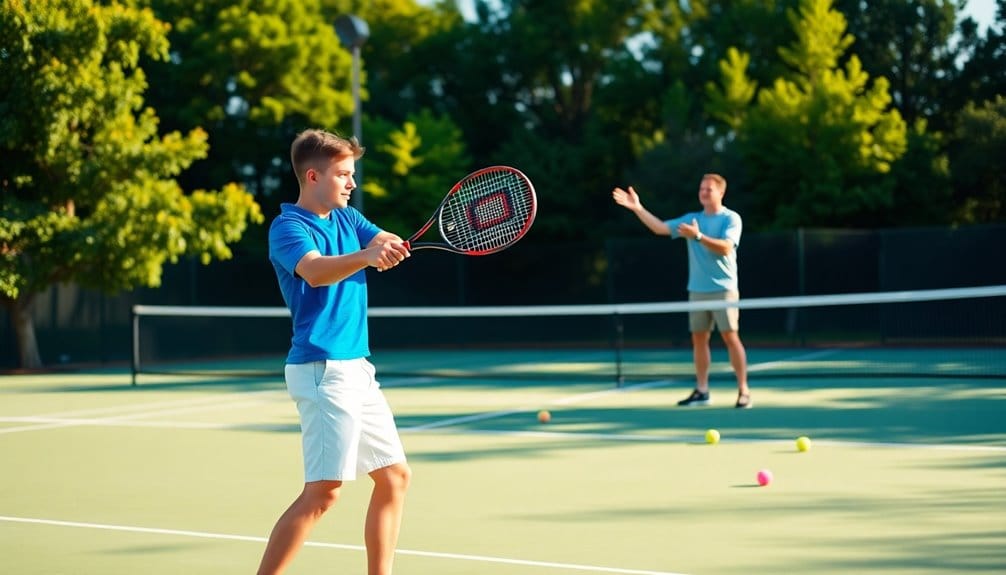
May 6, 2026To improve your tennis game as a beginner, focus on court positioning and shot selection. Stay balanced on the court to react quickly and look for open spaces to exploit. Master your serve by prioritizing power and consistency. Pay attention to your opponent’s body language to anticipate their next move. Additionally, enhance your mental game with positive self-talk and visualization. With these strategies, you’ll boost your confidence and performance, and there’s much more to explore.
Understanding the Basics of Tennis Strategy

Court awareness is essential, too. Knowing where you stand in relation to the net and your opponent can help you anticipate their next move. Additionally, understanding field dimensions can significantly impact your positioning and shot selection during a match.
By implementing these strategies, you’ll not only enhance your performance but also gain more confidence on the court.
The Importance of Court Positioning
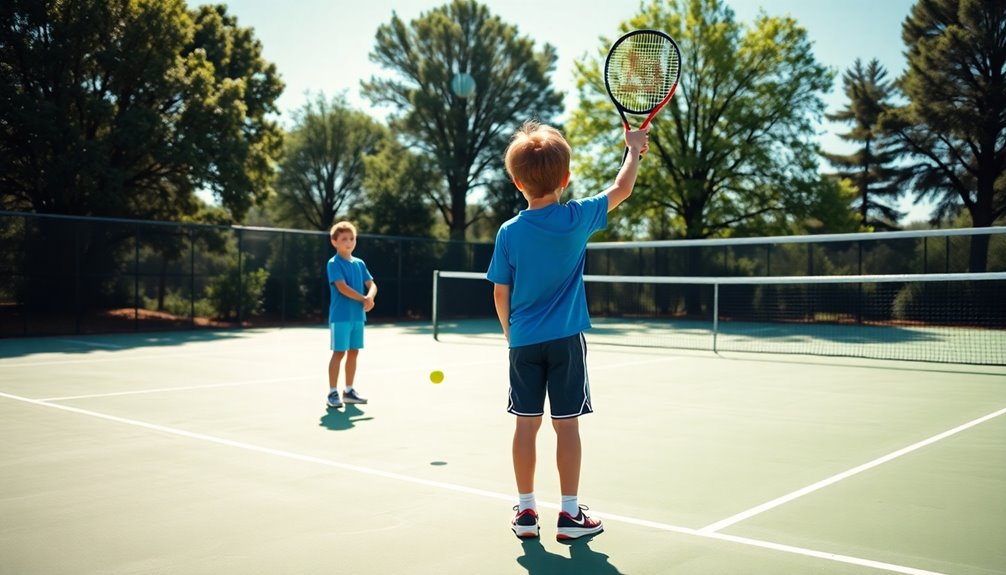
Maintaining the right position on the court can drastically impact your game. By mastering court positioning, you’ll enhance your baseline tactics and improve your overall performance.
When you stand too far behind the baseline, you may struggle to hit effective shots. Instead, find a balance that allows you to respond quickly while still being aggressive.
Standing too far behind the baseline can hinder your shot effectiveness; aim for a balanced position to stay aggressive and responsive.
For net play, getting closer to the net can give you a significant advantage. It enables you to intercept volleys and put pressure on your opponent.
Always be aware of your positioning, adjusting as the ball moves. This not only enhances your shot-making opportunities but also helps you control the pace of the game, making you a more formidable opponent on the court. Additionally, maintaining proper equipment regulations can ensure you’re well-prepared for any match.
Choosing the Right Shots: When to Attack or Defend?
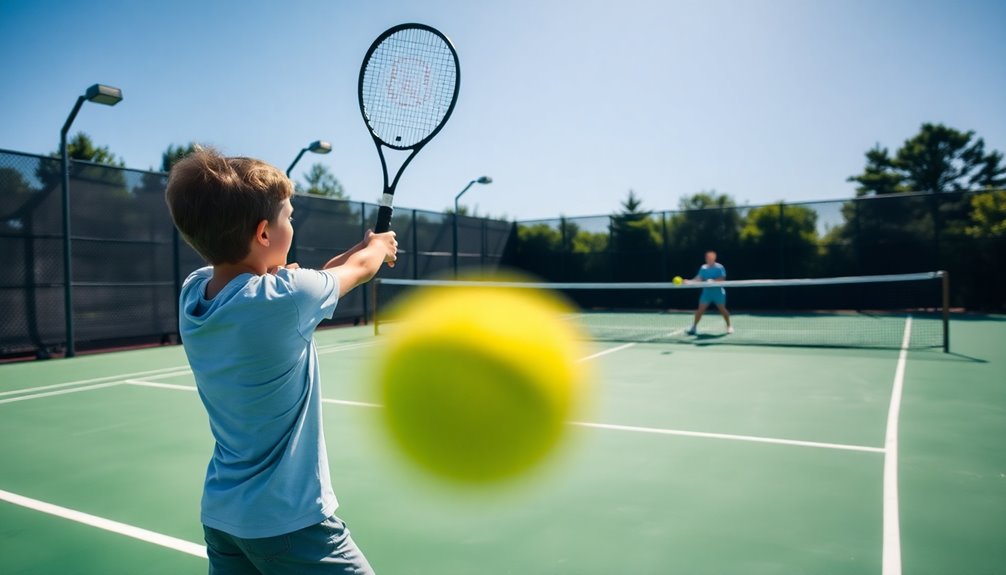
When should you seize the moment to attack, and when is it wiser to defend? Developing an attack mindset requires sharp shot timing and situational awareness. Assess risks based on your opponent’s weaknesses and your own shot variety.
Consider these points for strategic planning:
- Read your opponent’s body language: Is their stance weak?
- Look for open spaces on the court: Can you exploit them?
- Evaluate the score and game context: Are you behind or ahead?
- Use defensive tactics effectively: Can you prolong the rally to tire them out?
Balancing aggression with defense enhances your game. Additionally, understanding the importance of international basketball tournaments can provide insights into how competition shapes player strategies and skills.
Mastering the Serve: Key Strategies for Beginners
A solid serve can make all the difference in your tennis game, setting the tone for each point. Focus on mastering serve mechanics by practicing your grip, stance, and swing.
For your first serve, aim for power and precision with effective serve placement in target zones. Incorporating spin variations can keep your opponent guessing and create opportunities for you.
Your second serve should prioritize consistency, using a reliable spin to minimize errors. Mental preparation is key; visualize your serve success and establish a steady service rhythm to build confidence. Practicing foundational skills can further enhance your serve’s effectiveness and overall performance on the court.
Reading Your Opponent: Anticipating Their Moves
To improve your game, start paying attention to your opponent’s body language and shot selection patterns. These cues can give you valuable insights into their next move. By reading their court positioning, you can anticipate where to place your shots for maximum advantage. Additionally, developing your quick decision-making skills can further enhance your ability to respond effectively to their actions.
Body Language Cues
Understanding body language cues can give you a significant edge on the court. By observing your opponent’s demeanor, you can anticipate their next move and adjust your strategy accordingly.
Look for these key indicators:
- Body posture: A confidence stance often signals readiness for an aggressive shot.
- Facial expressions: A grimace might indicate tension release or frustration, affecting their match intensity.
- Hand signals: Subtle gestures can hint at their intended shot.
- Footwork cues: Quick, light movements may suggest a powerful strike is coming.
Pay attention to eye contact too; it can reveal emotional control or hesitation.
Shot Selection Patterns
Recognizing shot selection patterns can considerably boost your game. By improving your tactical awareness, you’ll better anticipate your opponent’s moves.
Focus on shot variation to disrupt their rhythm and control game tempo. In pressure situations, assess risks carefully; a well-placed shot can exploit opponent weaknesses and shift rally dynamics in your favor.
Pay attention to their shot placement—this gives you clues about their next move. Develop a strategic mindset by analyzing how they respond to your shots.
Are they consistently choosing safe options, or do they take risks? Adjust your approach accordingly, keeping your opponent guessing.
This awareness not only enhances your decision-making but also builds confidence, making you a more formidable player on the court.
Court Positioning Insights
As you position yourself on the court, being able to read your opponent’s body language and shot preparation can give you a crucial edge.
Focus on enhancing your court awareness to anticipate their next move. Here are some tips to improve your reading skills:
- Observe their grip and stance for shot placement clues.
- Notice where they’re looking to identify angles of attack.
- Analyze their footwork to gauge their recovery positioning.
- Watch for changes in energy to switch between offensive mindset and defensive stance.
Developing a Consistent Rally: Building Momentum
While mastering tennis can be challenging, developing a consistent rally is essential for building momentum in your game.
Focus on rally techniques that enhance your shot rhythm. Engage in consistency drills during your practice routines to improve your accuracy and reduce errors.
Partner exercises can help you maintain the rally length while practicing pace control, allowing you to adapt to different playing styles. Incorporate timing drills to refine your swings and enhance your overall game.
As you build momentum, you’ll notice how each successful rally boosts your confidence and performance. Additionally, small-sided games can provide valuable insight into maintaining focus and strategic planning during matches.
Mental Strategies: Staying Focused and Confident
To elevate your game, you need strong mental strategies that keep you focused and confident.
Techniques like visualization, positive self-talk, and breathing exercises can make a big difference during matches. Additionally, learning from the experiences of diverse athletes can provide valuable insights into maintaining composure under pressure.
Let’s explore how these tools can help you stay sharp on the court.
Visualization Techniques For Success
Visualization techniques can be a powerful tool in your tennis arsenal. By incorporating mental imagery into your practice, you can enhance focus and build confidence on the court.
Here are some effective visualization techniques to try:
- Picture yourself executing a perfect serve, the ball soaring over the net.
- Imagine the sensation of your feet moving swiftly across the court, positioning you for each shot.
- Visualize your opponent’s reactions, allowing you to anticipate their next move.
- Envision holding the trophy after a hard-fought match, celebrating your success.
Positive Self-Talk Strategies
Building on the mental imagery techniques discussed earlier, positive self-talk can greatly boost your performance on the court. By using self-talk techniques like positive affirmations, you can create powerful mindset shifts that enhance your confidence.
When faced with challenges, remind yourself of your strengths with motivational quotes. This isn’t just about overcoming negativity; it’s also about resilience training. Visualize your success and reinforce those images with affirmations like “I am capable” or “I can handle this.”
Each time you practice these strategies, you’re building confidence and preparing your mind for any situation. Embrace these techniques, and watch how they transform your game and mental approach, helping you stay focused and confident throughout your matches.
Breathing Exercises For Focus
While you’re on the court, staying focused can be a challenge, but breathing exercises can help center your mind. Incorporating deep breathing into your pre-match routine boosts your mental clarity and promotes a focused mindset.
Try these concentration techniques to enhance your performance:
- Rhythmic breathing: Inhale deeply for four counts, hold for four, then exhale for four.
- Breath awareness: Focus solely on your breath to reduce anxiety and stress.
- Visualization: Picture your ideal shot while you breathe, enhancing relaxation.
- Stress relief: Use these methods to calm nerves before critical points.
Common Mistakes Beginners Make and How to Avoid Them
Many beginners plunge into tennis excited but quickly fall into common traps that hinder their progress. One major mistake is making unforced errors by not focusing on your shot selection. You might try to hit every ball with power, but that often leads to missed shots. Instead, prioritize placement over power.
Another common pitfall is poor footwork. If you don’t position yourself properly, you’ll struggle to make effective shots, increasing your chances of errors.
Lastly, neglecting to practice your serve can limit your game. A strong serve sets the tone for each point. Additionally, developing spatial awareness can help you anticipate your opponent’s shots and improve your positioning on the court.
Conclusion
Incorporating these beginner strategies will elevate your game and boost your confidence on the court. For instance, imagine you’re facing an opponent who frequently hits to your backhand. By anticipating this and positioning yourself accordingly, you can turn their weakness into your advantage. Stay focused, keep practicing, and remember that every match is a chance to learn and grow. With time, you’ll develop a smarter game that reflects your progress and dedication.