
Where to Aim Your Shots in Tennis
May 6, 2026When aiming your shots in tennis, focus on your opponent’s positioning. Target open spaces, especially corners, to create angles that disrupt their rhythm. Use deep shots to push them back and short balls to draw them in. Pay attention to their stance and anticipate their moves to exploit weaknesses. Vary your shot heights and pace to keep them guessing. Mastering these strategies can greatly elevate your game, and there’s much more to discover about shot placement technique.
How to Identify Target Areas on the Court
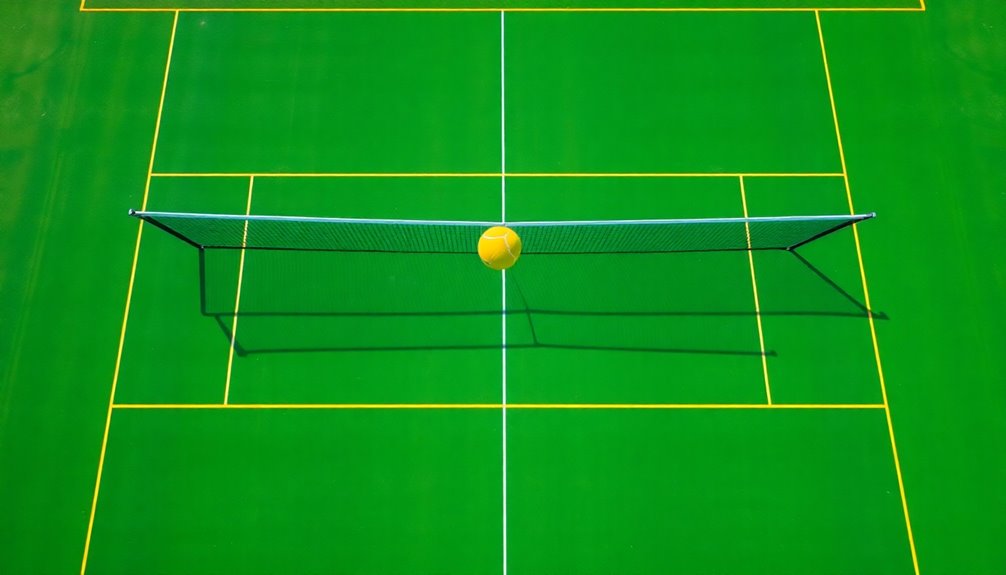
Identifying target areas on the court is essential for improving your tennis game. To elevate your performance, develop strong court awareness. Start by observing your opponent’s positioning and movement. Use targeting techniques to aim for open spaces, making it harder for them to return your shots.
Focus on the corners, as they can create angles that disrupt your opponent’s rhythm. Also, consider using the baseline and service boxes strategically. By placing your shots in these areas, you’ll keep your opponent on the defensive.
Practice visualizing your targets before each point, and remember to adjust your aim based on your opponent’s weaknesses. Ultimately, honing these skills will help you dominate the court and enhance your overall gameplay. Incorporating teamwork and communication strategies from soccer can also improve your on-court dynamics and decision-making.
The Importance of Shot Placement in Tennis

When you focus on shot placement, you’re not just hitting the ball; you’re strategically targeting specific court zones to gain an advantage. This approach can disrupt your opponent’s rhythm, making it harder for them to anticipate your next move. Mastering placement can turn a good player into a great one. Moreover, understanding field dimensions and markings can help you better visualize and maximize your shot placement strategy on the court.
Court Zones Strategy
Effective shot placement in tennis can make all the difference in your game, especially when you understand the various court zones.
By mastering baseline tactics, you can dictate play from the back of the court. Aim for the corners to stretch your opponent and create openings.
When you approach the net, your net strategies should focus on quick, precise volleys that exploit any gaps. If you force your opponent to hit from awkward positions, you’ll increase your chances of winning points.
Remember, targeting specific zones not only enhances your control but also keeps your opponent guessing.
Combining these strategies will elevate your performance and help you establish a commanding presence on the court.
Disrupting Opponent’s Rhythm
Mastering shot placement not only helps you control the game but also plays a key role in disrupting your opponent’s rhythm. When you aim for rhythm breaks, you force your opponent to adjust, creating openings for your next shot.
Here are three effective strategies to ponder:
- Use unexpected angles: Hitting shots to the corners catches your opponent off guard, making it tough for them to anticipate your next move.
- Vary your pace: Mixing up the speed of your shots can throw off their timing, leading to mistakes.
- Change heights: Combining high lobs with low drives can disrupt their comfort zone, forcing awkward returns.
Reading Your Opponent: What to Look For?
How can you gain an edge in tennis by reading your opponent? Start by observing their stance. Are they leaning forward, ready to attack, or are they positioned defensively? This can signal their intent.
Next, pay attention to their shot preparation. If their racket is high, they might be gearing up for a powerful shot; a low racket could mean a softer return. Anticipate where they’ll aim based on these cues.
For instance, if they shift their weight to one side, they’re likely to target the opposite corner. By decoding these signals, you can position yourself effectively, making it easier to counter their shots and dictate the game. Additionally, understanding sportsmanship and respect can enhance your interaction on the court, fostering a positive competitive environment.
Strategic Aiming: High, Low, and Angled Shots
When you’re on the court, strategic aiming can make all the difference. Focus on targeting your opponent’s weaknesses, using court angles to your advantage, and varying your shot heights. These tactics can keep your opponent guessing and elevate your game. Additionally, consistent practice in aiming improves overall performance by enhancing your accuracy and shot placement.
Targeting Opponent’s Weaknesses
Have you ever noticed how targeting your opponent’s weaknesses can turn the tide of a match? By focusing on their vulnerabilities, you can shift the momentum in your favor.
Here are three strategies to contemplate:
- Recognizing Patterns: Pay attention to their targeting tendencies and adjust your strategies accordingly.
- Exploiting Weaknesses: Identify areas where they struggle, whether it’s footwork or shot selection, and aim your shots there.
- Assessing Stamina: Analyze their form and stamina during the match to predict responses and counter their strengths effectively.
Utilizing Court Angles
Incorporating angled shots into your baseline strategies will keep your opponent guessing.
For instance, hitting sharply angled balls can pull them wide, opening up the opposite side of the court for your next shot.
Remember, the key to leveraging court angles lies in precision and timing.
With practice, you’ll find that utilizing angles makes your shots much more effective.
Varying Shot Heights
Using angles to keep your opponent off-balance is just the start. Varying shot heights can disrupt their rhythm and give you a tactical edge.
Consider these factors:
- Shot Trajectory: High shots can push your opponent back, while low ones can force them to bend.
- Spin Effects: Adding topspin to high shots can create unpredictable bounces, while slice shots keep the ball skimming low.
- Pace Control: Adjusting shot depth and speed can exploit your opponent’s preferences and weaknesses.
Mental Game: The Psychology of Targeting
While you might focus on technique and physical conditioning, the mental aspect of targeting in tennis plays a crucial role in your performance. Developing strong mental focus helps you stay present during matches, allowing you to make better shot selections.
Visualization techniques can enhance this process; picture yourself hitting precise shots to your target areas. This mental rehearsal creates confidence and clarity about where to aim. When you’re mentally engaged, you’re less likely to second-guess yourself and more likely to execute your strategy effectively. Embracing a positive attitude releases potential to overcome challenges in your game.
Common Mistakes in Shot Placement and How to Avoid Them
Certainly! Here’s your updated article subheading content:
Many players struggle with shot placement, often leading to missed opportunities or unforced errors.
To enhance your game, it’s essential to identify and avoid common mistakes:
- Ignoring Opponent’s Position: Always consider where your opponent is on the court; aim for open spaces rather than predictable spots.
- Inconsistent Shot Selection: Stick to a plan that suits your strengths. Random shot choices can leave you vulnerable.
- Neglecting Placement Drills: Regularly practice placement drills to refine your accuracy and consistency. Additionally, understanding offensive strategies can help you make more effective decisions in shot placement.
Conclusion
In the grand tapestry of tennis, every shot you make is like a painter’s brushstroke on a canvas. Aim wisely, and you’ll create a masterpiece, weaving your strategy into each rally. Remember, the court isn’t just a battleground; it’s a stage where you dance with your opponent. By honing your shot placement and reading their moves, you’ll not only elevate your game but also craft a beautiful symphony of skill and strategy. Keep painting your path to victory!