
Tennis Control Drills for Beginners
May 4, 2026Control drills are essential for beginners in tennis because they build your foundational skills. These drills improve your precision and consistency while developing muscle memory. Start with a basic tennis stance and practice accuracy through simple ball toss drills. Partner passing can help you build rhythm and communication. Incorporating rally games makes the process fun and engaging. As you progress, you’ll track improvements and avoid common mistakes. Stick around to discover more tips for mastering tennis skills!
Why Control Drills Are Essential for Beginners
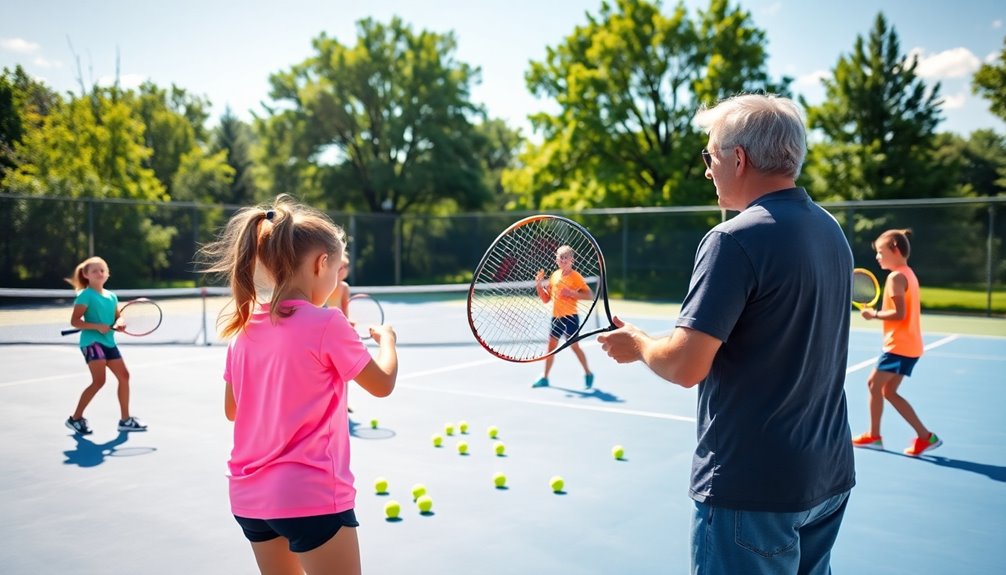
When you’re starting out in tennis, control drills are essential for building a solid foundation. These exercises help you develop muscle memory, allowing you to execute shots with precision and consistency.
By focusing on your strokes, you’ll improve your understanding of ball placement and racket control. This isn’t just about physical skills; it also demands mental focus. You’ll learn to concentrate on each movement, which reinforces better habits over time.
As you practice, you’ll notice that your confidence grows alongside your abilities. The more you engage in these drills, the more automatic your responses become during matches.
Ultimately, control drills set the stage for success, helping you shift smoothly into more advanced techniques and strategies. Additionally, incorporating consistent practice routines enhances familiarity and confidence on the field.
The Importance of Hand-Eye Coordination in Tennis
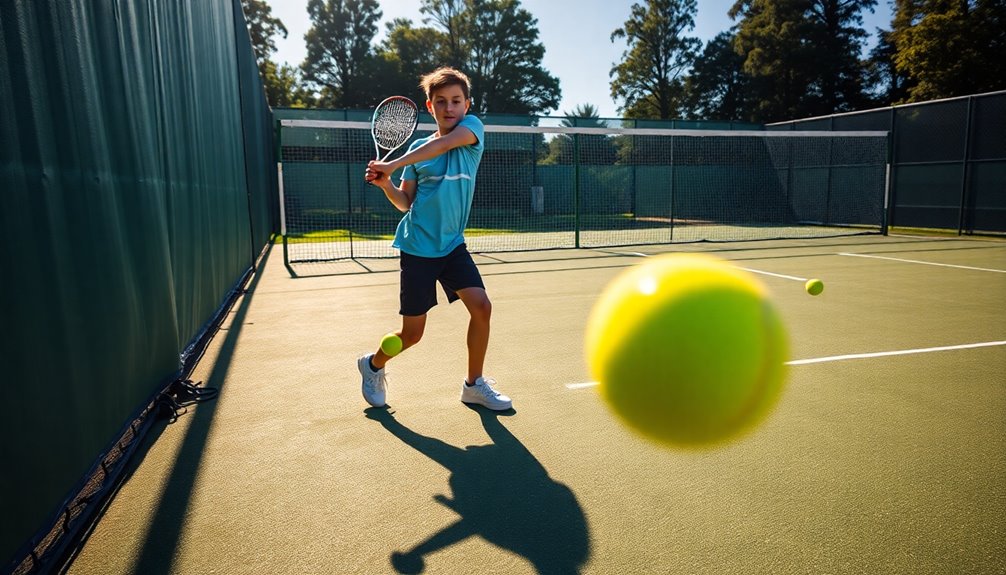
Hand-eye coordination is essential in tennis, as it directly affects your ability to make accurate shots. When you’re on the court, you need to effectively track the ball with your eyes while simultaneously preparing your racket for a hit.
Good visual tracking allows you to anticipate where the ball will go, helping you position yourself correctly. The better your hand-eye coordination, the more consistent your shots will be, whether you’re serving or returning.
Practicing drills that focus on this skill can enhance your reflexes and improve your overall game. Remember, tennis isn’t just about power; precision is key, and developing strong hand-eye coordination will give you the edge you need to succeed. The importance of sportsmanship and respect in any sport, including tennis, cannot be overstated as it fosters a positive and competitive environment.
Basic Tennis Stance: Setting Up for Success
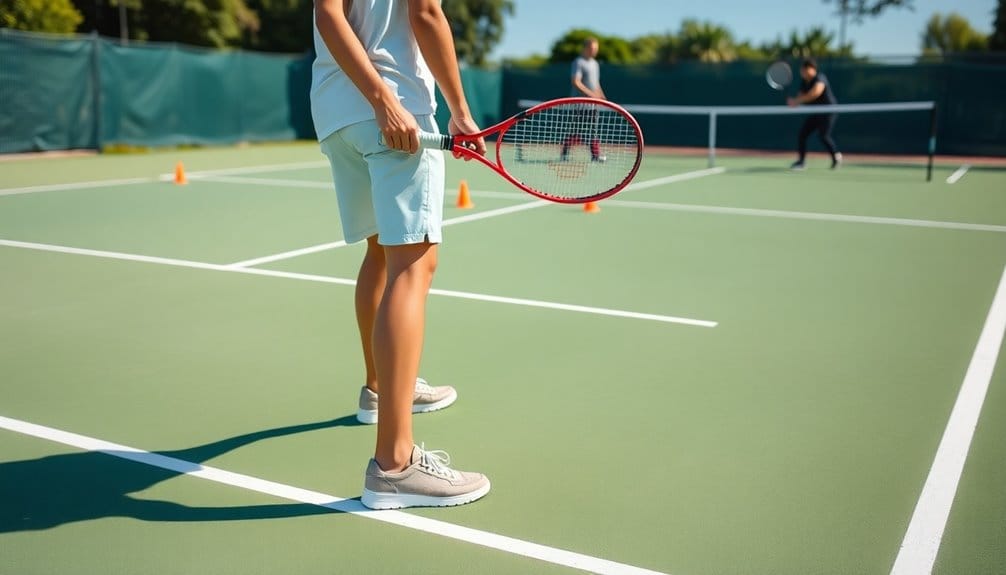
Mastering the basic tennis stance is essential for setting yourself up for success on the court. Start by positioning your feet shoulder-width apart, with your knees slightly bent. This proper posture helps you stay balanced and ready to move in any direction.
Keep your weight on the balls of your feet, allowing for quick reactions. Your racket should be held with the appropriate grip techniques—whether it’s an eastern or western grip—ensuring you’re prepared for the upcoming shot.
Maintain a relaxed upper body, with your elbows slightly bent and your racket in front of you. By focusing on these foundational elements, you’ll enhance your stability and readiness, ultimately improving your overall game. Additionally, field dimensions play a crucial role in understanding how to position yourself effectively in various playing environments.
Simple Ball Toss Drills to Improve Accuracy
After establishing a solid stance, focusing on your ball toss can greatly enhance your accuracy in serves and overheads.
Start with simple drills to build your confidence. First, practice tossing the ball straight up in front of you. Keep your arm relaxed and guarantee the ball reaches the same height each time.
Next, try tossing the ball to your dominant side, aiming for a consistent drop point. This helps you develop an accuracy focus that translates to your serves.
Finally, incorporate a target on the ground to aim for during your toss. Visualizing this target reinforces your precision. Additionally, maintaining a structured framework in your practice sessions mimics the essential elements of match play, fostering better performance under pressure.
Partner Passing: Building Consistency With a Friend
Partner passing is a great way to boost your consistency while having fun with a friend.
By focusing on key techniques, you’ll not only improve your control but also build a stronger connection with your partner. Incorporating drills that emphasize shooting accuracy can further enhance your overall performance on the court.
Let’s explore the benefits and essential skills you can master together.
Benefits of Partner Passing
Engaging in partner passing drills can greatly enhance your consistency on the court. When you practice with a partner, you’ll develop effective partner communication, which helps you understand each other’s playing styles and preferences. This connection not only boosts your confidence but also fosters a supportive environment that encourages improvement.
Additionally, partner passing is excellent for rhythm building. As you rally back and forth, you’ll find your timing improves, making it easier to hit the ball consistently.
This drill allows you to focus on your shots without the pressure of a match, giving you the freedom to experiment. Overall, partner passing is a fun and productive way to sharpen your skills and build a solid foundation for future play.
Key Techniques to Master
Consistency is key in tennis, and mastering a few fundamental techniques during partner passing can greatly elevate your game. Focus on stroke variety to keep your rallies dynamic. Experiment with forehands, backhands, and volleys, ensuring you can execute each shot with precision. This practice not only enhances your skills but also keeps your partner engaged.
Don’t forget grip adjustments; they’re essential for effective shot-making. Try different grips for various strokes to discover what feels comfortable and effective for you.
As you work with your partner, communicate openly about your preferences and areas for improvement. This collaboration will help you both develop consistency, making your partner passing sessions more productive and enjoyable.
Keep it fun, and you’ll see progress quickly!
Target Practice: Aiming for Precision on the Court
To improve your precision on the court, you’ll want to focus on specific target zones during practice. Using markers effectively can help you visualize your aim and enhance your accuracy. Try incorporating drills that challenge you to hit these targets consistently for better control in your game. Additionally, effective passing drills can enhance your overall coordination, which is crucial for achieving greater accuracy in your shots.
Focused Target Zones
Focusing on target zones can greatly enhance your precision on the court. By practicing specific target zone exercises, you’ll develop a better sense of where to aim your shots.
Start by dividing the court into sections, like the corners and the center. As you rally, try to hit these zones consistently. This method not only improves your shot placement but also boosts your confidence during matches.
Incorporating these drills into your routine will lead to significant accuracy enhancement. You’ll notice that as you become more comfortable with targeting, your overall gameplay improves.
Using Markers Effectively
After honing your targeting skills, using markers can take your precision to the next level. Place visual targets on the court to help you focus your shots. For instance, you can use cones, balls, or even tape to create specific zones where you want to land your shots.
Pay attention to marker placement; position them along the sidelines or near the service boxes to challenge yourself further. As you practice, aim for these markers, making adjustments as necessary.
This method not only sharpens your accuracy but also builds your confidence in hitting exact spots. By incorporating markers into your drills, you’ll develop a clearer sense of direction and purpose with each swing.
Drills for Accuracy
As you aim for greater accuracy on the court, incorporating targeted drills can markedly enhance your shot precision.
Start by setting up target zones on the court using cones or hula hoops. Focus on different areas for each shot, such as the corners and center. When you practice, concentrate on ball placement, ensuring you hit each target zone consistently.
You can also partner up for accuracy drills. Have your partner call out a target zone while you rally, challenging you to hit that spot. Gradually increase the distance to improve your control.
The One-Bounce Drill: Enhancing Timing and Control
While mastering timing and control is essential for any tennis player, the One-Bounce Drill offers a simple yet effective way to sharpen these skills.
In this drill, you’ll practice hitting the ball after it bounces once. Focus on your footwork and positioning to guarantee you’re in the right spot to make contact. This exercise helps you refine your timing techniques, allowing you to anticipate the ball’s trajectory better.
As you improve, incorporate control strategies by aiming for specific targets on the court. Start slowly, then increase your pace as you gain confidence. Additionally, practicing interval runs can further enhance your overall athletic performance and conditioning.
Shadow Swinging: Perfecting Your Technique Off the Ball
To perfect your technique off the ball, shadow swinging is an invaluable drill that allows you to focus solely on your form. This exercise helps you develop your shadow technique, enabling you to visualize your strokes without the distraction of a ball.
Start by standing in your ready position, then practice your forehand and backhand motions, paying close attention to your grip and body alignment. As you swing, concentrate on maintaining a smooth swing rhythm; this will make your real swings more fluid later on.
You can even incorporate footwork to enhance your overall movement. Remember, the goal is to internalize the mechanics of your shots, so repeat this drill regularly for the best results. Additionally, understanding pressure management during practice can greatly improve your overall performance in matches.
Forehand and Backhand Control: Focused Drills for Beginners
Mastering your forehand and backhand is essential for building a solid foundation in tennis. Start by focusing on your forehand grip; hold the racket comfortably, allowing for a smooth swing. Practice hitting against a wall or with a partner, aiming for consistent contact.
Next, work on your backhand stance. Position your feet shoulder-width apart, and rotate your hips as you prepare to strike. For drills, try alternating between forehands and backhands, keeping your eyes on the ball and your movements fluid.
Incorporate footwork by stepping into each shot, ensuring you’re balanced and ready for the next hit. These focused drills will enhance your control and confidence on the court, setting you up for success. Additionally, consider dynamic warm-ups to prepare your muscles and improve overall performance before hitting the court.
The Wall Drill: Practicing Alone With Purpose
The wall drill is a fantastic way to hone your tennis skills when you’re practicing alone. This solo practice method allows you to focus on your shots without the need for a partner.
Start by choosing a solid wall and stand a few feet away. Use the wall technique to practice your forehand and backhand strokes, ensuring you maintain proper form. Aim for accuracy by targeting a specific spot on the wall, and keep track of how many successful hits you can achieve.
Vary your rhythm and power to simulate match conditions, and don’t forget to incorporate volleys and overheads as you become more comfortable. This drill not only builds consistency but also boosts your confidence on the court. Additionally, focusing on passing accuracy can enhance your overall control and precision in your shots.
Incorporating Movement: Drills for Footwork and Balance
Improving your footwork and balance is essential for becoming a well-rounded tennis player. Start with basic footwork techniques like the side shuffle and quick steps to the net. These drills help you move efficiently while maintaining control.
Next, incorporate balance drills such as single-leg stands or lateral lunges. These exercises strengthen your core and improve stability during shots.
To create a dynamic routine, combine footwork drills with balance exercises. For example, practice your footwork while hitting against a wall, focusing on maintaining your balance after each shot.
Rally Games: Making Control Drills Fun and Engaging
After honing your footwork and balance, it’s time to bring some excitement into your practice with rally games. These engaging activities make control drills enjoyable while enhancing your skills. You can try rally variations like “Around the World” or “Target Practice,” where you aim for specific zones on the court.
These formats keep you motivated and improve your accuracy.
Introduce fun competitions with a friend to elevate the challenge. Set rules like who can maintain a rally the longest or hit the most targets in a set time.
Rally games not only reinforce your control but also foster a friendly atmosphere. So grab a partner, mix up the variations, and let the games begin!
Measuring Progress: Tracking Your Improvement
Progress in tennis isn’t just about winning matches; it’s about recognizing how far you’ve come. To effectively track your improvement, set clear progress benchmarks. These can include metrics like the number of successful serves, rally lengths, or accuracy in hitting targets during drills.
Keep a journal or use an app to record your sessions and note any advancements.
Incorporating improvement strategies, like focusing on specific skills each week, can help you pinpoint areas needing work. Regularly review your progress, and celebrate small victories to stay motivated.
This approach not only enhances your skills but also makes your training more rewarding. By measuring your growth, you’ll gain confidence and a clearer vision of your tennis journey.
Common Mistakes to Avoid in Control Drills
While practicing control drills, it’s easy to fall into common pitfalls that can hinder your development. One common misconception is focusing solely on power instead of precision. Remember, control is about placement, not just hitting harder.
Another mistake is neglecting footwork; good positioning is essential for effective shots. You might also rush through drills, thinking speed equals improvement, but that can lead to sloppy technique.
Finally, don’t compare yourself to others; everyone progresses at their own pace. Instead, focus on your own goals for better results.
Tips for Staying Motivated as a Beginner Tennis Player
Staying motivated as a beginner tennis player can be challenging, especially when progress feels slow. To keep your spirits high, consider these tips:
- Set realistic goals: Break down your objectives into achievable steps. Celebrate small victories to build momentum.
- Practice positive reinforcement: Reward yourself for reaching milestones, whether it’s treating yourself after a good practice or sharing your achievements with friends.
- Stay connected: Join a local tennis group or find a practice partner. The social aspect can make your sessions more enjoyable and keep you accountable.
Conclusion
As you wrap up your control drills, think of yourself as a painter, mastering the strokes of your craft. Each practice session adds depth to your skills, shaping you into a more confident player. Embrace the journey, just like a budding artist refining their technique. Remember, every swing brings you closer to your masterpiece on the court. Stay committed, keep practicing, and soon you’ll be painting your victories in vibrant colors. Enjoy the game!