

How to Keep the Ball in Play Longer
May 3, 2026To keep the ball in play longer, focus on your ball control and movement techniques. Use effective dribbling, maintain agility with footwork drills, and guarantee proper positioning. Communication with your teammates is key—trust each other and strategize together. Anticipate your opponent’s moves and create space to exploit weaknesses. Stay mentally engaged by visualizing successful plays and adapting to the game. For more tips on enhancing your gameplay, you’ll discover valuable insights ahead.
Understanding the Importance of Keeping the Ball in Play
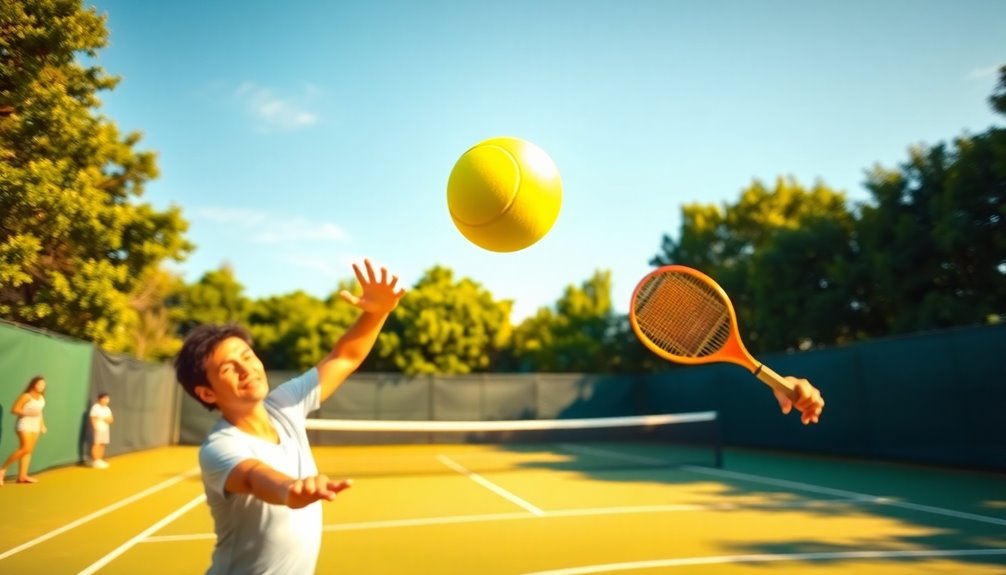
Keeping the ball in play is essential for enhancing the overall flow of a game. When you understand ball dynamics, you can make quicker decisions that keep the action going.
Each time the ball’s in motion, it creates opportunities for teamwork and strategy, contributing to the game rhythm. By maintaining that rhythm, you not only engage the players but also the audience, making the experience more exciting.
When the ball’s constantly in play, you reduce the chances for the opposing team to regroup and strategize. Remember, every pass and movement matters. Effective passing strategies can significantly impact match dynamics, allowing your team to maintain possession and control the game.
Key Techniques for Enhancing Ball Control

Mastering ball control is essential for maintaining momentum in any game. To enhance your skills, focus on ball manipulation through various dribbling techniques.
Incorporate footwork drills to improve your agility and reaction time, ensuring you can respond to opponents effectively. Proper body positioning is key; stay low and balanced to maintain control while maneuvering tight spaces.
Incorporate footwork drills to enhance agility and reaction time, while maintaining a low, balanced stance for optimal control in tight spaces.
Engage in balance exercises to strengthen your stability, which is vital during pressure handling situations. Rhythm control helps you anticipate movements, making it easier to execute plays. Regular agility training will further improve your overall skill enhancement, allowing you to outmaneuver defenders. Additionally, practicing finishing drills can help develop your shooting confidence, making it easier to capitalize on scoring opportunities. By combining these techniques, you’ll keep the ball in play longer and elevate your game considerably.
How Teamwork Boosts Gameplay Momentum

Teamwork can really elevate your game by keeping the momentum alive.
When you communicate effectively, trust your teammates, and use smart positioning, you create opportunities to maintain control. Incorporating small-sided passing drills into your practice can further enhance your team’s ability to keep the ball in play.
Let’s explore how these elements work together to enhance your gameplay.
Communication Is Key
Effective communication acts as the lifeblood of any successful team on the field. You need to master effective signals and verbal cues to guarantee everyone’s on the same page.
Pay attention to body language, as it can convey emotions that words sometimes can’t. Use non-verbal communication to your advantage—like nods or hand gestures—to enhance understanding.
Active listening is essential; it allows you to grasp feedback loops and adjust your strategy in real time. Encourage your teammates with positive words, fostering a supportive atmosphere.
Maintain situational awareness by processing clear instructions and concise messages quickly. When communication flows seamlessly, you’ll keep the ball in play longer, enhancing your team’s overall performance.
Trust Among Teammates
Trust fuels the engine of successful gameplay, allowing teammates to work in harmony. When you prioritize team dynamics, you create an environment where everyone understands their player roles.
Engage in trust exercises to build confidence among teammates and enhance emotional intelligence. Regular feedback sessions help you address issues and promote conflict resolution, ensuring that everyone stays focused on shared goals.
Incorporating bonding activities can further strengthen these connections, making collaboration feel more natural and efficient. As trust deepens, your gameplay momentum increases, allowing for quicker decision-making and seamless coordination.
Strategic Positioning Techniques
When players understand their positions and responsibilities, the entire team benefits from enhanced gameplay momentum.
Strategic positioning involves effective defensive positioning and offensive strategies that keep the game flowing. You need spacing awareness to guarantee players aren’t overcrowded, which allows for better angle creation when passing.
Implementing timely player rotations helps maintain pressure on the opposing team while making sure you’re always ready for shift tactics. Make necessary timing adjustments to exploit openings and respond to threats.
Regular threat assessment is essential; if you anticipate an opponent’s moves, you can adjust your positioning accordingly.
This synergy not only keeps the ball in play longer but also elevates the team’s overall performance, creating a dynamic and engaging game.
Adopting a Proactive Mindset on the Field
Consider these strategies:
- Visualize yourself making successful plays before the game starts.
- Anticipate the opponent’s moves and position yourself accordingly.
- Engage in adaptability training to handle unexpected scenarios.
- Regularly assess your performance to improve decision-making.
- Consistent practice of effective closeouts sharpens your ability to contest shots effectively.
The Role of Communication in Maintaining Play
A proactive mindset sets the stage for effective communication on the field. You’ll want to use verbal cues and nonverbal signals to enhance game awareness among teammates.
Establishing feedback loops during team huddles can help clarify strategies and strengthen understanding. Active listening is key; it allows you to grasp nuances and encourages open dialogue.
Establishing feedback loops in huddles enhances strategy clarity and fosters open dialogue through active listening.
When conflicts arise, focus on conflict resolution techniques that maintain team cohesion. Incorporating positive reinforcement can uplift spirits and motivate players, while encouragement tactics keep morale high.
Strategic discussions during breaks can refine your approach, ensuring everyone’s on the same page. By prioritizing communication, you not only keep the ball in play longer but also foster a stronger, more connected team. Additionally, understanding field dimensions and markings can significantly impact your team’s positioning and strategy during gameplay.
Utilizing Space Effectively to Extend Possession
To keep possession longer, you need to use space wisely.
By creating space through movement and utilizing both width and depth, you can open up new passing lanes.
Plus, anticipating your opponent’s positioning allows you to stay one step ahead and maintain control of the game. Incorporating rondo variations into your training can help enhance your team’s ability to effectively manipulate space during matches.
Create Space Through Movement
Creating space through movement is essential for maintaining possession, as it allows players to navigate the field more effectively. By utilizing offensive patterns and adjusting to defensive shifts, you can create opportunities for your team.
Focus on:
- Dynamic positioning to exploit gaps in the defense
- Player spacing to stretch the field and spread defenders
- Movement drills to enhance your zone awareness and decision-making
- Flow adjustments to adapt your movement strategies on the fly
Utilizing these techniques helps you control the game and keep the ball in play longer.
Use Width and Depth
Utilizing width and depth on the field is essential for extending possession and breaking through defensive lines. By embracing width expansion, you can stretch the defense, creating openings for lateral movement.
As you explore depth, focus on vertical play to penetrate zone coverage effectively. Maintain strategic spacing to enhance spacing dynamics, allowing teammates to support each other. Use boundary utilization to push defenders back and create more opportunities.
Lateral passing becomes vital in this setup, enabling quick ball movement that keeps the defense on their toes. Always stay aware of your surroundings; field awareness will help you identify the best moments to exploit space.
Mastering these elements will considerably increase your ability to maintain possession and control the game.
Anticipate Opponent’s Positioning
As you analyze the opponent’s positioning, you’ll find that anticipating their movements can open up new opportunities for maintaining possession. By honing your spatial awareness and understanding opponent tendencies, you can make effective offensive reads that disrupt their defensive strategies.
- Recognize positioning patterns that reveal their next move
- Use movement prediction to stay one step ahead
- Adjust your reaction time to exploit gaps
- Create a rhythm that influences game flow
Analyzing Opponents to Anticipate Moves
Anticipating your opponent’s next move can be a game-changer. Start by observing their tendencies; do they favor certain shots or positions?
Reading cues like body language and eye direction helps you predict their intentions. For instance, if you notice them shifting weight to one side, it might signal an offensive pattern or a quick shot.
Observing body language and eye direction can reveal your opponent’s next move, allowing you to anticipate their strategy effectively.
Similarly, understanding their defensive strategies can give you insight into when they might be on the back foot. By analyzing these elements, you can position yourself advantageously, intercepting their plays before they unfold.
The more you recognize these patterns, the better equipped you’ll be to respond effectively, keeping the ball in play longer and gaining the upper hand in the match. Additionally, mastering interception techniques can significantly enhance your ability to disrupt their offensive maneuvers.
Practicing Drills That Promote Continuous Play
Here’s your revised article subheading content:
Recognizing your opponent’s patterns sets the stage for effective drills that enhance continuous play. Focus on integrating various drills into your practice routine to improve your skills and keep the ball in play longer.
Here are some key activities to take into account:
- Dribbling exercises to enhance control and precision.
- Passing drills that encourage quick decision-making and teamwork.
- Footwork techniques to improve your speed and agility.
- Balance exercises to maintain stability during play.
Incorporate agility training to boost your reaction time and guarantee you can swiftly adjust to the game’s flow.
Additionally, practicing quick decision-making can significantly enhance your ability to maintain possession and keep the action moving.
Also, work on coordination drills and rhythm practice to develop a seamless playing style. Consistent practice of these drills will elevate your game and keep the action going.
Mental Strategies for Staying Engaged During the Game
To stay engaged during the game, focus on your breathing techniques to maintain calmness and clarity. Visualizing successful plays can also sharpen your mindset and boost your confidence. Additionally, understanding the impact of diverse athletes can inspire you to appreciate the different playing styles and strategies during the game.
Focus on Breathing Techniques
Breathing techniques can greatly enhance your focus and engagement during a game. By mastering breath control, you’ll find it easier to manage energy and reduce stress.
Incorporate these strategies into your routine:
- Mindful breathing: Focus on each breath, letting distractions fade away.
- Rhythmic inhalation: Establish a steady pattern that calms your nerves.
- Tension release: Exhale deeply to let go of built-up stress and anxiety.
- Concentration methods: Use your breath as an anchor to maintain focus during intense moments.
Visualize Successful Plays
Mastering your breath can set the stage for mental clarity, but visualizing successful plays takes your focus to the next level. By employing mental imagery, you can create vivid scenarios in your mind where you execute plays flawlessly.
Picture yourself making that perfect pass or scoring the winning point. This not only boosts your confidence but also enhances your muscle memory.
Incorporate positive reinforcement by celebrating these imagined successes. When you visualize a successful outcome, you train your brain to believe it’s possible in real life.
This practice keeps you engaged and motivated throughout the game. So, take a moment to envision your best plays—it’s a powerful tool that can help you keep the ball in play longer.
Adapting Your Game Plan for Different Situations
While every game has its own rhythm, adapting your game plan to different situations can be the key to keeping the ball in play longer. Embrace game adaptability by sharpening your situational awareness.
Adapting your game plan to various situations enhances ball retention and sharpens your situational awareness.
Analyze your opponent’s strengths and weaknesses to make informed tactical adjustments. This strategic flexibility allows you to switch up your approach mid-game, enhancing your responsive gameplay.
- Read the field like a book, anticipating plays before they unfold.
- Shift formations seamlessly, keeping your opponents guessing.
- Communicate effectively with teammates, ensuring everyone’s on the same page.
- Adjust your pacing to control the game tempo, maximizing ball retention. Incorporating endurance training methods into your regimen can further enhance your ability to adapt and maintain ball possession throughout the match.
Conclusion
Keeping the ball in play longer isn’t just about skill; it’s a mindset. When you embrace teamwork and communication, you create a flow that’s hard to break. Remember, every pass and play counts. If you anticipate your opponent’s moves and stay engaged, you’ll find yourself not just playing the game, but mastering it. So, challenge yourself to adapt and push your limits—because the true beauty of the game lies in the moments you keep alive.