
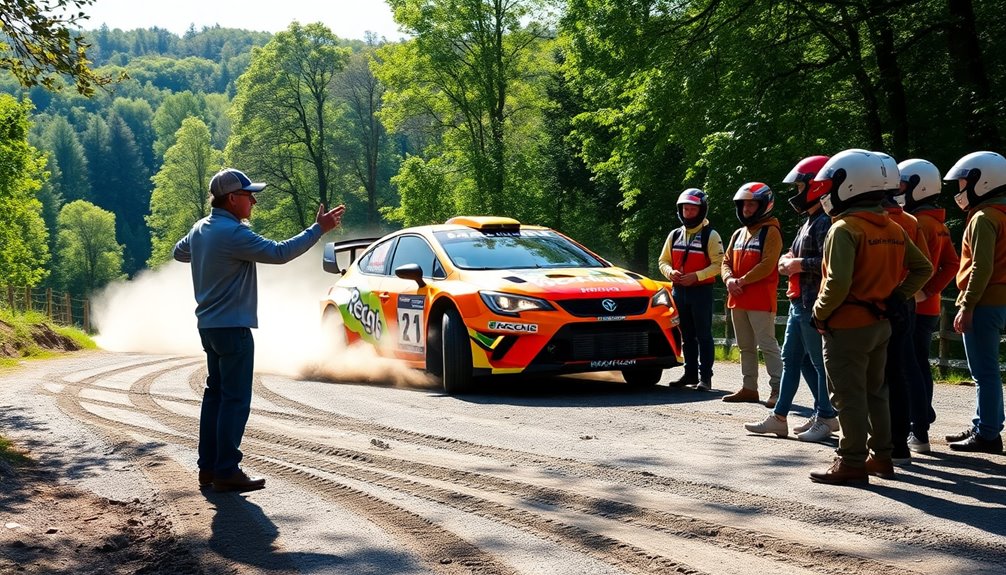
How to Teach Rallying to Beginners
May 4, 2026To teach rallying to beginners, start by sparking excitement through immersive experiences like ride-alongs and simulation sessions. Focus on fundamental skills, teamwork, and communication between the driver and co-driver. Make certain you’ve got essential equipment, and help them choose the right rally car. Encourage practice of key driving techniques and foster connections within local clubs. Building a supportive community keeps everyone motivated and engaged. There’s so much more to explore to enhance the learning journey together.
Why Rallying Is an Exciting Sport for Beginners

Rallying is an exhilarating sport that grabs beginners’ attention right from the start. With its rich rallying history, you’ll quickly find yourself immersed in a culture that thrives on adrenaline rush and excitement.
As you plunge into it, you’ll experience the teamwork dynamics that make each event special, where every crew member plays a crucial role. Skill development is at the forefront, allowing you to hone your driving techniques while learning from seasoned professionals.
Furthermore, the event organization aspect fosters a sense of community, offering mentorship opportunities that help you grow. You’ll also build lasting driver camaraderie, connecting with fellow enthusiasts who share your passion.
It’s an adventure that promises thrills and lifelong friendships, and mastering field dimensions and markings will enhance your understanding of the sport.
Understanding the Basics of Rallying
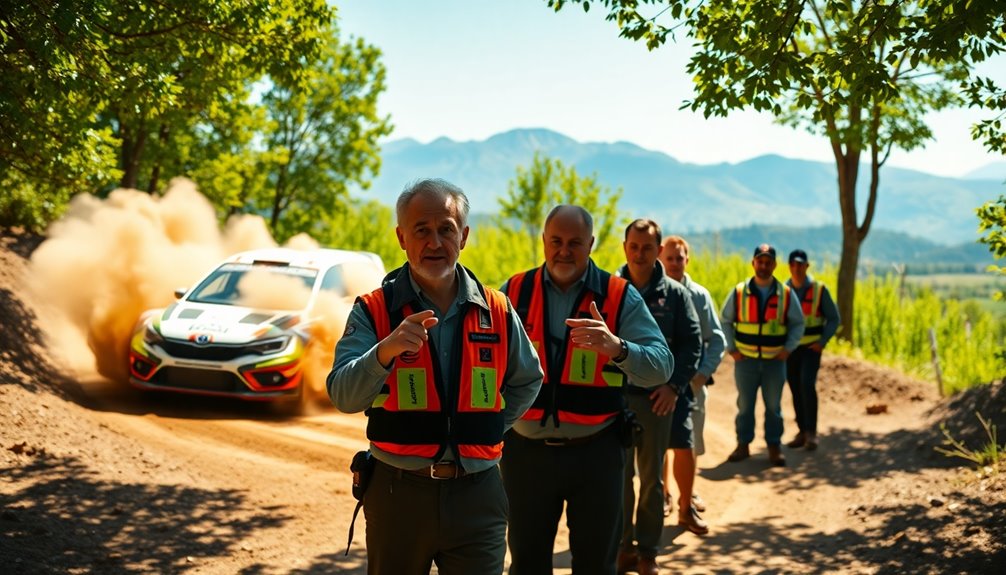
At its core, rallying combines skill, strategy, and speed, creating a unique motorsport experience.
Understanding rallying history is essential; it dates back to the early 20th century, evolving from simple endurance races to the thrilling events we see today.
Rallying’s rich history, rooted in early endurance races, has transformed into the exhilarating competitions we cherish today.
You’ll notice how rallying culture emphasizes teamwork and communication, often involving a driver and a co-driver working in sync.
As you immerse yourself in this sport, appreciate the diverse terrains, from dirt roads to snow-covered paths, which test your adaptability.
The camaraderie among rally enthusiasts adds to the excitement, making every event a celebration of passion and perseverance. Furthermore, the cultural influences in rallying can shape driving styles and strategies, much like how diverse athletes impact basketball.
Essential Equipment for New Rally Drivers
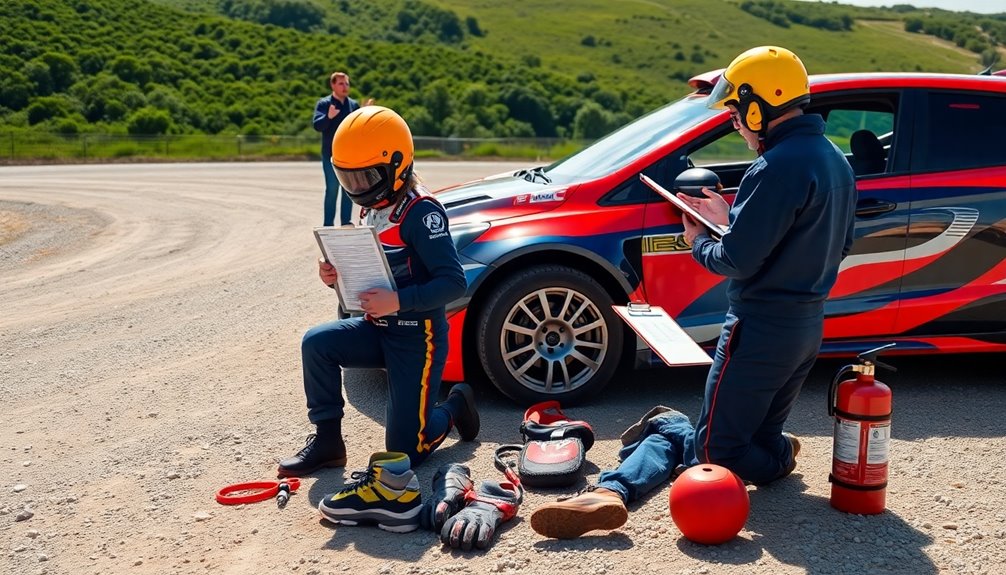
When you’re starting out in rallying, having the right equipment is essential.
You’ll need to choose the right vehicle, invest in important safety gear, and equip yourself with navigation tools. Additionally, understanding the importance of leg strength training can help enhance your driving stability and control during races.
Let’s explore what every new rally driver should have to hit the road safely and effectively.
Recommended Vehicle Types
Choosing the right vehicle is essential for new rally drivers looking to excel in the sport. Compact cars often serve as beginner-friendly options, providing excellent handling characteristics and agility.
Off-road vehicles can also be great, especially when equipped with rally modifications for improved performance. Focus on engine reliability and performance tuning, as these factors will enhance your driving experience.
Consider weight distribution for better control during tight turns. Prioritize driver comfort; a well-suited seat and controls can make a big difference.
Finally, don’t forget about maintenance tips; keeping your vehicle in top shape will guarantee you’re always ready to tackle any rally stage with confidence.
Choose wisely, and you’ll set a solid foundation for your rallying journey.
Safety Gear Essentials
While diving into the thrilling world of rallying, having the right safety gear is essential for protecting yourself on the track. Start with a quality helmet that meets safety standards; this is your first line of defense.
Next, invest in a flame-resistant racing suit and gloves, which are important for personal protective measures. Don’t forget about a sturdy pair of racing shoes that provide grip and support.
A HANS (Head and Neck Support) device is also critical to prevent neck injuries during collisions.
Finally, equip your vehicle with a proper roll cage and seat belts to enhance your safety.
Navigation Tools Needed
Maneuvering through the twists and turns of a rally course becomes much easier with the right tools at your disposal. Start with a reliable GPS device for accurate waypoints tracking and route planning.
Combine this with traditional map reading skills to enhance your navigation strategies. Digital tools and rally apps can provide real-time updates, helping you assess terrain and locate rally checkpoints effectively.
Don’t overlook the importance of directional signs along the route; they can guide you through tricky sections. Familiarize yourself with your tools before hitting the course, and practice using them in various conditions.
Mastering these navigation tools will give you the confidence to tackle any rally challenge that comes your way.
Key Driving Techniques Every Beginner Should Know
Mastering the essential driving techniques is crucial for every beginner rally driver. You need to understand driving dynamics and how they affect your vehicle’s handling.
Start by practicing throttle control; smooth inputs can mean the difference between a clean corner and a spin-out. Learn to balance the throttle and brake to maintain momentum, especially in tight turns.
Experiment with weight transfer by shifting your body and steering the car effectively. Focus on looking ahead, as this helps anticipate the road’s challenges.
Finally, embrace the art of drifting; it’s not just flashy—it’s a useful technique for maintaining speed through corners. Understanding field dimensions and equipment is also important, as it influences how you navigate different terrains.
With these skills under your belt, you’ll be well on your way to becoming a confident rally driver.
How to Choose the Right Rally Car
Choosing the right rally car starts with understanding your budget, especially as a beginner.
You’ll also want to contemplate the vehicle’s size and weight, as these factors can greatly impact your handling.
Finally, think about all-terrain capability—it’s essential for tackling various surfaces you’ll encounter on the rally course. Additionally, consider a car that enhances cardiovascular endurance, as this can improve your overall driving performance during long rallies.
Budget Considerations For Beginners
When you’re diving into the world of rallying, budget considerations play a crucial role in selecting the right rally car. Start by exploring budget-friendly options, like used cars or those from lesser-known brands. These can provide the performance you need without breaking the bank.
Next, consider cost-effective strategies, such as joining local rally groups or clubs. They often have resources and advice on affordable modifications that enhance your rally experience.
Don’t forget to factor in maintenance and repair costs; some cars are cheaper upfront but can be costly to maintain. By keeping your budget in mind and being strategic, you can find a rally car that meets your needs and keeps you within your financial limits.
Vehicle Size And Weight
Finding the right rally car involves a careful balance between vehicle size and weight. A compact car can offer better agility, enhancing vehicle dynamics and improving your handling characteristics.
Lightweight vehicles generally accelerate faster and handle turns more effectively, making them ideal for beginners. However, a heavier car might provide more stability on rough terrains, helping you feel more secure as you learn.
Consider your own comfort and control; a car that feels too big or heavy can hinder your confidence. Ultimately, choose a vehicle size and weight that complements your driving style, allowing you to master the basics of rallying while enjoying the thrill of the sport.
Finding that sweet spot will set you up for success.
All-Terrain Capability Importance
Understanding all-terrain capability is essential for selecting the right rally car, as it directly impacts your performance on diverse surfaces. You need a vehicle that boasts excellent terrain adaptability to handle everything from gravel to mud.
Look for features that enhance off-road dynamics, such as adjustable suspensions and all-wheel drive systems. These will help you maintain control and agility, especially in challenging conditions.
Additionally, consider tire types designed for various terrains, as they can greatly affect traction and handling. By choosing a car that excels in all-terrain capability, you’ll not only boost your confidence but also improve your overall rallying experience.
Navigating Different Types of Rally Terrain
Maneuvering different types of rally terrain can feel intimidating, especially if you’re new to the sport. Understanding gravel handling is essential for maintaining speed while traversing loose surfaces.
In snowy conditions, mastering snow drifting helps you control your car as you slide through corners. When faced with mud, focus on mud traction to keep your grip.
Hill climbing requires a blend of power and technique, so adjust your suspension tuning accordingly. Pay attention to surface variations and adapt your cornering techniques to maintain control.
Weather conditions can change rapidly, so always consider tire selection for peak performance across rally stages. With practice, you’ll confidently tackle any terrain that comes your way. Additionally, a well-prepared defense requires teamwork to navigate challenging conditions effectively.
Mastering the Art of Co-Driving
While many focus on the driver’s skills, mastering the art of co-driving is equally essential in rallying. Strong co-driver communication is key to developing effective navigation strategies and ensuring smooth teamwork dynamics.
You’ll rely heavily on rally pace notes, so practice reading them clearly and concisely. Trust building between you and the driver is vital; your role responsibilities include guiding them through tight corners and tricky sections.
Emphasize rally etiquette by maintaining focus and offering effective feedback during practice runs. Co-driver training sessions can help refine these skills, making you both more cohesive on the course. Additionally, understanding effective communication can significantly enhance your overall performance on the rally stage.
Importance of Rally Safety Measures
Rallying can be thrilling, but prioritizing safety measures is essential for protecting everyone involved. Implementing rally safety protocols is vital to guarantee a secure environment for drivers, co-drivers, and spectators alike. Familiarize yourself with the specific safety gear required, like helmets and fire suits, to minimize risks.
Incorporating accident prevention strategies, such as proper vehicle maintenance and route reconnaissance, can appreciably reduce the likelihood of mishaps. Additionally, encouraging effective communication among team members during events keeps everyone aware of potential hazards. Always emphasize that safety comes first; no victory is worth compromising health and well-being.
Developing a Rally Training Program
To create an effective rally training program, you’ll want to focus on building essential skills while fostering team cohesion. Start by identifying key rally training methods that suit your beginners’ diverse skill levels. Incorporate basic techniques like navigation, communication, and vehicle control, ensuring each participant gets hands-on experience.
Integrate beginner mentorship by pairing less experienced members with seasoned teammates. This not only enhances learning but also builds trust within the group.
Schedule regular practice sessions, emphasizing consistent feedback to help participants improve. Incorporate fun challenges to keep motivation high and encourage teamwork. Additionally, prioritizing warm-ups helps set the stage for a successful and injury-free experience, which is crucial for beginners.
Tips for Practicing Rally Skills Effectively
As you hone your rally skills, focus on specific techniques during practice sessions to maximize your improvement. Start by incorporating various rally drills that challenge both your speed and accuracy. These drills can help you build muscle memory and confidence.
Set aside time for skill assessments, where you evaluate your progress and identify areas for improvement. Keep track of your performance; this data will guide your future practices.
Don’t forget to mix in fun activities to maintain motivation. Collaborate with a partner to simulate match conditions, enhancing your adaptability. Incorporating small-sided games can further improve your decision-making and tactical awareness during practice.
Ultimately, always warm up properly and end with cool-down exercises to prevent injuries. By maintaining a structured approach, you’ll see significant advancements in your rally skills.
How to Analyze Rally Performance and Improve
To improve your rally performance, you need to focus on key performance indicators that highlight your strengths and weaknesses.
Identifying common mistakes can also help you refine your techniques and strategies.
Key Performance Indicators
Measuring success in rallying requires a keen focus on Key Performance Indicators (KPIs) that reveal how well teams are performing.
To effectively analyze rally performance, you should track essential performance metrics like timing, speed, and accuracy. These metrics provide clear insights into your team’s strengths and weaknesses. Regular skill assessments will help you identify areas needing improvement, allowing you to tailor training sessions accordingly.
Utilize data from past rallies to set benchmarks and track progress over time. By consistently monitoring these KPIs, you can make informed decisions that enhance overall performance.
Common Mistakes Analysis
Identifying common mistakes in rally performance is essential for improvement. As you analyze your skills, focus on common errors like improper footwork or incorrect stance.
These beginner pitfalls can hinder your progress and lead to frustration. Utilize coaching strategies that emphasize feedback and observation; this helps you recognize areas needing work.
Regular skill assessment will also guide your training, allowing you to pinpoint specific weaknesses. Keep a log of your sessions to track improvements and setbacks.
By addressing these mistakes head-on, you’ll develop a stronger foundation in rallying. Remember, every error is a learning opportunity, so embrace them as part of your journey.
With persistence, you’ll turn those common errors into strengths.
Finding Local Rally Clubs and Events
How can you discover local rally clubs and events? Start by exploring online resources like websites and forums dedicated to motorsport. Many local rally clubs list upcoming events, beginner workshops, and community outreach programs.
Don’t underestimate the power of social media; follow clubs and rally enthusiasts to stay informed about events and networking opportunities. Join local groups to connect with fellow rally enthusiasts and share experiences.
Attend meetings or events to meet organizers and learn about their promotional strategies for attracting new members. Engaging with these communities will help you find events tailored for beginners and deepen your understanding of the sport.
Building a Supportive Rally Community
While rallying can be an exhilarating solo pursuit, building a supportive community around it makes the experience even richer. Engage with local clubs by attending community events and social gatherings where you can meet like-minded enthusiasts.
Join mentorship programs to learn from experienced drivers and participate in skill-sharing sessions to boost your abilities. Utilize online forums for advice and tips, and don’t hesitate to join group challenges that foster camaraderie.
Look for volunteer opportunities at events to deepen your connections. Attend safety workshops to enhance your skills while networking during networking nights.
Collaborative training sessions can also help you grow, ensuring that everyone in your community feels valued and supported. Together, you’ll elevate your rallying experience!
How to Encourage Passion and Commitment in New Drivers?
To ignite passion in new drivers, you need to create engaging experiences that spark their excitement for rallying.
By organizing fun events and challenges, you’ll help them connect with the sport on a deeper level.
Don’t forget to foster community support; it’s essential for building commitment and camaraderie among drivers.
Create Engaging Experiences
Creating engaging experiences is essential for fostering passion and commitment in new drivers. Start by organizing interactive workshops where beginners can learn not just the basics, but also the excitement of rallying.
Use hands-on activities that allow them to practice skills in a fun environment. Incorporate immersive experiences, such as simulation sessions or ride-alongs with seasoned drivers. This gives newcomers a taste of the adrenaline and teamwork involved.
Encourage questions and discussions during these sessions to deepen their understanding and connection to the sport. By creating these dynamic learning opportunities, you’ll ignite their enthusiasm and motivate them to push their limits.
Ultimately, these experiences can transform casual interest into lasting commitment.
Foster Community Support
Building on those engaging experiences, fostering community support can greatly enhance new drivers’ passion and commitment. Start by organizing community events and rally workshops that encourage participation. These gatherings promote teamwork and help build lasting friendships among drivers.
Implement mentorship programs where experienced drivers guide newcomers, sharing valuable insights and tips. Utilizing social media can keep everyone connected, allowing drivers to share their progress and challenges.
Encourage group outings to strengthen bonds outside of the rally environment. Local sponsorships can also provide resources and opportunities for growth. Ultimately, create online forums where drivers can discuss experiences and seek advice.
Together, these strategies will cultivate a supportive atmosphere that inspires new drivers to commit to their rallying journey.
Conclusion
So, you think rallying’s just about speed and thrills? Ironically, it’s really about patience, precision, and community. As you guide beginners through twists and turns, you’ll find that the journey—filled with mistakes and learning—is just as exhilarating as crossing the finish line. Embrace the challenges, nurture their passion, and watch them transform from novices into dedicated drivers. Who knew that teaching rallying could teach you just as much about yourself?