
Set Pieces That Score: Corner Kick Plays and Other Strategies to Win the Game
October 30, 2025Last updated: · By Jake Turner
Soccer set pieces are restarts of play, such as corner kicks, free kicks, and throw-ins, where the ball is stationary or placed and both teams can organize before the action begins. Scoring from them is difficult but not rare, and the edge comes from planning and repetition. This guide explains how the main set pieces work, what recent research says about their effectiveness, and how to practice them so your team converts more of them.
Key Takeaways
- A 2025 meta-analysis of 12 studies found a cumulative goal conversion rate of about 3.09% from corner kicks, compared with about 25.61% for final attempts.
- The same meta-analysis found no significant difference in offensive outcomes between inswinging and outswinging corner kick deliveries.
- A 2021 mixed-methods study identified “transcendence,” meaning how significant the resulting goal was, as the most informative variable for evaluating corner kicks.
- Under the Laws of the Game, opponents must stand at least 2 metres (about 2.2 yards) from the ball on a throw-in.
- A 2025 systematic review found that every corner-kick study it included scored at least 7 on its quality checklist, but none was fully comprehensive.
What Are Soccer Set Pieces and Why Do They Matter?
Soccer set pieces are the situations where play stops and restarts from a fixed position: corner kicks, direct and indirect free kicks, throw-ins, goal kicks, and penalty kicks. Because the restart is predictable in location, teams can rehearse runs, screens, and delivery patterns ahead of time. That preparation is what separates a set piece that creates a chance from one that simply resets the attack.
Set pieces matter because they give you a scoring opportunity that does not depend on beating a defender in open play. They also let you reorganize players into positions that suit your strengths, such as a tall target player at the near post or a strong striker on the edge of the box. Teams that treat set pieces as a structured part of training usually get more out of them than teams that improvise.
How Do Corner Kick Plays Work?
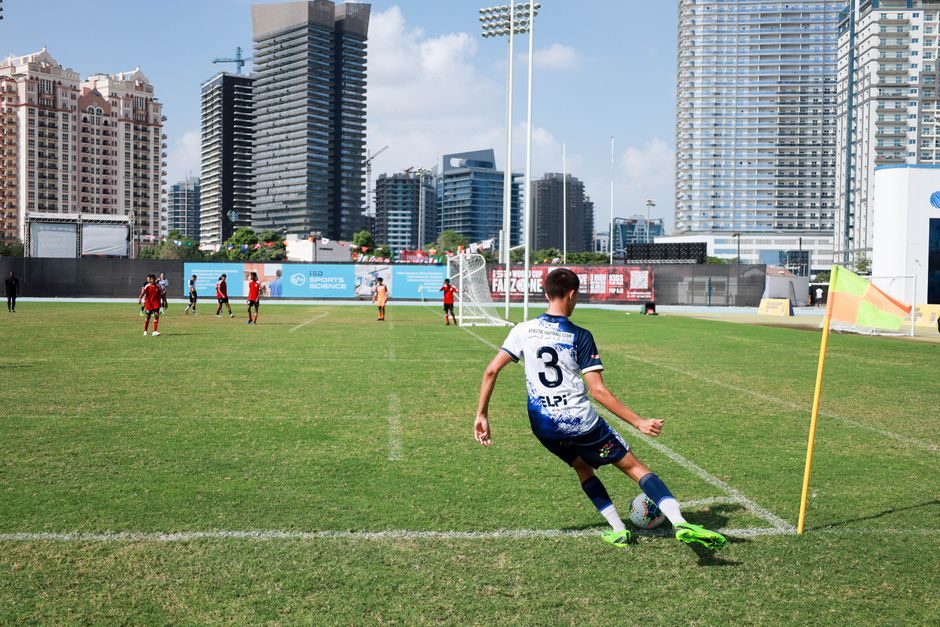
A corner kick play combines a delivery into the penalty area with movement designed to get an attacker free of marking. The kicker swings the ball toward a zone where teammates are timing runs, and the goal is a clean header or a quick shot before the defense can recover. Most effective corner routines pair a specific delivery with a specific run.
What Are Near-Post and Far-Post Runs?
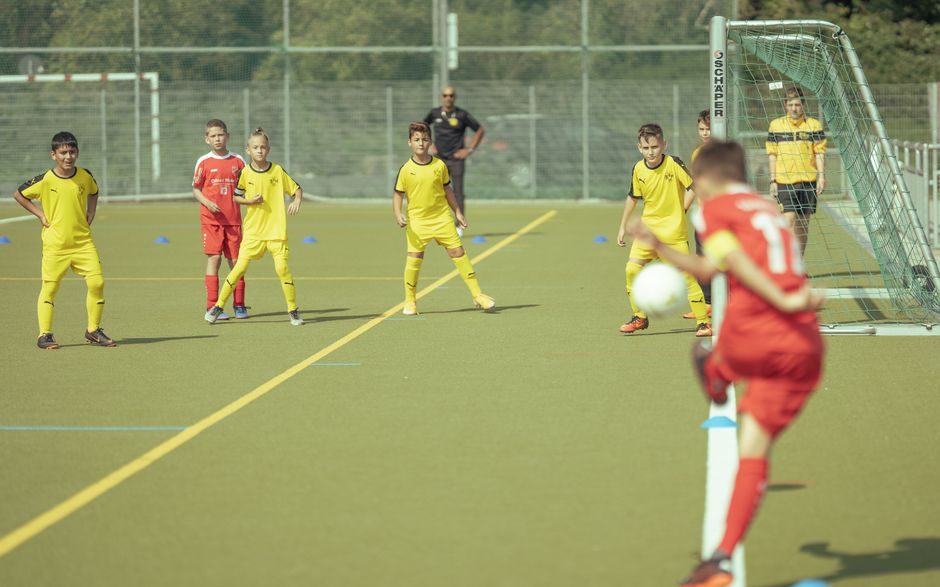
A near-post run is when an attacker moves toward the front of the goal as the ball is delivered, aiming to meet it before the goalkeeper or the first defender. A far-post run is a movement to the back post, where the ball often drops for an unmarked player. Many teams use both at once, so defenders must cover two threats with the same players.
Do Inswinging or Outswinging Corners Work Better?
Neither delivery type has been shown to be clearly superior. A 2025 meta-analysis published in the Journal of Coaching and Sports Science pooled 12 studies and found no significant difference in offensive outcomes between inswinging and outswinging deliveries. An inswinger curves toward the goal and an outswinger curves away from it, so choose the one that matches your best attackers and the movement your team has rehearsed.
When Should You Use Short Corners and Fake Sets?
A short corner is a pass to a nearby teammate rather than a delivery into the box. It can catch a defense that is still setting up, and it can open a passing lane for a cross from a better angle. Fake sets, where players run toward the ball and then peel away, can pull defenders out of position and open space for a teammate who was not marked.
| Corner play | How it works | Main risk |
|---|---|---|
| Near-post run | Attacker meets the delivery at the front of the goal | Easy for the goalkeeper to claim if the delivery is too slow |
| Far-post run | Attacker finishes a ball that drops to the back post | Attack can be cleared if the delivery is too deep |
| Short corner | Pass to a nearby teammate to change the angle | Can be cut out and lead to a quick counterattack |
| Fake set | Players feint toward the ball to pull defenders away | Requires precise timing and clear communication |
What Does Research Show About Corner Kick Success?
Research on corner kicks is growing but still uneven. A 2025 systematic review in Applied Sciences examined technical and tactical analysis of corner kicks in male soccer and found that every included study scored at least 7 on its quality checklist, though none was fully comprehensive. That means the findings are useful but should be read with their methods in mind.
A 2021 mixed-methods study in Sustainability analyzed corner kicks in high-level football and identified “transcendence,” or how significant the resulting goal was, as the most informative variable. In practical terms, the research suggests that the goals that matter most are often the ones scored in high-stakes moments, so evaluate your routines by the chances they create in games that count.
A separate peer-reviewed study, published through the University of Southern Denmark research portal, compared corner-kick goal characteristics across three European leagues and examined the determinants of corner-kick success at the FIFA World Cup 2022. Its focus on what drives variation makes it a useful read for coaches who want to understand why some routines work and others do not.
How Can You Make Free Kicks Score More Often?
To score more free kicks, match the approach to the type of kick and to the position of the wall and goalkeeper. A direct free kick can be shot straight at goal, so it calls for a reliable shooter and a plan for the wall. An indirect free kick must touch a second player before it can count as a goal, so it calls for a set play that creates a clean shot or pass.
What Is the Difference Between Direct and Indirect Free Kicks?
A direct free kick can be struck straight into the goal and count as a goal. An indirect free kick cannot score unless another player touches it before it goes in. Referees signal indirect free kicks by raising an arm, and the distinction determines how you should set up your attack.
How Do You Beat a Defensive Wall?
Defenders must stand at least 9.15 metres (10 yards) from the ball at a free kick, which gives the kicker room to shoot or pass over or around the wall. Use that space by aiming for the gaps at the sides of the wall, and by changing your target if the wall is set tightly. The following steps help a team build a consistent routine:
- Confirm the distance to the wall and the goal before the kick.
- Decide in advance whether the kicker will shoot, pass, or take a rehearsed short option.
- Choose a target gap based on the goalkeeper’s position and the wall’s width.
- Use a clear signal or call so teammates know which run to make.
- Review the outcome and adjust the routine for the next attempt.
How Should Teams Use Throw-Ins?
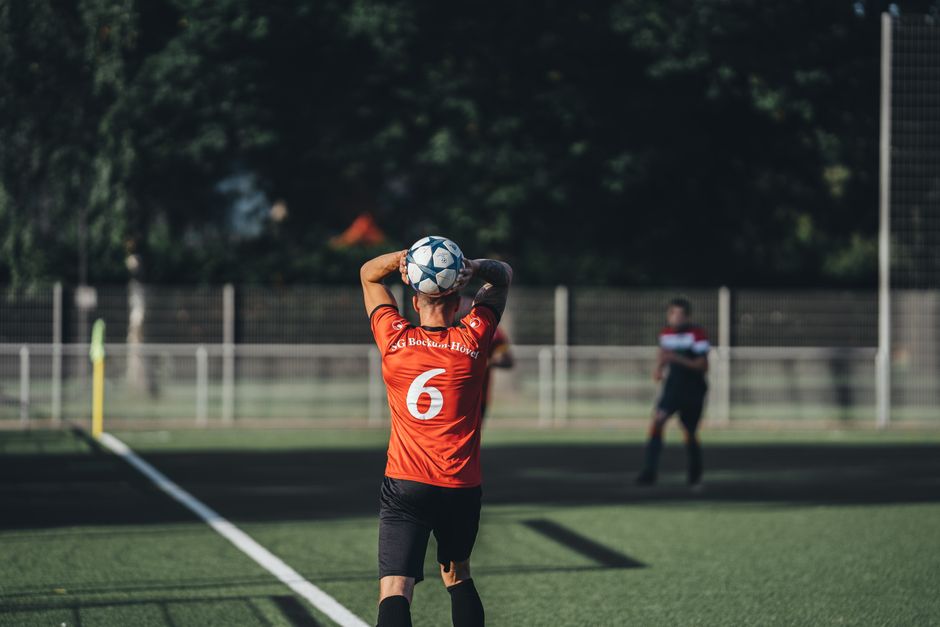
Throw-ins are a practical way to keep possession and start attacks from the touchline. The Laws of the Game require the thrower to face the field, keep both feet on or behind the touchline, use both hands, and release the ball from behind and over the head. Because the restart is quick, a simple, well-practiced pattern often works better than a complicated one.
Use these checks when setting up a throw-in routine:
- Pick a target teammate who is open before the throw is taken.
- Use a short throw to keep the ball when pressure is high.
- Use a longer throw to a forward when the defense is stretched and the forward can turn.
- Remember that opponents must stand at least 2 metres (about 2.2 yards) away.
- Practice the throw from both sides of the field so the routine works in any position.
How Do Teams Defend Set Pieces?
Defending set pieces means assigning players to specific threats rather than chasing the ball. A common approach is to mark attackers in zones near the goal while keeping one or two players free to clear. Teams also need players who can win aerial duels and a goalkeeper who communicates clearly.
Know the layout of the pitch before you set your markings. The penalty area and goal area dimensions determine where runs start and where the danger zones sit, and you can review the details in our guide to soccer field dimensions and penalty area markings. For defenders who need to improve their positioning in general, our set of defensive soccer drills for strengthening a backline covers the movement patterns that carry over into set-piece defending.
How Do You Practice Set Pieces?
Practice set pieces in short, repeated sessions that focus on one routine at a time. Start with the delivery, then add runs, then add defenders and a goalkeeper. Repetition builds the timing that makes a routine work under pressure.
- Choose two or three routines for the season and name each one clearly.
- Practice the kicker’s delivery until it reaches the same spot consistently.
- Add attacking runs and rotate players so everyone knows multiple roles.
- Introduce defenders and a goalkeeper, and reduce time between repetitions as the team improves.
- Record outcomes in each training session and keep the routines that create chances.
Quick touches and decisions in tight spaces also help when a restart breaks down, so pair set-piece work with one-touch drills for quick decision-making. If you are new to running a training plan, our guide on a step-by-step guide to coaching soccer for beginners explains how to structure sessions.
Frequently Asked Questions
Can You Score Directly From a Corner Kick?
Yes. A goal can be scored directly from a corner kick, with the ball entering the goal without touching another player. Teams usually aim for a chance inside the box, but a direct shot toward goal is also legal and can be a useful option if the goalkeeper is out of position.
How Far Must Defenders Stand From a Free Kick?
Defenders must stand at least 9.15 metres (10 yards) from the ball until it is in play. The distance applies to both direct and indirect free kicks and gives the kicker room to shoot or pass. Referees enforce the distance and can order a retake if a defender moves in too early.
Are Inswinging Corners More Effective Than Outswinging Corners?
The 2025 meta-analysis of 12 studies did not find a significant difference in offensive outcomes between the two. The choice should depend on your players and the movements you have rehearsed. Test both in training and track which delivery produces better chances for your team.
How Far Must Opponents Stand From a Throw-In?
Opponents must stand at least 2 metres (about 2.2 yards) from the thrower. This rule keeps the restart fair and gives the thrower a chance to find a teammate. A referee can stop play and have the throw retaken if an opponent is too close.
How Often Do Corner Kicks Result in Goals?
According to the 2025 meta-analysis in the Journal of Coaching and Sports Science, the cumulative goal conversion rate from corner kicks was about 3.09%. That is far lower than the rate of about 25.61% for final attempts, so corners are better viewed as a source of repeated chances than as a reliable goal source on any single kick.
Conclusion
Soccer set pieces reward preparation more than improvisation. Corner kicks depend on well-timed runs and a delivery that matches your attackers, free kicks depend on the right choice between a shot and a rehearsed pass, and throw-ins depend on quick, legal, well-practiced routines. Use the research to guide your choices, track what creates chances in real matches, and keep practicing until your set pieces become a dependable source of goals.
More on Soccer Set Pieces
Related guides: “What’s a Draw in Soccer?” A Guide to Soccer Rules and Lingo · 15 Fun Soccer Games That Improve Skills Without Boring Drills · Know Your Role: A Complete Guide to Soccer Positions in 7v7, 9v9, and 11v11 Formations
Free tools: Keto Macro Calculator · Keto Net Carbs Chart