
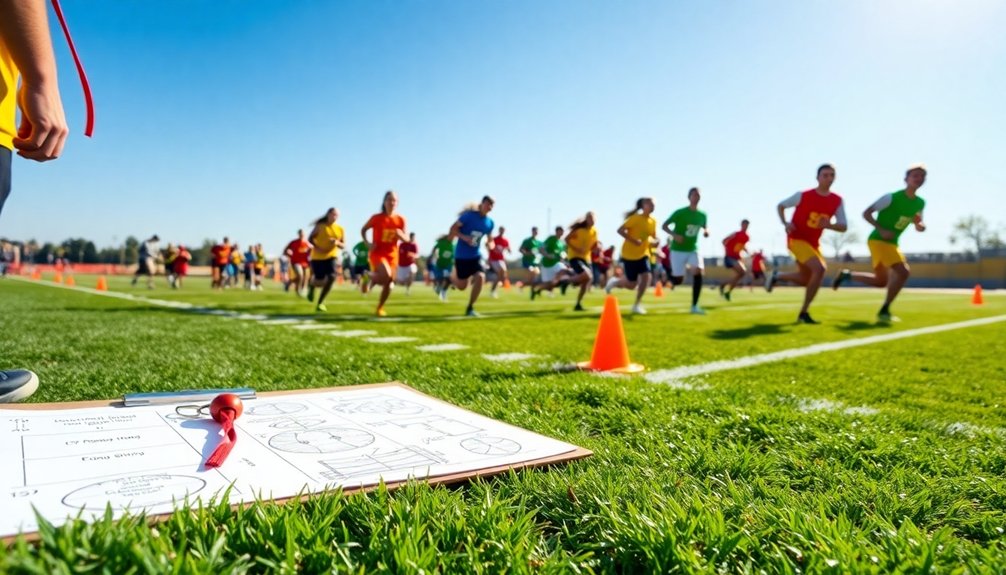
The Essentials of Flag Football Practice Planning
August 18, 2025Last updated: · By Jake Turner
A strong flag football practice plan starts with a dynamic warm-up, moves through fundamental skill drills and offense and defense work, and ends with a game-like scrimmage. Water breaks and heat precautions should be built into the schedule from the start, not added after players are already struggling. A 60- to 90-minute session works well for most youth and recreational teams, and the structure below can be scaled up or down.
Key Takeaways
- Children’s Hospital of Philadelphia sports medicine experts advise opening every practice with dynamic, movement-based warm-up exercises to prepare muscles and joints.
- The CDC reports that athletes who train on hot days face higher odds of dehydration and heat-related illness, so practice plans should account for weather.
- University of Utah Health notes that flag football produces the same kinds of less serious injuries as tackle football, such as sprains, muscle injuries, bruises and contusions.
- A suggested 90-minute practice splits time across a 10-minute warm-up, 20 minutes of fundamental drills, 20 minutes of offense and defense work, 15 minutes of small-sided games, 20 minutes of scrimmage and a 5-minute review.
- Each session should have one or two specific skill objectives so that drills and scrimmages stay focused.
How Should You Structure a Flag Football Practice?
Use a repeatable sequence of warm-up, skill work, team concepts, live play and a short wrap-up. This order moves players from low-intensity preparation to game-like decisions, and it lets you check progress before players tire. The table below shows one suggested 90-minute split, which you should adjust for age, experience and weather.
| Block | Time | Focus |
|---|---|---|
| Warm-up | 10 min | Dynamic stretches, footwork and light sprints |
| Fundamental drills | 20 min | Flag pulls, catching, route cuts and sprint mechanics |
| Offense and defense install | 20 min | One or two plays per side, plus coverage rules |
| Small-sided games | 15 min | 2-on-2 or 3-on-3 games to apply the install |
| Scrimmage | 20 min | Full-team reps in live situations |
| Cool-down and review | 5 min | Light movement, hydration check and one takeaway per player |
Why Does the Warm-Up Matter?
A warm-up prepares your muscles, joints and attention for the demands of practice, so it should happen before any drill. Children’s Hospital of Philadelphia sports medicine experts advise that every practice open with dynamic, movement-based exercises, which can improve flexibility and reduce strain risk, according to their guidance on benefits, safety and common injuries in flag football.
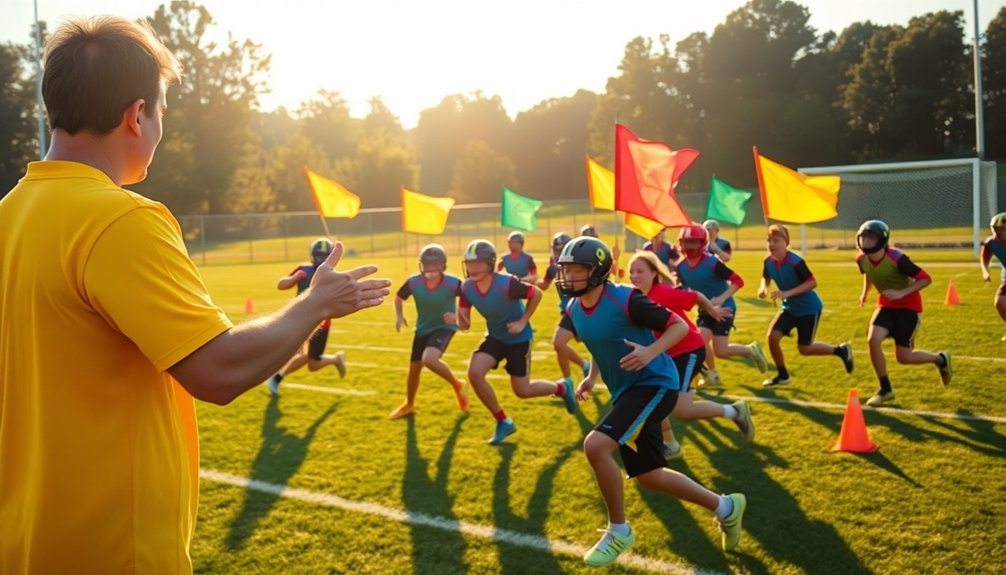
Start with about 10 minutes of movement that gradually rises in intensity. Useful choices include high knees, walking lunges, leg swings, lateral shuffles and skips, followed by a few build-up sprints. Finish with footwork ladder work or shuttle runs that match the agility demands of route running and pursuit.
Keep the warm-up the same from session to session. Players learn the routine, arrive ready to move, and spend less time waiting for the first drill to begin.
What Are the Best Drills for Fundamental Skills?
The most useful flag football drills build catching, flag pulling, route running and sprint speed through short, repeated reps. Choose drills that match the skills your team needs most, and keep each one to a few minutes so players get many touches. The three drills below are a practical starting set.
How Do You Run a Flag-Pulling Drill?
A flag-pulling drill teaches players to time their approach and pull a flag cleanly, which is the core defensive skill in flag football. Pair players up and mark a small lane with a clear start line.
- Have the ball carrier jog across the lane while the defender mirrors them laterally.
- On your whistle, the defender closes the distance, squares up and pulls one flag with a secure grip.
- Switch roles every 30 seconds so both players practice offense and defense.
- Add a change of direction once players are pulling cleanly at a steady pace.
What Is a Cone Route Drill?
A cone route drill is a set of marked cuts that helps wide receivers run precise routes at controlled speed. Place cones 5 to 10 yards apart, and have receivers run each route with a sharp plant and break at the cone. Once technique is clean, add a defender and time the break so the receiver turns at the right point. For a full list of routes to teach, see the core routes every flag football player should learn.
How Does a Catch and Sprint Drill Work?
A catch and sprint drill builds the transition from receiving a pass to running with the ball. The quarterback throws a short pass, the receiver catches it in stride and then sprints 10 yards upfield at full speed. Rotate receivers and vary the pass height and angle so players practice catching outside their ideal body position.
How Do You Balance Offense and Defense in Practice?
Balance offense and defense by teaching a small number of plays and coverage rules each session, then testing them in small-sided games. Installing too many plays at once slows learning, so keep each install focused. Both sides benefit: offensive players learn to read defenses, and defensive players learn to recognize route patterns.
How Should You Teach Offensive Plays?
Teach offensive plays one concept at a time, such as a route combination paired with a quarterback read. Walk the play at half speed before running it live, and have the quarterback call out the read before the snap. For more practice ideas on passing accuracy and decision-making, see quarterback drills for passing accuracy and decision-making.
Man-to-Man or Zone: Which Should You Teach?
Teach both basic coverages, because each one creates different practice needs. Man-to-man assigns each defender a specific receiver, while zone assigns each defender an area of the field.
| Feature | Man-to-man | Zone |
|---|---|---|
| Assignment | One defender covers one receiver | One defender covers one area |
| Strength | Tight coverage on a specific target | Helps defend deep throws and multiple receivers |
| Practice focus | Footwork, hip turns and flag-pulling timing | Communication, route reading and area landmarks |
| Main risk | A mismatch can leave an open receiver | Gaps form if players drift out of their area |
Communication matters in either system. Defenders should call out routes and switches before the snap. For more on matching coverage to team level, read defensive strategies for every team level.
Why Should You Use Scrimmages in Practice?
Scrimmages let players apply drilled skills in live situations, which is the main reason to include them. They also show which skills hold up under pressure and which still need work. Smaller formats such as 4-on-4 give more players repeated touches than full-team play when your roster is limited.
Timing matters. A short scrimmage early in practice uses players’ energy, while a scrimmage at the end tests whether they can apply the day’s skills when tired. You can do both, with a brief early game and a longer one to finish. Before you mark out scrimmage areas, review field dimensions and layout tips for setting up usable space.
How Do You Keep Players Hydrated in Heat?
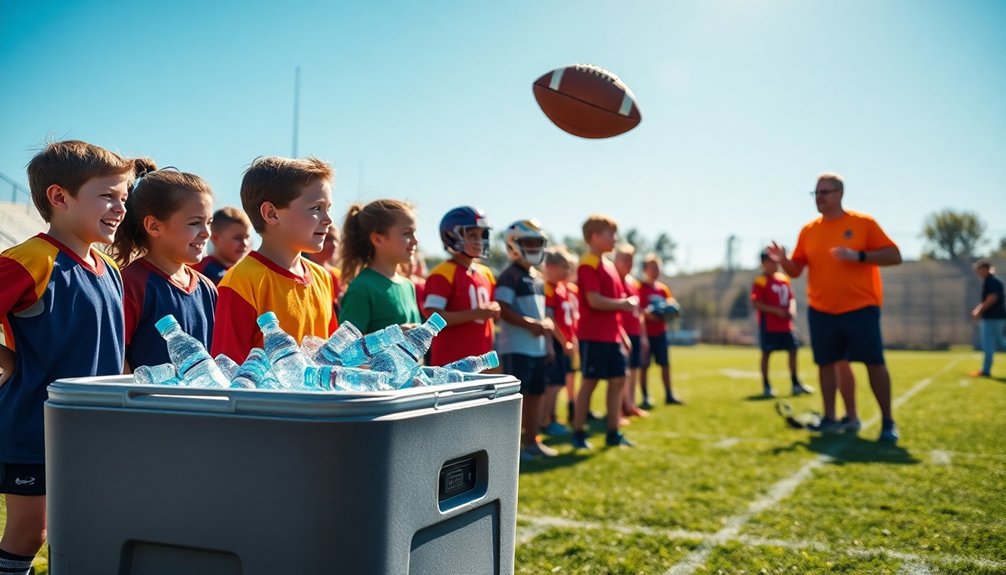
Plan water breaks before players ask for them, and adjust the schedule when temperatures rise. The CDC’s guidance on heat and athletes explains that athletes who train on hot days face higher odds of dehydration and heat-related illness, so hydration belongs in the practice plan as a fixed element. Heat illness is a range of conditions caused by the body overheating, from heat cramps to life-threatening heat stroke.
How Often Should Players Get Water Breaks?
A practical starting point is a water break every 15 to 20 minutes, with more frequent breaks on hot or humid days. This interval is practical guidance rather than a sourced standard, so adjust it for conditions. Keep water within reach at all times, not only during scheduled breaks, and bring extra bottles for players who forget theirs.
What Are the Signs of Dehydration?
Watch for these common warning signs during practice:
- Extreme thirst or a dry mouth
- Unusual fatigue or slowed sprinting
- Dizziness or lightheadedness
- Dark urine or less urine than usual
Young athletes may not always notice thirst, so check in with players rather than waiting for them to ask. Any player who is confused, faint or has stopped sweating in the heat should stop activity and get medical help right away.
How Should You Plan Practice Around Heat?
Check a heat-risk forecast before every practice and adjust the plan when conditions are high. The U.S. Environmental Protection Agency recommends this step in its guidance on heat and teenage athletes, which also notes that the CDC offers a free online heat-illness prevention course for coaches, athletic trainers, school nurses, parents and teachers.
On hot days, shorten intense drill blocks, add shade and rest, and move hard conditioning to cooler parts of the day when your schedule allows.
What Safety Steps Should Coaches Take?
Coaches should expect minor injuries, prepare for emergencies and keep first aid supplies and an AED ready at every practice. Flag football produces the same kinds of less serious injuries as tackle football, including sprains, muscle injuries, bruises and contusions, according to University of Utah Health’s parent guide to safe football play for kids. The same guide recommends that coaches be trained in first aid, with an AED available.
How Can You Reduce Injury Risk at Practice?
Use this checklist to build safety into every session:
- Run the same dynamic warm-up at the start of every practice.
- Check the heat forecast and adjust the plan before players arrive.
- Keep water, first aid supplies and an AED at the field.
- Confirm that at least one coach knows how to use the AED and where it is kept.
- Stop a drill when form breaks down from fatigue, rather than pushing through it.
How Do You Keep Practice Fun for Young Players?
Add fun elements that keep energy high without pulling focus from the skill goal. Engaged players repeat drills more willingly, which means more reps. Three simple options are:
- Play music: use a Bluetooth speaker during warm-ups to create an upbeat start.
- Add silly drills: include a relay or game variation that gets players laughing while they still practice a skill.
- Scrimmage early: start with a short game while energy is highest.
Build teamwork through simple routines, such as a pre-practice huddle or a shared goal for the day. Keep the fun in service of the session objective.
How Do You Set Objectives for Each Session?
Set one or two specific skill objectives for every practice, and tell players what they are at the start. A clear target, such as improving pass catching or route timing, helps you choose drills and judge progress. Vague goals like getting better make it hard to know what to change next.
Examples of useful objectives include:
- Catch at least 8 of 10 passes in a sideline catching drill
- Pull flags cleanly on three of four attempts in the flag-pulling drill
- Call coverage assignments before every snap in scrimmage
At the end of practice, review whether the group met the objective and note one adjustment for next time.
Frequently Asked Questions
How long should a flag football practice be?
Most youth and recreational teams do well with practices of about 60 to 90 minutes. Shorter sessions can work for younger players, while older or more experienced teams may handle longer blocks. Keep the warm-up and water breaks in every session regardless of length.
How many players do you need for a flag football practice?
You can run useful practices with fewer players by using small-sided games such as 2-on-2 or 3-on-3. Smaller formats give each player more touches than a full-field game would. Rotate players through offensive and defensive roles so everyone practices both.
Is flag football safe for kids?
Flag football is generally considered a lower-contact way to play than tackle football, but it is not injury-free. University of Utah Health reports that it produces the same kinds of less serious injuries, such as sprains and bruises. Good warm-ups, proper hydration, trained coaches and an available AED reduce risk during practice.
What should you do if a player gets hurt at practice?
Stop the drill, check the player, and follow your league’s emergency plan. Coaches should be trained in first aid and know where the AED is kept before practice starts. Call emergency medical services for any serious injury, any head injury with symptoms, or any player who has trouble breathing.
Can you practice in hot weather?
You can practice in hot weather if you change the plan, but you should not practice without precautions. Check the heat-risk forecast, shorten intense blocks, and add more water breaks and shade. If conditions are dangerous, move practice indoors or reschedule.
Conclusion
A solid flag football practice plan combines a dynamic warm-up, focused skill drills, offense and defense installs, live scrimmages and steady hydration. Set one clear objective each session, check the heat forecast, and keep safety supplies ready. With that structure, you can build players who are confident, prepared and ready to compete.
More on Flag Football Practice
- Effective Drills for Flag Football Quarterbacks
- Flag Football Gear for Girls: Empowering Female Players
- How Flag Football Teams Can Achieve Championship Success
- The Best Women’s Flag Football Cleats of 2026
- Top Cities for Flag Football Leagues: From Miami to Las Vegas
- Top Strategies for Girls Flag Football Teams
Related guides: Flag Football Plays for Beginners: Printable Route Trees Included · Flag Football Field Dimensions and Layout Tips · Key Positions in Flag Football Explained for Beginners
Free tools: Keto Macro Calculator · Keto Net Carbs Chart