
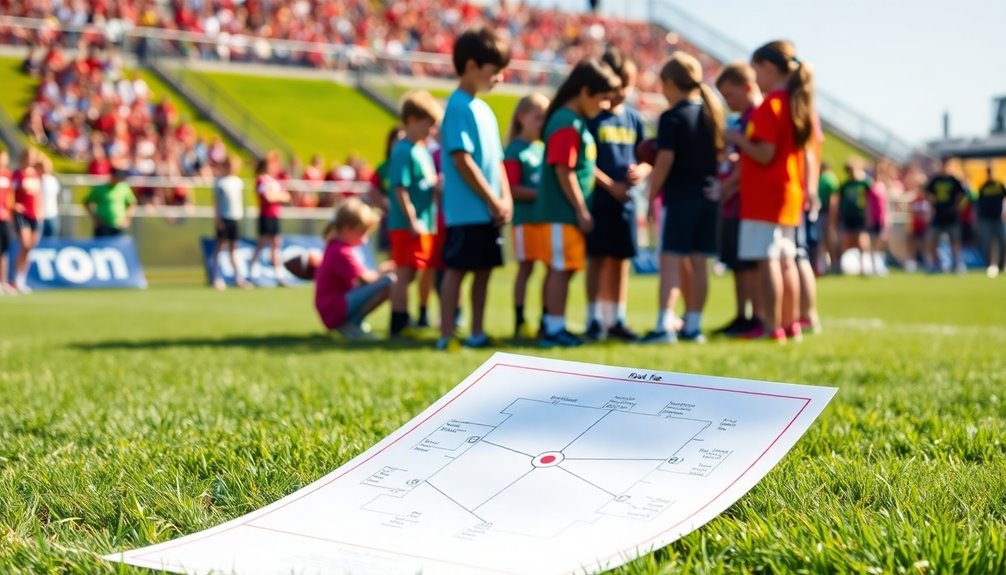
Flag Football Plays for Beginners: Printable Route Trees Included
March 25, 2026If you’re starting with flag football, understanding plays and formations is key. You’ll want to grasp the basics of offensive and defensive strategies, with printable route trees to help visualize passing routes. Familiarize yourself with various formations like the I-Formation and Shotgun to enhance teamwork. Use color-coded wristbands for seamless communication on the field. Mastering these fundamentals can greatly boost your gameplay, and there’s much more to explore that can take your skills to the next level.
Understanding Flag Football: Basics for Beginners
Flag football is an exciting way to immerse yourself in the world of team sports without the physical contact of traditional football. This non-contact sport emphasizes teamwork and strategy, making it perfect for beginners of all ages.
Each player has a specific role, from quarterback to receiver and defender, allowing everyone to showcase their skills.
Every player has a unique role, from quarterback to receiver, enabling all to shine on the field.
Understanding flag football is essential; knowing the route tree gives you a visual guide to the various passing routes players can run.
Familiarizing yourself with basic flag football plays enhances your ability to contribute to your team’s offense and defense. Effective teamwork is crucial in executing successful plays and avoiding penalties.
As you grasp these fundamentals, you’ll find it easier to advance the ball down the field while employing smart strategies to avoid being tagged.
The Importance of Formations in Flag Football
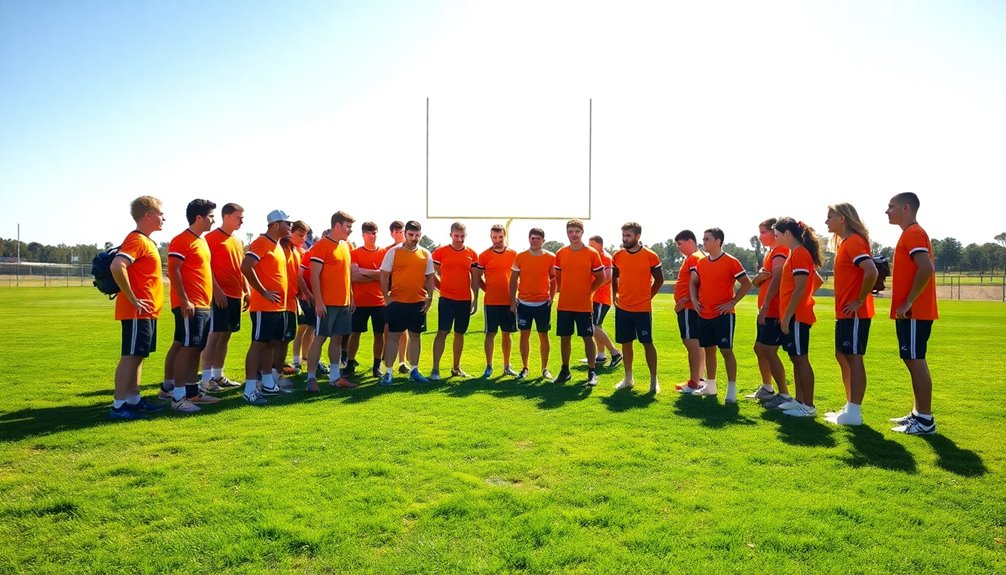
In flag football, formations are your team’s strategic backbone. They help you create key offensive plays and implement effective defensive strategies, boosting your coordination on the field. Understanding these formations allows you to adjust quickly, giving you a better shot at outsmarting your opponents. Additionally, utilizing color-coded wristbands can enhance communication and execution during games.
Key Offensive Formations
Offensive formations serve as the backbone of flag football, providing essential structure and strategy for teams. Understanding these formations is key to executing effective plays from your flag football playbooks.
Here are four important formations you should know:
- I-Formation: Great for running plays, it creates a strong offensive line.
- Spread Formation: Widens the field, giving receivers room to maneuver and exploit defensive gaps.
- Shotgun Formation: Allows for quicker passes, ideal for teams focused on aerial attacks.
- Singleback Formation: Balances run and pass options, providing flexibility for various strategies.
Mastering these formations not only enhances communication but also maximizes your scoring opportunities during games.
Effective Defensive Strategies
Understanding offensive formations is just the beginning; effective defensive strategies are equally essential for success in flag football. Your team can utilize six distinct defensive formations to counter various offensive tactics, enhancing adaptability during games.
By mastering defensive alignment strategies, you’ll position players effectively to disrupt the opponent’s plays. Incorporating zone coverage techniques allows defenders to anticipate passes and create turnovers, turning the tide in your favor.
Additionally, focusing on tackling fundamentals improves your ability to stop offensive progress, ensuring you’re always in the game. When players understand and implement these strategies, your defense becomes a formidable force, maximizing performance and increasing your chances of victory on the field.
Enhancing Team Coordination
When you prioritize formations in flag football, you set the stage for enhanced team coordination and effective play execution. Understanding formations not only sharpens team dynamics but also boosts player communication on the field.
Here are four key benefits of focusing on formations:
- Adaptability: With 11 unique offensive formations, you can adjust your strategy based on the opponent’s defense.
- Defensive Strength: Six defensive setups help counter common offensive plays, enhancing your team’s ability to stop scoring.
- Seamless Execution: A well-structured formation allows players to execute plays with precision.
- Foundation for Strategy: Formations serve as the basis for developing customized plays during practice routines.
Incorporating these elements fosters a cohesive team environment, leading to better performance overall.
Types of Offensive Formations: A Beginner’s Guide

While mastering flag football, you’ll quickly realize that the right formation can make all the difference in executing successful plays.
There are 11 different offensive formations, each designed to enhance team coordination and establish effective formation strategies. Understanding player alignment is essential, as it dictates how players execute their routes and adapt to various game situations.
For beginners, color-coded formations can simplify recognition, helping you grasp the basics faster. Familiarity with these formations empowers you to create custom plays, enhancing your creativity and improving your team’s offensive tactics. Additionally, knowing basic plays and routes helps in selecting the most effective formation for any situation.
Key Defensive Formations for Flag Football
Effective defense is essential in flag football, as it can turn the tide of the game. Knowing the right formations enhances your defensive alignment strategies and helps you adapt to offensive plays. Here are four key formations to evaluate:
- 2-3-2 Formation: Balances coverage and pass rush effectively.
- 1-3-3 Formation: Provides strong support against both run and pass plays.
- 3-2 Defense: Ideal for youth teams, allowing quick coverage adjustments techniques.
- 4-1 Formation: Pressures the quarterback while covering potential deep routes. Incorporating defensive stance drills into your practice can significantly enhance agility and positioning for flag pulls.
Exploring Pass Plays: Essential Concepts for New Players
When it comes to pass plays, understanding key route types can really boost your game. You’ll want to focus on executing those routes accurately to keep your offense sharp. Plus, getting creative with play calling can open up new scoring opportunities and keep your opponents guessing. Incorporating diverse offensive routes into your strategy can add unpredictability, making it harder for defenses to anticipate your moves.
Key Pass Play Types
Understanding key pass play types is essential for beginners looking to elevate their flag football game.
These plays form the backbone of your offensive strategy, allowing you to enhance creativity and execution.
Here are four fundamental pass play variations to contemplate:
- Short Routes: Quick, precise throws that require sharp route timing.
- Intermediate Routes: These involve deeper throws, necessitating solid defensive reads.
- Deep Routes: Long passes that stretch the defense, requiring excellent timing and coordination.
- Custom Plays: Combine various routes for unique strategies, fostering teamwork and adaptability.
Understanding Route Execution
Grasping how to execute routes is key for beginners aiming to improve their flag football skills. Understanding the route tree, where each route gets a specific number, helps you communicate plays effectively.
You’ll learn various routes, allowing you to create custom pass plays for strategic advantages.
Focusing on route recognition strategies enables you to identify which routes work best against specific defenses. As you become familiar with defense reading techniques, you’ll better predict how defenders will react, enhancing your ability to make receiver route adjustments.
This combination of skills not only boosts your individual performance but also improves team coordination, making your offensive execution more effective during games.
Creative Play Calling Techniques
Creative play calling can elevate your flag football game, especially as you learn to adapt strategies based on defensive formations.
Mastering creative play dynamics involves understanding how to leverage the route tree effectively. Here are four essential techniques for new players:
- Utilize Color-Coded Playbooks: Quickly identify routes and strategies for efficient execution.
- Implement Adaptive Route Strategies: Adjust routes based on the defense’s alignment to exploit weaknesses.
- Enhance Teamwork: Collaborate with teammates to develop synchronized plays, reinforcing teamwork enhancement techniques.
- Practice Different Scenarios: Familiarize yourself with over 100 unique pass play strategies to prepare for various game situations.
Introduction to the Route Tree: What You Need to Know
The route tree is an essential tool for players and coaches alike, simplifying the complexities of passing routes in flag football. It visually represents each route, assigning numbers for easy identification and communication techniques during plays.
As you read routes from left to right, you’ll quickly grasp your responsibilities in executing offensive timing. Each route aims to create separation from defenders, optimizing scoring opportunities through various depths and angles. Additionally, understanding defensive formations can help players effectively anticipate and counter the opposing team’s strategies.
How to Use Printable Route Trees Effectively
Understanding the route tree sets the stage for effectively using printable route trees during practice and games. Here’s how to make the most of them:
- Utilize Route Visualization Techniques: Regularly study the tree to memorize routes associated with specific numbers, enhancing your play execution.
- Enhance Player Communication Strategies: Use the tree during games to quickly identify responsibilities, ensuring everyone is on the same page.
- Encourage Creative Play Adaptations: Combine different routes to develop unique offensive strategies that can surprise your opponents.
- Focus on Route Depth and Timing: Work with your coach to grasp these concepts, essential for successful pass execution. Additionally, understanding quick passing techniques can significantly improve your team’s efficiency in executing plays under pressure.
Creating Custom Pass Plays: Step-by-Step Instructions
Creating custom pass plays can be an exciting way to enhance your team’s strategy. Start by familiarizing yourself with the route tree, which assigns specific numbers to each route. This makes communication during play calls much smoother.
Use the Google Slides Presentation to visualize and memorize various routes, setting a solid foundation for your custom playbooks. Next, combine different routes from the tree to develop unique route combinations that leverage your team’s strengths against opponents’ weaknesses. Incorporate dynamic route combinations to keep defenses guessing and create open passing lanes.
Experiment with the 11 offensive formations to add depth to your play design. Finally, document your custom plays clearly, using color-coded systems for quick reference during practices and games, optimizing your team’s communication and execution on the field.
Run Plays: Enhancing Your Team’s Ground Game
Run plays are essential for boosting your team’s ground game and creating effective offensive strategies.
By mastering key run play tactics and effective blocking techniques, you’ll enhance your team’s performance on the field. Additionally, prioritizing warm-ups and hydration can significantly improve player readiness and overall execution during games.
Plus, building chemistry among players will make executing these plays smoother and more efficient.
Key Run Play Strategies
While mastering key run play strategies can greatly enhance your team’s ground game, it’s essential to focus on versatility and adaptability.
Here are some effective yardage strategies to keep in mind:
- Utilize Diverse Formations: Mix formations to keep defenses guessing and create run play adaptations.
- Focus on Key Run Techniques: Practice different running styles to optimize player strengths and improve ball security.
- Adjust to Defensive Alignments: Read the defense and adjust plays to exploit their weaknesses.
- Incorporate Custom Plays: Develop unique plays that leverage your team’s skills, ensuring you can adapt on the fly.
Effective Blocking Techniques
Mastering effective blocking techniques is crucial for any flag football team looking to enhance its ground game. Proper stance techniques and footwork allow you to engage defenders efficiently, creating space for the ball carrier.
Understanding defensive formations helps you anticipate movements, enabling you to adjust your blocking assignments accordingly.
To improve your skills, practice specific blocking drills like the “drive block” and “seal block.” These drills enhance team coordination and individual effectiveness.
Additionally, clear communication is essential; using color-coded signals or wristbands can streamline your blocking process during fast-paced situations.
Building Team Chemistry
- Team Bonding Activities: Organize fun events outside of practice to strengthen relationships.
- Trust Building Exercises: Engage in drills that require reliance on teammates, fostering mutual confidence.
- Communication Drills: Use color-coded formations during practice to simplify assignments and improve on-field dialogue.
- Adaptability in Strategy: Encourage players to adjust run plays based on opponents, promoting collaborative problem-solving.
Tips for Effective Play Calling in Flag Football
To effectively call plays in flag football, you need to focus on clarity and adaptability. Using color-coded playbooks simplifies your play calling techniques, helping players quickly identify formations and routes.
Incorporate the route tree as a fundamental tool, ensuring everyone understands the specific routes tied to each play call. Encourage creativity by allowing players to mix and match route combinations, crafting custom pass plays that leverage your team’s strengths. Additionally, emphasize the importance of consistent practice to solidify understanding and boost confidence.
Emphasize adaptability strategies by adjusting your game plan according to the opponent’s defensive setup. Regularly practice execution with drills that reinforce route depth and timing, setting your team up for smooth performance during games.
Common Mistakes Beginners Make and How to Avoid Them
While diving into flag football, you might find yourself making some common mistakes that can hinder your progress. To improve your game, consider these tips:
- Route Depth Confusion: Familiarize yourself with the route tree to understand timing and depth better.
- Neglecting Communication Strategies: Use color-coded wristbands in huddles to enhance communication and streamline play execution.
- Ignoring Blocking Drills: Practice blocking regularly; it’s essential for successful run plays and overall offensive progression.
- Underestimating Formations: Study various offensive and defensive formations to expand your strategic options during games.
Resources for Further Learning and Skill Development
As you dive deeper into flag football, utilizing various resources can greatly enhance your learning and skill development.
Start by exploring the Route Tree presentation, which visually breaks down pass routes, making play calling easier. Check out flag football playbooks that offer over 100 unique pass plays; these will boost your game IQ.
Don’t forget to use the AI Play Finder tool to access route trees and strategies effortlessly. Incorporating practice drills tailored from the extensive Flag Football Play Library can sharpen your skills, while seeking player feedback helps you identify areas for improvement.
Ultimately, observe coaching techniques through community resources like video installations in the Coach Tys Take section, providing practical insights into specific plays.
Engaging With the Flag Football Community: Why Does It Matter?
Engaging with the flag football community not only enhances your skills but also fosters a sense of belonging. By connecting with others, you can implement effective community engagement strategies that enrich your experience.
Here are four key benefits:
- Skill Development: Collaborate with peers to share insights and techniques.
- Player Mentorship Programs: Learn from experienced players who can guide your growth.
- Networking Opportunities: Access valuable resources like editable plays and coaching notes.
- Inclusivity Promotion: Participate in events that encourage youth involvement, like football camps or support for organizations such as Special Olympics Georgia.
Through collaborative coaching techniques and community support, you’ll elevate both your gameplay and the overall quality of flag football.
Conclusion
Now that you’ve grasped the basics of flag football, imagine standing on the field, your heart racing as you prepare for the next play. With your teammates lined up, you can almost hear the crowd’s anticipation. As you call the play and sprint into action, every route you practiced comes to life. Remember, each game is an opportunity to sharpen your skills and bond with your team. Are you ready to make your mark on the field?