
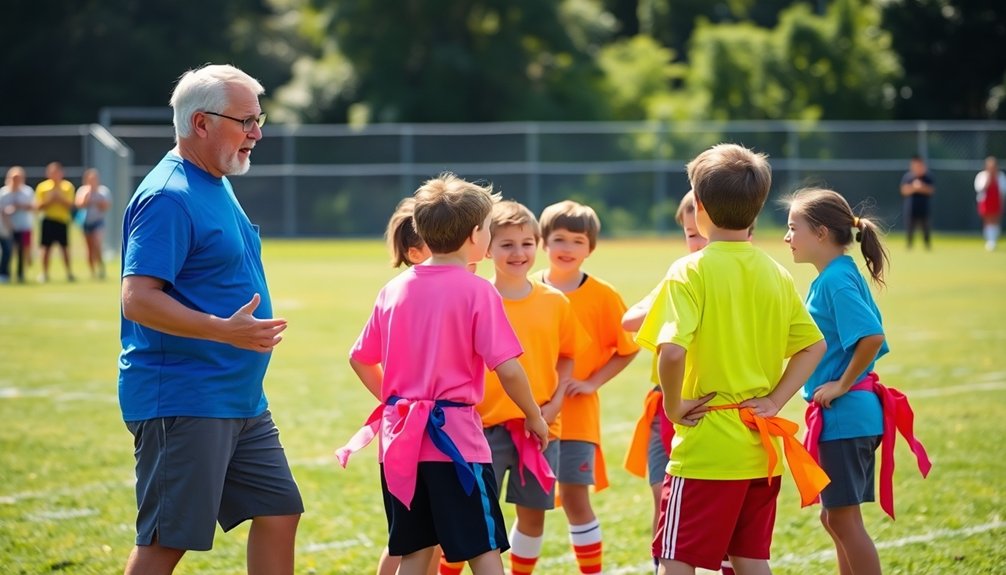
Flag Football Plays for Beginners: Start Strong
August 17, 2025To start strong in flag football, focus on mastering key offensive formations like the Single Back and Spread. Simple plays such as hitch and slant routes will enhance your skills while improving teamwork on the field. Communicate clearly with teammates to execute strategies effectively. Incorporating structured practice sessions will build confidence and familiarity with plays. As you progress, there’s much more to discover about winning tactics and developing as a player.
Understanding Flag Football Basics
Flag football is a fun and engaging way to enjoy the thrill of the game without the physical contact of traditional football. In this non-contact version, you’ll find teams of five to seven players, each with specific positions like quarterback, receivers, and running backs.
Understanding basic plays and routes—such as slants, hitches, and fly routes—is essential for effective communication among teammates. Teamwork is key, as coordinating movements allows you to outsmart the opposing team.
Familiarizing yourself with player eligibility and scoring rules enhances your gameplay experience. By grasping these fundamentals, you’ll be better prepared to enjoy flag football and contribute meaningfully to your team’s success on the field. Additionally, understanding player conduct and team composition is crucial for maintaining a positive atmosphere during games.
Key Offensive Formations for Beginners
Understanding offensive formations can greatly enhance your flag football experience.
Mastering offensive formations can significantly elevate your flag football skills and strategies.
The Single Back Formation positions one receiver on each side and one behind the quarterback, allowing for versatile passing routes like post and corner routes.
In the Spread Formation, three receivers on the line create opportunities to exploit defensive weaknesses with juke moves and crossing routes.
The Bunch Formation groups receivers closely, enabling them to spread out post-hike and utilize corner routes effectively.
The I Formation stacks receivers behind the quarterback, incorporating angled out and quick hitch routes.
Finally, the Double Back Set Formation places two receivers on either side, featuring diverse routes like post and shallow hitch to confuse defenders.
These formations provide solid foundations for youth flag football offensive strategies, just as team composition is vital for success in soccer.
Simple Plays to Enhance Skills
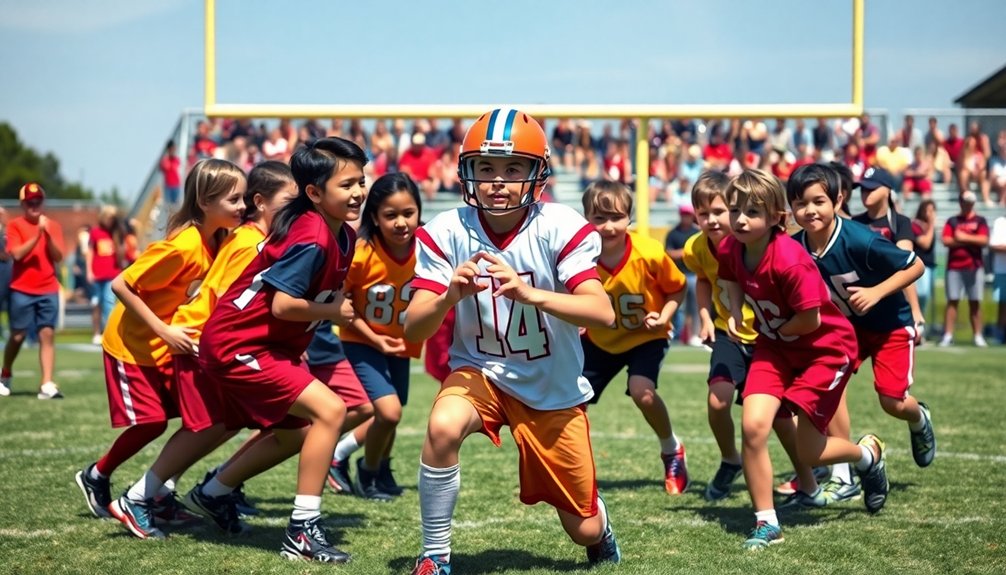
To improve your skills in flag football, it’s essential to start with simple plays that build a strong foundation.
Begin with basic routes like hitch, slant, and out, utilizing the single back formation for effective execution. Incorporate these plays into your practice:
- Single-Back Criss-Cross: This play employs reverse slants, focusing on timing and misdirection.
- Crossing Routes: Use the spread formation to enhance teamwork and communication among receivers.
- Post and Corner Routes: These straightforward routes help you familiarize yourself with spacing.
Repetitive practice of these simple plays will boost your confidence, allowing you to master the essential routes and improve your overall gameplay. Additionally, understanding basic rules and structure will help you make informed decisions during games.
Importance of Teamwork and Communication
While you might focus on perfecting your individual skills, teamwork and communication are just as essential for success in flag football. Effective teamwork enhances your on-field performance, allowing you to execute plays seamlessly and exploit defensive weaknesses.
During games, you’ll need to communicate quickly, relaying routes and strategies to guarantee everyone’s on the same page. Designated signals can streamline this communication, helping your teammates understand their roles without confusion, especially in high-pressure moments.
Regular practice focused on teamwork builds trust and chemistry, leading to better coordination during games. Coaches should encourage open dialogue among players, fostering a supportive environment where feedback and constructive criticism thrive, ultimately enhancing overall team dynamics and boosting your chances of victory. Additionally, emphasizing collective decisions during practice can further strengthen your team’s ability to respond effectively to opponents.
Tips for Effective Practice Sessions
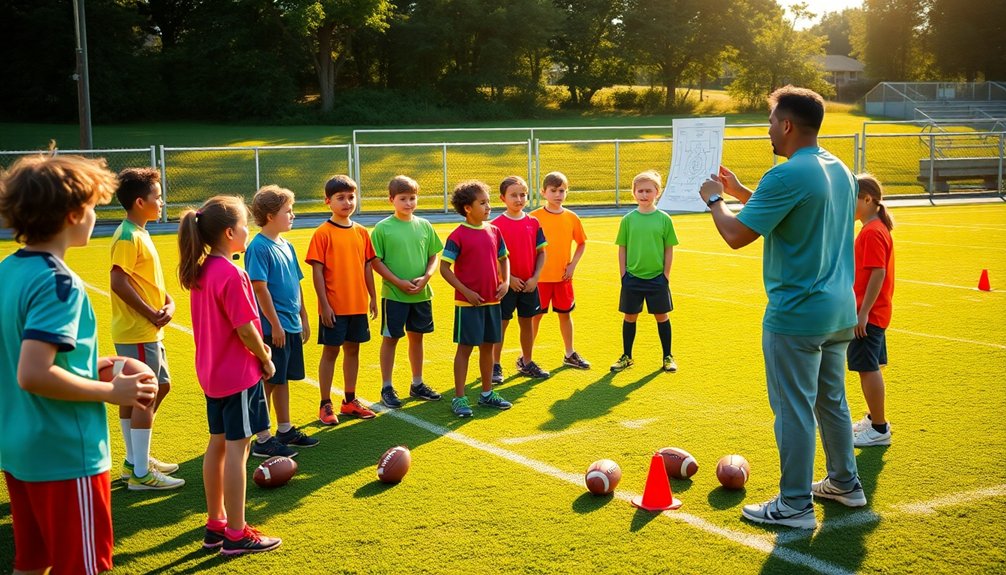
To make the most of your practice sessions, structure your drills and routines so everyone knows what to expect.
Focus on team communication by having players call out their routes and assignments, which builds trust and clarity on the field.
This approach not only sharpens skills but also strengthens team dynamics. Additionally, fostering strong team dynamics can lead to increased motivation and performance on the field.
Structured Drills and Routines
Establishing a structured routine at the start of each practice session not only enhances player conditioning but also helps prevent injuries.
Begin with warm-up exercises to boost agility and mobility, then immerse yourself in structured drills that focus on essential skills.
Here are three key components to include:
- Fundamental Skills: Practice passing, catching, and route running consistently.
- Game Situations: Implement drills simulating timed plays and scrimmages to improve decision-making and teamwork under pressure.
- Visual Aids: Use wristbands or laminated sheets for players to review plays and formations, reinforcing their understanding.
Focus on Team Communication
Effective team communication is essential for executing plays successfully, as it helps players understand their roles and responsibilities on the field.
During practice sessions, consistently call out your routes and assignments. Incorporate verbal cues and signals to guarantee clarity, keeping everyone on the same page.
Establish a huddle routine where you can discuss plays and strategies, fostering a collaborative environment where each player can contribute ideas.
Simulate game scenarios to encourage communication under pressure, helping you adapt to changing situations.
Don’t underestimate the power of non-verbal communication; use hand signals and eye contact for quick interactions that maintain the flow of play.
This focus on teamwork and communication will elevate your performance on the field.
Building Confidence on the Field
Here’s how you can boost your confidence:
- Consistent practice: Repeating plays like hitch, slant, and out helps you execute your role effectively.
- Positive reinforcement: Celebrate small victories with your coach and peers to enhance self-esteem.
- Achievable goals: Set specific targets, like completing a certain number of passes or making tackles, to measure progress.
Involve yourself in decision-making during practice to foster player ownership. This engagement not only boosts your confidence but also strengthens teamwork on the field. Additionally, remember that consistent effort is crucial for refining skills and decision-making in any sport.
With dedication, you’ll see your confidence soar as you embrace the game!
Resources for Continued Learning
To keep improving your flag football skills, check out online training resources that offer valuable drills and techniques.
You can also participate in community coaching clinics to learn from experienced coaches and network with other players.
These opportunities will help you stay up-to-date and enhance your game. Additionally, understanding tactical strategies can significantly improve your decision-making on the field.
Online Training Resources
How can you enhance your flag football skills beyond the field? Online training resources are invaluable for beginners keen to grow.
The NFL Flag Football Playbook provides essential downloadable resources that cover everything from rules to strategies.
You’ll find:
- Visual aids for offensive and defensive plays to help you grasp fundamental strategies.
- Training materials that support skill development, keeping your game sharp.
- Community support through FAQs and assistance to answer your questions.
Community Coaching Clinics
While you may have a solid grasp of flag football basics, attending community coaching clinics can greatly enhance your skills and understanding of the game.
These clinics focus on skill development, practice organization, and effective strategies for youth flag football. You’ll learn valuable insights on player management and game tactics from experienced coaches, helping you adapt plays to maximize your team’s strengths.
Additionally, these clinics foster a positive learning environment, enabling you to communicate more effectively with your players. You’ll also benefit from networking opportunities with other coaches, exchanging ideas and best practices.
Regular participation keeps you updated on the latest rules and resources available within the NFL FLAG community, ensuring you’re always prepared for the season ahead.
Conclusion
To summarize, flag football isn’t just a game; it’s a chance to build lasting friendships and develop essential life skills. Did you know that 75% of youth who play team sports report increased self-esteem and confidence? By mastering the basics and practicing together, you not only improve your skills but also create a strong bond with your teammates. So, gear up, communicate, and enjoy every moment on the field—you’re building memories that’ll last a lifetime!