

How to Play Smart Tennis
May 6, 2026To play smart tennis, you need to focus on strategic shot selection and court positioning. Analyze your opponent’s tendencies and adapt your game based on their strengths and weaknesses. Maintain effective communication if you’re playing doubles, and always be ready to adjust your strategies based on match conditions. Develop your mental game to stay focused and resilient under pressure. Keep honing your skills and you’ll discover even more tactics to elevate your game.
Understanding the Basics of Smart Tennis Strategy

You need to be aware of court positioning and how to exploit gaps in your opponent’s defense. Effective decision making is vital; you must know when to play aggressively and when to defend.
Analyzing your strengths and weaknesses allows you to adapt your strategy in real-time. It’s not just about hitting the ball; it’s about playing with purpose. Additionally, understanding key sportsmanship and respect principles can enhance your interaction with opponents and officials, contributing to a more positive playing environment.
The Importance of Shot Selection in Matches
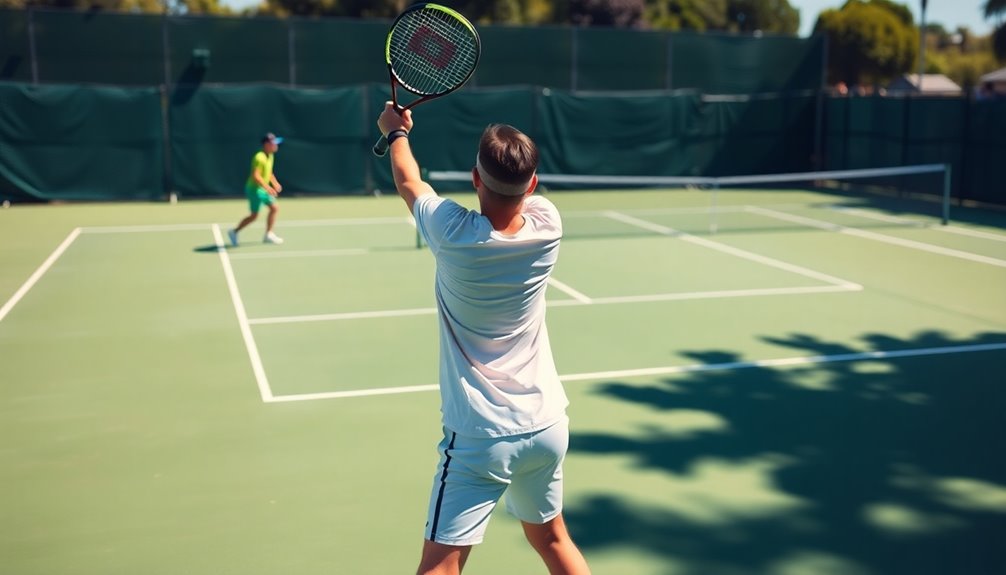
While you may have the skills to hit powerful shots, choosing the right one at the right time can make all the difference in a match. Effective shot selection relies on risk assessment; you need to weigh the rewards against potential errors.
Utilize shot variety to exploit your opponent’s weaknesses and maintain game tempo. In pressure situations, focus on shot placement rather than power, as this can shift match momentum in your favor.
Utilizing shot variety and focusing on placement over power can effectively exploit your opponent’s weaknesses and shift momentum in your favor.
Be prepared to make tactical adjustments based on how your opponent responds. Cultivating mental resilience and strategic patience allows you to stay composed and make smarter choices, even when the stakes are high. Understanding the importance of field dimensions and markings can also enhance your strategic approach on the court.
Ultimately, your shot selection will define your success on the court.
How to Analyze Your Opponent’s Game Style?

How can you effectively analyze your opponent’s game style? Start by observing their tendencies and patterns during play. Pay attention to their shot preferences and how they respond under pressure. This will help you identify their adaptability traits and risk assessment strategies.
Here are some key points to reflect on:
- Watch for consistent game patterns that emerge during points.
- Note their shot preferences—do they favor forehands or backhands?
- Identify mental cues that signal their next move.
- Assess their pressure responses when the match gets tense.
- Look for opportunities to make tactical adjustments based on your findings.
Additionally, consider how their defensive techniques can influence your strategy and approach during the match.
Mastering Court Positioning for Better Play
Mastering court positioning is essential for elevating your tennis game. By honing your court awareness, you’ll improve your movement efficiency and spatial understanding.
Start with positioning drills that focus on footwork fundamentals; these will help you react quickly to your opponent’s shots. Use baseline tactics to maintain ideal distance and create angles that put pressure on your opponent.
When approaching the net, employ net strategies to capitalize on weak returns. Always be mindful of rally dynamics; adjust your position based on the flow of the game. Incorporating high-intensity sprints can enhance your overall agility and responsiveness on the court.
Utilizing Effective Communication With Your Doubles Partner
Effective communication with your doubles partner can make all the difference in your game. By establishing clear signals and encouraging open dialogue, you can enhance your teamwork and strategy on the court. Let’s explore how these elements can elevate your performance together. Additionally, fostering teamwork and cooperation through regular practice games can significantly improve your synergy on the court.
Establishing Clear Signals
While playing doubles, establishing clear signals with your partner is essential for seamless communication on the court. You want to guarantee signal clarity, allowing for quick decision-making and partner synchronization.
Here are some effective strategies:
- Pre-match signals: Agree on specific gestures or codes before the game starts.
- Non-verbal cues: Use hand gestures and visual signals to communicate without speaking.
- Audible cues: Develop simple verbal commands for in-game adjustments, like “mine” or “yours.”
- Strategic huddles: Take a moment during breaks to discuss tactics and emotional signals.
- Consistency: Regularly practice these signals to improve understanding and reduce confusion.
Encouraging Open Dialogue
To enhance your performance on the court, fostering open dialogue with your doubles partner is essential.
Start by encouraging questions; this promotes collaboration and enhances understanding. Make space for open feedback and constructive criticism.
When you share experiences, you build trust and create comfort, making it easier to communicate effectively. Active listening is vital—pay attention to your partner’s thoughts and feelings, and show that you value their input.
By fostering teamwork, you’ll both feel more connected and confident on the court.
Developing a Strong Mental Game and Focus
To excel in tennis, you need a robust mental game and sharp focus. By using visualization techniques, managing your emotions on the court, and setting clear goals, you can enhance your performance. Additionally, embracing the power of belief can significantly boost your confidence and resilience during matches. Let’s explore how these strategies can elevate your game.
Visualization Techniques For Success
As you step onto the court, harnessing the power of visualization can elevate your game and sharpen your focus. By incorporating visual imagery and mental rehearsal, you can prepare yourself for success. Picture each shot you want to execute, imagining the ball’s trajectory and your ideal stance. This mental practice not only boosts confidence but also creates muscle memory.
- Visualize your opponent’s moves to anticipate their shots.
- Imagine the crowd’s energy fueling your performance.
- Rehearse your serves, focusing on precision and power.
- See yourself overcoming challenges during matches.
- Create a vivid mental playlist of your best moments.
These techniques can transform your mindset, enabling you to play smarter and more effectively on the court.
Managing On-Court Emotions
Building on your visualization techniques, managing your on-court emotions is key to maintaining focus and composure during matches. Developing emotional resilience helps you bounce back from setbacks, while mental toughness allows you to push through challenging moments.
Use focus strategies like deep breathing to enhance your stress management. Cultivating emotional awareness lets you identify when negative feelings arise, enabling you to implement effective coping techniques. Mindfulness practices, such as staying present during each point, can greatly improve your performance.
Remember to employ positive reinforcement, celebrating small victories to boost your confidence. By mastering these skills, you’ll enhance your game and enjoy the process, making each match an opportunity for growth and improvement.
Setting Clear Goals
While every player dreams of victory, setting clear goals is essential for developing a strong mental game and maintaining focus during matches.
By defining what you want to achieve, you create a roadmap for improvement. Here are some key points to reflect upon when goal setting:
- Identify specific short-term and long-term goals.
- Break goals into actionable steps for daily practice.
- Use performance tracking to evaluate progress regularly.
- Adjust your goals based on performance and changing circumstances.
- Stay positive and visualize your success to boost motivation.
Adjusting Your Strategy Based on Match Conditions
Embrace player adaptability by recognizing surface differences; clay, grass, and hard courts require varied tactics. For instance, on faster surfaces, you might want to attack the net more.
Keep an eye on your opponent’s fatigue—if they’re struggling, it’s a great opportunity to ramp up the pressure. Additionally, be aware of game momentum; if you’re on a winning streak, maintain that aggressive play.
Staying tactically flexible lets you pivot your approach as conditions change, ensuring you’re always one step ahead. Remember, smart tennis is all about reading the match and adjusting accordingly. Effective teamwork is crucial, as it allows players to anticipate their opponent’s movements and make quick strategic adjustments.
Common Mistakes to Avoid for Smarter Play
Here are some pitfalls to steer clear of:
- Rushing shots instead of taking your time to set up properly.
- Neglecting footwork, which can lead to poor positioning and weak shots.
- Ignoring patterns in your opponent’s play that could offer strategic advantages.
- Avoiding practice, as consistent training is essential for skill development.
- Underestimating opponents, which can lead to complacency and unexpected losses.
Additionally, understanding the importance of representation in sports can enhance your strategic approach and inspire confidence on the court.
Conclusion
In the game of tennis, think of your strategy as a chess match—every move counts. By honing your shot selection, analyzing your opponent, and mastering court positioning, you can elevate your play. Remember, effective communication with your doubles partner and a strong mental game are essential. Stay adaptable, adjust to match conditions, and watch out for common pitfalls. Embrace these principles, and you’ll transform your game into a smart, strategic masterpiece on the court.