
Volleyball Fundamentals: 6 Skills Every Beginner Must Learn
February 20, 2026To become a successful volleyball player, you need to master six essential skills. First, focus on passing, as it’s the foundation for great teamwork. Next, learn the art of setting; your hand positioning and footwork are vital. Then, execute a powerful spike by refining your footwork and arm mechanics. Don’t overlook serving, which sets the tone for rallies, and finally, understand defensive techniques. Building communication skills is key to enhancing your team’s performance. There’s more to discover about each skill!
The Importance of Passing in Volleyball
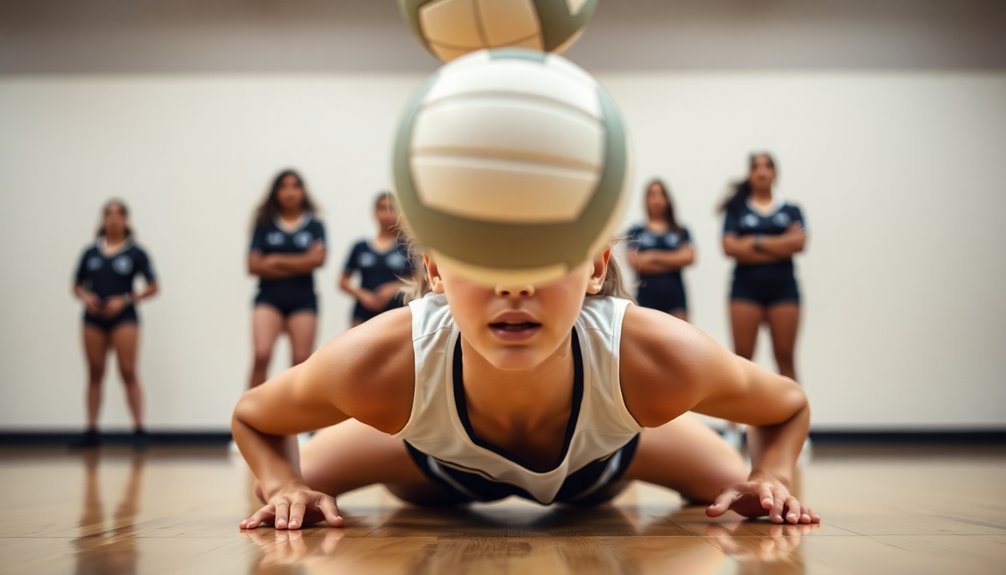
While you might be focused on scoring points, passing is the foundation of successful volleyball play. A solid pass sets the stage for effective attacks, allowing your teammates to shine.
To improve your passing skills, mastering various passing techniques is crucial. Focus on the platform, body position, and footwork to guarantee accuracy and control. Incorporating passing drills into your practice routine can make a significant difference.
For example, partner up and practice forearm passes, or set up a target to enhance precision. The more you train, the more confident you’ll become in your passing abilities. Additionally, effective communication with teammates is essential for enhancing team coordination, which ultimately leads to better overall performance.
Mastering the Art of Setting

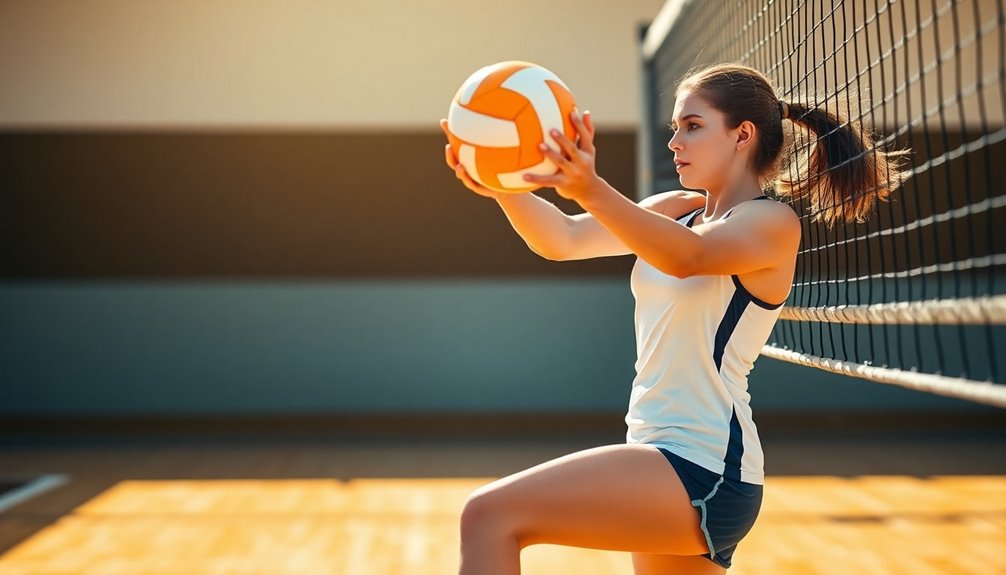
Setting is an essential skill that can elevate your volleyball game to new heights. To become a proficient setter, you need to master various setting techniques, such as hand positioning and footwork.
Focus on keeping your elbows high and your wrists firm as you create a consistent release point for the ball. As you progress, incorporate advanced strategies like recognizing hitters’ preferences and adjusting your sets accordingly.
Maintain high elbows and firm wrists for a consistent ball release, while adapting to hitters’ preferences for optimal sets.
Communication with your teammates is vital—let them know where you plan to set the ball and be ready to adapt based on their movements.
Practicing regularly will help you develop the timing and precision required for effective setting, ensuring your team has the best chance to score points. Additionally, understanding team composition can further enhance your effectiveness as a setter by allowing you to make informed decisions based on your teammates’ strengths.
How to Execute a Powerful Spike
To execute a powerful spike, you need to focus on your footwork and arm swing.
Your feet set the foundation for your jump, while your arm mechanics generate the force.
Mastering these elements will elevate your game and make your spikes more effective. Additionally, incorporating agility training into your routine can improve your foot speed and overall movement on the court.
Proper Footwork Technique
Mastering proper footwork technique is essential for executing a powerful spike in volleyball. Start by positioning your feet shoulder-width apart to guarantee stability.
As the ball approaches, take a quick step with your non-dominant foot forward, aligning your body toward the net. This foot placement helps establish a strong base and prepares you for the jump. Your dominant foot should follow closely, providing the necessary propulsion.
Maintain good body alignment by keeping your knees slightly bent and your hips low, which allows for a more explosive upward movement.
Arm Swing Mechanics
Execute a powerful spike by focusing on your arm swing mechanics. Start by positioning your arm high and back, ensuring your elbow is bent to create tension.
As you approach the ball, your arm should move forward in a smooth, controlled motion. Keep your wrist relaxed to generate additional power.
When you make contact with the ball, aim to hit it at the highest point of your jump. Your arm position is essential—extend your arm fully as you strike, driving through the ball.
Finally, don’t forget the swing follow through; allow your arm to continue its motion after contact. This not only adds power but also helps maintain your balance for the next play.
Practice these mechanics to enhance your spiking technique!
The Role of Serving in Volleyball Success
Serving is often considered the most essential skill in volleyball, as it sets the tone for each rally. A strong serve can put pressure on your opponents and disrupt their offensive rhythm.
You’ll want to master different serve types, such as the float serve, jump serve, and topspin serve, to keep your opponents guessing. Each type has its unique advantages, so practice them regularly.
Implementing a solid serving strategy is crucial; aim for specific zones on the court to exploit weaknesses in the opposing team. By focusing on accuracy and consistency in your serves, you can considerably impact the game and create scoring opportunities for your team. Additionally, understanding the importance of stoppage time can help you appreciate the flow of the game and how serving can influence the pace of play.
Understanding Defensive Techniques
Defense is the backbone of a successful volleyball team, and understanding defensive techniques is essential for any player. Effective defensive positioning allows you to anticipate where the ball will go and react quickly.
Start by maintaining a low stance, ready to move in any direction. Focus on reading attackers—watch their body language and the angle of their approach to predict their next move. Position yourself accordingly, ensuring you’re in line with the hitter’s potential shot.
Practicing these techniques will enhance your ability to dig and block effectively. Remember, the better you’re at reading attackers and adjusting your positioning, the more successful you’ll be at preventing points and supporting your team on the court. Additionally, mastery of defensive skills contributes to a sense of value within the team.
Building Teamwork and Communication Skills
In volleyball, strong communication is key to a successful team.
When you and your teammates trust each other, it creates a solid foundation for effective plays.
Plus, honing your nonverbal signals can enhance understanding on the court without needing to shout. Additionally, fostering teamwork and communication among players is crucial for enhancing on-court performance.
Importance Of Communication
Effective communication is essential in volleyball, as it not only enhances gameplay but also fosters strong teamwork. You’ll need to use verbal cues, like calling for the ball or signaling plays, to keep everyone on the same page. This clarity helps prevent confusion and guarantees everyone knows their role during critical moments.
Active listening is equally important; it allows you to understand your teammates’ needs and intentions, creating a more cohesive unit. When you communicate effectively, you build trust and confidence among your team members, which translates into better performance on the court.
Trust Between Teammates
Clear communication lays the groundwork for building trust between teammates. When you openly discuss your strengths and weaknesses, you create a supportive environment.
Engage in trust exercises, like blindfolded drills, to strengthen your connection and reliance on each other. These activities foster team bonding and help you understand how to support your teammates under pressure.
As you practice together, share feedback and celebrate small victories. This reinforces trust and encourages positive interactions.
Remember, trust isn’t built overnight; it requires consistent effort and patience. Through open dialogue and shared experiences, you’ll create a solid foundation that enhances your team’s performance.
Ultimately, trust between you and your teammates leads to better coordination on the court and a more enjoyable playing experience.
Effective Nonverbal Signals
While verbal communication is essential, mastering effective nonverbal signals can elevate your teamwork on the volleyball court. Nonverbal cues, like body language and eye contact, play an important role in enhancing your game.
To improve your signal recognition and foster better communication, focus on these key aspects:
- Eye contact: Establish connection and understanding with teammates.
- Hand signals: Use clear gestures for plays or strategies.
- Body positioning: Position yourself to signal readiness or intent.
- Facial expressions: Convey emotions and reactions quickly.
- Movement patterns: Recognize shifts in formation or strategy.
Conclusion
By mastering these six fundamental skills, you’re not just learning volleyball; you’re weaving the fabric of teamwork and strategy. Each skill is a thread that strengthens your game, creating a tapestry of success on the court. Embrace passing, setting, spiking, serving, defense, and communication, and watch as your confidence soars. Remember, every great player started as a beginner, so keep practicing and enjoy the journey. Your hard work will pay off, one serve at a time!