
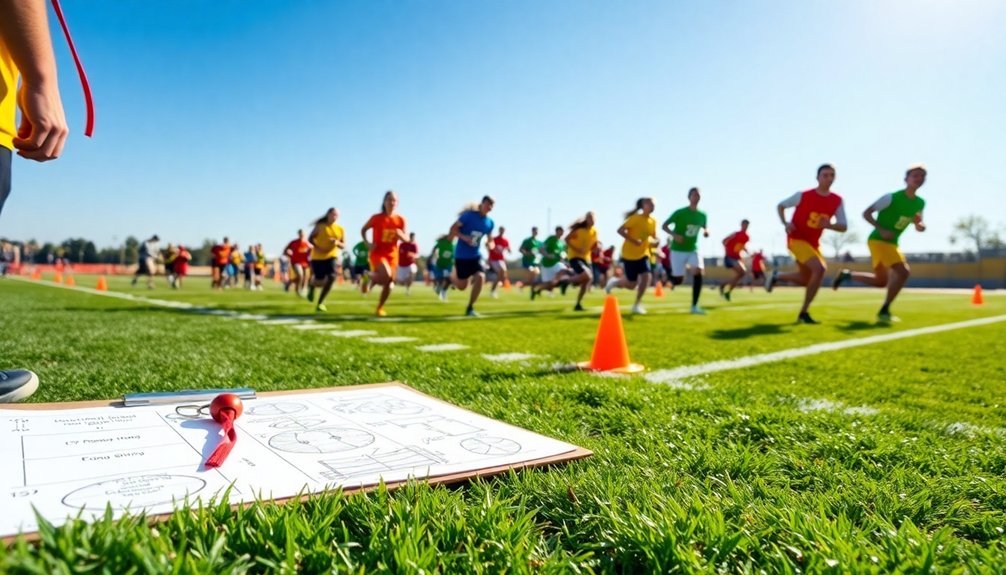
The Essentials of Flag Football Practice Planning
August 18, 2025To effectively plan your flag football practice, start with a structured warm-up that includes dynamic stretches and sport-specific drills to prime players. Incorporate key drills targeting fundamental skills, along with offensive and defensive strategies. Use scrimmages to foster teamwork and apply skills in action. Keep hydration a priority with regular breaks, and add fun elements to maintain energy and focus. Set clear objectives for each session to guide progress and engagement, ensuring every practice is productive and enjoyable. There’s much more to explore on optimizing your practice sessions.
The Importance of a Structured Warm-Up
While you might be enthusiastic to jump into the action of flag football practice, starting with a structured warm-up is essential for your performance and safety. This routine, lasting about 10 minutes, prepares you both physically and mentally, reducing the risk of injuries.
Engaging in dynamic stretches like high knees and lunges increases flexibility and elevates your heart rate, ensuring you’re ready for the demands of the game. Incorporating sport-specific drills, such as footwork ladder exercises and shuttle runs, boosts your agility and responsiveness.
A well-planned warm-up establishes a focused mindset, leading to more productive practice skills. Consistent routines also build muscle memory, allowing you to perform better during drills and scrimmages while minimizing the risk of strains or pulls. Additionally, utilizing dynamic stretches effectively enhances your overall performance and reduces injury risk.
Key Drills for Developing Fundamental Skills
To build a strong foundation in flag football, focusing on key drills that target fundamental skills is essential.
Start with the “Flag-Pulling Drill,” where players pair up to enhance timing and grip technique through lateral movements. Switch roles every 30 seconds to keep it engaging.
Enhance timing and grip technique with the engaging Flag-Pulling Drill, featuring paired lateral movements and role switching.
Next, implement the “Cone Route Drill” to help wide receivers run precise routes, simulating game scenarios with cones placed 5–10 yards apart.
Don’t forget the “Catch & Sprint Drill,” which involves players receiving a pass and sprinting 10 yards post-catch to improve changeover speed. This emphasis on teamwork and skill mirrors the foundational elements seen in ancient games that contributed to the evolution of soccer.
Incorporating Offensive and Defensive Strategies
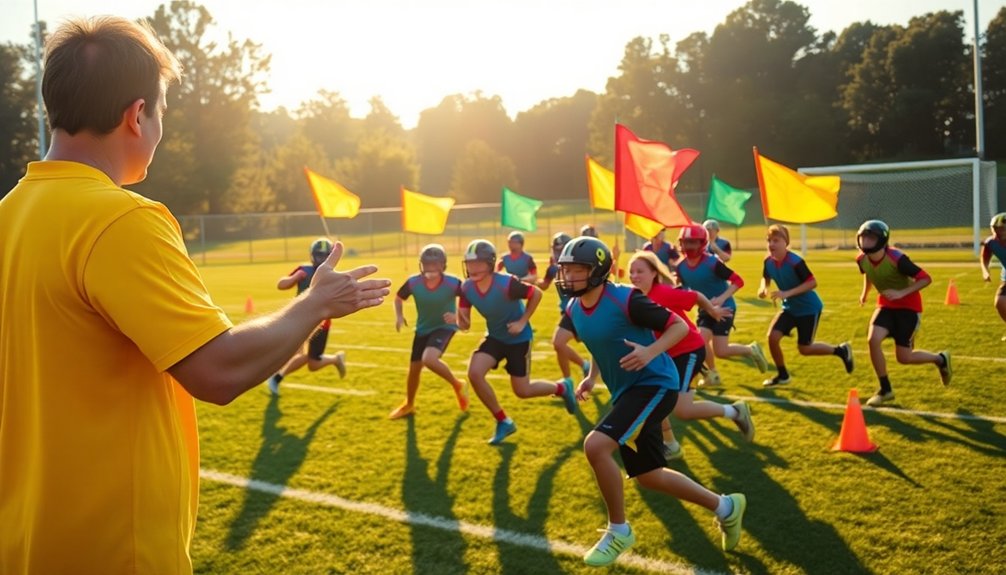
When planning your practices, you’ll want to focus on offensive play development and defensive coverage techniques. Incorporating specific drills for both areas will help your team maximize scoring and improve their defensive skills. Additionally, understanding defensive stance is essential for players to maintain balance and react quickly during practice.
Offensive Play Development
Effective offensive play development in flag football hinges on your team’s grasp of both offensive and defensive strategies. To enhance your players’ skills, focus on wide receiver routes, quarterback drills, and running back strategies.
Incorporating cone route drills helps players run clean routes and time their breaks effectively, which boosts gameplay dynamics. Additionally, practicing defensive strategies, like flag-pulling drills, not only sharpens defensive players’ skills but also empowers your offense to counteract these tactics.
Integrate small-sided games, such as 2-on-2 or 3-on-3, to simulate realistic scenarios, allowing players to apply their offensive skills while adapting to defensive maneuvers. Effective communication during scrimmages will reinforce teamwork and highlight areas for improvement, deepening your team’s understanding of game flow.
Defensive Coverage Techniques
Defensive coverage techniques in flag football are essential for anticipating offensive plays and executing effective responses. Understanding formations and maintaining proper positioning allows you to effectively counter your opponents.
You can choose between man-to-man coverage, where you’re responsible for a specific player, or zone coverage, focusing on a designated area. Communication among defenders is vital, as it helps coordinate your strategies and clarify responsibilities during plays.
Incorporating flag-pulling drills into your practice enhances your timing and technique, making it easier to pull flags from offensive players. Regularly practicing defensive scenarios through small-sided games lets you apply these coverage techniques in real-time, improving your individual skills and overall team performance.
Stay sharp and adaptable on the field!
The Value of Scrimmages in Practice
Scrimmages hold immense value in flag football practice because they create a dynamic environment where players can seamlessly apply the skills they’ve honed in drills.
By incorporating scrimmages into your practice plan, you promote teamwork and communication, essential components for success on the field. Conducting scrimmages at the beginning of practice leverages players’ energy levels, boosting engagement and performance.
Smaller formats, like 4v4, guarantee that more players are actively involved, enhancing their skill development. Observing player performance during these scrimmages allows you to identify specific areas for improvement, enabling you to adjust future practice plans effectively.
Additionally, wrapping up practice with scrimmages reinforces the importance of applying learned skills in a game-like setting, solidifying their growth. Incorporating agility drills during scrimmages can further enhance players’ ability to react quickly and effectively in game situations.
Maintaining Hydration and Energy Levels

During practice, it’s essential to prioritize hydration to keep your energy levels up and maintain focus.
Regular water breaks every 15-20 minutes can help prevent dehydration, which affects your performance on the field. Incorporating high-intensity interval training during practice sessions can further enhance your overall fitness and endurance, ensuring players remain sharp and ready to play.
Let’s explore some creative strategies to guarantee everyone stays hydrated and ready to play.
Importance of Water Breaks
Water breaks are essential for keeping players hydrated and energized, especially in the heat. During practice, scheduling water breaks every 15-20 minutes helps maintain hydration levels, allowing players to perform their best.
Dehydration can seriously impair focus and performance, so it’s vital to prioritize these breaks. As a coach, make sure to provide extra water for players who forget their bottles; this fosters a culture of hydration and responsibility within the team.
Additionally, water breaks can serve as a valuable moment to reset and regroup if a drill isn’t going well. By incorporating regular hydration into your practice plan, you not only enhance performance but also safeguard against heat-related illnesses, ensuring a safer experience for everyone.
Signs of Dehydration
Recognizing the signs of dehydration is essential for any athlete, especially during rigorous flag football practices.
As a player, you should be aware of symptoms like extreme thirst, dry mouth, fatigue, dizziness, and decreased urine output. These signs can greatly impair your performance on the field.
Remember, your body can lose up to 2% of its water weight through sweat during intense activity, impacting strength and endurance. Young athletes, in particular, may not recognize their thirst cues, making hydration even more important.
It’s critical to drink water before, during, and after practice—aim for 7-10 ounces every 20 minutes.
Regular water breaks not only maintain hydration but also provide a chance for players to reset focus and energy levels.
Creative Hydration Strategies
As players push their limits on the field, staying hydrated becomes essential for maintaining energy and performance. Schedule regular water breaks every 15-20 minutes, especially on hot days, to combat fatigue.
Set up hydration stations with coolers filled with water and electrolyte drinks to help maintain balance and reduce cramping during youth flag football practice. Encourage everyone to bring reusable water bottles, promoting personal responsibility and reducing plastic waste.
Use these breaks to reset drills or provide feedback, allowing players to recharge while staying focused. Finally, monitor hydration levels by reminding players to drink before, during, and after practice.
Proper hydration enhances energy levels and concentration, keeping your team sharp and ready to play.
Making Practice Enjoyable for Young Athletes
To make practice enjoyable for young athletes, incorporating fun elements is essential. Engaging practices not only help develop flag football skills but also foster a love for the game.
Here are three ways to keep things lively:
- Play Music: Use a Bluetooth speaker during warm-ups to create an energetic atmosphere.
- Silly Drills: Emphasize creative activities and silly drills that encourage laughter and excitement.
- Scrimmage Early: Start with a scrimmage when players are most energetic to boost engagement.
Additionally, fostering teamwork and unity among players can enhance their overall enjoyment and performance during practice.
Setting Clear Objectives for Each Session
Setting clear objectives for each practice session is essential for maximizing player development and enhancing overall team performance.
You’ll want to establish specific skill goals, like improving passing accuracy or refining route-running precision. Communicate these objectives to your players at the start of each session, ensuring everyone knows the focus and desired outcomes.
Structure your drills and scrimmages around these defined objectives, allowing players to apply their skills in a practical context. Throughout the practice, monitor progress by evaluating player performance against the set objectives and make adjustments as needed.
Structure drills around specific objectives to help players apply their skills practically while monitoring their progress for continuous improvement.
Reinforce the importance of these goals by discussing how they contribute to overall team performance and individual player development. This clarity fosters growth and engagement in your athletes. Additionally, understanding tactical strategies can enhance player performance and decision-making during practice.
Conclusion
In summary, effective flag football practice planning is essential for cultivating confident, capable players. By prioritizing a purposeful warm-up, practicing pivotal drills, and promoting playful participation, you’ll create a winning environment. Remember to regularly refresh hydration and set specific session goals to steer success. With structured sessions and spirited scrimmages, you can spark a love for the game while sharpening skills. So, get ready, gear up, and guide your team towards greatness on the field!