
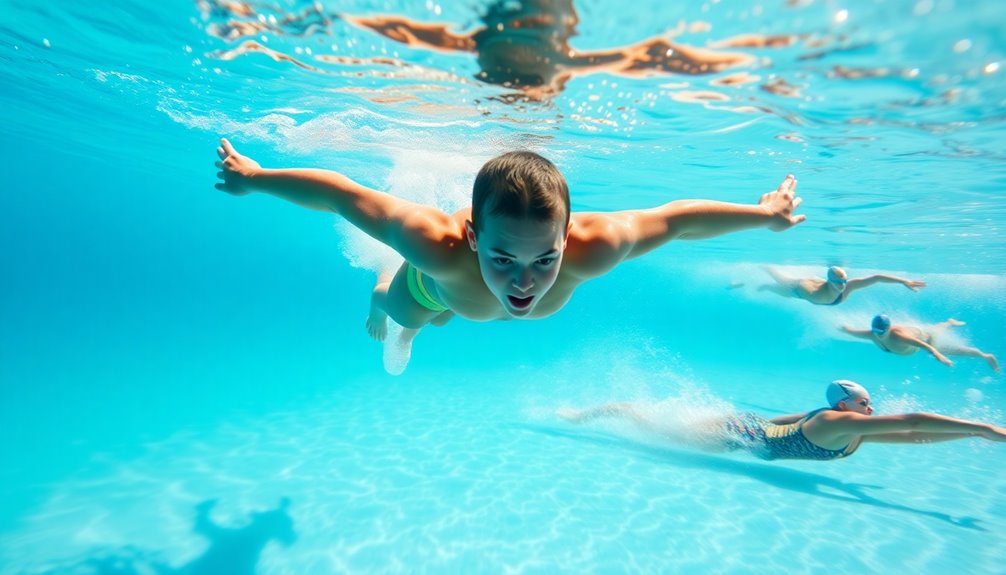
The 5 Swimming Strokes Every Young Athlete Should Master
February 19, 2026To elevate your swimming skills, you should master these five strokes: the Freestyle for speed and efficiency, the Backstroke for improved posture and breathing, the Breaststroke for technique and timing, and the Butterfly for building strength and coordination. Each stroke offers unique benefits that enhance overall performance and prepare you for various competitions. By understanding all five, you’ll gain a competitive edge in the water and learn how to tackle different challenges along the way.
The Freestyle Stroke: Speed and Efficiency
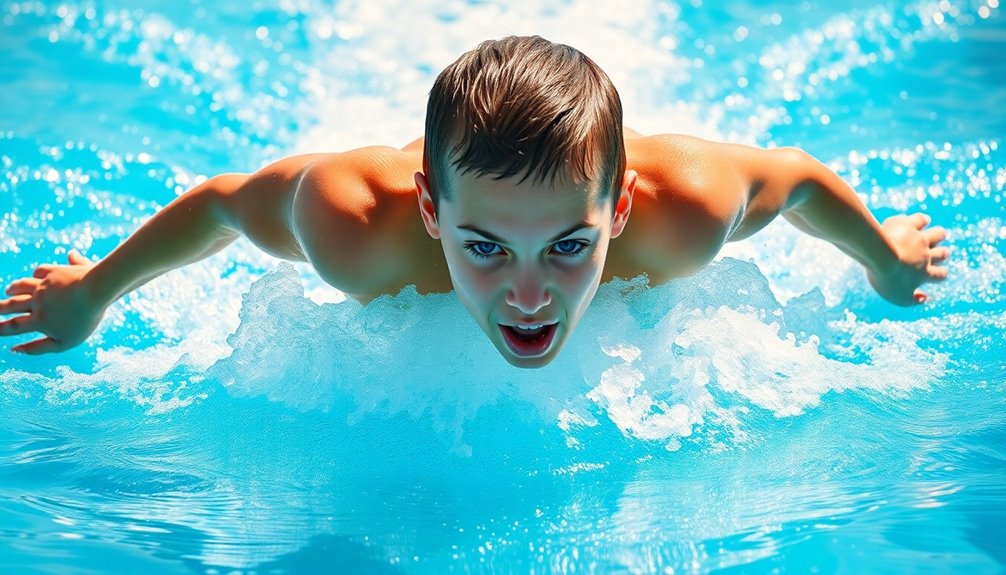
The freestyle stroke, often considered the fastest swimming technique, is all about speed and efficiency. To excel, you need to master your stroke mechanics.
Focus on maintaining a streamlined body position, as this reduces drag and allows for smoother movement through the water. Your arms should extend fully in front, entering the water with minimal splash.
Freestyle breathing is essential; practice turning your head to the side without disrupting your stroke rhythm. Inhale quickly and deeply, then exhale underwater as your face returns to the water.
This will help you maintain your pace and prevent fatigue. By refining these elements, you’ll enhance your overall performance and swim faster, making the freestyle stroke a fundamental skill for any young athlete. Additionally, understanding the importance of stoppage time in sports can enhance your overall awareness of pacing and strategy, which is beneficial for athletes in various disciplines.
Mastering the Backstroke: Benefits of Swimming on Your Back
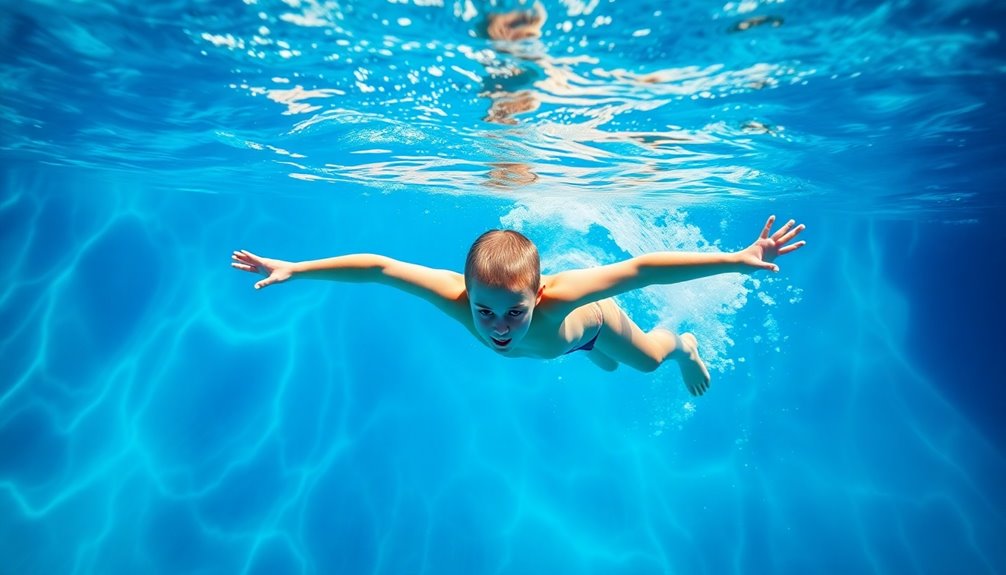
Mastering the backstroke offers unique benefits that can elevate any young athlete’s swimming skills. This stroke not only enhances your technique but also contributes to overall fitness.
Here are three key backstroke benefits you should know:
- Improved Posture: Swimming on your back encourages a straight alignment, promoting good posture both in and out of the water.
- Core Strength: The backstroke engages your core muscles, helping you build strength and stability essential for other swimming techniques.
- Breathing Control: Since your face is above water, it allows you to practice breathing without the stress of timing your strokes, enhancing your overall comfort in the pool. Additionally, core strength developed through backstroke practice can contribute to stamina improvement and injury reduction in other athletic activities.
The Breaststroke: Technique and Timing for Success
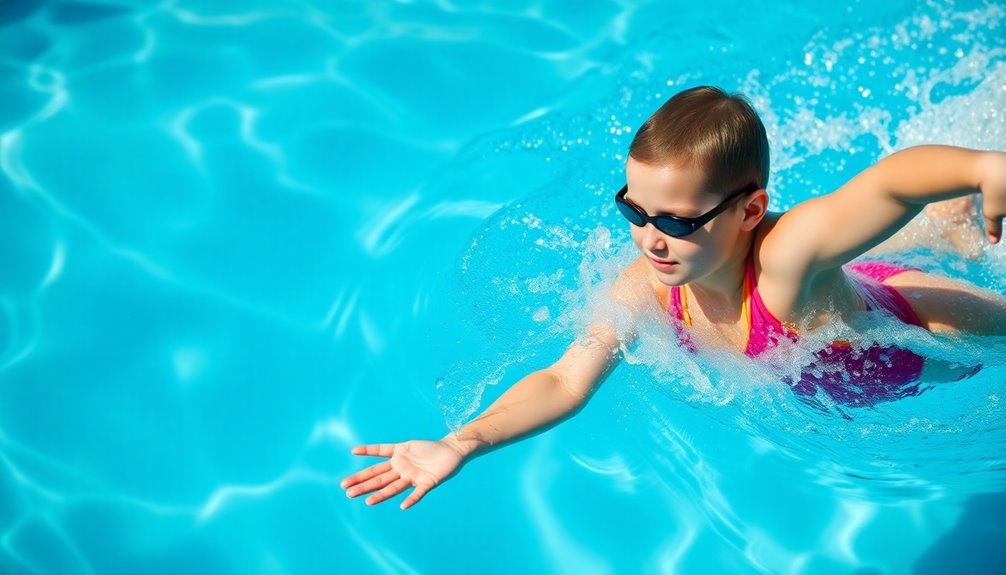
Perfecting the breaststroke requires a keen focus on technique and timing. To start, your arms should move in a circular motion while your legs perform a frog kick. Synchronize your movements to maximize propulsion.
When it comes to breaststroke breathing, make sure to lift your head during the arm pull, taking a quick breath before your arms extend back into the water. Timing is vital; if you breathe too late, you’ll lose momentum.
Also, practice your breaststroke turns to maintain speed and streamline your body. Tuck and rotate efficiently to minimize drag, allowing for a smooth shift. Additionally, understanding the importance of practice and drills can greatly enhance your overall performance in mastering the stroke.
The Butterfly Stroke: Building Strength and Coordination
While you might find the butterfly stroke challenging at first, it’s a rewarding technique that builds strength and coordination.
Mastering this stroke not only enhances your swimming skills but also offers significant benefits for your overall athleticism.
Mastering the butterfly stroke elevates your swimming abilities and boosts your overall athletic performance.
To improve your butterfly stroke, focus on the following:
- Strength Training: Incorporate exercises like push-ups and planks to develop upper body power, essential for that strong pull.
- Coordination Drills: Practice dolphin kicks and arm movements separately to enhance your timing and rhythm.
- Breathing Techniques: Work on your breath control to guarantee you maintain a smooth stroke without losing momentum. Additionally, including dynamic stretching in your warm-up routine can further enhance your performance by preparing your muscles for the physical demands of swimming.
Why Should Every Young Athlete Learn All Five Strokes?
Learning all five swimming strokes is essential for young athletes, as it not only diversifies their skill set but also enhances their overall performance in the water.
By mastering each stroke, you develop stroke versatility, which is vital for adapting to different race formats and conditions. This versatility allows you to switch between strokes seamlessly, making you a more well-rounded swimmer.
Additionally, understanding the nuances of each stroke can give you a competitive advantage during training and competitions. You’ll be better equipped to strategize your races and respond to opponents. Furthermore, the principles of sportsmanship and respect learned in team sports like soccer can also be applied to swimming, fostering a positive competitive environment.
Ultimately, learning all five strokes prepares you not just for immediate success, but also for a lifelong journey in the sport, ensuring you can tackle any challenge that comes your way.
Conclusion
In mastering these five swimming strokes, you’re not just learning to glide through water; you’re building a foundation for lifelong success. Each stroke teaches you valuable lessons in discipline, strength, and teamwork—skills that’ll serve you well beyond the pool. Imagine yourself, years from now, standing on the podium while the national anthem plays. By embracing every stroke today, you’re setting the stage for that moment. So plunge in, and let the journey begin!