
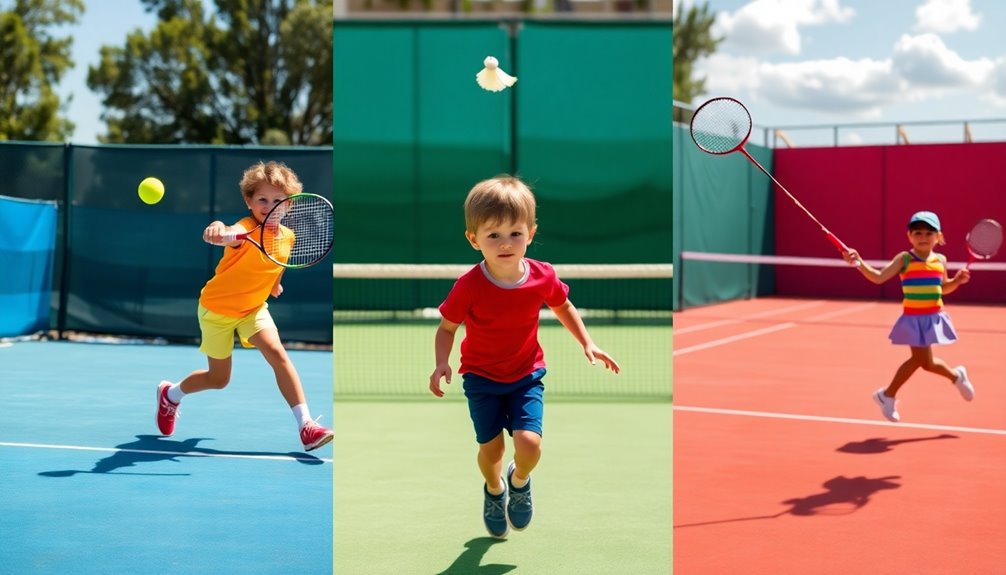
Tennis vs. Other Racquet Sports: Which Is Best for Your Child?
February 18, 2026When choosing a racquet sport for your child, consider the unique benefits each offers. Tennis promotes hand-eye coordination, endurance, and teamwork, while badminton enhances agility and social skills. Squash boosts cardiovascular endurance, and pickleball combines fun and social interaction. Think about your child’s personality, interests, and the level of competition they enjoy. Each sport has its costs and accessibility factors, so weigh these aspects carefully to find the best fit for your child’s needs. There’s more to explore in making the right choice!
Why Choose Tennis for Your Child’s First Racquet Sport

When it comes to choosing a racquet sport for your child, tennis stands out as an excellent option. It teaches essential tennis fundamentals, including hand-eye coordination, agility, and strategic thinking. These skills not only enhance your child’s game but also contribute to their overall physical development.
Tennis provides a fantastic way to instill a love for physical activity at a young age, paving the way for lifelong fitness. By engaging in tennis, your child learns the importance of commitment, discipline, and teamwork, all while having fun. The social aspect of the sport enables them to make friends and develop communication skills. Additionally, tennis can help improve overall physical development, making it the perfect choice for your child’s first racquet sport. Ultimately, tennis serves as a strong foundation for a healthy lifestyle, making it the perfect choice for your child’s first racquet sport.
The Benefits of Playing Badminton for Kids

Badminton offers numerous benefits for kids that can greatly enhance their physical and mental development. By learning badminton fundamentals, your child can improve their hand-eye coordination, agility, and overall fitness. The fast-paced nature of the game keeps them active, helping to develop a healthy lifestyle early on.
Additionally, playing badminton promotes social skills as kids often compete in pairs or teams. They learn to communicate effectively, cooperate with others, and handle both wins and losses gracefully. These interactions can boost their confidence and foster friendships. Moreover, the standard match duration in badminton encourages kids to focus and maintain their energy throughout the game.
How Squash Develops Agility and Coordination

Agility and coordination are essential skills developed through playing squash, making it an excellent choice for athletes of all ages.
Squash demands quick footwork and sharp reflexes, helping your child enhance their physical abilities while having fun. As they dart around the court, they’ll improve their balance and coordination, turning them into a more agile player. Additionally, engaging in racquet sports like squash can significantly boost cardiovascular endurance, which is crucial for sustained performance in any athletic endeavor.
- Experience the thrill of rapid movements
- Feel the adrenaline rush as they react
- Watch them gain confidence with every match
- Celebrate their progress in skill and speed
Pickleball: A Fun and Social Alternative for Young Players
Pickleball has quickly gained popularity among young players, offering a fun and social experience that combines elements of tennis, badminton, and table tennis. It’s perfect for kids who enjoy playing with friends while learning essential pickleball strategies.
The smaller court size makes it easier for young players to engage in rallies, fostering a sense of accomplishment and enjoyment.
Moreover, the social dynamics of pickleball encourage teamwork and communication, helping kids build friendships both on and off the court.
With its inclusive atmosphere, players of all skill levels can join in, making it a great choice for your child’s recreational activities.
If you’re looking for a sport that promotes fun, social interaction, and skill development, pickleball might just be the answer! Additionally, engaging in sports like pickleball can help kids develop teamwork and communication skills, which are essential for their overall personal growth.
Comparing Physical Demands: Tennis vs. Other Racquet Sports
While many enjoy the thrill of racquet sports, comparing the physical demands of tennis with those of other games reveals distinct differences.
Tennis requires a unique blend of endurance training and strength building, engaging both upper and lower body muscles. You’ll find that:
Tennis combines endurance and strength, engaging both upper and lower body muscles for a well-rounded athletic experience.
- Tennis players develop quick footwork and agility.
- The game promotes cardiovascular fitness through constant movement.
- Strength is built through powerful serves and groundstrokes.
- It enhances hand-eye coordination like few other sports.
In contrast, sports like badminton or pickleball might focus more on reaction time and less on overall endurance. Additionally, the rules of soccer include crucial elements like player conduct and team composition, which can further influence the physical demands of participating in various sports.
If you’re considering which sport is best for your child, think about how these physical demands align with their interests and fitness goals.
The Role of Competition in Tennis and Its Alternatives
Competition plays an essential role in tennis, driving players to push their limits and achieve personal bests. The competition dynamics in tennis foster a unique environment where players learn to handle pressure and develop resilience. This competitive spirit isn’t just about winning; it cultivates important sportsmanship values.
You’ll notice your child learning to respect opponents, celebrate victories humbly, and handle losses gracefully. In contrast, alternatives like badminton or squash also emphasize competition, but they might offer different experiences. These sports can encourage teamwork and collaboration, sometimes reducing individual pressure.
Ultimately, the choice depends on what values you want your child to embrace. Whether it’s the drive of tennis or the camaraderie of other racquet sports, competition shapes character and skills. Teamwork is essential, as it helps children learn the importance of collaboration and mutual support in achieving common goals.
Accessibility and Cost: Which Sport Is More Affordable?
When considering sports for your child, accessibility and cost are key factors that can influence your decision.
In a cost comparison between tennis and other racquet sports, you’ll find that both have their pros and cons. Tennis requires a racket, balls, and access to courts, which can add up. Other racquet sports, like badminton or squash, often have lower equipment requirements and can be played in various locations.
- Tennis lessons can be pricey.
- Courts may not always be available.
- Equipment can be a significant investment.
- Local clubs may have fees for access.
Ultimately, understanding these aspects helps you choose the most affordable sport for your child, ensuring they’ve fun without breaking the bank. Additionally, learning basic rules can help children quickly adapt to a new sport.
How to Decide: Factors to Consider for Your Child’s Best Fit?
When choosing the right racquet sport for your child, consider their physical activity level, social interaction opportunities, and the focus on skill development. Each sport offers unique benefits that can align with your child’s interests and personality. Additionally, prioritizing fun practices can enhance their overall enjoyment and engagement in the sport.
Physical Activity Level
Choosing the right racquet sport for your child involves considering their physical activity level, which can vary greatly based on individual interests and fitness.
Think about how much energy your child has and how they enjoy being active. Sports like tennis can boost endurance training, while others may focus more on quick, explosive movements.
- Will they thrive in a competitive environment?
- Do they prefer consistent practice or spontaneous play?
- How important is injury prevention for their chosen activity?
- Are they excited about pushing their limits?
Social Interaction Opportunities
While evaluating which racquet sport suits your child best, consider the social interaction opportunities each sport provides.
Tennis often promotes individual play, but it also offers doubles matches that encourage teamwork and camaraderie. This can foster strong team dynamics, where players learn to communicate and support each other.
On the other hand, sports like badminton or squash may involve smaller groups, allowing for more intimate friendship building among peers.
Think about your child’s personality; if they thrive in collaborative environments, a sport with more team-based elements might be ideal.
Ultimately, choosing a racquet sport that promotes social interaction can greatly enhance your child’s experience, leading to lasting friendships and valuable life skills.
Skill Development Focus
As you explore racquet sports for your child, consider the specific skills each sport emphasizes. Each sport offers unique opportunities for skill assessment and technique refinement, which can greatly influence your child’s development.
- Tennis promotes agility and strategic thinking.
- Badminton enhances quick reflexes and hand-eye coordination.
- Squash improves endurance and tactical awareness.
- Table Tennis fosters fast decision-making and precision.
Weigh these factors against your child’s interests and natural abilities. If they thrive on individual challenges, tennis might be a great choice.
However, if they prefer a fast-paced environment, badminton or table tennis could be a better fit. Ultimately, aligning the sport with your child’s strengths will spark their passion and foster a lifelong love for racquet sports.
Conclusion
Choosing the right racquet sport for your child is like picking the perfect puzzle piece – it needs to fit their personality and interests. Tennis offers a unique blend of competition and teamwork, while badminton, squash, and pickleball each have their own charm. Just like a well-balanced game, consider your child’s energy, social needs, and physical abilities. By exploring these options together, you’ll not only support their passion but also help them grow into a well-rounded athlete.