
Teaching Kids to Dive Safely: A Step-by-Step Swimming Guide
March 1, 2026To teach kids to dive safely, start by building essential swimming skills like floating and treading water. Always prioritize safety by evaluating the water depth and checking for hazards. Teach proper body positioning and dive techniques for a smooth entry. Instill emergency preparedness by practicing signaling for help and basic first aid. Encourage young swimmers to enjoy diving through fun activities. There’s so much more to explore about diving safely, so keep going for additional tips and techniques!
Understanding the Importance of Safe Diving for Kids
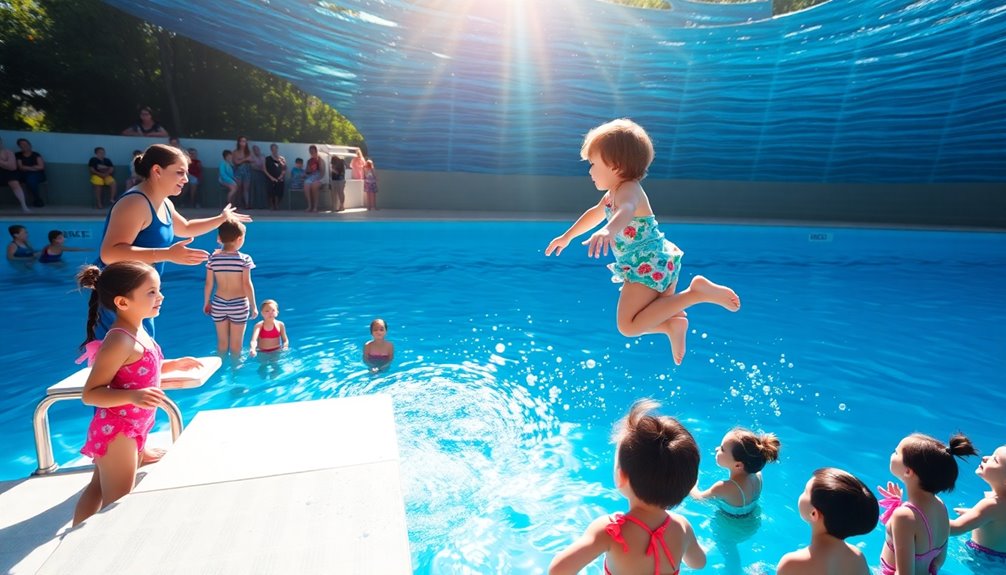
When teaching kids to dive, it’s crucial to understand that safety isn’t just a guideline; it’s a necessity. Kids are naturally curious and enthusiastic to explore, but they may not fully grasp the diving risks involved.
By prioritizing safety, you not only minimize these risks but also enhance their overall diving experience. Teaching them about proper techniques and safety protocols helps build their confidence in the water. You’ll notice that as they become more aware of their surroundings and potential hazards, they’ll enjoy diving more. The safety benefits extend beyond just preventing accidents; they foster a sense of responsibility and respect for the water. Additionally, understanding stoppage time in sports can draw parallels to the importance of timing and awareness in diving, reinforcing the need for vigilance.
Essential Swimming Skills Every Child Should Master
Mastering essential swimming skills is essential for every child who wants to dive safely. Start by focusing on swimming fundamentals like floating, kicking, and basic strokes. These skills build a strong foundation, enabling your child to navigate the water confidently.
Encourage them to practice breathing techniques, as proper breathing prevents panic and enhances their comfort in the water.
Next, introduce your child to submerging their face and body, helping them develop aquatic confidence. Play games that involve retrieving objects from the bottom, which fosters both skill and fun.
Finally, make sure they learn how to tread water, an important skill for safety. By mastering these essential skills, your child will be well-prepared for a safe and enjoyable diving experience. Additionally, understanding cardiovascular endurance can greatly enhance their swimming abilities, allowing for more sustained energy during activities in the water.
Key Safety Precautions Before Diving In
Before jumping in, you need to assess the water depth to guarantee it’s safe.
Take a moment to check the surrounding environment for any hazards that could pose a risk.
Finally, using proper techniques will help you avoid injuries and make the experience enjoyable. Additionally, understanding the importance of adherence to rules can enhance safety and prevent accidents while diving.
Assess Water Depth First
To guarantee a safe diving experience, it’s crucial to assess the water depth first.
Before you enter, make sure the water is deep enough to prevent injuries. A minimum depth of 9 to 12 feet is generally recommended for safe diving. You don’t want to risk hitting the bottom or any submerged objects.
Walk around the diving area to check for depth variations, and if possible, use a measuring tape or ruler to confirm it.
Remember, diving safety starts with knowing your surroundings. If the depth isn’t sufficient or if you’re unsure, it’s best to avoid diving altogether.
Teaching kids to prioritize water depth will help instill safe diving habits for life.
Check Surrounding Environment
Checking the surrounding environment is essential for safe diving. Before you enter the water, take a moment to assess your surroundings. Look for any obstacles like rocks, swimmers, or boats that might pose a danger.
Environmental awareness helps you avoid potential hazards that could lead to injury. Confirm the area is clear and suitable for diving—this is a key part of diving etiquette.
If you’re diving in a public space, be respectful of others and wait your turn. Communicate with fellow divers about your plans and make certain everyone understands the environment.
Use Proper Diving Techniques
Once you’ve assessed your surroundings, it’s time to focus on using proper diving techniques.
Start with your dive posture; keep your body straight and your arms extended above your head. This position helps reduce resistance as you enter the water.
When you’re ready to dive, pay attention to your entry angle. A streamlined entry at about a 45-degree angle minimizes splash and helps you cut through the water efficiently.
Remember to tuck your chin to your chest and keep your legs together. As you dive, push off the edge firmly to gain momentum.
Practicing these techniques won’t only enhance your diving skills but also guarantee you dive safely every time.
How to Teach Proper Body Positioning for Diving
While diving can be exhilarating, mastering proper body positioning is essential for safety and technique. Start by having your child stand on the diving board with feet shoulder-width apart. Encourage them to lean slightly forward, engaging their core for stability.
Emphasize the importance of maintaining body alignment; their head should be in line with their spine, and arms should extend straight overhead.
Maintaining proper body alignment is crucial; keep the head in line with the spine and arms extended overhead.
Next, demonstrate the ideal dive posture: a streamlined shape with a tight body. Remind them to keep their legs together and toes pointed to minimize resistance as they enter the water.
Practicing on land can help them internalize this positioning. Reinforce these concepts regularly, ensuring they understand that correct body positioning sets the stage for a successful dive. Additionally, remind them that just like in soccer, where player conduct emphasizes safety and respect, diving should also be done with care for oneself and others around them.
Techniques for a Safe and Effective Dive Entry
To guarantee a safe and effective dive entry, focus on maintaining a smooth and controlled approach as you reach the end of the diving board.
Start by positioning your body with your arms extended and your head aligned with your spine. As you prepare to dive, bend your knees slightly and push off the board with your feet. This explosive motion helps you gain momentum.
For ideal entry angles, aim to enter the water at about a 45-degree angle. This reduces splashing and minimizes the impact on your body.
Practicing various dive techniques, like the tuck dive or pike dive, will build your confidence and skill. Incorporating advanced football routes into your training may also enhance your overall agility and coordination in the water.
Always remember to keep your eyes on the water as you dive for a safe landing.
What to Do in Case of an Emergency While Diving?
When an emergency happens in the water, your first step is to stay calm and assess the situation.
You should signal for assistance to alert others nearby, ensuring help is on the way.
If necessary, be ready to perform first aid to address any injuries until help arrives. Additionally, it’s important to maintain a focus on hydration and recovery to ensure you are physically prepared for any challenges that may arise.
Stay Calm And Assess
In any diving situation, staying calm is essential, especially during an emergency. A calm mindset allows you to think clearly and assess the situation effectively.
Take a deep breath, focus on your surroundings, and recognize what’s happening. This is vital for anxiety management. Instead of panicking, remind yourself that you’ve trained for emergencies and can handle this.
Look for potential hazards, check on your diving buddy, and evaluate your own physical condition. Identify any immediate needs, such as air supply or support.
By staying composed, you can make informed decisions that prioritize safety. Remember, keeping your cool not only helps you but also sets a positive example for others in the water.
Stay aware, stay calm, and act wisely.
Signal For Assistance
Staying calm and evaluating your surroundings sets the stage for effective communication during a diving emergency.
First, identify the nearest lifeguard or diving supervisor. Use clear signal signs, like waving your arms or using a whistle, to get their attention. If you’re with a buddy, make certain they’re aware of the situation as well.
Know the assistance protocols specific to your diving location. For instance, some areas may require specific hand signals to indicate distress.
Communicate your need for help by being direct and assertive. Remember, it’s essential to keep your movements deliberate to avoid panic.
Perform First Aid
Act quickly in a diving emergency to secure the safety of yourself and others.
First, assess the situation and verify it’s safe to approach the injured person. Call for help immediately, initiating your emergency response plan.
If someone’s unresponsive, check for breathing and pulse; if absent, start CPR using first aid techniques.
For injuries like cuts or sprains, apply appropriate pressure or stabilize the area. If a person is conscious but in distress, keep them calm and still to prevent further injury.
Always have a first aid kit nearby and know how to use its contents.
After addressing immediate needs, make sure the injured person receives professional medical assistance as soon as possible to prevent complications.
Encouraging a Lifelong Love for Diving in Young Swimmers
While diving may seem intimidating at first, instilling a passion for it in young swimmers can lead to a lifelong love for the sport.
Start by creating positive diving experiences that emphasize fun and safety. Encourage them to explore different aquatic adventures, whether it’s diving for treasure or creating splash contests with friends. Celebrate their achievements, no matter how small, to build their confidence.
Make diving a family activity, participating together in lessons or outings at the pool. Share stories of your own diving adventures to inspire them.
Finally, foster a supportive environment where they can express their fears and excitement. With your guidance, they’ll not only develop diving skills but also cherish the joy it brings throughout their lives. Additionally, incorporating communication with teammates during group diving activities can enhance their social skills and confidence in the water.
Conclusion
In summary, teaching kids to plunge safely is vital for fostering their confidence and enjoyment in the water. By instilling essential skills and safety habits, you’re not only protecting them but also nurturing a lifelong passion for swimming. Isn’t it rewarding to see them embrace the thrill of diving while staying safe? Remember, with the right guidance and practice, your kids can dive into a world of fun and adventure without fear.