
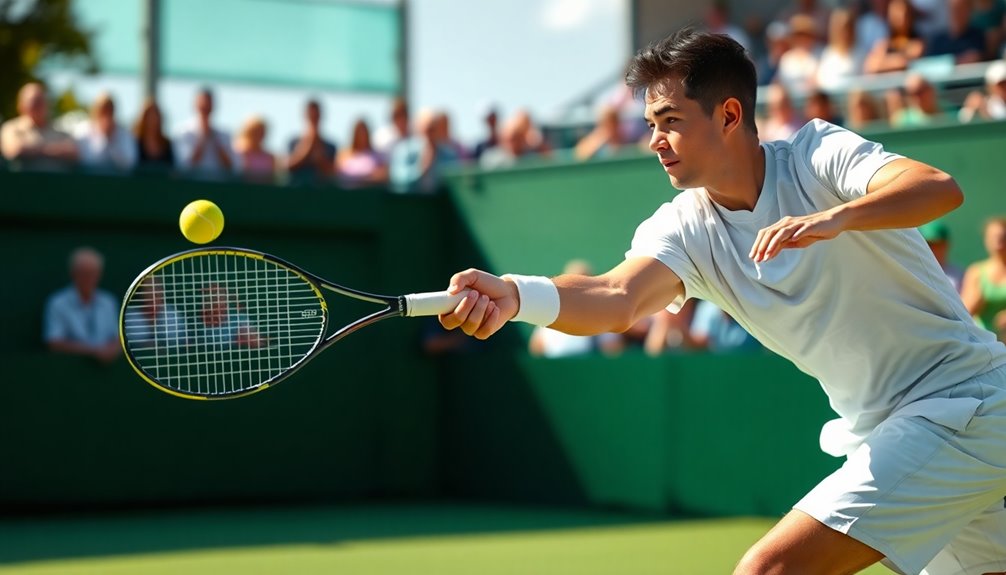
One-Handed Backhand Basics
April 20, 2026The one-handed backhand is an essential shot that can elevate your tennis game. You’ll want to master various grips for versatility, like the Eastern for balance and the Semi-Western for topspin. Focus on your stance and footwork to maintain stability as you swing. Timing is key, so hit the ball at waist height for ideal leverage. With the right techniques and drills, you can develop power and precision. There’s so much more to explore about perfecting this shot!
Understanding the One-Handed Backhand: An Overview
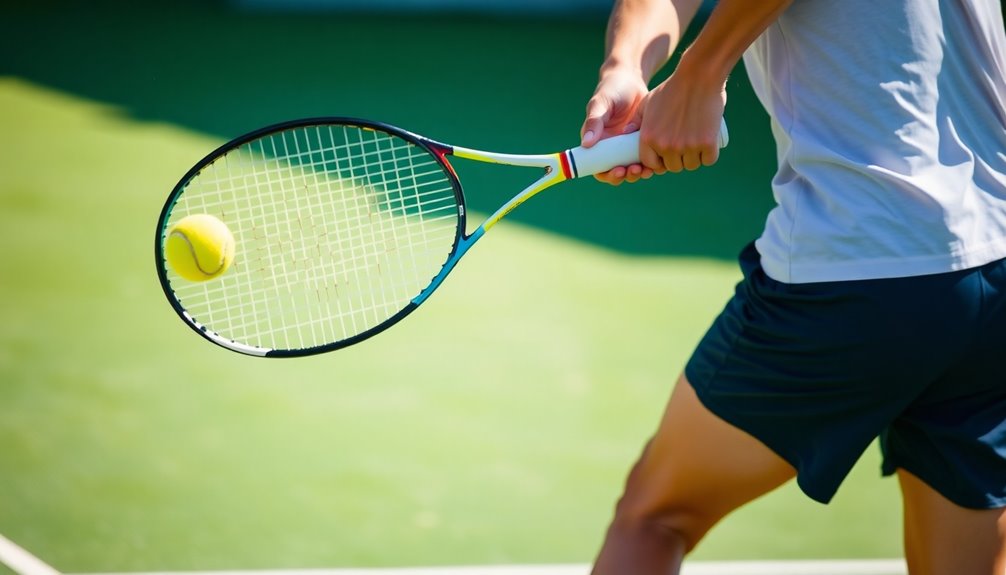
When you grasp the fundamentals of the one-handed backhand, you’ll access a powerful weapon in your tennis arsenal. This stroke offers distinct one-handed advantages, such as greater reach and the ability to hit with more topspin.
Mastering the one-handed backhand unlocks powerful advantages, enhancing your reach and topspin on the court.
Historically, the one-handed backhand has evolved from the classic styles of legends like Rod Laver and Björn Borg to modern players like Roger Federer, showcasing its adaptability and effectiveness.
Understanding its mechanics is vital; you’ll learn to balance power with finesse, allowing for versatile shot-making. As you practice, you’ll notice how this technique can give you an edge in your game, making it essential to master.
Embrace its rich history and unique benefits to enhance your overall performance on the court. Additionally, mastering the offside rule can help improve your strategic play in various sports, including tennis.
Key Grip Variations for a Powerful Backhand
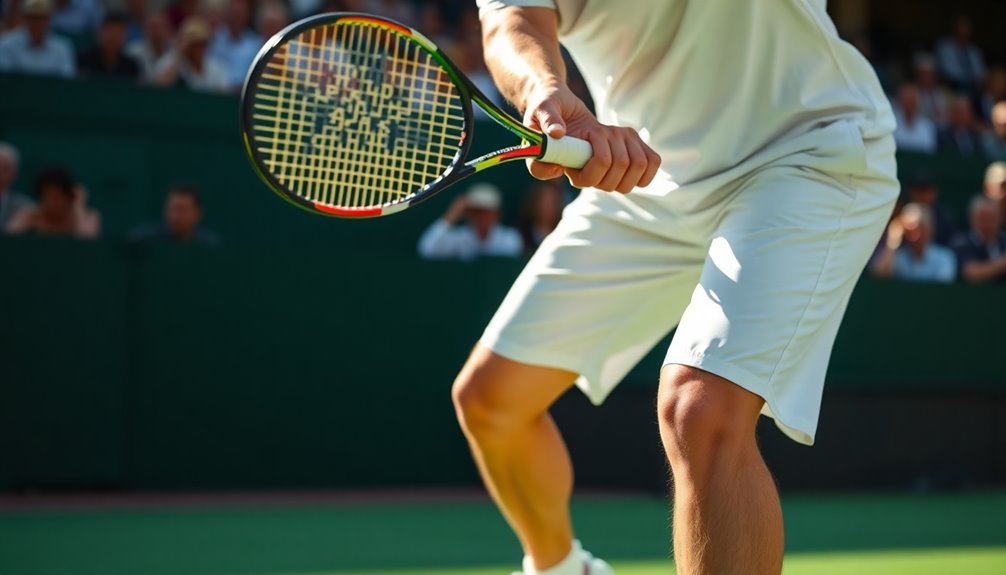
Mastering the one-handed backhand isn’t just about technique; it starts with the right grip. Different grip types can enhance your power and control, so don’t hesitate to make grip adjustments based on your comfort and play style.
Here are some key variations to evaluate:
- Eastern Grip: Ideal for a balanced attack.
- Semi-Western Grip: Great for topspin and depth.
- Continental Grip: Perfect for versatility and slice shots.
- Western Grip: Best suited for heavy topspin.
- Modified Grip: A mix that tailors to personal style.
Experiment with these grip types to find what feels best and elevates your one-handed backhand. Additionally, understanding stoppage time can improve your overall game awareness, helping you anticipate critical moments during play.
Mastering the Stance: Footwork Fundamentals
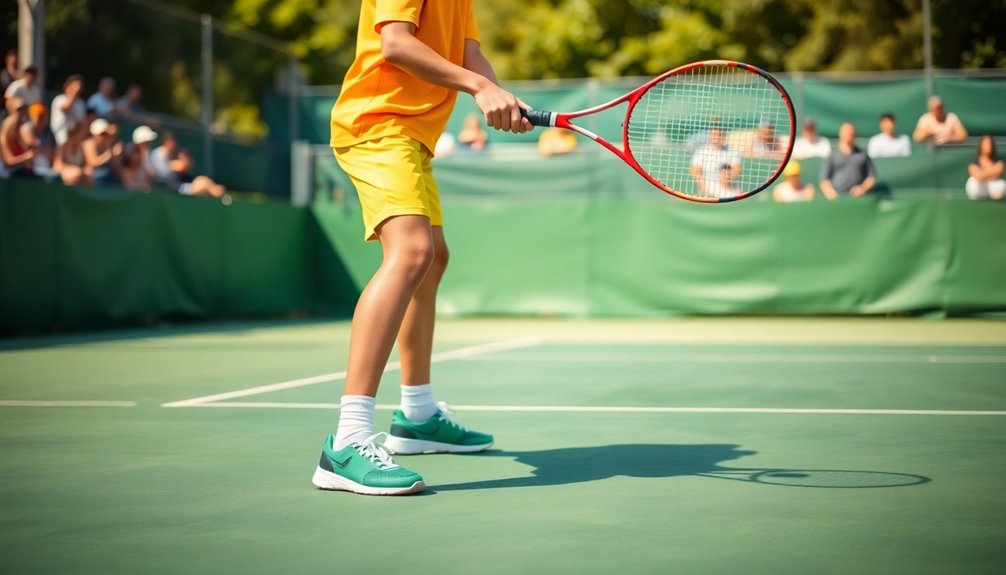
To effectively execute a one-handed backhand, your stance and footwork play essential roles.
Start by positioning your feet shoulder-width apart, ensuring proper foot placement for stability. As the ball approaches, pivot on your back foot and step forward with your front foot, maintaining balance control throughout the movement.
This dynamic shift helps you generate power while keeping your body aligned. Focus on bending your knees slightly to lower your center of gravity, which enhances your balance and prepares you for a smooth follow-through. Additionally, incorporating agility training drills can further improve your overall footwork and responsiveness on the court.
Essential Body Mechanics for a Smooth Stroke
To execute a smooth one-handed backhand, your grip position is essential.
You’ll want to guarantee your weight transfer is seamless, allowing you to generate power and control.
Mastering these body mechanics can greatly improve your stroke effectiveness. Additionally, understanding formation strategies in soccer can enhance your overall awareness in sports that require precise movements and coordination.
Proper Grip Position
The grip you choose is vital for executing a smooth one-handed backhand. Different grip styles can greatly impact your performance, so it’s important to find what feels right for you.
Here’s how to position your grip for ideal control and power:
- Hold the racket with a relaxed, firm grip
- Position your hand near the throat for balance
- Adjust your grip based on your stance and swing
- Keep your wrist neutral to avoid tension
- Experiment with grip adjustments to find your sweet spot
Weight Transfer Techniques
Mastering weight transfer is essential for a powerful one-handed backhand. Start by positioning your feet shoulder-width apart, allowing for effective weight distribution strategies.
As you prepare to swing, shift your weight onto your back foot, engaging your core for stability. This sets the stage for a smooth shift. When you make contact with the ball, transfer your weight to your front foot, pushing off for added momentum.
Incorporating balance enhancement techniques, like bending your knees slightly, will keep you grounded during the stroke. Focus on maintaining your center of gravity to guarantee control and precision.
Timing Your Swing: When to Hit the Ball?
Timing your swing is essential for a successful one-handed backhand. You need to focus on hitting the ball at the ideal contact point while maintaining a smooth swing rhythm.
Anticipating the ball’s trajectory will help you prepare and react more effectively during your shots.
Ideal Contact Point
Finding the ideal contact point for your one-handed backhand is crucial for a successful shot. You want to guarantee that your racket meets the ball at just the right moment, maximizing control and power.
Here are some key elements to visualize:
- The ball should be at waist height for best leverage.
- Aim for a slight forward tilt in your racket to adjust the contact angle.
- Position your body sideways to the net for balance.
- Keep your eyes focused on the ball as it approaches.
- Step into the shot to generate momentum.
Swing Rhythm Importance
Nailing your swing rhythm plays an essential role in executing a powerful one-handed backhand. You’ll want to focus on your swing tempo, which helps you develop rhythm consistency. A fluid, well-timed swing allows you to connect with the ball at the ideal moment, maximizing your power and control.
To achieve this, practice your timing with drills that emphasize rhythm. Pay attention to the pace of your preparation and follow-through; both should feel natural and synchronized.
When you find your groove, hitting the ball becomes instinctive, and your shots will carry more weight. Remember, mastering your swing rhythm not only enhances your performance but also boosts your confidence on the court.
Keep refining it, and you’ll see the results.
Anticipating Ball Trajectory
As you prepare to hit a one-handed backhand, anticipating the ball’s trajectory is essential for timing your swing effectively. You need to watch the ball closely and assess how it’ll bounce before making your move.
Pay attention to:
- The angle of the racket as the ball approaches
- The height of the ball bounce off the court
- Your opponent’s position and shot placement
- The speed of the incoming ball
- The spin that might affect its trajectory
Common Mistakes to Avoid With One-Handed Backhands
When perfecting your one-handed backhand, avoiding common mistakes can make all the difference in your game.
One of the most prevalent misconceptions is thinking you need to generate power solely from your arm. Instead, focus on using your whole body for better control and balance.
Another beginner pitfall is neglecting footwork; without proper positioning, even a well-executed stroke can falter.
Many players also grip the racket too tightly, limiting flexibility and fluidity.
Ultimately, don’t overlook the importance of follow-through; a complete stroke helps with accuracy and consistency.
By steering clear of these errors, you’ll enhance your technique and enjoy more success on the court. Additionally, effective body shielding can help you maintain your balance during your stroke and improve overall performance.
How to Generate Power and Spin in Your Shot
To generate power and spin in your one-handed backhand, focus on grip pressure and position. Your body alignment plays a vital role, so make sure you’re positioned correctly for each shot. Finally, mastering your follow-through mechanics will help you achieve that extra pop and spin on the ball. Additionally, incorporating leg strength training into your routine can enhance your overall power and stability, contributing to a more effective shot.
Grip Pressure and Position
Mastering grip pressure and position is essential for generating power and spin in your one-handed backhand. You want to find the right grip tension and alignment to guarantee a fluid stroke.
Here are some key points to keep in mind:
- Light but Firm: Your grip should be secure, not overly tight.
- Base of Fingers: Hold the racquet with the base of your fingers for better control.
- Angle of the Racquet: Maintain a slight angle to create topspin.
- Wrist Flexibility: Let your wrist remain relaxed for a more dynamic swing.
- Consistent Placement: Keep your grip alignment consistent for reliable shots.
Body Alignment Techniques
Proper body alignment is essential for generating both power and spin in your one-handed backhand. Start by positioning your feet shoulder-width apart, ensuring your body orientation faces the net.
As you prepare to hit, rotate your shoulders back while keeping them aligned with your hips. This shoulder alignment helps create a strong base and sets you up for an effective swing.
When you step into the shot, shift your weight onto your front foot, allowing your hips to follow through the motion. This weight transfer not only adds power but also helps in producing the necessary spin.
Follow-Through Mechanics
Execute a smooth follow-through to maximize both power and spin in your one-handed backhand. The key lies in maintaining stroke fluidity throughout the motion.
As you complete your swing, focus on these elements:
- Arm extension: Fully extend your arm for maximum reach.
- Wrist snap: Allow your wrist to flick naturally, adding spin.
- Body rotation: Rotate your hips and shoulders for added power.
- Follow-through height: Finish high, ensuring your racquet ends above your shoulder.
- Balance: Maintain your stance, keeping your weight centered.
Drills to Practice Your One-Handed Backhand
To sharpen your one-handed backhand, engaging in targeted drills can make all the difference. Start with solo practice using a wall; hit the ball against it, focusing on your grip and follow-through. Incorporate drill variations by changing the distance from the wall to challenge your precision and power.
Next, set up cones or targets on the court to improve your accuracy. As you progress, try shadow swings without a ball to reinforce muscle memory. Additionally, consider how consistent finishing drills can enhance your overall technique and confidence in match situations.
Finally, practice with a partner, alternating volleys to simulate match conditions. These drills not only enhance your technique but also build confidence in your one-handed backhand. Consistent practice will lead to noticeable improvements in your overall game.
Analyzing Professional Players’ One-Handed Backhands
After honing your one-handed backhand through targeted drills, it’s beneficial to examine how professional players execute this shot.
By analyzing player comparisons, you can see the technique evolution over time. Notice how different players vary in their approach, contributing to unique styles.
Consider these key elements:
- Grip Style: Some prefer an Eastern grip for more spin.
- Preparation: Watch how players position their bodies pre-shot.
- Follow-Through: Observe the fluidity in their follow-throughs.
- Footwork: Note their quick, agile movements to set up.
- Timing: Pay attention to their ability to strike the ball at just the right moment.
Additionally, understanding goalkeeper tendencies can enhance your ability to anticipate and adapt during gameplay.
Tips for Building Confidence in Your Backhand Technique
Building confidence in your one-handed backhand can transform your game. Start with confidence building exercises, like practicing your stroke against a wall. This repetition helps you feel more comfortable with your technique.
Next, incorporate mental visualization techniques. Picture yourself executing the perfect backhand during a match—focus on your grip, stance, and follow-through.
Also, set small, achievable goals for each practice session. Celebrate each improvement, no matter how minor, as it boosts your confidence.
Finally, play practice matches with friends or against players of varying skill levels. The more you put your backhand to the test, the more secure you’ll feel. Additionally, consistent practice of foundational skills, such as dribbling techniques, can further enhance your overall performance.
Conclusion
Mastering the one-handed backhand can feel challenging, but it’s also incredibly rewarding. While you might struggle at first, each practice session brings you closer to that fluid, powerful stroke. Embrace the challenges; they’re part of the journey. Just like the pros who once faced their own hurdles, you’ll find that persistence transforms frustration into finesse. So, keep swinging, find your rhythm, and remember: every great player was once a beginner, just like you.