
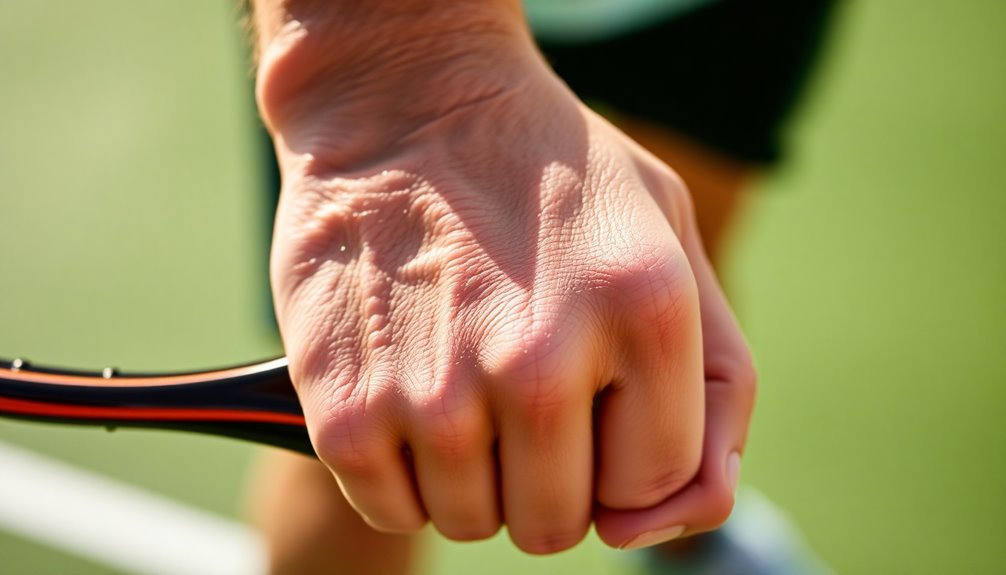
Backhand Grip Explained
April 20, 2026Your backhand grip is essential for powerful, consistent shots in tennis. It determines your swing path, control, and spin. There are several types to choose from—like the Eastern, Western, and Two-Handed grips—each suited to different styles and skill levels. You want a grip that feels comfortable and aligns with your game. Mastering these techniques can greatly enhance your performance. Stick around to discover more about how to refine your grip and improve your gameplay.
Understanding the Importance of the Backhand Grip

When you grasp the significance of the backhand grip, you reveal an essential element of your game.
Mastering the backhand fundamentals is critical for achieving consistent and powerful shots. Your grip is more than just where you hold the racquet; it’s a key factor in your overall technique.
Mastering your backhand grip is essential for powerful, consistent shots and overall technique on the court.
As you explore grip evolution, you’ll notice how adapting your grip can enhance your performance. Each grip style influences your swing path, control, and spin, making it crucial to find one that complements your playing style.
By understanding these aspects, you can elevate your backhand, turning it into a formidable weapon on the court. Additionally, just as soccer players must follow equipment and attire regulations, your grip choice should align with your playing style for optimal results.
The Different Types of Backhand Grips Explained
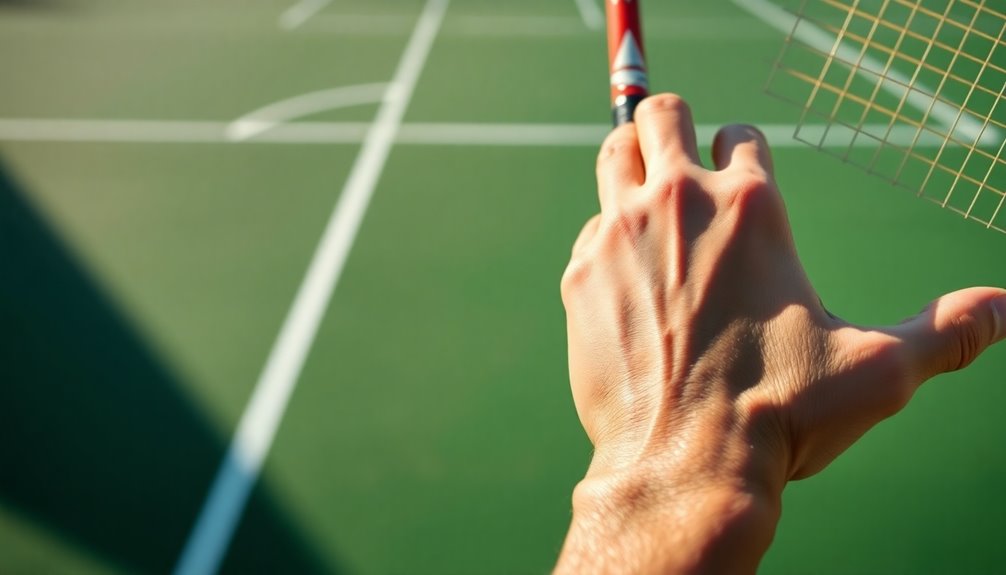
Here are four common backhand grips:
- Eastern Grip: Offers a mix of power and control, ideal for beginners.
- Western Grip: Provides a high topspin, perfect for aggressive play.
- Two-Handed Grip: Enhances stability and power, suitable for players with a strong upper body.
- One-Handed Grip: Allows for more finesse and angle shots, favored by advanced players. Additionally, mastering different grips can enhance your overall performance by improving shot accuracy and versatility on the court.
How to Choose the Right Backhand Grip for Your Style?
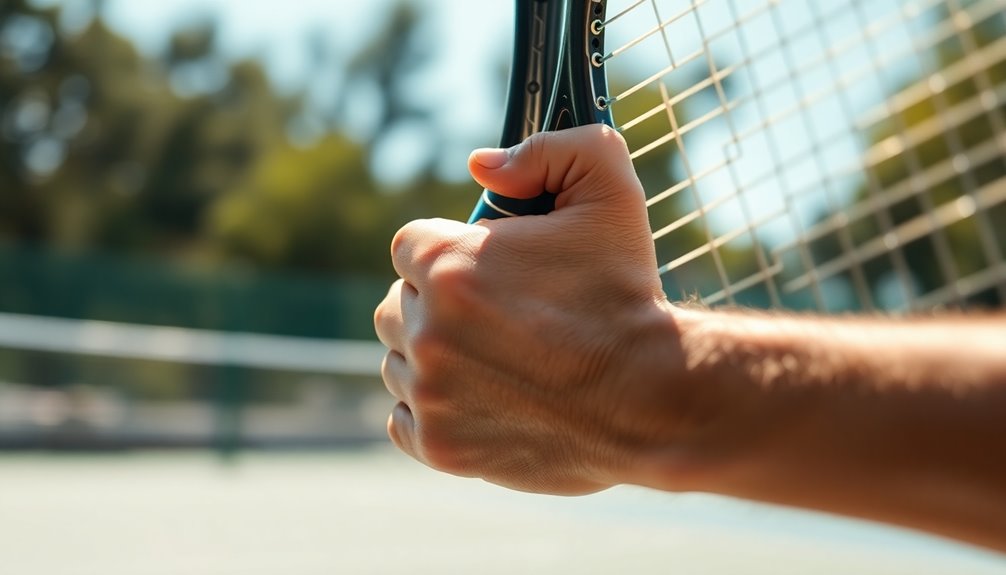
How do you decide on the right backhand grip that complements your playing style?
Start by considering your style preferences. If you favor power, a semi-western grip might suit you, while a continental grip can enhance versatility.
Your player experience also plays an essential role; beginners may find it easier to start with a more forgiving grip like the eastern.
Experimenting with different grips during practice can reveal what feels most comfortable. Pay attention to how each grip affects your control and spin.
Ultimately, the right backhand grip aligns with your unique combination of style and experience, allowing you to execute shots more effectively and confidently on the court. Additionally, understanding key areas on the field can enhance your overall spatial awareness and shot placement.
Mastering the One-Handed Backhand Grip
To master the one-handed backhand grip, you need to focus on proper grip placement first. Next, pay attention to your wrist positioning, as it can greatly impact your shot’s accuracy. Finally, perfecting your follow-through technique will enhance your overall performance on the court. Additionally, understanding the impact of diverse athletes can inspire you to incorporate unique playing styles into your game.
Proper Grip Placement
Mastering the one-handed backhand grip starts with proper placement, directly impacting your control and power. To achieve this, follow these grip alignment techniques and adjustment methods:
- Position the Base Knuckle: Place your index finger’s base knuckle on the third bevel of the racquet handle.
- Relax Your Hand: Keep your grip loose to maintain flexibility and enhance swing speed.
- Align Your Thumb: Position your thumb along the back of the handle for stability and support.
- Check Your Palm Placement: Confirm your palm is facing the ground, creating a natural angle for the stroke.
Wrist Positioning Tips
While the grip is essential, wrist positioning plays an important role in executing a one-handed backhand effectively.
To improve your wrist positioning, focus on maintaining a relaxed yet firm wrist throughout your swing. This flexibility helps you generate power and control.
Incorporate wrist flexibility exercises into your routine, such as wrist rotations and stretches, to enhance your range of motion. Additionally, engage in wrist strength training with exercises like wrist curls and resistance bands to build the necessary strength for a solid backhand.
Remember, a strong and flexible wrist allows for better shot execution and minimizes the risk of injury.
Keep practicing these tips, and you’ll see improvements in your one-handed backhand performance.
Follow-Through Technique
As you refine your one-handed backhand grip, the follow-through technique becomes essential for maintaining power and accuracy in your shots. Understanding the follow-through importance allows you to execute clean strokes consistently.
Focus on these key elements:
- Body Rotation: Confirm your torso rotates towards the net for maximum energy transfer.
- Racket Position: Finish high, with the racket above your shoulder to create ideal follow-through angles.
- Follow-Through Path: Allow your racket to move naturally, following the ball’s trajectory.
- Balance: Maintain a stable stance throughout to enhance control and placement.
Unlocking the Potential of the Two-Handed Backhand Grip
The two-handed backhand grip can greatly enhance your performance on the court. By mastering this grip, you open yourself up to advanced techniques that can elevate your game.
You’ll find that grip variations allow for better control and power, helping you respond effectively to different shots. Experiment with the placement of your hands to discover what feels best for you.
This grip not only stabilizes your swing but also improves your ability to generate topspin and slice. As you practice, focus on your footwork and body positioning to complement the two-handed backhand.
Embrace this grip, and you’ll unlock a new level of consistency and precision in your shots. A strong defense helps to build resilience in your game, making it essential to your overall performance. Get ready to impress your opponents!
Common Mistakes With Backhand Grips and How to Fix Them
Many players struggle with their backhand grips, often leading to inconsistent shots and missed opportunities.
To help you avoid common errors, consider these grip adjustments:
- Too Loose: A grip that’s too relaxed can cause loss of control. Make certain your grip is firm but not tense.
- Improper Hand Placement: Ensure your dominant hand is positioned correctly on the handle; it should feel natural.
- Neglecting the Non-Dominant Hand: For two-handed grips, your non-dominant hand is essential for stability. Don’t overlook its role.
- Over-gripping: Squeezing the racket too tightly can hinder your swing. Focus on a balanced grip that allows fluid movement.
Incorporating strong defensive skills into your overall training can enhance your grip technique by improving hand-eye coordination and stability.
Drills to Improve Your Backhand Grip Technique
Sharpen your backhand grip technique with targeted drills that build muscle memory and confidence. Start by incorporating practice routines that focus on different grip variations. For example, practice hitting backhands with both Eastern and Western grips, alternating every few minutes to understand their unique feels.
Next, use shadow swings without the ball. This helps you focus solely on your grip and hand positioning. Once you’re comfortable, integrate these grips into your regular hitting sessions, ensuring you switch grips during actual play to reinforce your skills.
Finally, record your practice to analyze your grip each session. Consistent practice with these drills will enhance your backhand grip, leading to improved performance on the court. Additionally, incorporating dynamic stretching before your practice sessions can help reduce injury risk and improve overall performance.
How Does Your Grip Affect Spin and Power in Your Shots?
Your grip plays an essential role in how much spin and power you generate with your shots.
By adjusting your grip pressure and technique, you can enhance your ability to create spin and effectively transfer power.
Let’s explore how these factors come together to elevate your game. Additionally, mastering proper grip techniques is crucial for optimizing your performance.
Spin Generation Techniques
The grip you choose can greatly impact the spin and power of your shots. Understanding spin mechanics is essential for maximizing your performance.
Here are some spin generation techniques that illustrate how grip variations can influence your game:
- Eastern Grip: This grip allows for easier topspin, making it ideal for consistent groundstrokes.
- Semi-Western Grip: Perfect for generating heavy topspin, it enables you to hit with more power while maintaining control.
- Western Grip: This grip promotes extreme topspin, ideal for high-bouncing shots that challenge opponents.
- Continental Grip: While versatile, it can provide effective slice shots, allowing for deceptive spins.
Experiment with these grips to find what best suits your playing style and enhances your spin generation!
Power Transfer Mechanics
Grip selection plays a pivotal role in transferring power and spin during your shots. When you choose the right backhand grip, you enhance power transfer from your body through the racket to the ball.
A stable grip allows for better control, enabling you to generate more force without losing accuracy. If your grip is too loose or weak, you’ll struggle to maintain grip stability, which can result in mishits and reduced power.
Conversely, a firm grip provides a solid foundation, allowing you to harness your body’s momentum effectively. This stability helps you apply the necessary spin, complementing your power.
Ultimately, mastering your grip guarantees you strike a balance between power and precision, elevating your overall performance.
Grip Pressure Influence
Control plays an essential role in how grip pressure influences both spin and power during your shots.
Adjusting your grip tension can considerably affect your grip dynamics, enhancing your performance.
Here’s how varying your grip pressure impacts your game:
- Light Grip: Increases racket speed, allowing for more spin on the ball.
- Moderate Grip: Balances control and power, helping you maintain accuracy.
- Firm Grip: Boosts power transfer but may reduce spin potential.
- Variable Pressure: Adapts to shot types, allowing you to maximize both spin and power effectively.
Conclusion
In mastering your backhand grip, you’re on the path to powerful performance. Perfecting this pivotal technique not only enhances your shots but also elevates your entire game. Remember, whether you favor the finesse of a one-handed backhand or the stability of a two-handed grip, practice makes progress. So, stay sharp, stay focused, and let your backhand blossom into a brilliant blend of spin and strength. Embrace your grip, and watch your game grow!