
Is Safety an Offensive or Defensive Position? Everything You Need to Know
March 19, 2026The safety position in football is definitely a defensive role. It’s vital for stopping offenses and preventing big plays. You’ve got two types: strong safety and free safety, each with distinct responsibilities. While strong safeties focus on stopping the run, free safeties typically handle deep coverage and read opposing offenses. Their skills can swing the game’s momentum, making them key players in defensive strategies. There’s much more to explore about their impact and roles in today’s game.
What Is the Safety Position in Football?
In football, the safety position plays an essential role on defense. Safeties are vital defensive backs tasked with preventing big plays, whether through pass coverage or stopping run plays.
There are two main types: the strong safety (SS) who lines up closer to the line of scrimmage to assist in halting the run, and the free safety (FS), who plays deeper to cover long routes.
Typically, safeties line up 10 to 15 yards from the line of scrimmage, acting as the last line of defense against offensive threats.
As the game evolves, the safety position has adapted to focus more on both tackling and coverage, reflecting the increasing emphasis on the passing game in modern football. Additionally, effective communication among teammates ensures role clarity within formations, which is crucial for team coordination in defensive strategies.
Understanding the Roles of Free Safety and Strong Safety
When you look at the roles of free safety and strong safety, you’ll notice some key differences that shape their responsibilities on the field.
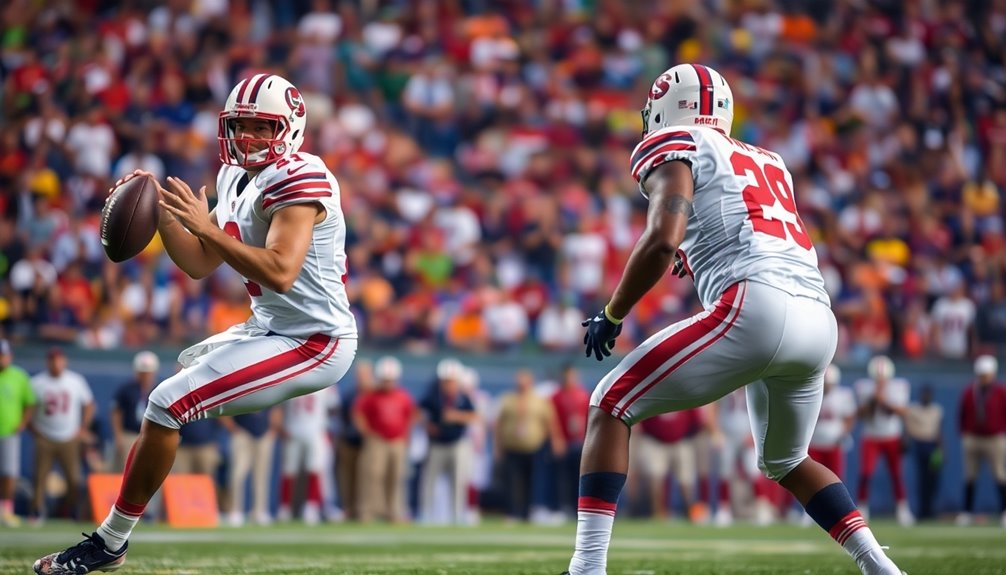
The free safety acts as a defensive quarterback, focusing on deep coverage and interceptions, while the strong safety plays closer to the action, prioritizing run defense and tight end coverage. Understanding these distinct roles can help you appreciate how each position adapts to modern offensive strategies. Additionally, a strong defense requires teamwork and coordination, which is essential for success on the field.
Key Differences Between Safeties
Understanding the roles of free safety and strong safety is essential for grasping how a defense operates effectively. The key differences between these two safeties lie in their positioning and responsibilities.
The free safety (FS) typically plays deeper in the secondary, focusing on pass coverage and serving as the last line of defense against deep passes.
In contrast, the strong safety (SS) lines up closer to the line of scrimmage, emphasizing run defense and covering tight ends or running backs.
Free safeties require superior speed and agility for expansive field coverage, while strong safeties blend the roles of a linebacker and a defensive back, prioritizing physicality and tackling.
Understanding these distinctions enhances your grasp of modern defensive strategies.
Responsibilities of Free Safety
The free safety (FS) plays a pivotal role in the defensive backfield, often acting as the defensive quarterback. Positioned deeper than the strong safety, your primary responsibility is to read the offense and adjust defensive schemes accordingly.
You focus on covering deep routes and assisting cornerbacks in defending against pass plays, which means anticipating where the ball will go. Your speed and awareness enable you to make significant interceptions, creating turnover opportunities.
Additionally, you might blitz to pressure the quarterback, adding an unpredictable element to your defense. While the strong safety primarily handles run support and tight ends, your role emphasizes deep coverage and playmaking, making you an essential asset in the defense.
Role of Strong Safety
Strong safety (SS) is a dynamic position that bridges the gap between the secondary and the front seven.
As a defensive player, you line up closer to the line of scrimmage, taking on vital responsibilities that resemble those of linebackers. Your main tasks are to stop the run and cover the pass, focusing on tight ends and running backs.
This role demands a blend of physicality and coverage skills, especially given the modern game’s emphasis on passing offenses. You often engage in tackles and blitz the quarterback, making you essential for your defensive team.
The Evolution of the Safety Position: From Past to Present
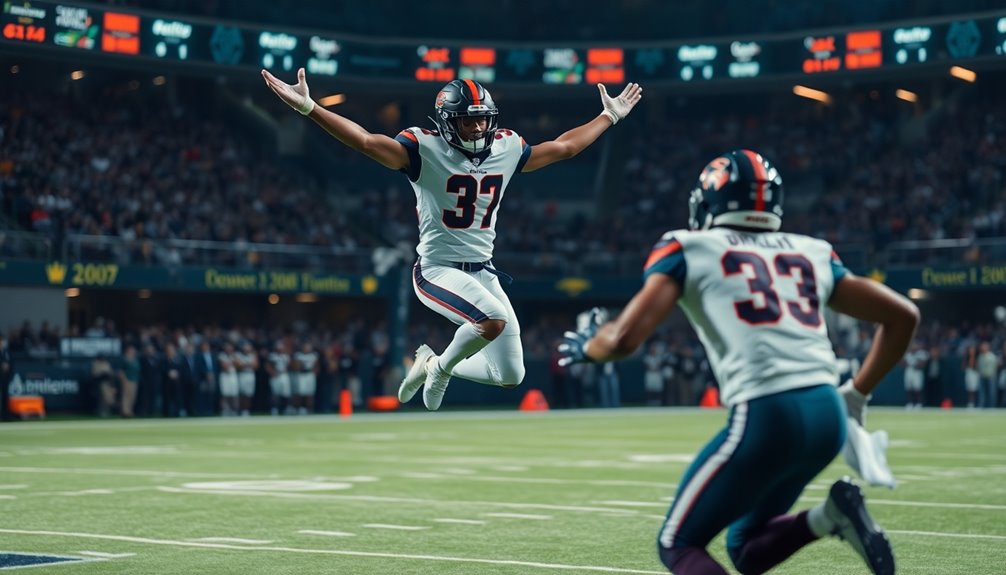
The safety position has come a long way from its early days as a defensive fullback, focusing primarily on stopping the run. Today, you’ll notice modern safeties juggling both pass coverage and run defense, adapting to an ever-evolving game strategy. This shift highlights not just their versatility, but also their crucial role in shaping defensive schemes. Additionally, their skills are increasingly comparable to those found in local community centers that host flag football leagues, emphasizing the need for diverse athletic capabilities.
Historical Role Changes
As football evolved, so did the role of the safety position, shifting from the traditional “defensive fullback” to a more specialized defensive back. This transformation reflects key historical role changes that resonate deeply:
- From Run Stoppers to Coverage Specialists: Safeties now excel in coverage skills, adapting to complex offensive schemes.
- The Last Line of Defense: Modern safeties are pivotal in playmaking, often essential in thwarting opponents’ big plays.
- Defensive Quarterbacks: Today’s free safeties read offenses, orchestrating defensive alignments with finesse.
This evolution highlights how the safety position has grown from a simple role to a dynamic force in modern football, showcasing the importance of adaptability in the face of changing strategies.
Modern Responsibilities Overview
While many still think of safeties as mere defenders, their modern responsibilities have transformed them into multifaceted players essential for both stopping the run and defending against the pass.
Free safeties now act as the “defensive quarterbacks,” making quick decisions in coverage to counter deep routes and support cornerbacks.
Strong safeties blend the roles of linebackers and defensive backs, focusing on run support and tight end coverage.
As the passing game evolves, safeties must develop exceptional athleticism, playmaking abilities, and communication skills to read offensive formations effectively.
Their ability to create turnovers and impact games highlights the critical role modern safeties play in contemporary defensive strategies, making them invaluable assets on the field.
Impact on Game Strategy
Evolving from their traditional roles, safeties now play a pivotal part in shaping game strategy. The safety position has transformed dramatically, focusing on both stopping the run and excelling in pass coverage.
Here’s how they impact game strategy:
- Dynamic Coverage Schemes: Safeties adapt to various offensive strategies, making split-second decisions that can dictate the game’s outcome.
- Playmaking Abilities: Their knack for creating turnovers through interceptions and fumbles adds an essential element to modern defenses.
- Influence on Defensive Formations: Safeties often align with defensive linemen, adjusting formations based on offensive setups, which can frustrate even the best offenses.
Key Skills Every Safety Must Have
To excel as a safety, you need a unique blend of skills that set you apart on the field. First, your speed and agility are vital for effective coverage of both deep and short routes, allowing quick reactions to offensive plays.
A strong tackling ability is essential since you often serve as the last line of defense, needing to stop advancing ball carriers. Your communication skills help coordinate with teammates and read formations, aiding in anticipating plays.
Additionally, your playmaking ability is key; you must excel in forcing fumbles, making interceptions, and creating turnovers that can shift game momentum. Overall, mastering these skills will elevate your performance as a safety and enhance your team’s defensive strategy. Incorporating effective conditioning drills can significantly improve your strength and agility, further enhancing your on-field capabilities.
Why Are Safeties Crucial to Defensive Strategies?
Safeties play a pivotal role in shaping a team’s defensive strategy. Their unique blend of skills makes them indispensable in the modern game. Here are three reasons why their impact is significant:
- Last Line of Defense: Safeties, especially free safeties, are crucial in covering deep routes, preventing touchdowns, and reading offensive formations.
- Versatile Responsibilities: Strong safeties juggle coverage responsibilities and run-stopping duties, allowing the defense to adapt seamlessly to various offensive threats.
- Game-Changing Plays: Safeties can create turnovers through interceptions and fumble recoveries, swinging momentum in your favor.
Their ability to execute blitzes adds pressure on quarterbacks, disrupting plays and enhancing defensive strategies. Additionally, safeties are vital in preventing flag guarding penalties, which can significantly impact the game’s flow.
In short, safeties are essential for success on the field.
Common Misconceptions About the Safety Position
While many fans appreciate the safety position, misconceptions about its role often cloud understanding. The safety’s primary defensive role isn’t just tackling; it involves reading offenses and anticipating plays.
You might think a strong safety and a free safety are interchangeable, but they’ve distinct responsibilities. A free safety typically plays deeper, focusing on pass coverage, while a strong safety aligns closer to the line for run support.
Another common misconception is that safeties don’t blitz. In reality, they can surprise the quarterback by blitzing, adding pressure to the defense.
Finally, remember that “safety” can refer to both a position and a scoring play, which sometimes confuses fans about their true function on the field. Furthermore, safeties must develop speed mechanics to effectively read plays and react quickly on the field.
Conclusion
In the dynamic dance of defense, safeties stand as stalwart sentinels, blending bravery and brains. They’re not just backfield buffers; they’re game-changing guardians who guide the gridiron. By understanding their crucial role, you’ll appreciate how these players shift the tide of triumph. So, next time you watch a game, remember: safeties symbolize strategy and skill, proving that in football, both offense and defense play pivotal parts in the pursuit of victory.