
How to Structure a 60-Minute Tennis Lesson
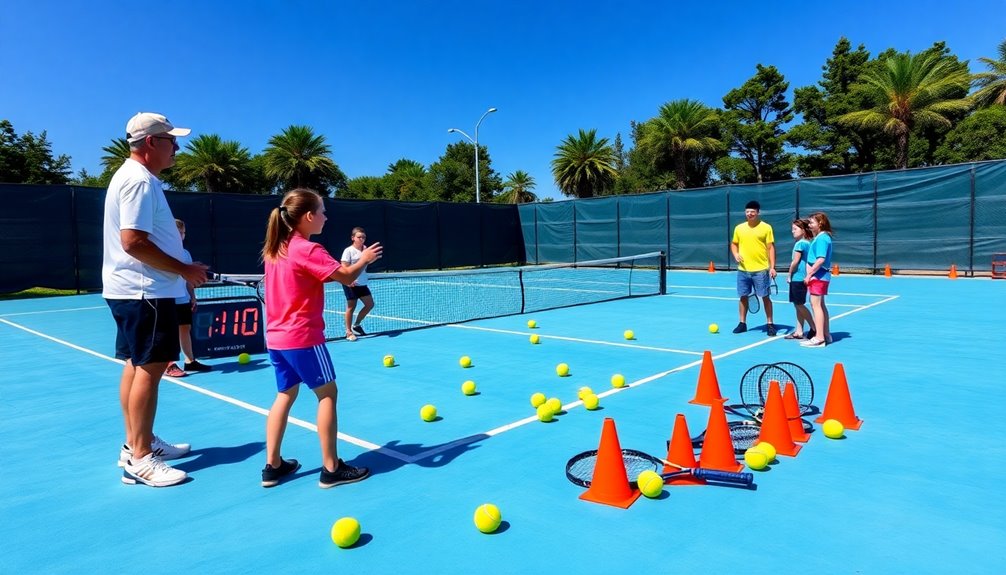
May 11, 2026To structure a 60-minute tennis lesson, start with a dynamic warm-up to prepare your players physically and mentally. Incorporate key drills focusing on fundamental skills like groundstrokes and serves while integrating footwork and agility training. Use engaging match play scenarios to build strategy and enhance tactical awareness. Regularly assess player progress and offer constructive feedback. Finally, adapt your lesson to suit different skill levels for better engagement. You’ll discover even more effective strategies as you continue exploring.
The Importance of a Structured Tennis Lesson
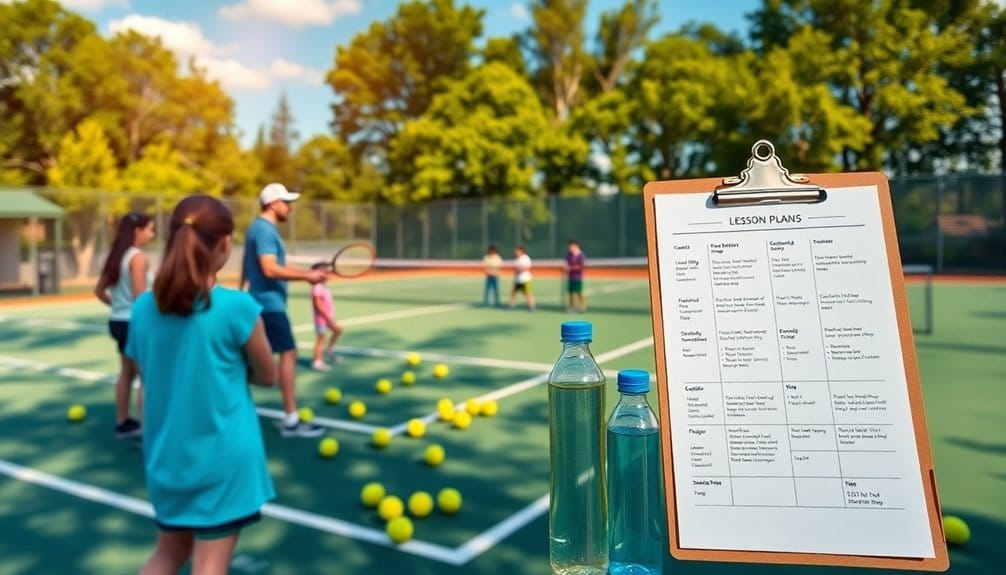
When you structure a tennis lesson effectively, you set the foundation for your players’ growth and enjoyment of the game. A well-organized lesson maximizes lesson benefits, ensuring that each player understands the objectives and feels motivated to improve.
By incorporating structured learning, you help players grasp complex skills more easily and retain what they learn. Utilizing various teaching techniques keeps the atmosphere dynamic and responsive to individual needs, enhancing student engagement.
You can incorporate drills, feedback, and game situations that cater to different skill levels. This approach not only boosts confidence but also fosters a love for the game. Ultimately, a structured lesson prepares your players for better performance on the court, making their experience both enjoyable and rewarding. Additionally, effective communication during practice can significantly enhance players’ understanding and execution of skills.
Starting With Effective Warm-Up Exercises

Starting your tennis lesson with effective warm-up exercises is essential for peak performance and injury prevention. You’ll want to incorporate dynamic stretching techniques and sport-specific drills to prepare both your body and mind. This sets a solid foundation for the rest of your session. Additionally, incorporating elements from soccer conditioning drills can enhance your overall athletic performance.
Importance Of Warm-Up
Before you step onto the court, warming up is essential for both performance and injury prevention. A proper warm-up increases blood flow to your muscles, enhancing flexibility and coordination. This not only boosts your overall performance but also primes your body for intense activity.
The warm-up benefits extend to mental readiness too; it helps you focus and get in the zone.
Incorporating light cardiovascular activities, like jogging or skipping, followed by dynamic movements prepares your body for the specific demands of tennis. By taking the time to warm up, you’re greatly reducing the risk of strains and sprains, ensuring you can play at your best.
Prioritizing this vital step sets the tone for an effective and enjoyable lesson.
Dynamic Stretching Techniques
Having warmed up effectively, it’s time to incorporate dynamic stretching techniques that further enhance your readiness for tennis.
Start with dynamic warm ups like high knees and butt kicks to get your heart rate up. Follow these with flexibility exercises such as arm circles and leg swings to improve your range of motion.
Incorporating mobility drills, like walking lunges and torso twists, helps activate key muscle groups for better performance.
These activities not only prepare your body for the physical demands of tennis but also contribute to injury prevention.
Sport-Specific Drills
As you shift from warm-up exercises to sport-specific drills, it’s crucial to focus on movements that mimic the demands of tennis. Start with stroke variation drills, where you practice forehands, backhands, and volleys in different scenarios. This helps you develop muscle memory and adaptability on the court.
Next, incorporate tactical awareness drills, like simulating game situations. Set up points where you need to decide whether to attack or defend based on your partner’s position.
These drills not only enhance your technical skills but also improve your ability to read the game. Remember, the goal is to prepare you for real match scenarios, so stay engaged and challenge yourself throughout each drill.
Key Drills for Skill Development
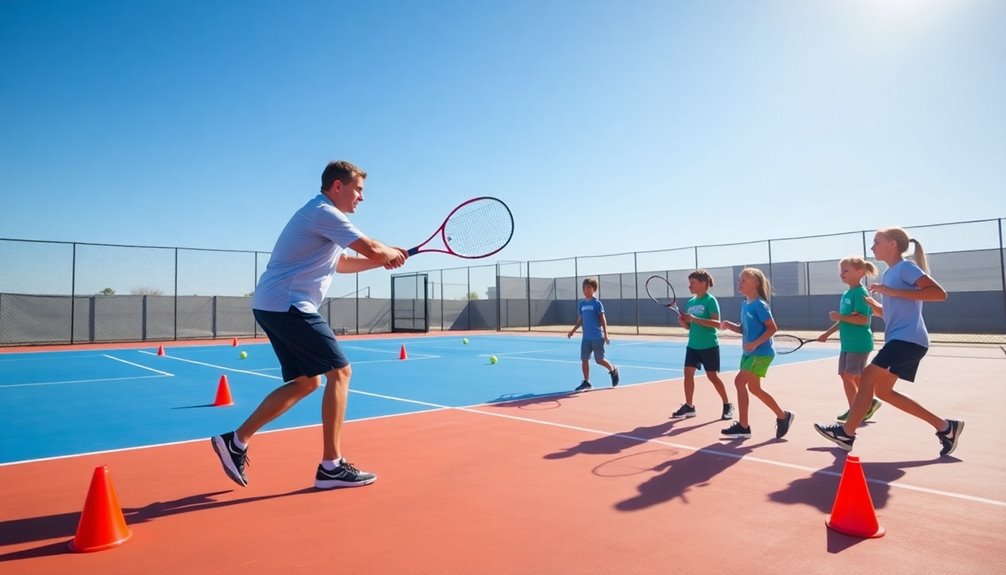
To elevate your tennis game, incorporating key drills into your practice routine is essential. Start with progressive drills that build on each other, allowing you to gradually enhance your skills.
For example, focus on basic groundstrokes before moving to more advanced shots like volleys and overheads.
Integrate skill reinforcement by repeating specific drills, ensuring you master each technique. A drill centered on consistent forehands can improve your accuracy and power over time.
Don’t forget to incorporate partner drills, which help simulate match conditions and improve your reaction time. Additionally, dynamic stretches can enhance your overall physical readiness and performance on the court.
Incorporating Footwork and Agility Training
While mastering tennis techniques is essential, incorporating footwork and agility training can greatly enhance your performance on the court.
Start by integrating footwork drills that emphasize lateral movement; these will improve your positioning for every shot. Include agility exercises like ladder drills to boost your reaction time and overall speed.
Balance training is vital too; try single-leg exercises to strengthen stability while moving. Don’t forget to develop your coordination skills with cone drills that simulate match situations. Additionally, incorporating core strength exercises into your routine can enhance your overall stability and agility on the court.
By consistently focusing on these elements, you’ll notice a marked improvement in your game.
Practicing Techniques: Groundstrokes and Serves
Now, let’s focus on practicing your groundstrokes and serves.
You’ll want to incorporate key drills that sharpen your technique while also exploring variations to keep things fresh. Additionally, consider integrating finishing drills to enhance your overall game performance and decision-making under pressure.
Key Groundstroke Drills
Mastering key groundstroke drills is essential for developing strong, reliable shots on the court.
Start with timing drills to enhance your groundstroke consistency and stroke mechanics. Focus on grip adjustments that suit your style and improve shot selection during rallies.
Incorporate rallying techniques to boost tactical awareness—this helps you anticipate your opponent’s moves. Use target practice to refine depth control and spin variation, ensuring your shots land where you intend.
Challenge yourself by varying drill intensity, keeping your skills sharp. Mix in fun drills that promote engagement while reinforcing core principles.
Serve Technique Focus
Building on your groundstroke skills, it’s time to focus on serve technique. Start by ensuring you have the correct serve grip; this sets the foundation for a powerful serve.
Next, work on your serve stance—balance is key. As you practice, emphasize serve rhythm to develop consistency.
Incorporate serve drills that target serve placement, allowing you to place your serves strategically in the service box. Experiment with serve variations to keep your opponent guessing.
Remember, mental focus is essential; visualize each serve before you hit. Regular serve practice will solidify these techniques, helping you build confidence.
Combine these elements, and you’ll elevate your serving game considerably!
Progression and Variation Strategies
As you progress in your tennis journey, incorporating variation strategies into your practice can enhance both your groundstrokes and serves.
Start with basic drills using progression methods, like alternating between forehands and backhands. Once you’re comfortable, introduce variation techniques by changing the pace, spin, and placement of your shots.
For serves, practice different types—flat, slice, and kick—gradually increasing complexity. Focus on specific targets within the service box to sharpen accuracy.
Mixing up your training not only keeps things interesting but also prepares you for real match scenarios.
Engaging Players With Fun Games and Challenges
To keep players engaged and excited during a tennis lesson, incorporating fun games and challenges can make all the difference. Here are three effective ways to do that:
Engage players in tennis lessons by incorporating fun games and challenges to enhance excitement and skill development.
- Competitive Games: Organize friendly matches that encourage teamwork. This fosters camaraderie and drives players to improve through fun challenges.
- Skill-Based Activities: Use creative drills that target specific skills, like serving or volleying. These playful exercises maintain focus while enhancing technique.
- Team Exercises: Divide players into groups for relay races or target challenges. This not only builds skills but also promotes a lively atmosphere. Additionally, integrating small-sided games can provide more opportunities for players to engage and enhance their decision-making abilities.
Building Strategy Through Match Play Scenarios
To enhance your players’ strategic thinking, start incorporating match play scenarios into your lessons. Focus on specific objectives and create drills that mimic real match situations. This way, you’ll help them adapt their strategies on the court when it matters most. Additionally, consider emphasizing sportsmanship and respect to foster a positive learning environment during these scenarios.
Match Play Objectives
While you focus on developing your skills, understanding match play objectives can greatly enhance your strategic thinking.
By honing these objectives, you’ll build a solid foundation for effective match strategy. Here are three key areas to concentrate on:
- Tactical Awareness: Recognize your opponent’s strengths and weaknesses. Adjust your play accordingly to exploit gaps in their game.
- Competitive Mindset: Foster a winning attitude. Stay positive and focused, even during challenging moments.
- Mental Resilience: Learn to bounce back from setbacks. Maintain your composure and adapt your strategy as needed.
Scenario-Based Drills
When you’re faced with real match situations, scenario-based drills can sharpen your strategic skills effectively. By incorporating scenario variations, you can mimic different match conditions, such as playing from behind or closing out a tight game. This helps you think critically about shot selection and court positioning.
Adjusting drill intensity is essential; you want to challenge yourself without overwhelming your focus. Start with a lower intensity to master the scenarios, then gradually increase it to simulate match pressure. This approach allows you to build confidence and adaptability.
Ultimately, these drills enhance your understanding of strategy, helping you make smarter decisions on the court.
Embrace these scenarios, and you’ll see your game improve in real matches.
Adapting Strategies On Court
As you navigate a match, adapting your strategies on court becomes essential for success. Focus on these key areas to enhance your match strategy:
- Court Positioning: Stay aware of your placement. Adjust based on your opponent’s shot selection to create advantageous angles.
- Shot Selection: Evaluate your options. Use game analysis to identify when to be aggressive or play defensively.
- Player Communication: If you’re practicing with a partner, utilize the role of feedback to strengthen your adaptability techniques.
Developing mental toughness is vital. Embrace a competitive mindset and be ready for strategy adjustments as the match evolves.
Assessing Player Progress and Providing Feedback
Evaluating player progress and providing feedback are essential components of a successful tennis lesson, as they help you tailor your instruction to each individual’s needs.
Start by implementing effective progress tracking methods; keep notes on each player’s strengths and areas for improvement. This allows you to identify trends over time.
Use feedback techniques like positive reinforcement and constructive criticism to guide players. For instance, highlight what they’ve done well before suggesting improvements.
Encourage questions and open dialogue to foster a supportive learning environment. Regularly check in with your players to gauge their understanding and comfort level. Additionally, incorporating cognitive challenges can enhance players’ ability to make swift, informed decisions on the court.
Tips for Keeping Players Motivated and Engaged
To keep players motivated and engaged, it’s essential to create a dynamic and enjoyable learning environment. Here are three effective strategies to enhance player engagement:
- Interactive Activities: Incorporate fun competitions and challenge-based learning to make drills exciting. Players are more likely to stay motivated when they feel challenged.
- Goal Setting: Set achievable goals with your players. This gives them a clear focus and fosters a sense of accomplishment as they progress.
- Positive Reinforcement: Use feedback methods that highlight improvements. Visual aids can help illustrate concepts, while peer collaboration encourages support and camaraderie.
How Can You Adapt Your Lesson for Different Skill Levels?
Creating a motivating atmosphere sets the stage for effective learning, but adapting your lesson for different skill levels is just as important.
Start with a skill assessment to gauge each player’s abilities. This insight allows you to implement lesson differentiation, ensuring everyone engages with the material at their level.
Begin with a skill assessment to understand each player’s abilities, enabling tailored lesson differentiation for effective engagement.
For beginners, focus on foundational skills and simple drills. Intermediate players can benefit from tailored activities that challenge them without overwhelming them. Advanced players might need more competitive scenarios or strategic discussions.
Incorporate an individualized focus during practice, giving feedback that speaks to each player’s unique needs. By being flexible and responsive, you create an environment where every player can thrive and improve. Additionally, utilizing small-sided games can enhance individual skill development and foster teamwork among players of varying skill levels.
Conclusion
By structuring your 60-minute tennis lesson effectively, you’re not just teaching skills—you’re igniting passion and fostering growth. Imagine the thrill of seeing your players improve, hit that perfect serve, or nail their footwork. Keeping them engaged and motivated is key, and with the right mix of drills and feedback, you’ll help them elevate their game. So, are you ready to transform your next lesson into an unforgettable experience on the court? Let’s get started!