

How to Size Youth Sports Equipment Correctly (Size Charts Included)
February 18, 2026To size youth sports equipment correctly, start by measuring your child’s height, weight, and shoe size. Use specific size charts for each sport, as gear like helmets or cleats can vary by brand. Remember to check for room to grow, ensuring comfort without compromising performance. Keep an eye out for common sizing mistakes, like choosing gear that’s too large or small. If you want more tips on selecting the right equipment, keep going for detailed insights.
Why Proper Sizing of Youth Sports Equipment Matters
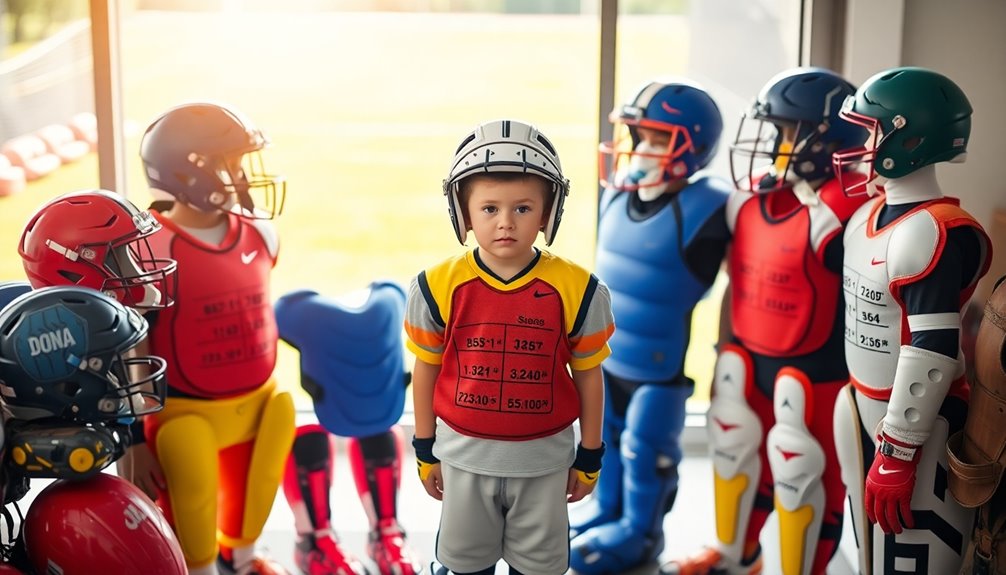
When you equip your child with properly sized sports gear, you’re not just enhancing their performance; you’re also ensuring their safety and enjoyment of the game.
The importance of safety in youth sports can’t be overstated. Ill-fitting equipment can lead to injuries, discomfort, and even a lack of confidence on the field. When gear fits correctly, your child can move freely, focus on their game, and fully engage in the experience.
Proper sizing also plays a vital role in enhancing performance; it allows for better control, agility, and balance. By prioritizing the right fit, you’re setting your child up for success while keeping their well-being front and center. Proper sizing also helps maintain foot health and prevents injuries, which is crucial for young athletes.
Investing in properly sized equipment is a smart choice for every young athlete.
Understanding Different Types of Youth Sports Equipment
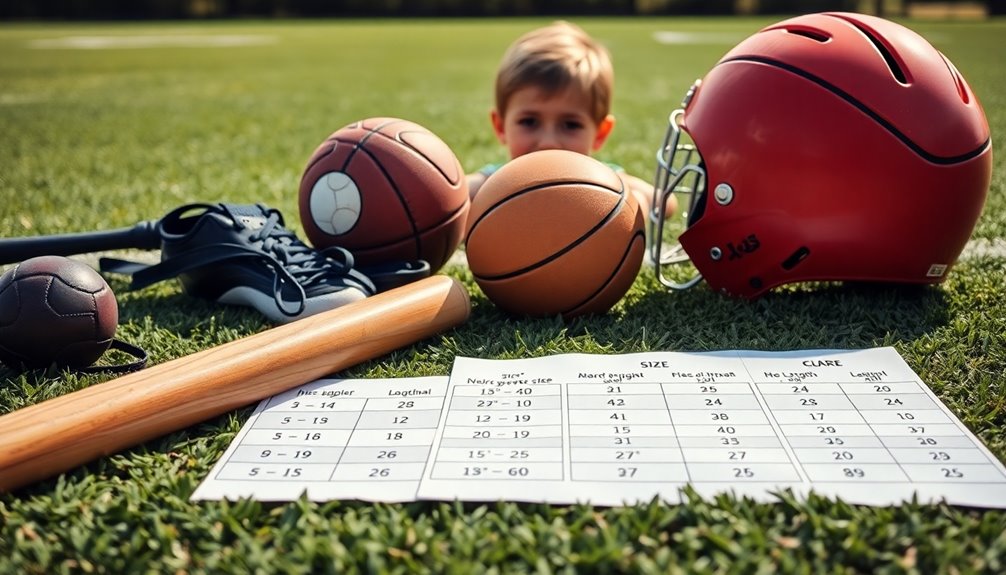
Understanding the various types of youth sports equipment is essential for ensuring your child has the right gear for their chosen activity.
In youth sports, you’ll encounter several categories of equipment, each tailored to specific sports. For example, soccer requires cleats, shin guards, and a ball, while basketball needs proper shoes, a hoop, and a ball.
Baseball players need gloves, helmets, and bats, while hockey players require skates, sticks, and pads. Each type of equipment serves a unique purpose, enhancing safety and performance.
Always consider your child’s sport when selecting gear, as using the right types of equipment not only boosts their confidence but also helps them enjoy the game to the fullest. Additionally, having the correct soccer equipment essentials ensures their safety and performance on the field.
Measuring Your Child for the Right Fit
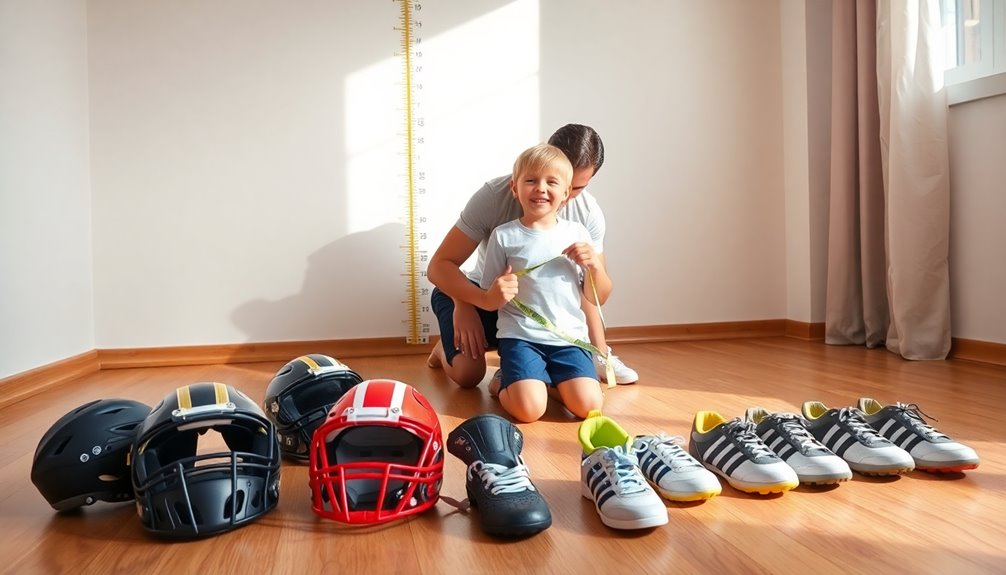
When you’re measuring your child for the right fit, focus on key areas like height, weight, and specific body parts related to the sport. Using size charts can help you find the best options, but don’t forget to adjust for growth as kids can change quickly. Ensuring a proper fit not only boosts performance but keeps your child safe while playing. Additionally, proper fit enhances performance, comfort, and injury prevention in youth sports equipment.
Key Measurement Areas
To guarantee your child plays safely and comfortably, measuring them correctly for sports equipment is essential.
Focusing on the key measurement areas guarantees an ideal equipment fit. Here are the main areas to take into account:
- Height: Stand them straight against a wall to get an accurate measurement.
- Chest circumference: Measure around the fullest part of their chest.
- Waist circumference: Locate the natural waistline for an accurate size.
- Inseam: Measure from the crotch to the bottom of their ankle.
- Shoe size: Have them stand on a piece of paper and trace their foot for an exact length.
Taking these measurements will help you choose the right equipment, keeping your young athlete safe and comfortable on the field or court.
Using Size Charts
Once you’ve gathered the key measurements, it’s time to consult size charts to confirm you select the right fit for your child’s sports equipment.
Size charts vary by brand, so always check the specific chart for the equipment you’re considering. Pay attention to youth sports trends, as these can influence sizing; what fits one season may differ next season.
Ascertain you match your child’s measurements to the chart closely to guarantee equipment durability. A proper fit not only enhances performance but also helps prevent injuries.
Don’t hesitate to reach out to retailers for guidance if you’re uncertain. Remember, investing in the right size now can save you time and money down the line, assuring your child enjoys their sport fully.
Adjusting For Growth
As your child grows, regularly measuring their size becomes essential for guaranteeing the right fit in sports equipment.
Kids experience growth spurts that can happen suddenly, making it vital to adapt their gear accordingly. Here’s what you should check:
- Height: Measure from head to toe.
- Chest: Wrap the tape measure around the widest part.
- Waist: Measure around the natural waistline.
- Inseam: Measure from the crotch to the ankle.
- Shoe Size: Measure both feet, as one may be larger.
Investing in adaptive equipment can make a huge difference, allowing for adjustments as your child grows.
Regularly measuring guarantees they stay safe and comfortable while playing their favorite sports.
Common Sizing Mistakes to Avoid
While selecting youth sports equipment, it’s crucial to avoid common sizing mistakes that can hinder performance and safety. One common error is choosing equipment that’s too large, which can lead to decreased control and increased injury risk.
On the flip side, opting for gear that’s too small can restrict movement and comfort, impacting your child’s overall enjoyment. Always check the manufacturer’s guidelines and size charts, as they help guarantee a proper fit. Moreover, proper fit is essential for optimizing performance and preventing injuries during play.
Additionally, don’t underestimate the importance of equipment durability; poorly sized gear can wear out faster and compromise safety.
Size Charts for Popular Youth Sports Equipment
Finding the right size for youth sports equipment is easier when you refer to size charts specifically designed for different sports.
Finding the perfect fit for youth sports gear is simple with dedicated size charts for each sport.
These charts can guide you in making informed equipment recommendations tailored to your young athlete’s needs.
Here are some popular items you should check size charts for:
- Helmets: Guarantee proper fit for safety.
- Shoulder Pads: Look for a snug but comfortable fit.
- Batting Gloves: Measure hand size for ideal grip.
- Cleats: Choose the right length and width for comfort.
- Jerseys: Check chest measurements for a good fit.
Additionally, ensure that you have the right non-metal cleats to minimize ankle injury risks and ensure grip on the field.
How to Choose the Right Size for Soccer Gear
When choosing the right size for soccer gear, start by measuring your player’s height to get a baseline.
Next, check the weight guidelines to guarantee a proper fit for comfort and performance.
This way, you’ll make certain they’re equipped for success on the field. Additionally, remember that synthetic cleats require an initial snug fit to prevent slippage during play.
Measure Player’s Height
Measuring a player’s height is essential for choosing the right size soccer gear.
Accurate height measurement helps guarantee the gear fits properly, accommodating player growth over time.
Here’s how to do it effectively:
- Stand the player against a flat wall, with their back straight.
- Use a ruler or tape measure, marking the top of their head.
- Measure from the floor to the mark for an accurate height.
- Compare this measurement with size charts specific to soccer gear.
- Repeat the process regularly as the player grows.
Getting the height right means your player will feel comfortable and perform better on the field, allowing them to focus on the game rather than adjusting ill-fitting equipment.
Check Weight Guidelines
To guarantee your soccer gear fits well, it’s important to check the weight guidelines alongside height measurements. Each equipment category, from shin guards to soccer balls, has specific weight limits that promote safety and performance.
For instance, youth soccer balls come in various sizes, and knowing the appropriate weight for your child’s age group is vital.
When selecting shin guards, consider both your child’s weight and height to find the right fit; this helps prevent injuries.
Additionally, check the weight limits for footwear, as lighter shoes can enhance speed and agility.
Finding the Perfect Fit for Basketball Gear
How do you guarantee your young athlete finds the right fit for basketball gear? Start by measuring their height and weight, then consult size charts specific to brands. A proper youth fit guarantees comfort and performance.
To ensure the right basketball gear fit, measure height and weight, then check brand-specific size charts for optimal comfort and performance.
Look for these key features when selecting gear:
- Shoes: Confirm they provide adequate support and cushioning.
- Shorts: Choose a length that allows free movement without restriction.
- Jerseys: Opt for a size that’s snug but not tight.
- Socks: Pick moisture-wicking options to keep feet dry.
- Protective gear: Make certain it fits securely without slipping.
Additionally, ensure that the gear supports their specific position responsibilities, which can enhance their overall performance on the court.
Sizing Guidelines for Baseball and Softball Equipment
Finding the right fit for baseball and softball equipment is just as important as it’s for basketball gear.
When it comes to bat sizes, you’ll want to take into account your child’s height and weight to guarantee they can swing comfortably and effectively. Typically, younger players should opt for lighter bats, which help with control and speed.
For gloves, take note of glove types, as they come in various styles like infielder and outfielder models. Measure your child’s hand to find the right size; a well-fitted glove allows for better grip and easier catches. Additionally, ensuring that players wear shin guards for lower leg protection is crucial for safety during play.
Choosing the Right Size for Hockey Gear
Choosing the right size for hockey gear is crucial for your young athlete’s performance and safety on the ice. Properly sized gear guarantees comfort and protection, allowing them to focus on the game.
Here are some sizing tips to keep in mind:
- Helmets: Should fit snugly without pressure points.
- Shoulder Pads: They should cover the shoulders and chest without restricting movement.
- Elbow Pads: Make sure they cover the elbow joint while allowing flexibility.
- Shin Guards: These need to fit from knee to ankle for proper coverage.
- Skates: A snug fit is important, but toes shouldn’t hit the front. Additionally, leg strength plays a vital role in ensuring proper skating technique and overall performance on the ice.
Tips for Sizing Footwear for Young Athletes
When sizing footwear for young athletes, what should you keep in mind to guarantee a perfect fit?
First, measure their feet in the afternoon when they’re slightly swollen for the most accurate size.
Measure your child’s feet in the afternoon for the most accurate shoe size, accounting for natural swelling.
Next, consider the footwear materials; breathable fabrics can make a big difference in comfort.
Make certain there’s enough room for growth—about a thumb’s width between the toe and the shoe’s end.
Also, check for shoe flexibility; the shoe should bend easily at the ball of the foot.
Finally, involve your child in the fitting process; they should walk and run in the shoes to confirm they feel right.
A proper fit will enhance performance and prevent injuries, making sure they enjoy their game. Additionally, consider proper fit to ensure that the cleats feel snug without discomfort or circulation issues.
When to Replace Youth Sports Equipment Due to Growth
Many parents overlook how quickly youth sports equipment needs to be replaced as kids grow.
Timing replacements is essential, especially during growth spurts. Regularly check your child’s gear to guarantee it fits properly and provides the necessary support.
Here are some signs it’s time to replace youth sports equipment:
- Shoes show signs of wear or don’t fit snugly
- Helmets feel loose or uncomfortable
- Pads or protective gear have visible damage
- Bats or racquets feel unbalanced or too short
- Uniforms are tight or restrict movement
Resources for Sizing Assistance and Equipment Recommendations
How can you guarantee your child has the right-sized sports equipment? Start by utilizing reputable sizing resources that provide detailed size charts for various sports.
These charts often include measurements for height, weight, and skill level, ensuring you choose the best fit for your child. Don’t hesitate to consult your child’s coach or local sports store for personalized equipment recommendations, as they can offer insights based on your child’s specific needs and the sport they’re playing.
Additionally, many manufacturers have online tools that can help you determine the correct size based on measurements you take at home.
Conclusion
To sum up, ensuring your child has properly sized sports equipment is essential for their safety and performance. After all, wouldn’t you want them to play at their best without discomfort? By measuring accurately and avoiding common sizing mistakes, you can help your young athlete excel. Keep those size charts handy and remember to check in as they grow. With the right fit, they’ll be ready to take on any challenge on the field or court!