

Flag Football Helmets and Headgear: Safety or Overkill?
March 23, 2026When it comes to flag football helmets and headgear, you can’t underestimate their importance for safety. With the sport’s rapid growth and rising head injury concerns, helmets considerably reduce concussion risk. However, relying solely on them can lead to overconfidence, making you or your athletes more prone to risky behaviors. It’s essential to couple helmet use with proper techniques and awareness. If you’re curious about the best practices for headgear maintenance and safety measures, there’s more to explore.
The Rise of Flag Football and Helmet Usage
As flag football gains traction as the fastest-growing youth sport in the U.S., with over 6.5 million participants, safety concerns are prompting leagues to rethink gear usage.
The recent decision by the Southern Maryland Youth Flag Football League to mandate helmet use highlights a growing focus on player safety.
The Southern Maryland Youth Flag Football League’s helmet mandate underscores an increasing commitment to ensuring player safety.
With the PIAA officially sanctioning girls’ flag football in 2024, the sport’s visibility is set to rise, increasing the urgency for protective measures.
According to Virginia Tech’s Helmet Lab, five-star rated flag football headgear can reduce concussion risk by 70% or more.
Following serious head injury incidents, including one involving an eight-year-old, leagues are prioritizing helmets to guarantee the safety of young athletes in this rapidly expanding sport. Additionally, the inclusion of mandatory protective gear is essential for ensuring player safety across all levels of play.
Understanding the Safety Benefits of Headgear
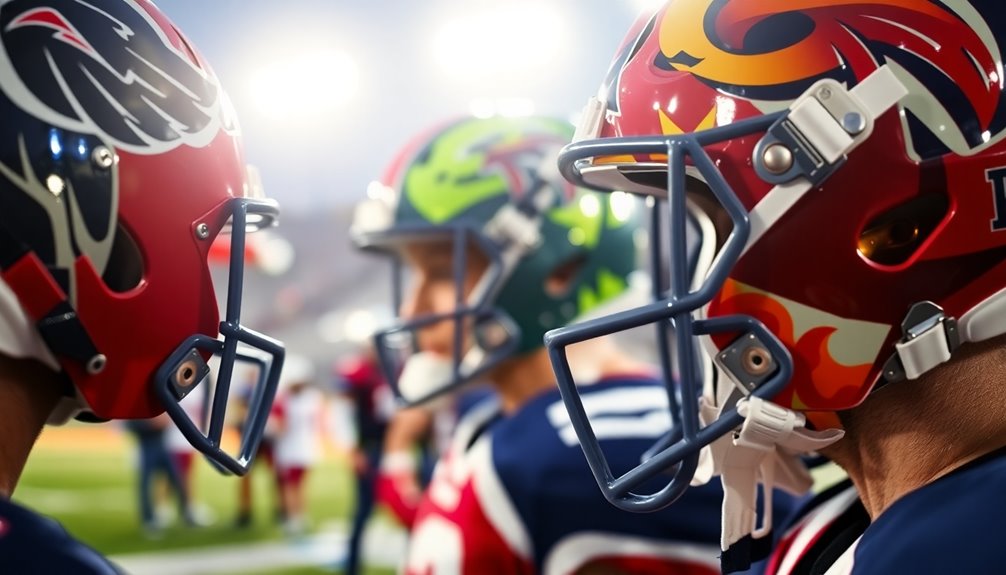
With the increasing focus on safety in flag football, understanding the benefits of headgear becomes vital for players and parents alike. Here are four key advantages to take into account:
- Concussion Risk Reduction: Headgear rated 4 or 5 stars can greatly lower concussion risk compared to lower-rated options.
- Proven Performance: The STAR evaluation system indicates that higher-rated helmets reduce peak linear and rotational accelerations during impacts.
- Positive Outcomes: Mandatory helmet use in leagues has led to fewer severe injuries and faster recovery times after collisions.
- Maintenance Matters: Regular checks and proper fitting are essential for ensuring maximum safety on the field.
Additionally, understanding the importance of proper form during flag pulls can further enhance safety and reduce injury risks while playing.
Investing in quality headgear is important for enhancing safety while playing football and protecting young athletes.
Evaluating the Risks of Over-Reliance on Helmets?
When you rely too much on helmets, you might feel safer but could actually take more risks on the field. This overconfidence can lead you to neglect essential skills and techniques that prevent injuries. Additionally, strong communication among teammates is crucial in minimizing risks and enhancing safety during gameplay.
Perceived Safety Benefits
While helmets can markedly reduce concussion risk in flag football, an over-reliance on them might lead players and coaches to underestimate other fundamental safety measures. Here are some key points to reflect on:
- Comprehensive Approach: Relying solely on helmet use can distract from other important safety equipment, like mouthguards.
- Skill Development: Focusing on injury prevention techniques is essential; helmets won’t replace the need for fundamental skills.
- Awareness: Players must remain vigilant about their surroundings, as head protection alone doesn’t eliminate risks.
- Education: Coaches should educate players on safe gameplay to complement the benefits of headgear.
Potential Neglect of Skills
As players gear up with helmets, they might unknowingly shift their focus away from mastering essential skills, such as proper tackling techniques and spatial awareness.
This potential neglect of skills can be particularly concerning for youth athletes, who may feel overconfident in their protective gear. While helmets notably reduce concussion risk, they can’t replace the importance of proper skill development.
When players rely too heavily on helmets, they may engage in riskier behaviors, assuming protection is guaranteed. Studies show that without ongoing training emphasizing technique, the risk of injury actually increases.
Balancing helmet use with thorough skill education is vital to guarantee young athletes stay safe on the field, fully prepared to handle the game’s demands.
Key Features to Look for in Flag Football Helmets
When choosing a flag football helmet, you’ll want to prioritize safety ratings, looking for those with 4 or 5 stars to guarantee maximum protection. Comfort and fit are just as essential, so make certain the helmet sits snugly to minimize movement during play. Don’t forget to check for ventilation features to keep you cool and focused on the game. Additionally, consider the importance of cleat recommendations for optimal traction on the field, as this can significantly impact your performance and safety during gameplay.
Safety Ratings Importance
Choosing the right flag football helmet is essential for your safety, especially since head injuries can have lasting effects.
When selecting headgear for youth athletes, consider these critical safety ratings:
- STAR Rating: Look for helmets rated 4 or 5 stars to reduce concussion risk effectively.
- Impact Tests: Confirm the helmet performs well against linear and rotational accelerations across various impact severities.
- 70% Reduction: Opt for helmets that decrease head accelerations by 70% or more, as recommended by Virginia Tech’s Helmet Lab.
- Regular Maintenance: Inspect your helmet routinely for wear and guarantee a snug fit; compromised gear can reduce its protective capabilities.
Taking these factors into account can greatly enhance safety and help minimize concussion risks on the field.
Comfort and Fit Considerations
Finding the right fit for your flag football helmet is essential for both safety and comfort. A loose helmet can shift during impacts, compromising your protection.
Make sure to regularly adjust your headgear to accommodate growth, ensuring a snug fit throughout the season. Look for helmets like the GameBreaker, which utilizes D3O® technology to enhance impact protection while maximizing comfort.
Ventilation is another key feature; good airflow keeps you cool during play without sacrificing coverage against head injuries.
Finally, inspect your helmet regularly for signs of wear, such as frayed straps or damaged padding. This not only boosts your comfort but also enhances safety by maintaining the helmet’s effectiveness.
Prioritize fit and comfort to stay secure on the field.
Real-Life Incidents: Are Helmets Making a Difference?
How much of a difference do helmets really make in flag football? Real-life incidents like that of eight-year-old Gabriel Crout, who suffered a concussion, reveal the stakes involved.
After mandates for helmet use, leagues like the Southern Maryland Youth Flag Football League reported notable changes:
- Fewer severe injuries among players.
- Quicker recoveries post-injury.
- A 70% reduction in head impacts with five-star rated helmets.
- Increased belief in helmets’ protective benefits from parents and officials.
Gabriel’s mother believes helmets could’ve prevented her son’s injury, and the overall sentiment is clear: helmets in youth sports enhance safety and considerably reduce the risk of serious injuries. Additionally, understanding penalties in flag football may contribute to safer play, as players are less likely to engage in risky maneuvers.
It seems they’re making a difference worth considering.
Best Practices for Headgear Maintenance and Care
While guaranteeing safety on the field, you can’t overlook the importance of maintaining headgear properly. Regularly inspect your headgear before each practice and game for any signs of wear, like frayed straps or cracked shells, to protect athletes from injury.
After each use, clean the outer shell and use a mild soap solution on the padding and straps weekly to maintain hygiene. Store headgear in a cool, dry place away from direct sunlight to prolong its lifespan.
Promptly replace worn-out padding and straps, as they compromise safety. Finally, guarantee a snug fit by assisting young athletes in making adjustments according to manufacturer guidelines, which enhances safety and minimizes movement during impacts. Additionally, ensure that all players wear proper mouthguards for dental safety, as this is crucial for reducing the risk of oral injuries.
Conclusion
As you weigh the pros and cons of flag football helmets, consider this: are they enhancing safety or creating a false sense of security? While headgear offers some protection, it’s essential to remember that they’re not a cure-all. You might find that the real key to safety lies in education, proper technique, and a culture of awareness. So, before you strap on that helmet, ask yourself: are you truly prepared for the game ahead?