
Can You Wear Soccer Cleats for Flag Football? What to Know Before Playing
March 23, 2026Yes, you can wear soccer cleats for flag football! They’re lightweight and flexible, which boosts your speed and agility. The absence of a front toe stud makes them safer for non-contact play. Just make sure they’re non-metal to meet safety regulations. A snug fit is essential for comfort and control during the game. Want to know more about finding the right cleats and other gear for flag football? There’s plenty more to explore!
Can You Use Soccer Cleats for Flag Football?
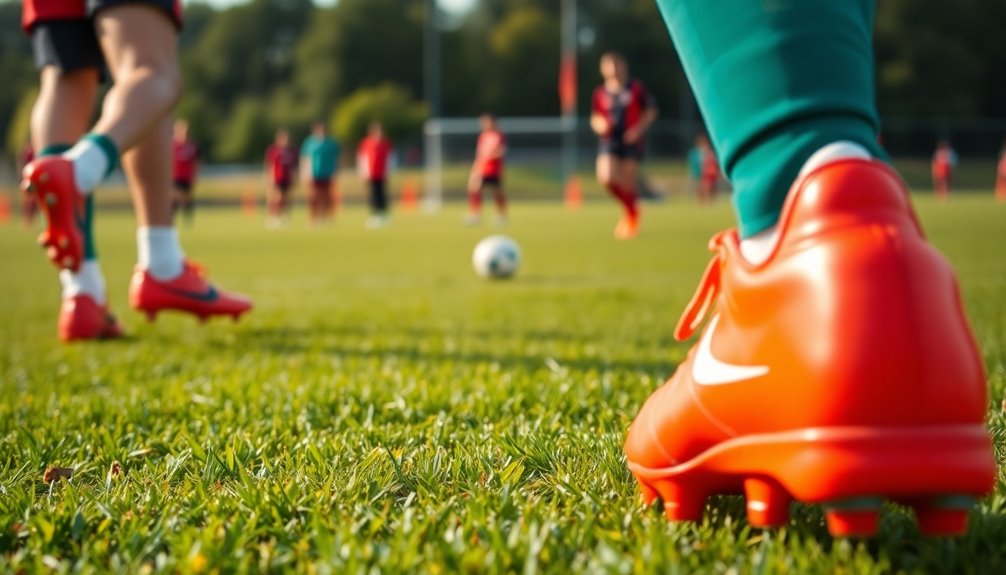
Can you really use soccer cleats for flag football? Absolutely!
Soccer cleats are a great option due to their lightweight and flexible design, which boosts your speed and agility on the field. Unlike football cleats, soccer cleats don’t have a front toe stud, making them safer for the non-contact nature of flag football.
Many players prefer these cleats because they enhance ball feel, helping with passing and receiving. Just remember to choose non-metal soccer cleats, as metal ones are typically banned in flag football leagues for safety reasons.
Key Differences Between Soccer and Football Cleats
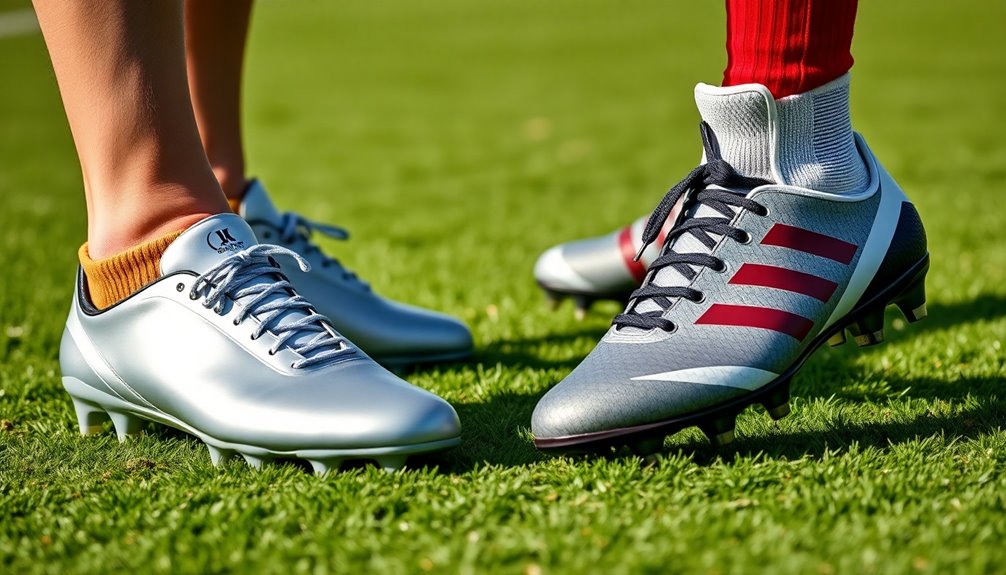
When choosing between soccer and football cleats, understanding their key differences is essential for optimizing your performance on the field.
Soccer cleats lack a front toe stud, which is vital for traction during acceleration and jumping in football cleats. The front stud in football cleats enhances grip for blocking and pushing in contact situations, making them more suitable for the physical demands of the sport.
While soccer cleats are lightweight and flexible, ideal for agility, they don’t provide the same level of traction as football cleats.
Additionally, football cleats generally feature more padding to cater to the higher contact nature of football, contributing to safety and comfort during play. The increased padding also aligns with the safety regulations in NFL Flag Football, making football cleats a better choice for players.
Why Soccer Cleats Are Suitable for Flag Football
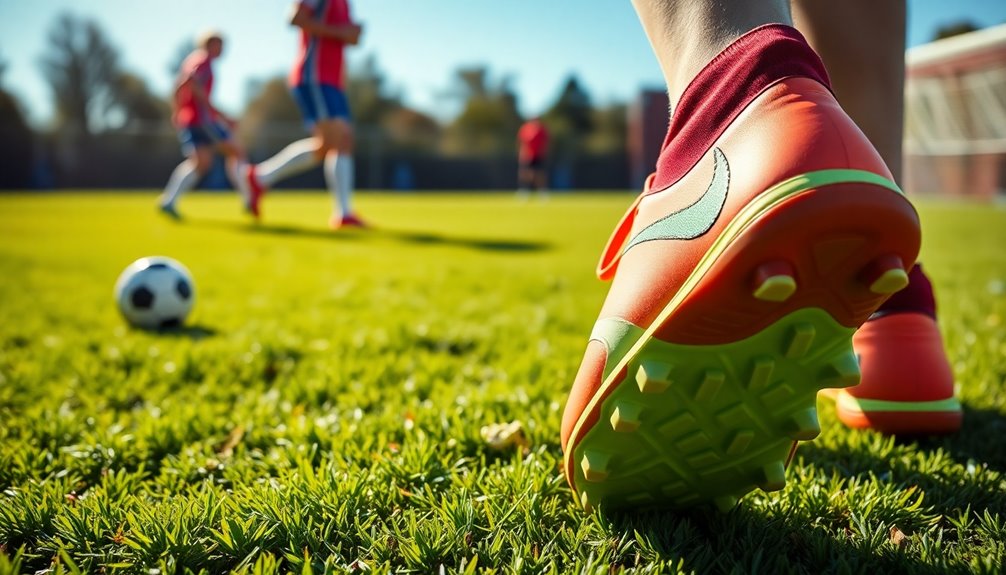
Although soccer cleats aren’t designed specifically for flag football, they offer several advantages that make them a suitable choice for the game. Their lightweight and flexible nature enhances your speed and agility, perfect for the non-contact style of flag football.
Plus, the absence of a front toe stud provides better ball feel, which is beneficial for punters and kickers.
Here are some key benefits of wearing soccer cleats:
- Adequate traction for stability while running and changing direction.
- Comfortable fit to enhance performance and reduce injury risk.
- Minimal design aligns with flag football’s low-equipment requirements.
Choosing soccer cleats can elevate your game without compromising safety or performance. Additionally, they can help improve your cardiovascular endurance during intense bursts of activity, similar to the demands of soccer.
What to Look for in Youth Cleats for Flag Football?
Finding the right youth cleats for flag football is crucial for performance and safety on the field.
Look for cleats that are lightweight and flexible, allowing for quick movements and agility. Molded cleats are your best bet, as they provide excellent traction without the risks of metal spikes.
Choose lightweight, flexible cleats for agility and quick movements, opting for molded designs to ensure safe traction on the field.
Guarantee a snug fit at the heel to prevent slipping, while a comfortable toe box allows for breathability and ease of movement.
Consider mid-cut designs for added ankle support, which enhances stability during play.
Finally, remember to regularly check the fit of the cleats, since children’s feet grow quickly. This guarantees comfort and peak performance throughout the season, keeping your young athlete safe and competitive. Additionally, selecting cleats with a snug, sock-like fit can enhance overall performance and comfort on the field.
The Importance of Non-Metal Cleats in Flag Football
When you’re choosing cleats for flag football, non-metal options are essential for your safety.
Many leagues don’t allow metal cleats to prevent injuries, so sticking to molded or plastic varieties keeps you compliant.
Plus, these cleats give you the traction you need to stay agile and avoid slips on the field. Additionally, using the right footwear can enhance your overall performance by providing better support and stability during quick movements and changes in direction.
Safety Considerations
Safety is a top priority in flag football, and wearing non-metal cleats plays an essential role in minimizing injury risks. Metal cleats can cause serious harm during falls or contact situations, making non-metal options the safer choice.
Here are some safety reasons to take into account:
- Reduced Injury Risk: Non-metal cleats help prevent injuries during tackles and scrambles.
- Flexibility and Agility: Lightweight, flexible designs enhance your stability and speed on the field.
- League Compliance: Many leagues prohibit metal cleats to promote player safety, so it’s important to check regulations.
League Regulations
League regulations play an essential role in maintaining safety and fairness in flag football, particularly when it comes to cleat requirements.
Most leagues mandate non-metal cleats to minimize the risk of injury during games. Metal cleats can be rigid and may lead to cuts or punctures during contact, posing a higher injury risk.
By specifying cleat types, leagues create a uniform playing environment and uphold safety standards across all teams. Wearing appropriate non-metal cleats, including soccer cleats, enhances traction without compromising safety on various surfaces.
Before you purchase your cleats, it’s vital to verify your league’s specific rules regarding cleat requirements to guarantee compliance and avoid penalties.
Stay safe and enjoy the game!
Comfort and Fit: How to Choose the Right Cleats
When choosing cleats for flag football, you need to make certain they fit snugly at the heel while allowing enough room in the toe box for comfort. Consider options that offer good ankle support and breathable materials to keep your feet cool during play. Additionally, selecting football cleats designed for traction can ensure stability during quick movements on the field.
Proper Size Selection
Finding the right size for your cleats is essential, as a snug fit at the heel keeps you stable and in control during the game.
When selecting cleats, consider the following:
- Assure a comfortable toe box for breathability and to prevent discomfort during extended play.
- Choose lightweight molded cleats; they offer flexibility for the varied movements common in flag football.
- Regularly check the fit, especially for growing feet, to prioritize comfort and support.
Properly fitting cleats work to enhance your performance by minimizing slips and maximizing comfort.
A great fit not only boosts your confidence but also helps you focus on your game, making every play count.
2. Ankle Support Options
Choosing the right ankle support is essential for enhancing your performance on the flag football field. Mid-cut cleats are a fantastic option, offering extra support that enhances stability during quick movements and helps reduce injury risk.
For youth players, lightweight molded cleats provide both agility and comfort without sacrificing that vital ankle support.
Make sure your cleats have a snug fit at the heel to prevent slipping, while a comfortable toe box promotes breathability and overall foot health.
Regularly assess the fit, especially for growing feet, to maintain ideal comfort throughout the season.
Flexibility in your cleat design is also key, allowing for quick pivots and directional changes while keeping your ankles well-supported.
3. Material Breathability Importance
While selecting cleats, you can’t overlook the importance of material breathability. Proper breathability is essential for keeping your feet comfortable during games. It helps regulate temperature and moisture, preventing overheating and blisters.
When choosing cleats, consider these key factors:
- Look for lightweight, breathable materials like mesh for better airflow.
- Guarantee a snug fit around the heel and a spacious toe box for stability.
- Choose flexible designs that support natural foot movements, especially for youth players.
Regularly assess the fit since children’s feet grow quickly.
Well-fitting cleats with excellent breathability greatly enhance both performance and comfort on the field, allowing you to focus on your game without distractions.
Weather Considerations for Choosing Cleats
When weather conditions shift, your choice of cleats can make a big difference in your performance on the field. In wet or muddy conditions, cleats with better traction are essential, as soccer cleats mightn’t provide enough grip. Cold weather calls for additional gear like long sleeves and tights, but don’t overlook your cleat choice—slipping on wet surfaces can be a game-changer. Conversely, in hot weather, lightweight soccer cleats can enhance breathability, keeping you comfortable, but they still need to offer sufficient grip. For rainy or snowy days, opt for cleats with deeper treads to prevent slips. Always check your league’s regulations regarding footwear to guarantee compliance with weather-related field conditions. Additionally, selecting the right footwear sizing is crucial for comfort and performance in varying weather conditions.
Additional Gear Needed for Flag Football
To excel in flag football, you’ll need more than just speed and agility on the field; proper gear is essential. Besides your cleats, make certain you have the following items:
To succeed in flag football, gear up with essentials beyond speed—cleats, flags, and jerseys are crucial for optimal performance.
- Flags and belts: Mandatory for gameplay, allowing for non-contact engagement.
- Mouthguard: While not mandatory, it’s highly recommended for protecting your teeth.
- Team jerseys: Provided by NFL FLAG at registration, helping with uniformity and visibility.
Also, wear shorts without pockets to enhance flag visibility and guarantee a smoother game. Additionally, ensure you have essential gear to maximize your safety and performance on the field.
Safety Features to Consider in Cleat Selection
Choosing the right cleats plays a vital role in your overall safety and performance on the flag football field. It’s essential to opt for non-metal cleats to minimize injury risks from sharp spikes.
Make sure your cleats fit snugly at the heel to prevent slipping, while a comfortable toe box allows for breathability during play. Lightweight molded designs are ideal for youth players, providing the flexibility needed for quick movements.
Additionally, consider mid-cut cleats for extra ankle support, enhancing stability and reducing injury chances during fast-paced gameplay. Remember that the equipment and attire regulations in soccer can also inform your choice of cleats for other sports.
Finally, always check with league representatives regarding specific gear regulations, as safety standards can vary and impact your cleat selection. Your choice of footwear can greatly influence your safety on the field.
Common Misconceptions About Soccer Cleats in Football
Many people think soccer cleats can’t keep up in flag football, but that’s not entirely true.
While they lack that front toe stud, their lightweight design still offers great traction and speed for non-contact play.
Plus, safety features make them a solid choice, especially for younger players. Additionally, the emphasis on core strength exercises in soccer training can enhance overall agility and performance on the flag football field.
Soccer Cleats vs. Football Cleats
While you might think soccer cleats are only for the pitch, they can actually serve you well in flag football. Their lightweight and flexible design makes them suitable for the sport’s less contact-intensive nature.
However, there are key differences to take into account:
- Lack of Front Toe Stud: Soccer cleats don’t have a front stud, which enhances acceleration but may not provide the same traction for blocking as football cleats.
- Focus on Ball Feel: Soccer cleats prioritize ball control, while football cleats are built for pushing and stability.
- League Regulations: Always check your league’s rules; some recommend non-metal cleats for safety, which can include both soccer and football options.
2. Traction and Performance Factors
Although soccer cleats can be a viable option for flag football, misconceptions about their traction and performance often arise.
Soccer cleats lack a front toe stud, which can limit your acceleration and jumping ability compared to football cleats designed for those specific movements. While their lightweight design enhances agility—crucial in flag football—you mightn’t get the same stability as with football cleats during high-contact situations.
Many players successfully wear soccer cleats, appreciating their ball feel, especially if you’re a punter or kicker. Just make sure they fit snugly and provide adequate support; improper footwear can hurt your performance and increase injury risk on the field.
Always weigh these factors before choosing your cleats.
3. Safety Considerations for Players
When considering soccer cleats for flag football, safety should be at the forefront of your decision. While soccer cleats can enhance agility and speed, they lack the front toe stud found in football cleats, which may impact traction during quick movements.
Here are some safety considerations to keep in mind:
- Soccer cleats offer less stability and support compared to football cleats designed for higher contact sports.
- Check your league’s regulations, as some may permit soccer cleats while others may not.
- Prioritize fit and comfort to prevent injuries, as poor-fitting cleats can lead to slips or falls.
Understanding these factors will help you make an informed choice about using soccer cleats in flag football.
Tips for Maintaining Your Cleats for Optimal Performance
To guarantee your cleats perform at their best, regular maintenance is essential. After each use, clean your cleats to remove dirt and debris that can affect traction.
Inspect the studs for wear; replacing worn-out studs can greatly enhance grip and prevent slipping during games.
Store your cleats in a cool, dry place to avoid moisture buildup, which can lead to odors and material degradation.
Use a specialized cleat cleaner or mild soap to maintain the material integrity without causing damage.
If possible, rotate between multiple pairs of cleats, allowing them to air out and recover between uses. This simple practice can prolong their lifespan and keep your performance on point. Additionally, ensuring proper sizing is crucial for maintaining optimal control and comfort during play.
Conclusion
In the game of flag football, your cleats are like a trusty steed, ready to charge into action. While soccer cleats can serve you well, remember they’re not built for every terrain. Choose wisely, just as a knight picks their armor, ensuring comfort and safety. With the right gear, you’ll dash through the field like a breeze, outmaneuvering opponents and snagging victory. So gear up, stay agile, and let the game unfold!