
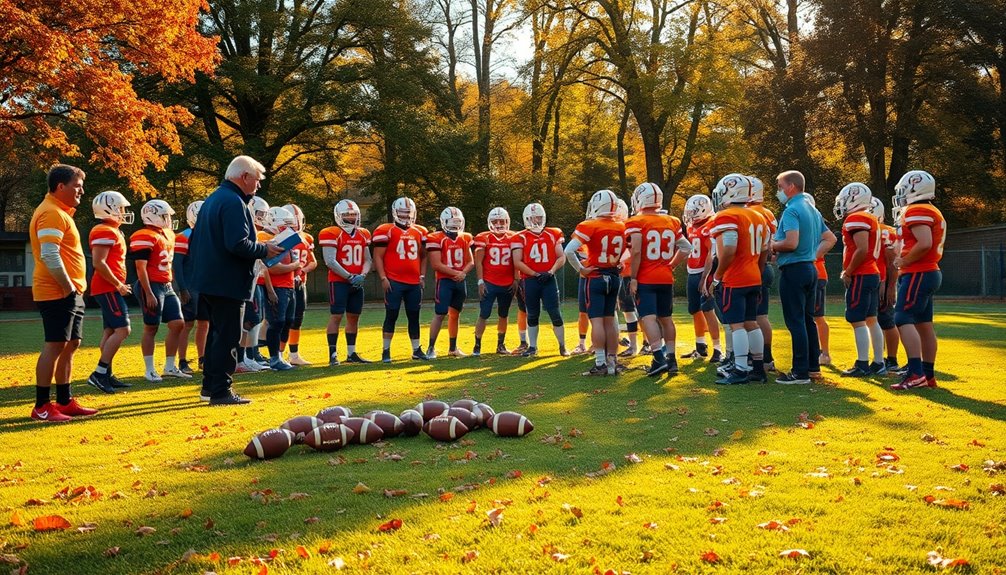
Fall Flag Football Prep: Tips for Players and Coaches
March 25, 2026To excel in fall flag football, you should focus on the fundamentals, like pulling flags and mastering basic rules. Hone your skills through passing accuracy, agility drills, and teamwork. Develop effective strategies by analyzing opponents and practicing quick decision-making. Communication on the field is key, so establish clear signals. Finally, preparing for tournaments involves stamina training and mock games to build team chemistry. Keep going to discover more essential tips for your flag football journey!
Understanding the Fundamentals of Flag Football
When you step onto the field for flag football, you’ll quickly realize that understanding the fundamentals is key to enjoying the game. Unlike traditional football, flag football eliminates tackling, focusing on pulling flags from opponents’ belts. This promotes safety while developing essential skills like agility and teamwork.
With teams typically playing in formats like 5v5 or 6v6, strategic play becomes vital. You’ll have four downs to reach midfield and three to score, encouraging collaboration and smart decision-making. Familiarizing yourself with the basic rules, such as no blocking, enhances the fun for all ages. Incorporating Youth Flag Football Drills into your practice can sharpen your flag-pulling techniques and passing skills, setting a solid foundation for successful gameplay. Understanding key offensive formations can further enhance your team’s strategic options on the field.
Essential Skills to Focus on During Practice
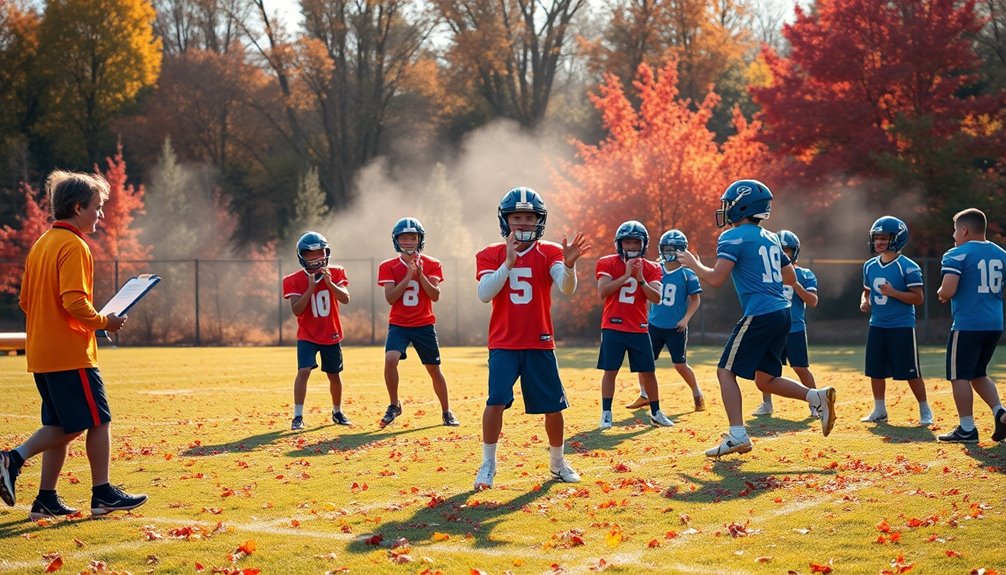
Mastering essential skills during practice can drastically improve your flag football game. Here are three key areas to focus on:
- Flag Pulling: Hone your flag pulling techniques to effectively stop opponents. This skill is fundamental for defensive success.
- Passing and Catching: Work on your throwing accuracy and catching reliability. These fundamentals are critical for advancing the ball and scoring.
- Agility Drills: Incorporate footwork and reaction speed drills to navigate the field. Being quick on your feet can make all the difference.
Additionally, teach specific routes for wide receivers, ensuring they know at least 15 essential techniques. Incorporating quick passing techniques will enhance your team’s ability to move the ball efficiently down the field.
Emphasizing teamwork and communication during practice will create a cohesive unit ready for game situations. Use game simulations to apply these skills in real-time scenarios.
Crafting a Winning Game Strategy for Your Team
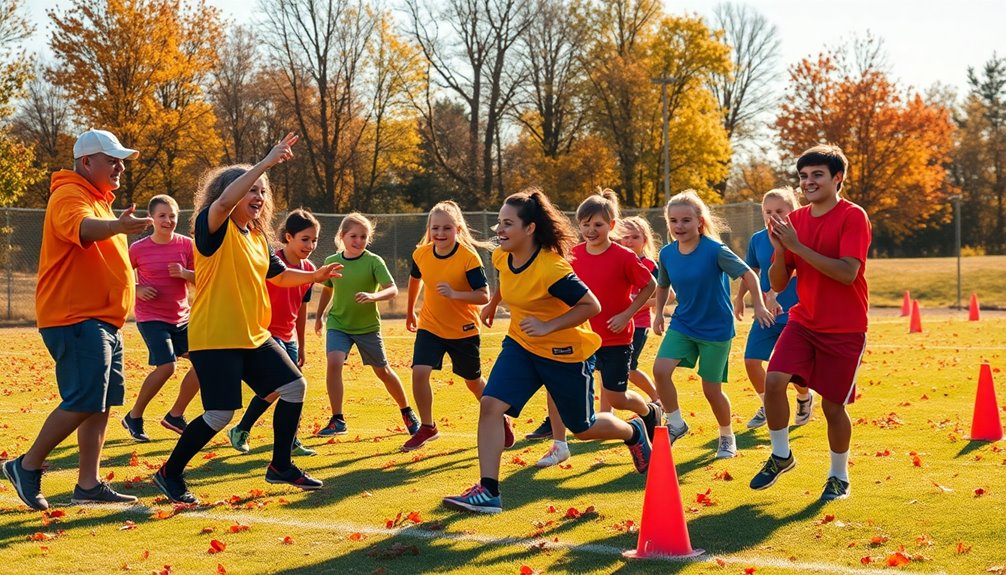
To craft a winning game strategy, start by analyzing your opponent’s weaknesses using past game footage. This insight lets you tailor your offensive plays, maximizing your team’s strengths. Additionally, consider implementing effective offensive strategies to keep your opponents guessing and create opportunities for big plays.
Analyzing Opponent Weaknesses
Identifying your opponent’s weaknesses is essential for crafting a winning game strategy. When analyzing opponent weaknesses in NFL FLAG, you can gain a significant edge.
Here are three key strategies to focus on:
- Review Game Footage: Analyze previous matches to spot patterns in their play style, particularly their offensive and defensive strategies.
- Observe Key Players: Pay attention to the tendencies of standout players, like their favorite routes or common quarterback moves, to tailor your defense.
- Utilize Statistical Data: Look at their success rates in critical situations, such as third downs or red zone efficiency, to inform your game plan.
Utilizing Team Strengths
While understanding your opponent’s weaknesses is essential, leveraging your team’s strengths can be the game-changer. Start by identifying each player’s unique abilities—like speed or agility—to assign roles that maximize impact.
For instance, align your fastest players in receiving positions and use your strong, agile athletes in defensive roles. Communication is key; make certain everyone knows their specific tasks to capitalize on collective strengths during plays.
Analyze past games to pinpoint successful strategies, adapting them to exploit your team’s advantages against specific opponents. Regularly practice a variety of offensive and defensive plays so your team can seamlessly implement strategies that utilize team strengths, especially with running backs, during competitive matches.
This preparation sets you up for success on the field.
Tips for Effective Communication on the Field
Effective communication on the field is essential for a successful game. You can use clear hand signals and positive verbal cues to guarantee everyone knows their role and feels confident. Establishing these practices will help your team stay coordinated, even in the heat of the moment. Additionally, incorporating dynamic stretches during warm-ups can enhance players’ focus and readiness for effective communication.
Clear Hand Signals
To enhance communication on the field, establishing a set of clear and consistent hand signals is essential for both offensive and defensive plays.
Here are some tips to help you implement effective clear hand signals:
- Use Contrasting Colors: Equip players with gloves or wristbands in contrasting colors to quickly recognize signals, even in fast-paced situations.
- Keep It Simple: Implement universally understood gestures, like a thumbs-up for a successful play or a fist for a timeout, to minimize confusion.
- Practice Regularly: Integrate hand signals into your drills to reinforce their meaning, ensuring players react quickly during games.
Positive Verbal Cues
Clear communication on the field is essential, especially when it comes to using positive verbal cues. Use clear, concise phrases like “Go deep!” or “Cut left!” to quickly convey tactical instructions. This guarantees players understand their roles in real-time.
Boost confidence and morale by encouraging players with phrases such as “Great job!” or “Keep it up!” Establish a team-specific vocabulary for common plays, helping everyone anticipate actions and enhancing overall communication.
During drills, employ verbal cues like “Switch!” or “Reset!” to maintain flow and keep players engaged. When addressing mistakes, use a calm tone and frame feedback positively, saying things like “Let’s try that again!” This approach fosters a supportive learning environment that benefits everyone.
Creating a Fun and Inclusive Team Environment
- Prioritize Sportsmanship: Teach players to respect one another and learn responsibility—whether they’re pulling the flag or cheering from the sidelines.
- Build Connections: Organize community events that strengthen ties among players, families, and coaches, enhancing the overall experience.
- Encourage Open Communication: Create a space where players feel comfortable sharing their thoughts and experiences, cultivating a supportive atmosphere. This helps reinforce teamwork skills, which are essential for collaboration on the field.
Preparing for Competitive Tournaments and Challenges
Building a fun and inclusive team environment sets the stage for your players to thrive in competitive tournaments. Competing in these tournaments exposes your team to fast-paced gameplay, helping them adapt to various playing styles.
Focus on incorporating game simulations during practice; this boosts teamwork and communication, essential for success. Encourage your wide receivers to work closely with the quarterback to enhance their chemistry.
After each tournament, analyze game footage to pinpoint areas for improvement and refine your strategies. Implementing two blitzers in your defensive plays can disrupt opponents’ strategies, making your defense more competitive.
Finally, prioritize regular speed and agility drills to build the stamina needed for those intense tournament moments. Additionally, ensure that players practice agility improvement drills to enhance their ability to make quick decisions under pressure.
Conclusion
So, as you gear up for fall flag football, remember that while winning might seem like the ultimate goal, it’s actually all about having fun and building teamwork. Ironically, the more you focus on enjoyment, the better your chances of success. Embrace the challenges, communicate openly, and create an inclusive environment. Who knew that by simply enjoying the game, you could end up scoring more touchdowns? Go out there, and make the most of your season!