

Coaching Youth Football: A Guide to Creating Your First Playbook
March 15, 2026Creating your first youth football playbook is essential for organizing strategies and developing player skills. Start with 8 to 10 customizable plays, grouping them by formation and difficulty. Use fun code names to make memorization easier and keep everyone engaged. Regularly reassess plays to reflect team strengths and improve confidence. Don’t forget to communicate with parents about the playbook concepts. Stay tuned to uncover more tips for enhancing your playbook and coaching methods.
Understanding the Importance of a Youth Football Playbook
When you immerse yourself in coaching youth football, understanding the importance of a playbook is essential. A well-structured playbook organizes offensive strategies, helping your players grasp fundamental skills necessary for success on the field.
Start with 8 to 10 customizable plays to maintain variety without overwhelming young athletes. Grouping these plays by formation and difficulty allows you to quickly access strategies tailored to your team’s strengths and your opponents’ weaknesses.
Regularly reassessing and adapting these plays throughout the season keeps the playbook effective and relevant to player development. Ultimately, a solid playbook enhances teamwork and fosters confidence, enabling your players to master various plays and formations as they grow in their youth football coaching journey. Incorporating essential flag football gear ensures that players are well-equipped to execute the strategies in your playbook.
Key Elements Every Playbook Should Include
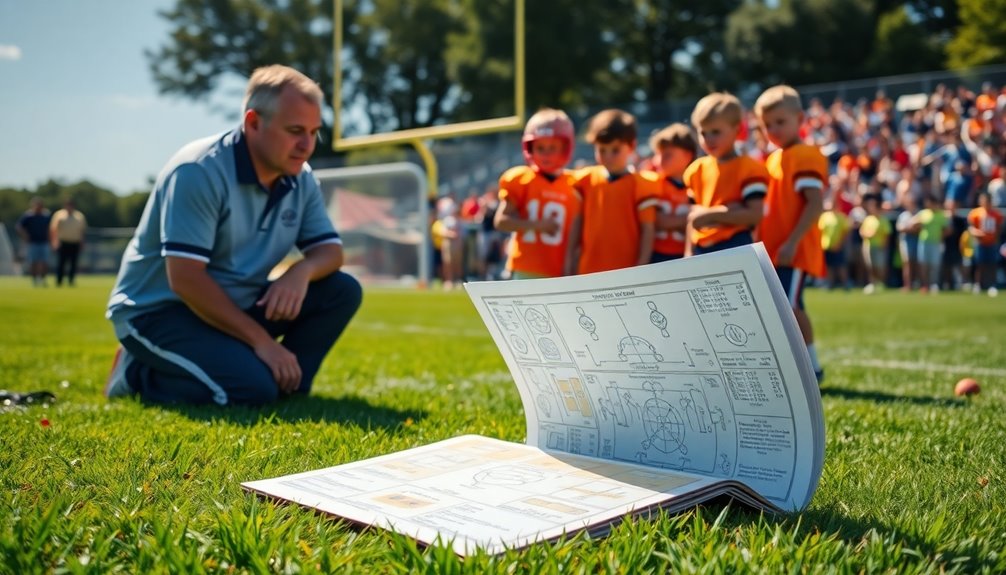
When creating a youth football playbook, you need to focus on essential play types and how to organize formations effectively. Consider customizing your playbook to match your team’s strengths and player development. This approach not only keeps practices engaging but also helps players grasp strategies more easily. Incorporating offensive strategies that emphasize quick passes can further enhance your team’s performance.
Essential Play Types
To create a winning youth football playbook, it’s vital to include a diverse mix of play types that cater to different game situations. Incorporating short, medium, and long yardage plays will enhance your strategic depth.
Start with five essential plays, like quick slants and fly routes, to build a strong foundation for youth flag football plays.
Categorizing plays by difficulty—beginner, intermediate, and advanced—lets you tailor strategies to your players’ skill levels.
Use unique code-names or numbers for quick identification during practice, making the learning process more engaging.
Finally, regularly reassess and adapt your plays based on your team’s strengths and opponent weaknesses to maintain an effective and responsive playbook throughout the season.
Formation Organization Strategies
Effective formation organization is essential for a successful youth football playbook, as it helps streamline play selection during games.
Start by categorizing your plays by formation types, like single back, spread, and bunch. This clarity lets you quickly choose plays based on your offensive strategy.
Additionally, group plays by difficulty levels—beginner, intermediate, and advanced—so players can master skills progressively. Incorporate categories for intended yardage to easily identify plays for short, medium, or long situations.
Use a consistent naming system with fun code-names or numbers for fast identification during practice and games.
Finally, reassess your formation organization strategies regularly to adapt to player development and team strengths throughout the season.
Playbook Customization Tips
Building on the formation organization strategies, customizing your playbook is vital for maximizing your team’s potential. Start by organizing plays by formation, difficulty level, and intended yardage. This guarantees quick access during games and practices.
Begin with a manageable number of plays—about 8 to 10—to help your players master the fundamentals before gradually expanding the playbook. Use unique code names or numbers for plays to enhance communication and quick identification.
Don’t forget to include both offensive and defensive strategies, so players understand their roles in various situations. Finally, regularly reassess and update your plays based on performance and strengths, promoting adaptability and continuous improvement throughout the season.
Your playbook is a living document; treat it in this manner!
Choosing the Right Formations for Young Athletes

When choosing formations for young athletes, focus on their skill levels and what keeps the game enjoyable. Simple yet effective formations, like single back or spread, help build fundamental skills while fostering teamwork. Incorporating spacing among receivers allows for better passing lanes and enhances the overall gameplay experience.
Formation Selection Criteria
Selecting the right formations for young athletes requires careful consideration of their skill levels and physical attributes. Start with simpler formations like single back or spread to build fundamentals and boost confidence.
Use formation selection criteria to organize plays based on the intended yardage, ensuring quick access during games. This allows you to adapt strategies to exploit defensive weaknesses effectively.
Incorporating a variety of formations, such as bunch or trips, encourages creativity and adaptability as players grasp offensive concepts.
Also, evaluate your team’s speed and agility to choose formations that maximize their strengths.
Finally, regularly reassess and modify formations throughout the season to reflect your team’s evolving skills and the dynamics of opposing teams.
Simple Yet Effective Formations
Understanding the importance of simple yet effective formations can greatly enhance young athletes’ experiences on the field. Simple formations, like the single back and spread, give players clear roles, helping them grasp the game better.
Utilizing formations such as bunch or trips can create mismatches against defenses, making it easier for inexperienced players to succeed with straightforward routes and plays. Grouping plays by formation allows young athletes to quickly recognize their positions and responsibilities, boosting team coordination.
Start with a few basic options tailored to your team’s skill level, gradually introducing more complex structures as confidence builds. Consistent practice of these simple formations fosters familiarity, enabling players to focus on executing plays instead of struggling to remember their roles.
Organizing Plays by Skill Level and Yardage
Organizing your playbook by skill level and yardage not only streamlines decision-making during games but also guarantees that your players are appropriately challenged.
Start by categorizing your football plays into short, medium, and long yardage groups. This helps you make quick calls on the field. Begin with 8 to 10 manageable plays, allowing your players to master the fundamentals before introducing more complex strategies.
Group plays by skill level—beginner, intermediate, and advanced—tailoring practice sessions to match their experience. Utilize formations like single back, spread, or bunch to clarify roles. Incorporating quick passing techniques into your practice can enhance overall game performance.
Regularly reassess your playbook, incorporating player feedback and performance metrics, ensuring your strategies evolve with their skill progression for maximum effectiveness.
Incorporating Fun Code Names for Plays
Once you’ve categorized your plays by skill level and yardage, adding fun code names can elevate your team’s communication and engagement. Unique code names, like “Eagle” or “Superman,” make strategies easier for players to remember, enhancing their ability to recall specific plays during practice and games. This approach not only fosters team spirit but also adds an exciting challenge to learning. By assigning code names based on complexity, you help players understand the difficulty of each play, promoting gradual skill development. Consistently using these fun code names during practice reinforces familiarity, leading to better execution in games. Ultimately, incorporating fun code names transforms playbook learning from a chore into an enjoyable experience for your young athletes. Additionally, using effective communication improves coordination and execution during gameplay.
Utilizing Technology for Playbook Development
When you’re developing your playbook, using an app like FirstDown PlayBook can save you tons of time.
With customizable formations and visual learning tools, you can easily teach your players and adapt strategies on the fly.
This technology not only streamlines your planning but also makes it easier for young athletes to grasp key concepts. Incorporating strong communication within your playbook can further enhance your team’s defensive strategies.
App-Supported Playbook Creation
In today’s fast-paced coaching environment, using an app like FirstDown PlayBook can transform how you develop your playbook. This app-supported playbook creation tool gives football coaches access to a wide variety of formations, making it easier to craft effective flag football playbooks.
You can customize and save formations in “My Plays” and “My PlayBooks,” ensuring your playbook reflects your unique coaching style. The quick navigation system links specific formations to offensive and defensive strategies, simplifying practice preparation.
Additionally, short instructional videos enhance your understanding of the app’s features, helping you adapt plays efficiently. By embracing this technology, you’ll save valuable time, allowing you to focus more on coaching and developing your players’ skills.
Visual Learning Tools
- Access to Diverse Plays: The FirstDown PlayBook app offers a wide variety of formations and plays tailored for youth football.
- Demonstrative Learning: Short videos help visualize formations and execution, making concepts clearer.
- Customization: You can save and organize playbooks to fit your team’s unique strengths and weaknesses.
- Fast Navigation: Quickly link plays to specific defensive strategies, streamlining game preparation.
Incorporating visual learning tools not only saves time but also accommodates various learning styles, benefiting everyone involved.
Creating a Practice Schedule Around Your Playbook
Creating a practice schedule that aligns with your playbook is essential for effective team development. Start by organizing your practice sessions around specific themes like offense, defense, and special teams. This guarantees thorough skill development each week.
Allocate time for each play type based on difficulty, beginning with simpler plays to build confidence before tackling more complex strategies. Include dedicated sessions to review key plays, helping players understand their roles and responsibilities in various formations.
Don’t forget to incorporate drills that simulate game scenarios, enhancing their grasp of play execution. Regularly assess and adjust your practice schedule based on team performance and player feedback, guaranteeing continuous improvement and keeping everyone engaged. Additionally, ensure hydration breaks are integrated into your schedule to maintain focus and energy throughout practices.
Adapting Plays to Fit Team Strengths and Weaknesses
After establishing a solid practice schedule, it’s time to focus on adapting plays to fit your team’s strengths and weaknesses. Tailoring your playbook will enhance performance and engagement. Here’s how to do it:
- Assess individual strengths: Identify players’ skills, like speed and catching ability, to maximize effectiveness.
- Utilize suitable formations: Choose formations that align with player preferences, ensuring comfort and better execution.
- Implement diverse play types: Mix short, medium, and long yardage plays to keep all players involved.
- Evaluate regularly: Monitor play effectiveness during practices and games, adjusting as necessary to address weaknesses.
Encourage creativity by letting players suggest modifications. This fosters ownership and helps in adapting plays to fit your team’s unique dynamics. Additionally, incorporating agility improvement drills can significantly enhance player adaptability and performance in various game scenarios.
Strategies for Teaching Players Their Roles
When it comes to teaching players their roles, clearly defining responsibilities in the playbook is essential for fostering teamwork and efficiency.
You should use visual aids, like printed plays and diagrams, to help youth players grasp their positions and routes. Incorporating fun code-names for flag football plays can make recalling their roles easier during running plays.
As the head coach, emphasize repetition and practice to reinforce understanding of individual responsibilities, boosting confidence over time. Regularly review and adjust roles based on performance, making sure each player fits effectively within the team structure. Additionally, utilizing color-coded wristbands can significantly enhance communication and execution during games.
Reviewing and Adjusting Plays Throughout the Season
As the season unfolds, it’s essential to regularly review and adjust your plays to guarantee they align with your team’s evolving strengths and weaknesses.
Here are four key steps to evaluate in youth flag football:
- Evaluate Effectiveness: Regularly assess plays during practices and games to pinpoint what works well for your team.
- Gather Feedback: Engage in open discussions with players to understand their comfort and grasp of specific plays.
- Analyze Video: Use game footage to identify successful plays and areas for improvement, allowing for data-driven adjustments.
- Reassess Periodically: Schedule regular check-ins on play effectiveness, ensuring your strategy evolves alongside your team’s growth and performance goals.
Additionally, understanding scoring opportunities can inform which plays to emphasize based on game situations and opponent weaknesses.
These adjustments will help keep your team competitive and engaged throughout the season.
Engaging Parents in the Playbook Process
Adjusting plays throughout the season isn’t just about the team; parents play an essential role in the process too. Engaging parents in the playbook fosters a sense of community and support, enhancing the overall experience for both players and families.
Regular communication about playbook strategies keeps parents informed and actively involved in their child’s football journey. Hosting workshops to explain playbook concepts helps them understand the game better, empowering them to support their children’s learning.
Encourage parent feedback on the playbook; their insights can improve team dynamics and strategies. Finally, create a parent-friendly version of the playbook with simplified explanations, allowing families to discuss plays at home and reinforce what’s learned during practice.
Compliance With League Rules and Regulations
Understanding league rules and regulations is essential for any youth football coach, guaranteeing fair play and safety for all players. Compliance with these rules helps create a structured environment.
Understanding league rules is crucial for youth football coaches, ensuring fair play and player safety while fostering a structured environment.
Here are key areas to focus on for effective rule adaptation:
- Player Eligibility: Confirm all players meet age and skill requirements.
- Play Types: Familiarize yourself with specific rules, like quarterbacks not running plays in NFL FLAG football.
- Field Dimensions: Know the required field size and that you need 11 players on the field.
- Safety Protocols: Regularly review safety guidelines to protect your players.
Stay updated by attending coaching clinics and reviewing rule books, adapting your strategies as necessary to fit the league’s framework.
Resources for Continuous Learning and Improvement
To enhance your skills as a youth football coach, tapping into various resources is essential. Start with platforms like Coach Parker’s for video clinics that provide visual insights into effective coaching techniques.
Don’t overlook free downloadable playbooks and coaching certifications from USA Football; they’ll bolster your foundational knowledge and coaching philosophy. Regularly reviewing game tapes is vital, too—it helps you analyze player performance and refine team strategies.
Engage with your local leagues to network with fellow coaches and exchange best practices. Finally, attend workshops and clinics to stay updated on the latest strategies and rules, ensuring your playbook remains relevant and effective.
Continuous learning is key to becoming the best coach you can be.
Conclusion
Creating your first youth football playbook is like crafting a recipe for success—you mix the right ingredients to whip up a winning strategy. By understanding your players, organizing your plays, and keeping things fun, you’ll foster a love for the game while nurturing their skills. Remember, your playbook isn’t just a guide; it’s a living document that evolves with your team. Embrace the journey, engage everyone involved, and watch your young athletes thrive on the field!