
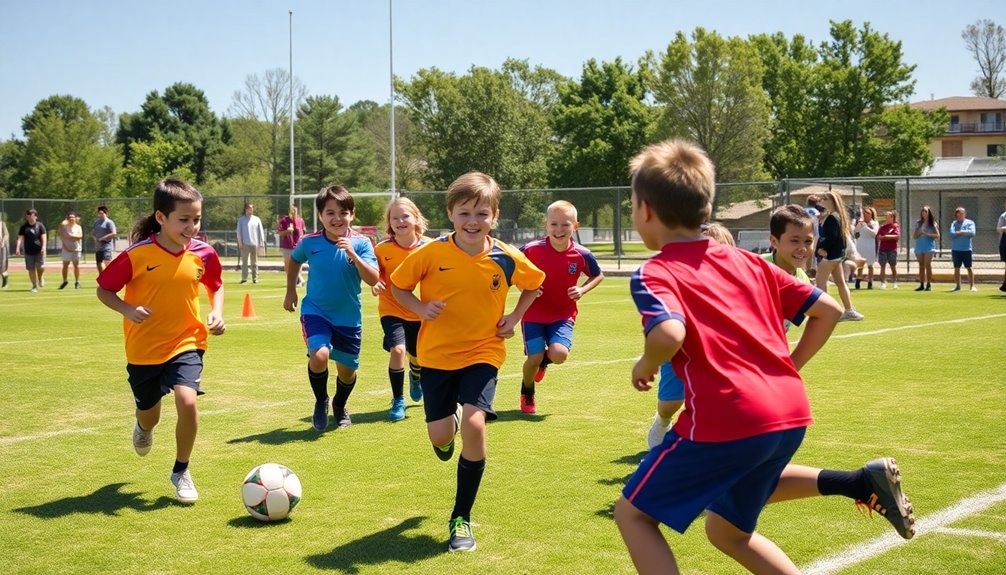
Building a Winning Team: Fun and Effective Football Drills for Kids and Youth Players
March 14, 2026Last updated: · By Jake Turner
Football practice drills work best when they teach real skills and keep kids wanting to come back. For most youth players, the strongest sessions mix a short warm-up game, skill drills with plenty of repetitions, small-sided games, and a few minutes of team bonding. This guide explains which football practice drills to run, how to set them up, and the safety basics every coach should know.
Key Takeaways
- Children and adolescents aged 6 to 17 need at least 60 minutes of moderate-to-vigorous physical activity every day, so practices should keep players moving for most of the session.
- A CDC study published in Sports Health found that youth tackle football players aged 6 to 14 took about 15 times more head impacts than flag football players during practices or games.
- The CDC offers a free online concussion course for youth coaches that teaches them to recognize concussion signs and symptoms during practice or games.
- Small-sided games such as 3-on-3 or 4-on-4 give each player far more touches on the ball than full-squad drills.
- Short, high-energy warm-up games like Simon Says and Snacks in the Grass prepare players physically and mentally before skill work begins.
What Makes Football Practice Drills Effective for Kids?
Effective football practice drills for kids are short, repeatable, and matched to the age and skill level of the players. A drill works when every child touches the ball often, understands the goal, and can succeed with some effort. Drills that leave kids standing in line for long stretches tend to lose their attention quickly.
Physical activity should be a central goal, not an afterthought. The CDC’s physical activity guidelines for students say children and adolescents aged 6 to 17 should get 60 or more minutes of moderate-to-vigorous activity daily, with vigorous activity on at least three days a week. The second edition of the federal guidelines, summarized in a list of the top things to know from the U.S. Department of Health and Human Services, makes the same point for kids ages 6 to 17.
Use that benchmark to plan. A practice that is mostly standing and listening will not meet it, while a session built around rotating stations, small games, and quick repetitions will.
Which Warm-Up Games Work Best Before Football Practice?
The best warm-up games get kids moving, reinforce footwork and awareness, and make the first five to ten minutes feel like play. Choose games that require quick starts, changes of direction, and listening for signals. Rotate them through the season so players do not get bored.
Simon Says
Use Simon Says to build reaction speed and body control. Call out football-specific movements such as backpedal, shuffle left, sprint, or get into a three-point stance. Players who respond to the wrong command sit out one round, which keeps everyone focused.
Football Golf
Football Golf turns passing and kicking into a short course. Set up several targets at different distances, and have each player attempt a throw or kick at each one. Scores are kept for fun, not ranking, so kids of all skill levels can compete.
Snacks in the Grass
Snacks in the Grass is a ball-control and agility game. Scatter a few balls on the field, and have players run in, grab one, and carry it back without letting it touch the ground. Adjust the distance and number of balls to match the age group.
Which Skill Drills Should Kids Practice First?
Kids should practice the fundamentals first: catching, throwing, footwork, and getting into a stance. Start with basic technique in a low-pressure setting, then add defenders, time limits, or game-like scenarios once players can repeat the skill correctly. Plan a few minutes of skill work at the start of each session, while players are fresh.
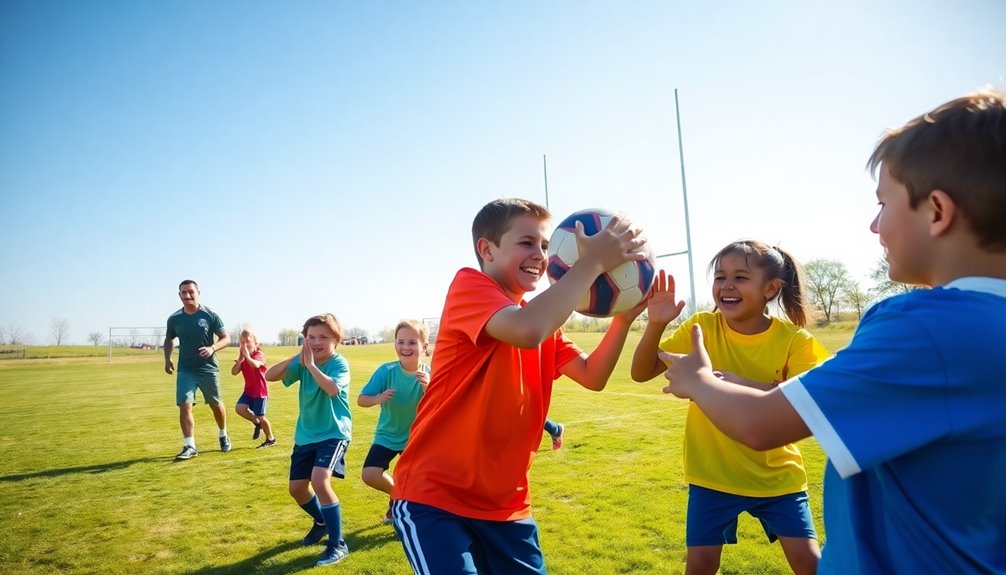
The table below summarizes common skill drills and what each one builds.
| Drill | Main skill | Simple setup |
|---|---|---|
| Hot Potato passing | Accuracy and ball handling | Players in a circle pass the ball quickly while spreading out a few steps after each pass |
| Ready, Set, Hut | Stance, timing, and snap rhythm | Pairs practice the stance and a count before each repetition |
| Ride the Pads | Comfort with contact and tackling form | A partner holds a pad while the player drives through with proper technique |
| Simon Shows | Reading the play and reacting | The coach signals a ball position, and players react with the correct movement |
How to Teach Throwing in a Simple Sequence
Teaching a throw works best in short, ordered steps. Break the motion into parts, practice each one, then combine them. For a full breakdown, see this step-by-step guide to teaching kids to throw a football.
- Show the grip, with fingers across the laces and the ball held away from the body.
- Practice a stance with the non-throwing shoulder pointed at the target.
- Step toward the target and rotate the hips and shoulders together.
- Release the ball with a follow-through toward the target.
- Add distance and movement only after the form stays consistent.
Why Are Small-Sided Games Good for Youth Football?
Small-sided games are scrimmages with fewer players, such as 3-on-3 or 4-on-4, on a smaller field. They are one of the most efficient ways to increase touches, decision-making, and communication. Every player is involved on every play, which is hard to achieve in full-squad drills.
- More touches: Fewer players means more chances to catch, throw, or carry the ball in each session.
- Faster decisions: Kids must read the situation quickly because the space is tight and the action is constant.
- Better communication: Small groups need to call out assignments and signals, which builds the habit of talking on the field.
Rotate teams often so every child plays with and against different teammates. For more on structuring the full session around these games, read this guide to planning flag football practice.
How Can Conditioning Challenges Build Strength Without Feeling Like Work?
Conditioning challenges build strength, agility, and endurance through competition, which keeps kids working harder than they would in a plain sprint drill. The key is to keep each challenge short, supervised, and scaled to the group. Rest between rounds and watch for signs of fatigue.
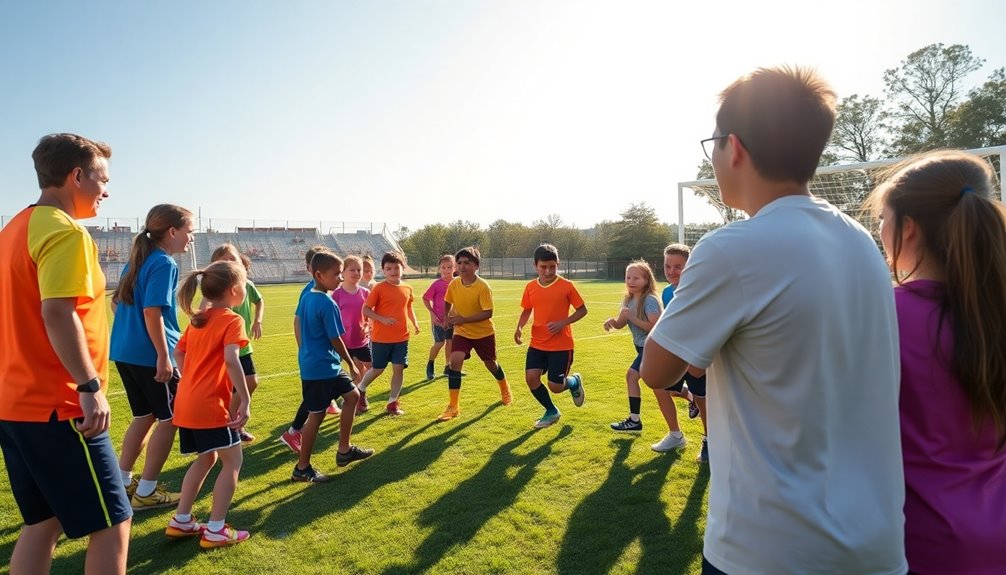
- Towel Wars: Partners compete to pull a towel from each other, building grip strength and core control.
- Tire Flips: Relay teams flip tires across a set distance, improving strength, coordination, and teamwork.
- Car Wars: Teams push a car or sled for time, which builds leg power and a competitive spirit.
Keep these challenges as one part of a broader plan. For age-specific ideas and progressions, see these football conditioning drills for building strength and endurance.
How Do You Keep Youth Football Practice Safe?
Youth football practice is safest when coaches teach proper technique, limit unnecessary contact, and know how to spot a concussion. The risk of head impacts depends heavily on the type of football being played. A CDC study published in Sports Health found that youth tackle football players aged 6 to 14 took about 15 times more head impacts than flag football players during practices or games. That gap is a reason to keep contact drills controlled and age-appropriate.
Every coach should complete the CDC’s free online concussion training for youth sports coaches, which teaches how to recognize concussion signs and symptoms during a practice or game. Use this checklist before every session:
- Confirm that every player has the protective equipment required by your league.
- Check the field for holes, debris, and unsafe surfaces before drills begin.
- Keep water breaks scheduled, especially in hot weather.
- Remove any player who shows concussion symptoms and follow the league’s return-to-play process.
- Teach tackling and blocking form before adding any live contact.
How Do You Build Communication Into Football Practice Drills?
Build communication into drills by giving players specific calls to make and listening routines to follow. Teams that talk clearly react faster and make fewer mistakes under pressure. Communication is a skill, so it needs practice just like throwing or footwork.
Active Listening Practices
Use simple listening routines that make kids pay attention to one another. Reflective listening works well: a player repeats a teammate’s instruction before the drill starts. Another option is a feedback loop, where players summarize what a teammate said about a play. Both habits reduce confusion when the game gets fast.
Clear Calls and Signals
Choose a short set of calls and signals and use them every practice. Consistent terms let players respond without thinking during games. Keep the list small, and explain what each call means before the first repetition.
How Do Team Building and Celebrations Fit Into Practice?
Team building and celebrations help players feel like they belong, which makes them more willing to try new drills and accept coaching. Set shared goals, recognize effort as well as results, and plan a few moments each week for players to celebrate progress. Small wins, such as a clean catch or a improved stance, count.
- Set one shared goal per month: For example, complete ten straight clean handoffs in a drill.
- Recognize individual effort: Name the player and the specific action, not just the final result.
- Plan one team activity: A short trivia round or a team cheer after practice builds connection.
Confidence matters too, especially for younger or newer players. These confidence building techniques for youth sports can help coaches support players who are nervous about contact or mistakes.
How Can You Use Player Feedback to Improve Drills?
Player feedback shows which drills kids enjoy, which ones confuse them, and where practice time is being wasted. Ask for input regularly, then make visible changes based on what you hear. Players are more committed when they see their suggestions used.
- Ask one or two simple questions after practice, such as which drill was most fun and which one was hardest.
- Use anonymous surveys for older players who may not speak up in a group.
- Adjust the next session based on the answers, and tell players what changed.
Frequently Asked Questions
How long should a youth football practice be?
Practices for young players often run 60 to 90 minutes, depending on age and attention span. Shorter sessions with more variety usually work better for younger kids. Plan for constant movement, since federal guidelines recommend at least 60 minutes of moderate-to-vigorous activity daily for children aged 6 to 17.
What are the best football practice drills for beginners?
The best beginner drills focus on catching, throwing, footwork, and stance, with plenty of repetitions. Small-sided games and simple warm-up games like Simon Says also work well for new players. Keep the rules simple and add complexity only after players show consistent form.
Is flag football safer than tackle football for kids?
Flag football involves far less contact than tackle football. A CDC study in Sports Health found that youth tackle players aged 6 to 14 took about 15 times more head impacts than flag players during practices or games. Safety still depends on good coaching, proper technique, and concussion awareness in any version of the sport.
How do I know if a player has a concussion?
Signs can include confusion, headache, dizziness, balance problems, or changes in behavior, and some symptoms appear later. If you suspect a concussion, remove the player from play and do not let them return the same day. The CDC’s free coach training covers how to recognize these signs and what to do next.
How many drills should I plan for one practice?
Plan four to six activities per session, including a warm-up, two or three skill drills, a small-sided game, and a short closing activity. Keep each block between 5 and 15 minutes. Rotating activities helps kids stay engaged and keeps the schedule flexible when plans change.
Conclusion
Strong football practice drills combine fun, fundamentals, and safety. Start with a short warm-up game, build skills through repetition, use small-sided games for more touches, and finish with team connection. When you plan each session around these pieces, your players improve faster and want to return for the next practice.
More on Football Practice Drills
Related guides: Football Conditioning Drills to Build Strength and Endurance · How to Catch a Football Better: Practical Tips for Beginners · How to Hold a Football: Tips for Perfect Technique
Free tools: Keto Macro Calculator · Keto Net Carbs Chart