

How to Teach Kids to Throw a Football the Right Way
March 22, 2026To teach kids to throw a football the right way, start with a proper grip on the laces and guarantee they maintain a slight gap for control. Focus on transferring weight from the back leg to the front while keeping their elbow elevated. Encourage a neutral spine for balance and stability. Pay attention to their front leg, minimizing movement to enhance their throw. You’ll discover more techniques and drills to boost their skills as they progress.
Understanding the Right Grip for Throwing a Football
To help kids throw a football effectively, the right grip is essential. First, make sure that they’re placing their fingers on the laces, creating a comfortable hold with a slight gap between the ball and their hand. This gap improves control and accuracy.
You’ll want to avoid having their fingers positioned too far up or down on the laces, as that can negatively impact their grip stability. Emphasize individual comfort, since each child’s hand size varies.
Introduce various lacing techniques to help them find what feels most natural. By focusing on the right grip, you’re setting a solid foundation for their throwing mechanics and overall performance—maybe even sparking a lifelong love for the game! Additionally, a proper grip is crucial for generating a perfect spiral that enhances accuracy and reduces wind resistance.
Mastering Weight Transfer in Your Throwing Motion
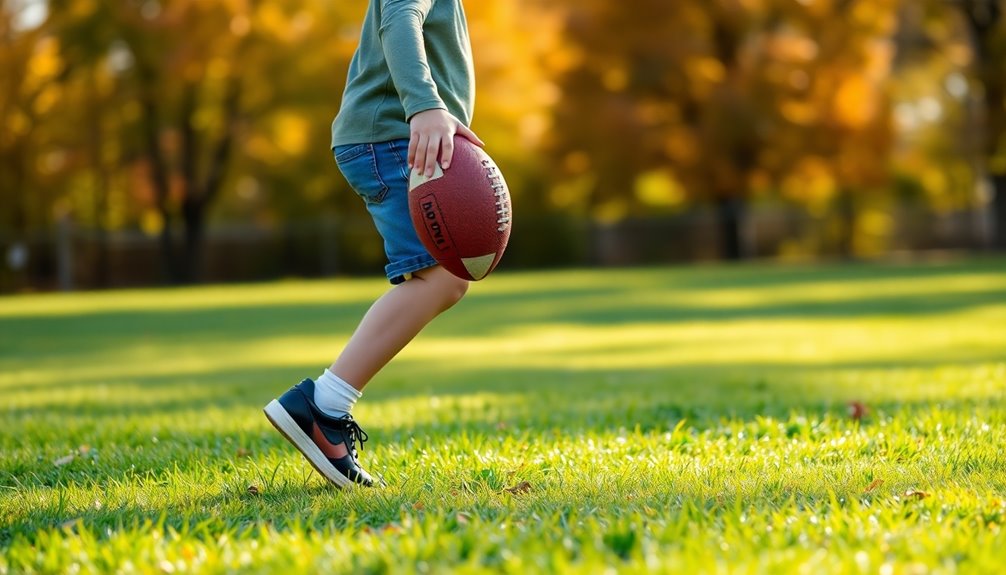
To throw a football effectively, you need to master weight transfer between your legs. As you shift your weight from your back leg to your front, keep your elbow elevated to maintain proper mechanics. This focus on body movement, rather than just arm strength, will boost your accuracy and power while reducing the risk of injury. Incorporating hip rotation during your throw will further enhance your overall performance.
Elbow Height Maintenance
Maintaining elbow height during a throw is essential for effective mechanics and injury prevention. Make sure your young athletes keep their elbows elevated throughout the motion. Dropping the elbow can lead to shoulder and arm strain, which you want to avoid.
Encourage them to focus on shifting their weight from the back leg to the front, all while trying to use their torso rotation rather than just arm strength. This approach promotes a more powerful and accurate throw.
After the throw, remind them to maintain an upright posture, which helps stabilize the spine and sustain elbow height. Regular feedback on their elbow positioning during practice can reinforce these good habits and enhance their overall throwing mechanics.
Proper Weight Shifting
Mastering proper weight shifting is essential for a powerful football throw. To achieve this, make sure you’re shifting your weight from your back leg to your front leg.
Push off the back foot to generate momentum, ensuring a strong weight shift. Maintain your elbow height throughout the motion; this prevents dropping and helps with effective weight transfer.
Focus on an upright posture post-throw, which enhances balance and stability. As you throw, try to make sure your hips and shoulders rotate smoothly; this aids in proper weight distribution.
Finally, your front leg should remain stable, absorbing weight without excessive movement to facilitate an accurate throw. Master these elements for a more powerful and precise throw.
Maintaining Proper Spine Alignment While Throwing
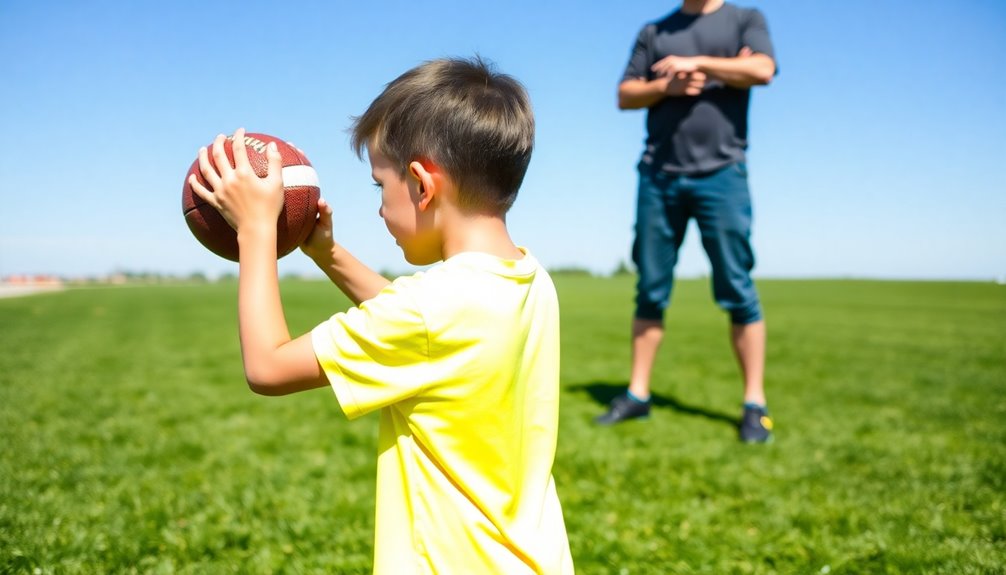
Maintaining a neutral spine is essential for effective throwing. While a slight forward lean can help, too much can throw off your balance and reduce power. Focus on keeping your spine upright to enhance stability and improve your throws. Additionally, engaging your hips during the throw can help maintain proper grip and stance for optimal power and accuracy.
Importance Of Neutral Spine
A neutral spine plays an essential role in throwing mechanics, helping kids achieve better performance on the field. When you teach them to maintain a neutral spine, make sure that they’re standing upright, which enhances their balance and stability during the throw.
This proper spine alignment allows for efficient weight transfer from the back leg to the front leg, promoting a smoother throwing motion. By avoiding excessive forward or backward lean, they’ll maintain better control and accuracy in their throws.
It’s crucial to emphasize this aspect, as trying to make sure their spine is aligned can minimize strain on their back and shoulders, leading to improved longevity in the sport.
Preventing Forward Lean
Proper spine alignment not only enhances throwing mechanics but also plays a pivotal role in preventing forward lean during the throw.
To help young athletes maintain this alignment, you can encourage them to focus on key points:
- Keep their chest lifted and shoulders back to promote better posture.
- Avoid excessive forward or backward lean, which disrupts balance and accuracy.
- Regularly assess and correct their spine alignment to boost confidence and throwing effectiveness.
Enhancing Throwing Stability
While throwing a football, focusing on spine alignment is essential for achieving stability and power. When kids are trying to throw effectively, make sure that they’re maintaining a neutral spine position. This helps reduce the risk of injury and enhances their overall throwing mechanics.
An upright posture prevents excessive lean, allowing for better weight transfer and balance throughout the throw. Encourage them to visualize a straight line from their head to their tailbone, reinforcing proper alignment. This small adjustment can greatly improve energy transfer from the lower body to the upper body, leading to greater distance and accuracy.
Ensuring Front Leg Stability for Better Throws
To guarantee better throws, focusing on the stability of your front leg is essential. A solid front leg acts as the foundation for your throwing motion, enhancing balance and control.
Here are some key points to remember:
- Keep your front leg steady to promote better weight transfer during throws.
- Minimize movement in this leg to reduce strain and boost throwing efficiency.
- Regularly check and adjust your front leg position to develop correct biomechanics.
- A stable front leg enhances throwing power by allowing for effective weight transfer from the back leg during the throw.
Key Techniques for Young Athletes to Improve Performance
Mastering key techniques can greatly elevate a young athlete’s football throwing performance. Start by emphasizing proper hand placement on the laces. This grip will enhance control and accuracy during throws.
Next, teach kids to maintain elbow height throughout the motion; this prevents injury and guarantees effective weight transfer from the back leg to the front leg.
Maintaining elbow height during throwing is crucial for preventing injury and ensuring effective weight transfer from back to front leg.
It’s also essential to instruct them to keep their spine in a neutral, upright position for better stability and reduced injury risk.
Encourage minimal movement in the front leg, allowing it to serve as a stabilizer rather than a force generator.
Finally, provide individualized feedback on biomechanics to highlight the importance of posture and mechanics for overall health and performance improvement. Additionally, remind them that reliable receivers build trust with quarterbacks, enhancing teamwork and communication.
Common Mistakes to Avoid When Teaching Football Throws
When teaching kids to throw a football, it’s easy to overlook common mistakes that can hinder their progress. To guarantee they develop good habits, make sure that they’re aware of these pitfalls:
- Grip too tightly: Encourage a comfortable hold with a small gap between the ball and their hand to reduce tension.
- Dropping elbows: Monitor their elbow height during throws; maintaining proper mechanics is key to effective throws.
- Incorrect spine position: A neutral spine is essential; excessive leaning can lead to poor form and injury. Additionally, emphasize the importance of proper form during flag pulls, as this can help them understand body mechanics better during throws.
Individualized Feedback: Tailoring Coaching to Each Athlete
While teaching kids to throw a football, offering individualized feedback is essential for their development. Focus on each athlete’s grip, making sure that they’re comfortable with their hand placement on the laces for ideal throwing mechanics.
Individualized feedback on grip and hand placement is crucial for teaching kids effective football throwing mechanics.
Assess and adjust their elbow height, emphasizing its importance for preventing injury and improving accuracy. Tailor your feedback on spine alignment, helping them understand the need for an upright posture during throws.
Observe the stability and motion of their front leg, providing guidance to develop proper habits for balance and weight transfer. Encourage open communication, making sure that they’re able to express their comfort levels and preferences. This approach fosters a more effective learning environment and boosts their confidence. Additionally, teaching them about proper spacing among receivers can enhance their overall understanding of the game.
Drills and Exercises to Reinforce Proper Throwing Mechanics
Here are some effective drills to focus on grip techniques and throwing accuracy:
- Grip Drill: Teach kids to hold the ball with their fingertips on the laces, ensuring proper finger placement for control and comfort.
- Elbow Height Exercise: Use a wall to encourage maintaining elbow height above the shoulder during throws, reinforcing the right arm position.
- Weight Transfer Drill: Set up a line for kids to step over, helping them practice transferring weight from their back leg to their front leg, promoting proper mechanics.
These exercises won’t only improve their skills but also boost their confidence in throwing a football accurately. Additionally, participating in local leagues can provide valuable team experience that further enhances their development.
Conclusion
By mastering the art of throwing a football, you’re not just launching an air-filled sphere; you’re igniting a passion in young athletes that can soar like a comet across the sky. Remember, the right grip, weight transfer, and spine alignment are your tools to sculpt their skills. Avoid the common pitfalls, and with tailored feedback and fun drills, you’ll watch their confidence and performance blossom. So, let’s turn those aspiring quarterbacks into champions, one throw at a time!