

Beginner Tennis Coaching Mistakes to Avoid
May 15, 2026When coaching beginner tennis players, don’t overlook the importance of fundamentals and consistent drills. Avoid creating a negative atmosphere; positive reinforcement boosts motivation. Be clear in your communication and listen to players’ concerns. Tailor your approach to individual needs and track their progress. Remember to keep learning yourself, as ongoing education enhances your coaching skills. Don’t underestimate the mental aspect of the game either—it’s vital. There’s so much more to explore to enhance your coaching techniques.
Understanding the Importance of Fundamentals in Tennis Coaching

Fundamentals are the backbone of successful tennis coaching, shaping a player’s journey from novice to expert. By focusing on foundational techniques, you lay the groundwork for skill development.
Encourage practice consistency to help players refine their techniques and build game awareness. A growth mindset is essential; it allows players to embrace challenges and learn from mistakes.
Adaptive coaching techniques can cater to individual needs, keeping player motivation high. When you prioritize these fundamentals, you’re not just teaching tennis; you’re fostering a love for the game. Additionally, integrating small-sided games into practice can enhance decision-making and tactical awareness, further enriching players’ overall development.
Failing to Create a Positive Learning Environment
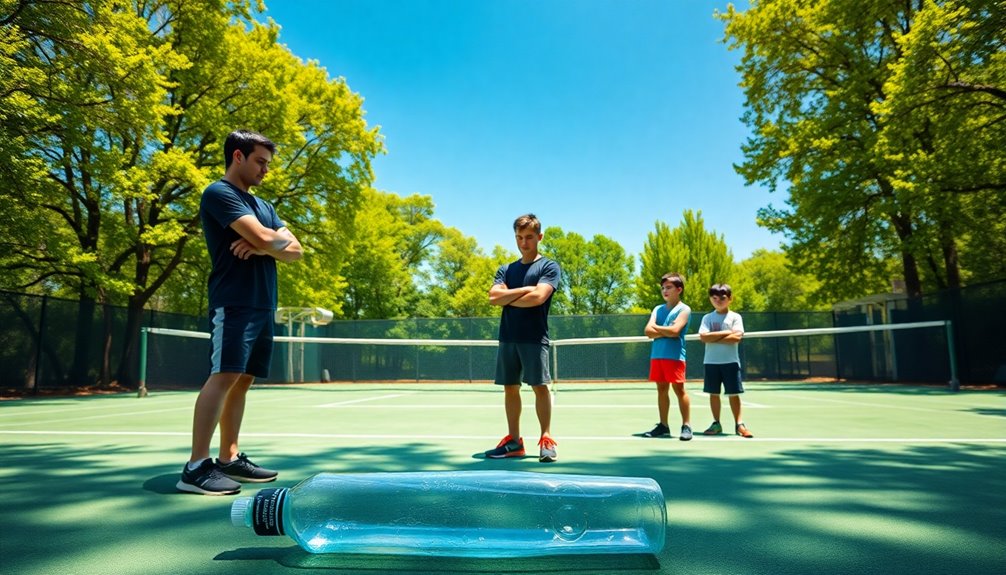
While focusing on fundamentals is essential, overlooking the atmosphere in which players learn can hinder their progress. A positive learning environment fosters player motivation and builds confidence.
Fostering a positive learning environment is crucial for enhancing player motivation and confidence in their development.
Here are three ways to create this encouraging atmosphere:
- Positive Reinforcement: Use praise to acknowledge efforts, not just successes. Celebrate achievements, big or small, to boost morale.
- Supportive Interactions: Encourage players to support each other through constructive feedback, fostering a sense of community.
- Growth Mindset: Promote resilience by reminding players that mistakes are part of learning. This mindset helps them embrace challenges. Additionally, teamwork enhances performance by cultivating trust and collaboration among players, further supporting a positive atmosphere.
Overlooking Player Communication and Feedback

Effective coaching hinges on clear communication and feedback, yet many beginner coaches underestimate its importance. By practicing active listening, you can better understand your players’ needs and concerns.
Employ various communication styles to match each player’s personality, fostering trust and engagement. Constructive criticism is essential, but it’s equally important to create feedback loops. This way, players feel empowered to share their thoughts, enhancing their learning experience.
Use verbal cues to guide them during drills, and don’t shy away from showing emotional intelligence—understanding their feelings can strengthen your bond. Incorporating real-time feedback during practice sessions can significantly enhance their understanding of game dynamics.
Ignoring Individual Player Needs and Progress
Many beginner coaches make the mistake of overlooking individual player needs and progress, which can hinder development.
To foster improvement, you should focus on the following:
- Player Assessment: Regularly evaluate each player’s unique strengths and weaknesses.
- Individualized Coaching: Adapt your strategies to align with their personal goals and learning styles.
- Progress Monitoring: Implement skill tracking to guarantee effective feedback and celebrate milestones. Additionally, incorporating finishing drills can help players develop confidence and improve their overall performance.
Neglecting the Role of Fun in Learning
When you focus solely on drills and techniques, you might forget that fun is essential for keeping beginner players engaged in learning. Incorporating fun learning elements can transform your coaching.
Use engaging activities and playful drills that spark creativity in coaching. Instead of a strict routine, emphasize enjoyment focus with game-based learning that encourages social interactions among players.
Implement motivation strategies like positive reinforcement, celebrating small successes to boost confidence. Don’t underestimate the power of laughter integration; it creates a relaxed environment where players feel comfortable. Adding playful practices into your sessions can significantly enhance player engagement and motivation.
Mismanaging Practice Time and Structure
Even if you have great drills planned, mismanaging practice time can derail your session and frustrate your players. To guarantee effective practice, focus on these key aspects:
Mismanaging practice time can derail your session, so focus on effective planning to keep players engaged and productive.
- Time Allocation: Divide your session according to practice objectives, guaranteeing each drill gets adequate attention without rushing.
- Activity Balance: Mix focused drills with fun activities to maintain player engagement and avoid burnout.
- Structured Feedback: Incorporate scheduled moments for feedback, allowing players to understand their progress and areas for improvement.
Incorporating small-sided games can also enhance player engagement and skill development during practice.
With proper session planning and scheduling flexibility, you can enhance time management and create a productive environment.
Skipping Proper Warm-Up and Cool-Down Routines
Warm-up exercises prepare your body, improving your performance and reducing injury risk. Meanwhile, cool-down routines help your muscles recover and prevent stiffness, making them just as essential for your overall tennis success. Incorporating dynamic stretches into your warm-up can enhance flexibility and improve your overall performance on the court.
Importance of Warm-Up Exercises
While it might seem tempting to dive straight into practice, neglecting warm-up and cool-down routines can lead to injuries and hinder your performance. A proper warm-up enhances physical readiness and prepares your body for action.
Here’s why you shouldn’t skip it:
- Dynamic Stretching: Increases flexibility and range of motion, helping your muscles adapt to movements.
- Muscle Activation: Engages key muscle groups, reducing the likelihood of strains during play.
- Mental Focus: Sets your mindset for practice, improving concentration and coordination.
Incorporating flexibility training and coordination drills into your warm-up routine not only aids in injury prevention but also boosts your overall performance on the court.
Take the time to prepare; your body will thank you!
Benefits of Cool-Down Routines
Although many players focus solely on the intensity of their practice, neglecting a proper cool-down routine can have significant consequences.
The cool down benefits include important injury prevention and muscle recovery, allowing your body to shift smoothly after intense activity. By prioritizing this routine, you enhance performance and improve flexibility, which is critical for long-term success.
Mental relaxation during cool-down periods promotes stress reduction, helping you stay focused for your next session.
Routine consistency in cooling down instills player discipline, ensuring you maintain longevity in sport.
Don’t underestimate the importance of these moments; they’re fundamental for sustaining your tennis journey and maximizing your potential on the court.
Underestimating the Value of Drills and Repetition
Many beginner coaches overlook how essential drills and repetition are to developing a solid foundation in tennis. Emphasizing these elements can greatly enhance skill progression and player motivation.
Many beginner coaches underestimate the importance of drills and repetition in building a strong tennis foundation.
Here are three key reasons to prioritize drills and repetition:
- Drill Variations: Incorporating different drills keeps practice fresh and engaging, preventing monotony.
- Repetition Techniques: Consistent practice of specific skills helps solidify techniques and build muscle memory.
- Feedback Loops: Regular performance tracking allows you to adjust drill intensity and focus on areas needing improvement. Additionally, incorporating drills with moving targets can simulate game situations and enhance overall performance.
Not Emphasizing the Mental Aspect of the Game
Mental fortitude is essential in tennis, yet beginner coaches often neglect this important aspect of the game. Without emphasizing mental resilience, you miss the chance to help players develop strategic thinking and game awareness.
Emotional control can be just as important as a powerful serve. Encourage focus techniques and visualization practice to enhance concentration during matches. Teach pressure management to help players thrive in high-stakes situations.
By fostering decision-making skills, you’ll empower your students to make quick, effective choices on the court. Remember, developing a strong mental game can be the difference between winning and losing, so don’t overlook these critical elements in your coaching approach. Additionally, emphasize the importance of maintaining an athletic stance to help players feel more grounded and confident during critical moments on the court.
Prioritize the mental aspect, and watch your players flourish.
Avoiding Continuous Education and Self-Improvement
Neglecting continuous education and self-improvement can hinder your effectiveness as a coach. Staying current with coaching methods and techniques is essential for your development and your players’ success.
Here are three ways to enhance your coaching skills:
- Attend coaching workshops to learn new strategies and network with other coaches.
- Participate in mentorship programs where you can gain insights from experienced coaches and receive peer feedback.
- Enroll in online courses or pursue coaching certifications to deepen your knowledge and access valuable teaching resources.
Incorporating instructional videos and regular skill assessments into your routine can also keep you sharp. Additionally, understanding field dimensions can help you design effective drills that align with your players’ needs.
Embrace these opportunities to grow, and you’ll see the positive impact on your coaching journey!
Making Assumptions About Player Experience and Skill Levels
When coaching beginners, it’s essential not to assume their skill levels or past experiences.
Take the time to assess each player’s background so you can tailor drills effectively.
Encouraging open communication will help you understand their needs and foster a better learning environment.
Assessing Player Background
Many coaches make the mistake of assuming a player’s experience and skill level based solely on their age or appearance.
Instead, take the time to assess each player’s background. Understanding their player history is vital for effective coaching.
- Skill Assessment: Evaluate their current abilities through drills and friendly matches.
- Motivation Factors: Discover what drives them—whether it’s competition or social interaction.
- Learning Styles: Identify how they absorb information best, whether visually, verbally, or kinesthetically.
Tailoring Drills Appropriately
Tailoring drills to match each player’s experience and skill level is essential for effective coaching.
To enhance player engagement, incorporate drill variety that reflects their capabilities. Use adaptability strategies to modify drills on the fly, ensuring everyone can participate and progress.
Focus on skill progression by setting clear, achievable goals and employing performance tracking to visualize improvement. Feedback techniques should be constructive and specific, guiding players toward mastery.
Embrace creativity in drills to keep sessions fresh and enjoyable, while ensuring age appropriateness for younger players.
Finally, maintain instructional clarity to avoid confusion and foster a supportive learning environment.
Encouraging Open Communication
Understanding each player’s background and skill set is key to effective coaching. When you make assumptions about their experience, you risk losing trust and engagement.
To foster open communication and enhance player development, focus on these strategies:
- Active Listening: Pay attention to players’ concerns and feedback, showing you value their thoughts.
- Clear Expectations: Set transparent goals and guidelines, so players know what to aim for.
- Constructive Feedback: Offer insights that encourage growth while being sensitive to their emotional intelligence.
Conclusion
In the exhilarating world of tennis coaching, avoiding these beginner mistakes can transform you from an average coach into a legendary mentor! By mastering fundamentals, creating a vibrant learning atmosphere, and tailoring your approach to each player’s unique needs, you’ll unleash their potential like a magician revealing hidden treasures. Embrace the joy of the game, prioritize mental resilience, and continuously evolve your skills. With these strategies, you’ll not just coach—you’ll inspire the next generation of tennis champions!