

The Best Order to Teach Tennis Skills
May 13, 2026To teach tennis skills effectively, start with the basics like grip, stance, and footwork. These fundamentals build a solid foundation. Next, introduce stroke techniques gradually, emphasizing mastery before progression. Incorporate practice drills to boost confidence and develop game strategies. Don’t forget to include match play for real-world experience, adapting skills as you progress. Focusing on these steps will improve overall performance and resilience. Discovering additional insights can further enhance your teaching approach.
Why Starting With the Basics Is Crucial

When you begin learning tennis, starting with the basics is essential because it lays a solid foundation for your future skills.
By focusing on fundamental techniques like grip, stance, and swing, you’ll develop the proficiency needed to progress. These basics enhance your understanding of the game and guarantee you can execute more complex shots later on.
Additionally, mastering these fundamental techniques promotes skill retention; the more you practice them, the more instinctive they become.
Mastering fundamental techniques fosters instinctive skill retention, making your practice more effective and your game more fluid.
This solid groundwork not only boosts your confidence but also helps you avoid bad habits that can hinder your development. Furthermore, understanding field dimensions can help you appreciate the importance of spatial awareness in both tennis and other sports.
Key Skills Every Beginner Should Learn First
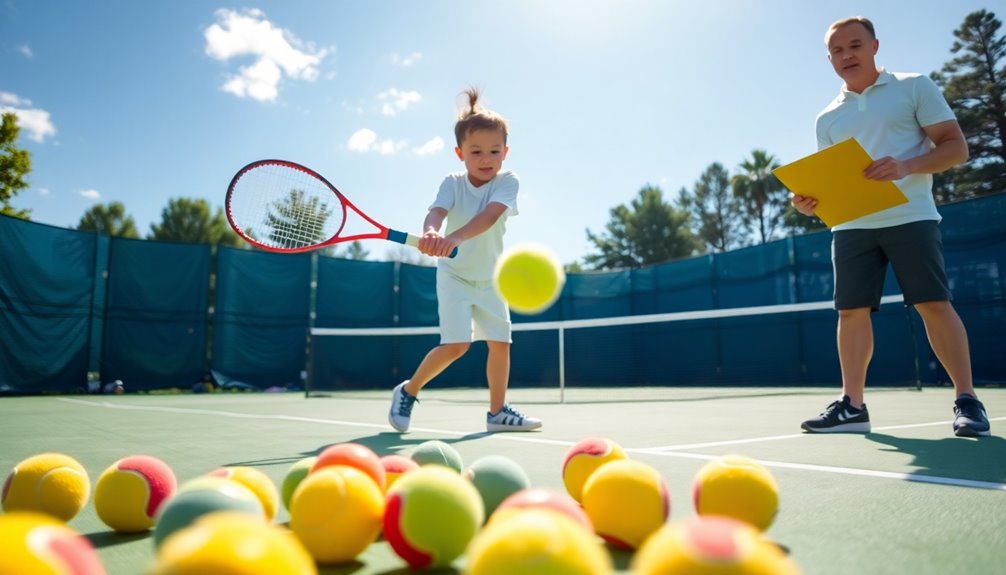
To build a strong tennis foundation, you’ll want to focus on several key skills right from the start.
First, mastering racket handling is essential. Get comfortable holding your racket, switching grips, and understanding the different strokes. This familiarity will boost your confidence on the court.
Next, prioritize ball control. Practice hitting the ball consistently over the net and into the court’s target areas. Start with simple drills, like forehands and backhands, gradually increasing complexity as you improve.
Don’t rush; focus on developing these skills before moving on to more advanced techniques. A solid grasp of racket handling and ball control will set you up for success in your tennis journey. Additionally, practicing passing accuracy through focused drills can enhance your overall performance on the court.
The Importance of Footwork in Tennis Training
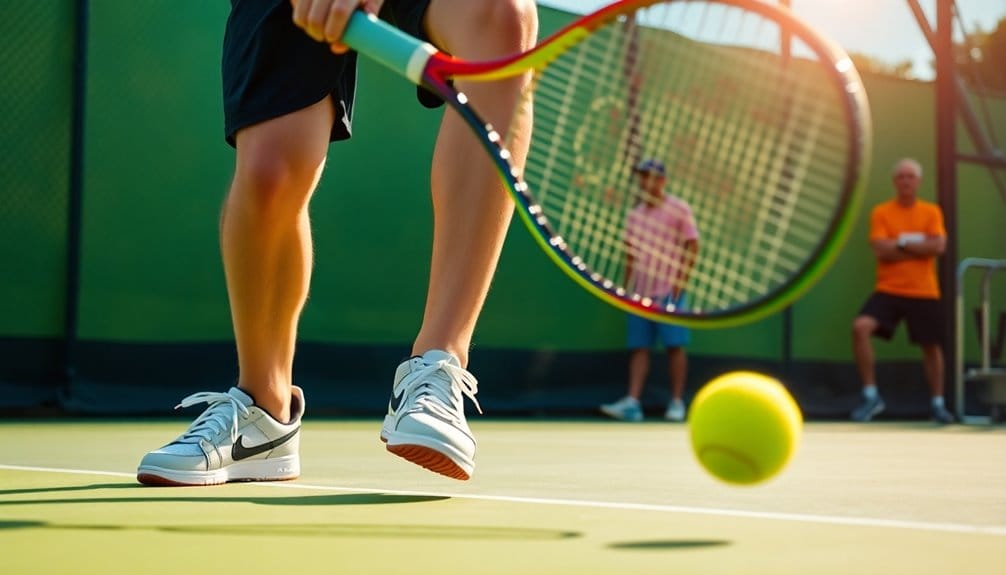
Footwork is essential in tennis because it shapes your movement patterns on the court.
When you master the right footwork, you’ll find that your shot accuracy improves greatly. Additionally, enhanced agility through focused footwork can significantly impact your ability to respond to fast-paced gameplay.
Let’s explore how focusing on your footwork can enhance your overall game.
Essential Movement Patterns
Although many players focus on their strokes, mastering essential movement patterns is crucial for overall success in tennis. Developing your footwork enhances movement efficiency and helps you maintain dynamic balance during matches.
Here are three key movement patterns to practice:
- Split Step: Initiate quick reactions by timing your split step as your opponent strikes the ball.
- Side Shuffle: Use this to quickly reposition yourself, allowing for better court coverage and shot preparation.
- Crossover Step: Perfect for moving diagonally, this step aids in reaching wide balls while maintaining balance.
Impact on Shot Accuracy
While mastering your strokes is essential, the accuracy of your shots heavily relies on your footwork. Good footwork helps you position yourself effectively for shot placement, ensuring you hit your target zones with precision.
By practicing consistency drills, you can improve your angle control, making it easier to execute spin techniques and analyze your follow through. In rally dynamics, staying light on your feet enhances shot selection, allowing you to adapt to your opponent’s moves.
Furthermore, in pressure situations, your mental focus is vital; solid footwork keeps your balance and poise. Ultimately, refining your footwork not only boosts shot accuracy but also elevates your overall game, making you a more formidable player on the court.
How to Introduce Stroke Techniques Gradually
To teach stroke techniques effectively, start with the basics of grip fundamentals.
Once you’ve nailed that, you can progress through the various strokes, ensuring each is mastered before moving on.
Don’t forget to incorporate footwork drills, as they’re essential for executing those strokes successfully. Additionally, practicing ball control techniques can enhance your overall performance and consistency in each stroke.
Basic Grip Fundamentals
Mastering the grip is essential for developing effective tennis strokes. To guarantee you’re comfortable and confident, focus on these basic grip fundamentals:
- Grip Types: Familiarize yourself with the three main grip types—Eastern, Western, and Continental. Each serves a different purpose and affects your stroke.
- Hand Positioning: Position your dominant hand correctly on the racket. For example, in the Eastern grip, your base knuckle should rest on the third bevel.
- Practice: Spend time practicing your grips without hitting the ball. This helps you internalize the correct hand positioning and builds muscle memory.
Progressing Through Strokes
Once you’ve got a solid grip on your racket, it’s time to move on to stroke techniques.
Start with a skill assessment to identify your strengths and areas for improvement. Focus on stroke progression by introducing one stroke at a time—forehand, backhand, serve—ensuring you master each before moving on.
Use variation drills to keep practice consistent and engaging. As you refine your technique, incorporate feedback loops, where you evaluate your performance and adjust accordingly.
Mental focus is essential; visualize your strokes to enhance muscle memory. Finally, develop adaptability strategies to handle different game situations.
This structured approach will help you build confidence and competence in your strokes, setting a strong foundation for your tennis journey.
Incorporating Footwork Drills
- Ladder Drills: Use a speed ladder to practice quick steps, enhancing your coordination and foot speed.
- Shadow Swinging: Without a ball, practice your strokes while moving to different positions on the court, focusing on your footwork.
- Cone Drills: Set up cones to simulate opponents, moving rapidly between them while maintaining proper stance and balance.
These drills won’t only refine your footwork but also boost your overall game performance.
Stay committed, and watch your skills flourish!
Building Confidence With Practice Drills
Building confidence in tennis often hinges on the effectiveness of practice drills. When you engage in drills that focus on specific skills, you’re not just improving; you’re also reinforcing your belief in your abilities.
Start with simple exercises that allow for practice consistency, gradually increasing complexity as you gain comfort. For example, repetitive ball striking drills can enhance your stroke precision, while serving drills build your serve confidence.
Each successful repetition acts as a confidence-building moment, showing you that improvement is possible. Finishing drills in soccer demonstrate how consistent practice can lead to enhanced skills and overall performance. Remember, the more you practice, the more you’ll trust your skills during matches.
Teaching Game Strategy: When and How?
Here are three key areas to concentrate on:
- Opponent Observation: Pay attention to your opponent’s strengths and weaknesses during matches. This insight helps in formulating effective match tactics.
- Point Construction: Build points deliberately by using situational awareness. Think about how to set up your shots for maximum effectiveness.
- Adjustment Strategies: Develop mental resilience by adapting your game plan as the match unfolds. Flexibility is vital for overcoming challenges, and communication is essential for executing strategies effectively on the court.
Incorporating Match Play for Real-World Experience
Understanding game strategy sets the stage for the next essential component of your tennis development: match play. Incorporating competitive practices helps you adapt your skills to real match scenarios.
Engage in game simulations that mimic pressure situations, pushing you to refine your tactical awareness. Use situational drills to focus on specific player roles and strategies, allowing you to practice responding to various challenges.
During match play, seek real-time feedback from coaches and peers to enhance your understanding of your performance. This combination of practice and match experience builds confidence and prepares you for the unpredictability of actual games. Additionally, developing strong defensive skills enhances your ability to anticipate opponents’ moves and improve your overall performance.
Adapting Skills for Different Player Levels
As you progress in your tennis journey, adapting skills to match different player levels becomes essential for your growth.
Skill adaptation not only enhances your performance but also makes learning more enjoyable.
Skill adaptation enriches your performance while making the learning experience more engaging and rewarding.
Here are three key strategies to contemplate:
- Start with Fundamentals: Focus on basic strokes and footwork for beginners. This builds a solid foundation for player progression.
- Gradually Increase Complexity: Introduce drills that combine skills as players advance. This encourages adaptability and quick thinking during matches.
- Incorporate Real-Game Situations: Use match scenarios to help players apply skills under pressure. This connection enhances understanding and boosts confidence. Additionally, emphasizing fundamental skills can significantly improve overall performance.
Conclusion
By mastering the basics first, you’re setting the stage for a tennis journey that can lead to greatness. Focus on key skills, footwork, and stroke techniques, and you’ll build a solid foundation. Don’t underestimate the power of practice drills—they’re the secret sauce to confidence! As you gradually introduce game strategy and match play, you’ll transform into a player who can tackle any opponent. Remember, every champion started with one small swing!