

How to Give Better Tennis Coaching Feedback
May 14, 2026To give better tennis coaching feedback, focus on clear, constructive communication. Start with positive reinforcement and be specific about areas for improvement. Tailor your feedback to each player’s learning style, using visual aids or hands-on guidance as needed. Timing matters—provide insights right after drills or matches to maximize impact. Foster a supportive environment where players feel comfortable sharing their thoughts. With these strategies, you can enhance their development and create a more effective coaching experience. There’s more to explore on this topic!
Why Feedback Is Essential for Tennis Development

Feedback is the cornerstone of tennis development. It plays a vital role in performance evaluation, helping you identify strengths and weaknesses. By understanding the feedback importance, you can enhance your skills and stay motivated.
When coaches use effective coaching techniques, they foster a growth mindset, encouraging you to view challenges as opportunities for improvement. Constructive criticism is key; it provides clear learning objectives, guiding your focus on specific areas.
Strong communication skills enhance this process, ensuring you’re receptive to suggestions and adjustments. By embracing feedback, you accelerate your athlete development, making each practice session more valuable. Incorporating high-intensity sprints into your training can also improve your overall athletic performance.
Understanding the Different Types of Feedback
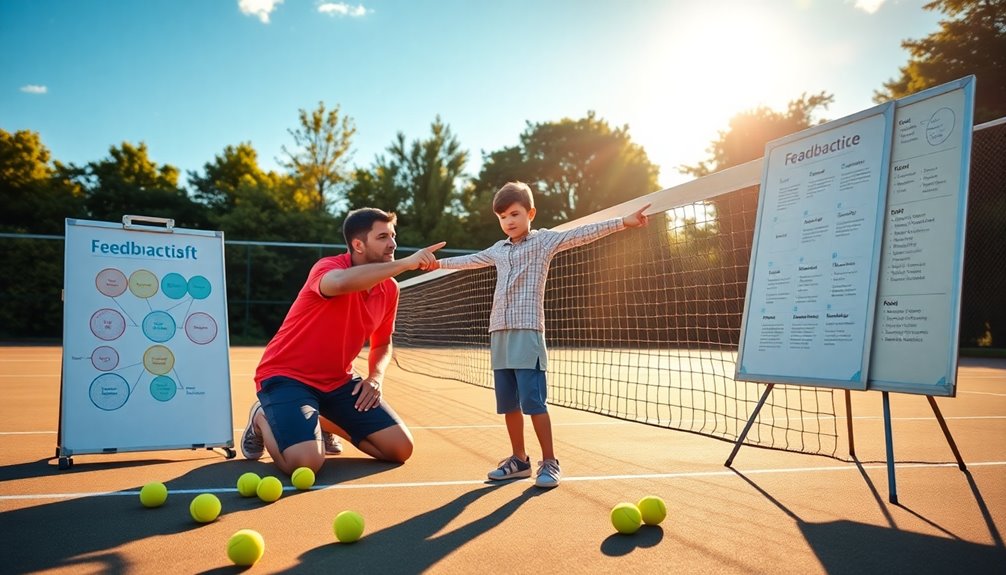
While you might think of feedback as just one thing, it actually comes in several forms, each serving a unique purpose in your tennis development. Understanding feedback types—like positive, negative, and constructive—can influence your progress.
Different feedback styles, such as verbal or visual, cater to various learning preferences. You should consider feedback methods, including immediate or delayed responses, based on the situation. Adjusting feedback frequency guarantees you receive the right amount at the right time.
Additionally, the feedback context matters; what works during practice might differ in a match. By aligning feedback goals with your performance needs and using relevant feedback examples, you can enhance your feedback effectiveness, ultimately elevating your game. Incorporating mental skills training can further support your ability to process and apply feedback effectively.
Creating a Positive Feedback Environment

To create a positive feedback environment, you need to encourage open communication with your players.
When they feel safe sharing their thoughts, it fosters a supportive atmosphere that helps everyone improve. Teamwork is essential for success, as it enhances the collective growth of each player.
Encourage Open Communication
Creating a positive feedback environment starts with fostering open communication among players and coaches. When you encourage players to express their thoughts and concerns, you boost player engagement and create a sense of ownership in their development.
Make it a habit to practice active listening—show that you value their input by responding thoughtfully and asking follow-up questions. This not only builds trust but also encourages players to share their experiences and challenges.
Foster a Supportive Atmosphere
Fostering a supportive atmosphere is essential for effective feedback in tennis. When you create a space where players feel valued, it boosts their confidence and enhances team dynamics.
Encourage your players to share their thoughts openly, reinforcing that everyone’s input matters. By doing so, you help build trust among the team, which can greatly impact their performance.
Recognize each player’s strengths while addressing areas for improvement. This balanced approach not only motivates them but also helps them understand that growth is a shared journey.
Celebrate small victories to keep morale high, and remind players that mistakes are part of the learning process. Ultimately, a supportive environment fosters resilience and ignites player motivation, leading to better overall performance on the court.
Timing: When to Give Feedback for Maximum Impact?
While feedback can enhance a player’s skills, timing is essential for ensuring it resonates. Use effective timing strategies to maximize your impact.
Right after a drill or match is usually the best moment to provide insights, as players can connect your feedback to their recent experiences. Avoid waiting too long, as they might forget key details.
Look for specific feedback moments—like a successful serve or a missed shot—to tailor your comments. This approach not only reinforces positive actions but also addresses mistakes while they’re fresh in their minds. Additionally, enhancing players’ layup techniques can significantly improve their overall performance and confidence on the court.
How to Frame Your Feedback Constructively
To guarantee your feedback resonates, it’s crucial to frame it constructively. Use these coaching strategies to enhance your communication skills and motivate your players:
- Start with Positive Reinforcement: Highlight what they did well to boost their confidence and player motivation.
- Be Specific: Instead of vague comments, use targeted feedback techniques that focus on particular skills or actions.
- Use Constructive Criticism: Frame areas for improvement as opportunities for growth, not failures.
- Incorporate Effective Questioning: Engage players by asking how they felt about their performance, encouraging self-reflection during performance reviews. Additionally, fostering team communication during drills can significantly enhance overall performance.
Balancing Positive and Negative Feedback
However, constructive criticism is equally important; it helps your players improve and understand areas needing attention. A balanced approach combines these two elements, making your feedback techniques more effective.
Tailor your coaching styles to each player, using emotional intelligence to gauge their reactions. This not only fosters effective communication but also creates a supportive environment. Incorporating soccer wisdom from legends can also inspire players to embrace challenges and strive for excellence.
Using Video Analysis for Effective Feedback
Using video analysis can really enhance your visual learning experience on the court. This technique can also improve shooting accuracy by providing immediate feedback on your form and technique.
Enhance Visual Learning
How can video analysis transform your tennis feedback? By incorporating visual aids, you can enhance your players’ understanding and retention. Here are four effective strategies to contemplate:
- Diagrammatic Representation: Use annotated videos to highlight movement patterns and spatial awareness.
- Color Coding: Implement color coding in your videos to indicate gesture cues and key performance aspects.
- Imagery Techniques: Encourage players to visualize their movements through imagery techniques, helping them internalize the correct actions.
- Interactive Drills: Combine video demonstrations with interactive drills that reinforce the concepts shown, creating feedback loops for continuous improvement.
With these methods, your feedback becomes more engaging and impactful, leading to better learning outcomes on the court.
Identify Technique Improvements
Video analysis serves as a powerful tool for identifying specific technique improvements in your players’ games. By reviewing footage, you can conduct stroke analysis that highlights areas needing attention.
Focus on performance metrics to track skill progression over time. Use the insights to tailor technique drills that enhance movement efficiency and encourage tactical adjustments.
Encourage your players to maintain a consistency focus by analyzing their shot selection during matches. This helps them understand which shots require more practice.
Incorporate these video findings into your practice routines, ensuring that each session aligns with their goal setting. With this approach, you’ll not only boost their confidence but also foster a deeper understanding of their game.
Encouraging Self-Assessment in Players
Here are some effective self-reflection techniques to implement:
- Player Journals: Have your players keep a journal to document their thoughts, feelings, and observations after each practice or match.
- Video Analysis: Encourage players to review footage of their games, allowing them to see areas for improvement firsthand.
- Goal Setting: Guide them to set specific, measurable goals, fostering a sense of ownership over their progress.
- Peer Feedback: Create opportunities for players to give and receive feedback from each other, promoting a collaborative learning environment.
Additionally, understanding the offside rule can help players evaluate their positioning and decision-making during matches.
Tailoring Feedback to Individual Player Needs
To give effective feedback, you need to assess each player’s skill level first. Understanding where they stand helps you tailor your advice to be more impactful. Additionally, recognizing their learning style can make your feedback resonate even more. Incorporating holistic development strategies can also enhance their overall performance and engagement in the game.
Assess Player Skill Level
Understanding a player’s skill level is essential for providing effective feedback, as it allows you to tailor your coaching to meet their specific needs.
Start with a skill assessment to gauge their strengths and weaknesses. Here are four steps to evaluate during player evaluation:
- Observe: Watch their playing style in action during drills or matches.
- Ask Questions: Inquire about their experience and what they feel comfortable with.
- Use Drills: Implement various drills to see how they respond under different conditions.
- Feedback Loop: Provide immediate feedback and encourage them to self-reflect on their performance.
Identify Learning Styles
Every player learns differently, so identifying their unique learning style can greatly enhance your feedback.
For visual learners, use diagrams or videos to illustrate techniques. Auditory learners benefit from verbal explanations, so describe drills and strategies clearly. Kinesthetic feedback is essential for those who learn by doing; provide hands-on guidance during practice.
Incorporate adaptive strategies that cater to each player’s needs, fostering personalized coaching. As you focus on cognitive development, be mindful of their emotional intelligence, ensuring they feel supported.
Set clear goals and utilize engagement techniques to maintain motivation. Ultimately, employ reinforcement methods that resonate with their learning style, helping them internalize lessons and improve their game effectively.
Tailoring your approach can lead to remarkable progress.
The Role of Body Language in Delivering Feedback
Body language plays an essential role in how effective your feedback can be on the tennis court. Your nonverbal cues often communicate as much, if not more, than your words.
To enhance your feedback delivery, focus on these key aspects:
- Maintain Eye Contact: This shows you’re engaged and builds trust.
- Use Expressive Gestures: These can emphasize your points and make instructions clearer.
- Observe Player Reactions: Pay attention to their body language; it’ll help you gauge understanding and adjust your approach.
- Stay Open and Relaxed: Your posture can create a welcoming atmosphere, encouraging players to be receptive to feedback. Additionally, fostering team engagement can significantly improve how players respond to your coaching.
Strategies for Delivering Feedback to Different Age Groups
Effective feedback varies greatly across age groups, as players of different ages respond differently to guidance.
For younger players, use age-specific techniques that focus on positive reinforcement. Celebrate their effort and skill development, as this builds confidence and encourages a love for the game.
With adolescent players, connect the feedback to their developmental milestones. They’ll appreciate constructive criticism when it’s framed as a pathway to improvement.
For adults, be straightforward and respectful; they often prefer direct feedback that’s focused on results.
Tailoring your approach not only enhances comprehension but also fosters motivation. By understanding the unique needs of each age group, you can provide feedback that resonates and drives improvement on the court.
Following Up: Ensuring Feedback Leads to Improvement
While delivering feedback is essential, following up is equally important to guarantee that your players actually implement your suggestions.
To make sure your feedback leads to improvement, try these steps:
To ensure your feedback fosters growth, set specific goals and schedule regular check-ins for ongoing support.
- Set Specific Goals: Use goal setting strategies to help players focus on what they need to improve.
- Schedule Regular Check-Ins: Make time for brief discussions to see how they’re progressing with your advice.
- Encourage Self-Assessment: Have players track their progress and reflect on their performance after each session.
- Adjust as Needed: Be flexible and ready to modify your feedback based on their evolving needs and challenges.
Conclusion
When you focus on delivering effective feedback, you might just witness a remarkable transformation in your players. It’s not just about correcting mistakes; it’s about inspiring growth and confidence. By tailoring your approach, you create an environment where players thrive. Coincidentally, as you refine your feedback methods, you’ll likely notice your own coaching skills elevate too. So, embrace the power of feedback, and watch as both you and your players reach new heights on the court.