
Best Drills for Teaching Tennis Fundamentals
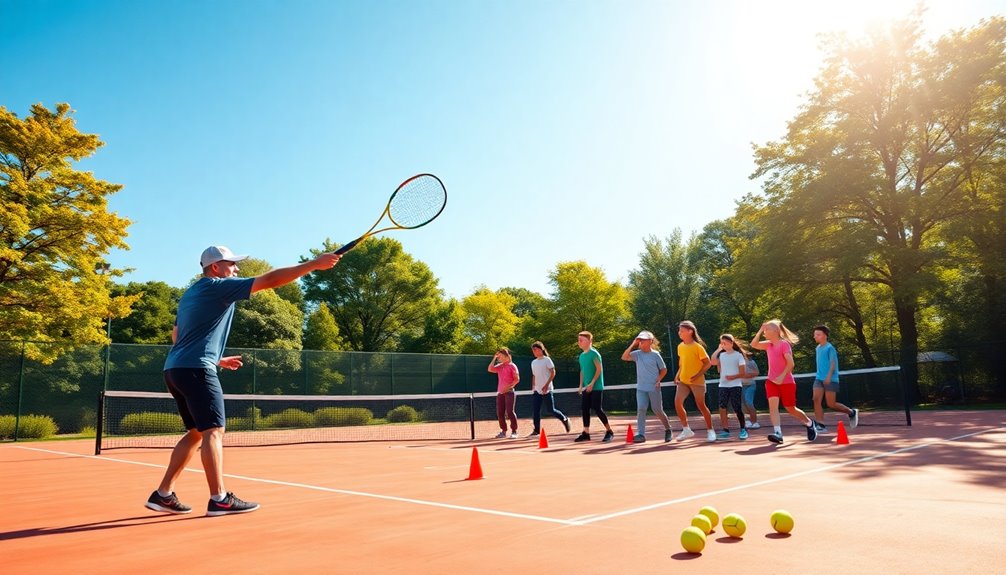
May 11, 2026To teach tennis fundamentals, focus on grip, stance, and footwork through engaging drills. Start with grip techniques like Eastern and Western grips, and practice serve accuracy using target zones. Enhance groundstrokes with rally drills, while agility training improves foot speed. Use fun games to foster a competitive spirit, and incorporate video analysis for skill improvement. By tailoring drills to different skill levels, you can maximize growth. Keep exploring to discover even more effective strategies for your training.
Understanding the Importance of Tennis Fundamentals
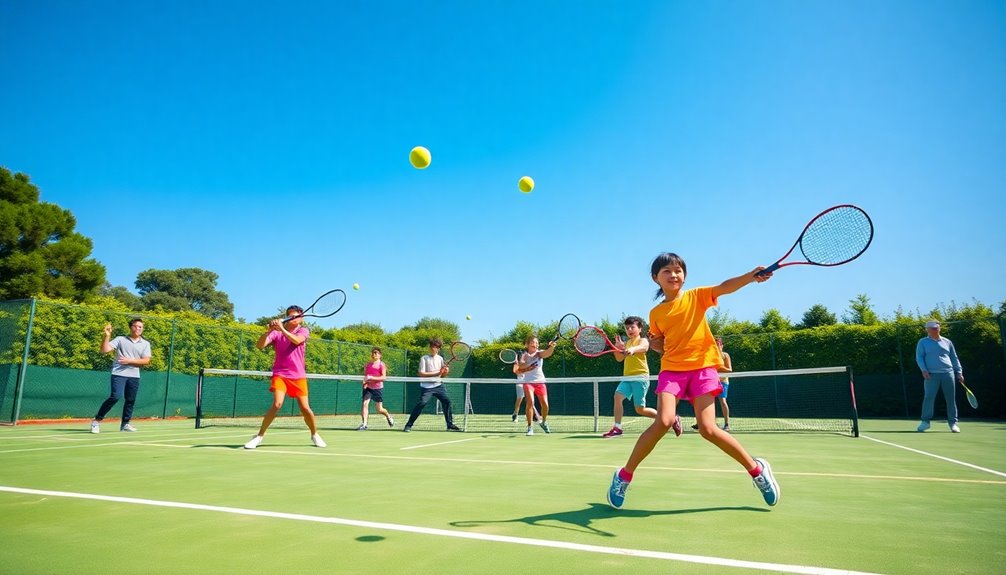
Understanding the fundamentals of tennis is essential if you want to improve your game. Mastering fundamental techniques like grip, stance, and footwork sets a solid foundation for your skill progression.
When you focus on these basics, you’ll find that everything else—such as strokes and strategy—becomes easier to learn. Practicing these techniques regularly helps you develop muscle memory and confidence on the court.
Remember, it’s not just about hitting the ball; it’s about doing it correctly. As you refine your fundamentals, you’ll notice your overall performance improves, allowing you to tackle more advanced drills and strategies.
Prioritizing these foundational aspects will make your journey in tennis more enjoyable and effective. Additionally, focusing on passing accuracy will enhance your overall decision-making on the court.
Essential Skills Every Tennis Player Should Develop
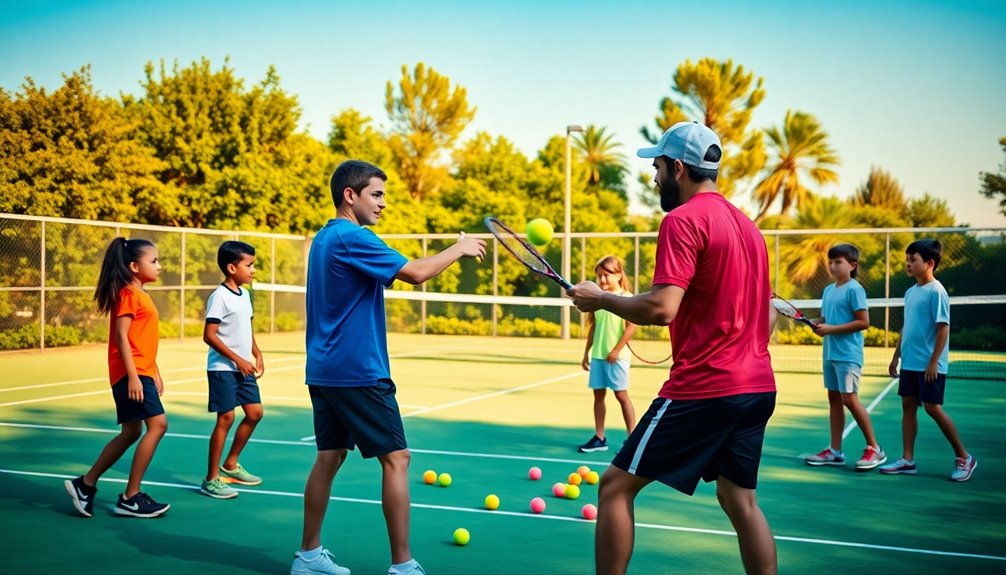
As you dive deeper into tennis, developing essential skills will greatly enhance your game. Focus on match preparation to boost your confidence and guarantee you’re ready for any opponent.
Cultivating mental toughness helps you stay composed under pressure, while strategy development allows you to outsmart your rivals. Don’t overlook physical conditioning; a strong body supports agility and endurance. Incorporating endurance training methods into your routine can further improve your overall fitness and performance on the court.
Prioritize injury prevention to keep yourself on the court longer. Understanding nutrition basics fuels your performance, assuring you have the energy for every match.
Equipment selection is vital; using the right gear can profoundly impact your play. Finally, engage in match analysis to identify strengths and weaknesses, allowing for targeted improvement in your future games.
How to Teach Proper Grip Techniques?
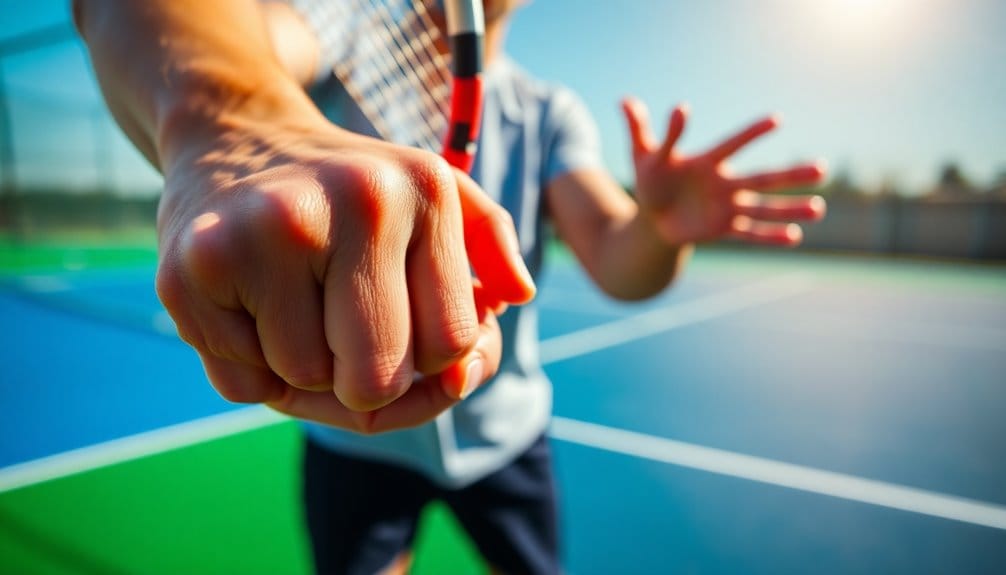
Mastering proper grip techniques is essential for any aspiring tennis player. To start, introduce the basic grip styles: the Eastern, Western, and Continental grips. Each has its advantages, so let your players experiment to find the one that feels most comfortable.
Emphasize the importance of grip pressure; players should hold the racket firmly enough to maintain control but not so tight that it restricts movement. Encourage them to relax their hands, as excessive tension can hinder their swing.
Use drills that focus on grip adjustments during different strokes, allowing players to practice switching grips seamlessly. Additionally, remind them that equipment and attire regulations play a crucial role in ensuring a consistent playing experience. Reinforcing these fundamentals will help them develop a solid foundation, increasing their overall performance on the court.
Drills for Improving Serve Accuracy
To improve your serve accuracy, focus on specific drills that target your technique and consistency.
Start with serve drills that emphasize serve mechanics—like tossing the ball at the same height to develop serve rhythm. Use target zones on the court to create practice routines that challenge your precision. Set accuracy benchmarks, aiming for a certain percentage of serves landing in your designated areas.
Incorporate visualization techniques before your serve, picturing the ball landing exactly where you want it. Additionally, consider how finishing drills can enhance your overall coordination and confidence in executing precise serves.
Finally, employ feedback methods, either through video analysis or a coach’s input, to refine your technique.
Fun Exercises for Mastering Groundstrokes
Groundstrokes are a fundamental part of your tennis game, and incorporating fun exercises can make practice enjoyable while improving your skills.
Try groundstroke variations to keep things fresh and exciting. Engage in accuracy challenges by aiming for specific targets on the court, turning practice into a competitive game.
Incorporate groundstroke variations and accuracy challenges to make practice competitive and exciting!
Rhythm drills can help you develop consistency while adding a fun twist to your routine. Teamwork exercises, like rallying with a partner, foster cooperation and enhance your dynamic movements.
Additionally, incorporating quick short touches can improve your ability to maintain control during rallies. Don’t forget about skill competitions; they can motivate you and your friends to push each other.
Volley Drills to Enhance Net Play
When you’re at the net, mastering essential volley techniques can make all the difference in your game.
Partner volley drills not only sharpen your skills but also enhance your timing and positioning.
Finally, targeted net play exercises will help you develop a strategic approach to outsmart your opponents. Incorporating strength training exercises can significantly improve your overall performance on the court.
Essential Volley Techniques
Mastering essential volley techniques is crucial for any player looking to enhance their net game.
Start with proper volley positioning; stay on your toes and be ready to move. Your shot selection should be quick and decisive, guaranteeing you exploit openings.
Focus on reaction timing—anticipate your opponent’s shots to respond effectively. Cultivating net awareness helps you judge the ball’s trajectory and adjust your position accordingly.
Don’t underestimate communication skills with your partner; it can make or break points. Maintain mental focus to stay engaged in the game.
Develop tactical awareness to recognize when to attack or defend. Finally, prioritize footwork efficiency to guarantee you’re always in the best position to volley confidently.
Partner Volley Drills
Improving your volley skills with a partner can considerably elevate your net game. Start by practicing volley timing together; it’s vital for effective exchanges.
Focus on shot placement by aiming for specific targets, enhancing your partner communication. As you volley, pay attention to your reaction speed and positioning awareness, ensuring you’re ready for the next shot.
Rhythm coordination is essential; develop a smooth flow with your partner to build confidence. Engage in drills that require footwork synchronization, allowing you to move fluidly around the net.
Finally, work on tactical awareness by discussing strategies during practice. This collaborative effort enhances target accuracy and keeps both players engaged, ultimately sharpening your net play.
Targeted Net Play Exercises
Analyze your opponent’s patterns to anticipate their shots and position yourself strategically.
For instance, practice volleying against a wall, aiming for different zones to sharpen your accuracy.
Additionally, partner drills that simulate match scenarios can heighten your ability to respond swiftly.
Embrace these exercises to elevate your game and become a formidable presence at the net.
Building Footwork Skills Through Ladder Drills
When it comes to improving your tennis game, agility training is essential for quick movements on the court.
Ladder drills offer a fun and effective way to enhance your footwork skills.
Let’s explore some variations that can take your agility to the next level. Incorporating high-intensity sprints can further elevate your performance by mimicking the fast-paced demands of competitive play.
Importance of Agility Training
Agility training is essential for enhancing your footwork skills on the tennis court, as it allows you to move quickly and efficiently in response to your opponent’s shots.
By focusing on agility benefits, you’ll improve your foot speed and reaction time, enabling you to execute dynamic movements with ease.
Incorporating balance training into your routine further enhances your stability, making it easier to change directions during play.
This focus on agility not only contributes to performance enhancement but also plays an important role in injury prevention.
Additionally, strengthening your core through agility drills will support your overall athleticism, allowing you to maintain control and power in your game.
Embrace agility training, and watch your tennis skills flourish!
Ladder Drill Variations Explained
Incorporating ladder drills into your training routine can greatly enhance your footwork skills on the tennis court.
These drills not only improve your ladder footwork but also boost your overall agility progression. Here are four effective variations to try:
- In-and-Outs: Step into and out of each square, focusing on quick feet.
- Lateral Shuffle: Move sideways through the ladder, maintaining a low center of gravity.
- Single-Leg Hops: Hop through the ladder on one foot to build strength and balance.
- Crossovers: Cross one foot over the other while moving through the ladder, enhancing coordination.
Integrating these variations into your practice will help you become faster and more agile, giving you an edge on the court.
Incorporating Target Practice Into Training Sessions
Target practice can elevate your tennis training sessions by honing your precision and shot placement. By setting up target zones on the court, you can create aiming exercises that challenge your skills.
Incorporate distance challenges to vary the difficulty and keep things engaging. Use throwable targets to make your drills more interactive and fun. Focus drills will help you develop consistent targeting, while precision hits can establish accuracy benchmarks for your progress.
Don’t forget to utilize feedback loops; they’re essential for refining your technique. Mixing in shot variety to enhance your adaptability and keep your practice sessions dynamic will also improve your passing accuracy and overall performance.
With these strategies, you’ll see significant improvements in your game and confidence on the court.
Developing Consistency With Rally Drills
To improve your game, consistent rallying is key. It helps build your confidence and keeps you in rhythm during matches. Plus, trying out fun variations can make these drills even more engaging! Implementing passing drills can also enhance your teamwork and communication on the court.
Importance Of Consistent Rallying
Consistency is the cornerstone of successful tennis play, and developing it through rally drills can elevate your game considerably.
By focusing on rallying consistency, you’ll improve your overall performance. Here are four key benefits of mastering rallying techniques:
- Improved Focus: Regular rallying helps you concentrate on shot placement and timing.
- Enhanced Coordination: Consistent drills develop hand-eye coordination, essential for effective shots.
- Increased Endurance: Longer rallies build stamina, preparing you for intense match situations.
- Better Shot Selection: With practice, you’ll learn to choose the right shots under pressure.
Incorporating these elements into your training will lay a solid foundation for your tennis skills and help you become a more formidable player on the court.
Fun Variations To Practice
Incorporating fun variations into your rally drills can keep your practice sessions engaging while boosting consistency.
Try using creative court layouts, like setting up targets or zones where you aim to hit your shots. This not only sharpens your accuracy but also makes the drills more exciting.
You can also introduce playful competition by challenging your partner to see who can maintain the longest rally or hit the most targets in a given time.
Mixing in music or setting specific themes for your drills can add an extra layer of fun.
Creative Drills to Build Agility on the Court
Here are four effective drills to boost your agility:
- Agility Cones: Set up cones in various patterns to improve footwork patterns and lateral movements.
- Speed Hurdles: Use speed hurdles to develop quick footwork and explosiveness.
- Dynamic Stretches: Integrate dynamic stretches to enhance flexibility and prevent injuries during play.
- Reaction Drills: Practice reaction drills that require quick changes in direction, helping with coordination exercises. Incorporating these drills can significantly enhance your overall performance on the court, just as agility drills do in hockey.
Strategies for Teaching Game Situations
While mastering the fundamentals of tennis is essential, understanding game situations can greatly elevate a player’s performance.
Incorporate game scenarios into your training through situational drills that mimic real match conditions. Focus on tactical awareness by setting up match simulations where players face pressure situations, like serving for the match or responding to a break point.
Encourage competitive practice by pairing players against each other in varied scenarios, promoting quick decision making and strategic play. Use feedback to help players analyze their choices and adapt to their opponents.
Fun Games to Foster Competitive Spirit
To foster a competitive spirit on the tennis court, you can introduce fun games that engage players while sharpening their skills.
These activities not only enhance technique but also encourage camaraderie through team building activities. Here are four great games to try:
- King of the Court: Players rotate every point, challenging each other for the title.
- Target Practice: Set up targets on the court; players earn points for hitting them.
- Doubles Relay: Teams race to complete a series of shots, promoting competitive challenges.
- Round Robin Tournament: Organize mini-matches, allowing players to compete against various opponents.
Implementing these games keeps the atmosphere lively and competitive, motivating players to improve while having fun.
How to Use Video Analysis for Skill Improvement?
Video analysis can be a game-changer for your tennis skills. By reviewing your performance, you’ll spot areas for improvement and track your progress over time.
Let’s explore some effective techniques to implement video analysis into your training routine.
Benefits Of Video Analysis
When you analyze your performance through video, you gain invaluable insights that can greatly enhance your tennis skills. Here’s how video analysis can benefit you:
- Video Feedback: You can see your strokes in action, allowing for precise performance assessment.
- Skill Visualization: Watching yourself play helps solidify your understanding of techniques and tactics.
- Error Correction: Identifying mistakes becomes easier, enabling effective technique refinement.
- Player Motivation: Tracking progress boosts your confidence and keeps you engaged in your training.
Implementing Effective Techniques
Analyzing your performance through video opens up practical pathways for skill improvement. By reviewing your matches, you can identify areas needing focus, enhancing your mental toughness and competitive mindset.
Use strategic planning to set specific goals based on your analysis, whether it’s refining your serve or improving your footwork.
Video feedback can also aid in injury prevention by highlighting poor mechanics in your strokes. Combine this with nutrition awareness to fuel your body effectively.
Emphasizing sportsmanship values while watching your interactions can foster emotional resilience. Prioritize match preparation through consistent video reviews, ensuring you’re ready for any opponent.
Ultimately, effective communication with your coach about your observations boosts player motivation and accelerates your development.
Tips for Keeping Practice Engaging and Motivating
How can you keep your tennis practice both engaging and motivating? Here are some effective strategies to elevate your sessions:
- Incorporate Fun Games: Use engaging activities like mini-tournaments or skill challenges to make practice enjoyable.
- Set Clear Goals: Establish specific, achievable targets for each session. This helps maintain focus and motivation.
- Vary Drills: Change up your routine regularly. Mixing different drills keeps things fresh and exciting.
- Use Positive Reinforcement: Celebrate achievements, no matter how small. Acknowledging progress boosts morale and encourages continued effort.
Adapting Drills for Different Skill Levels
Intermediate players might need competitive elements, like timed drills or point play, to sharpen their focus and instincts.
Always assess your players’ needs and adjust accordingly, fostering an environment where everyone can thrive.
Conclusion
Incorporating these drills into your training can transform your tennis game. For instance, a beginner named Alex, who struggled with his serve, saw a dramatic improvement after just a few sessions focused on serve accuracy drills. By practicing consistently and engaging in fun games, he not only built skills but also fostered a love for the game. Remember, whether you’re just starting or looking to refine your technique, keeping practice enjoyable is key to success!