
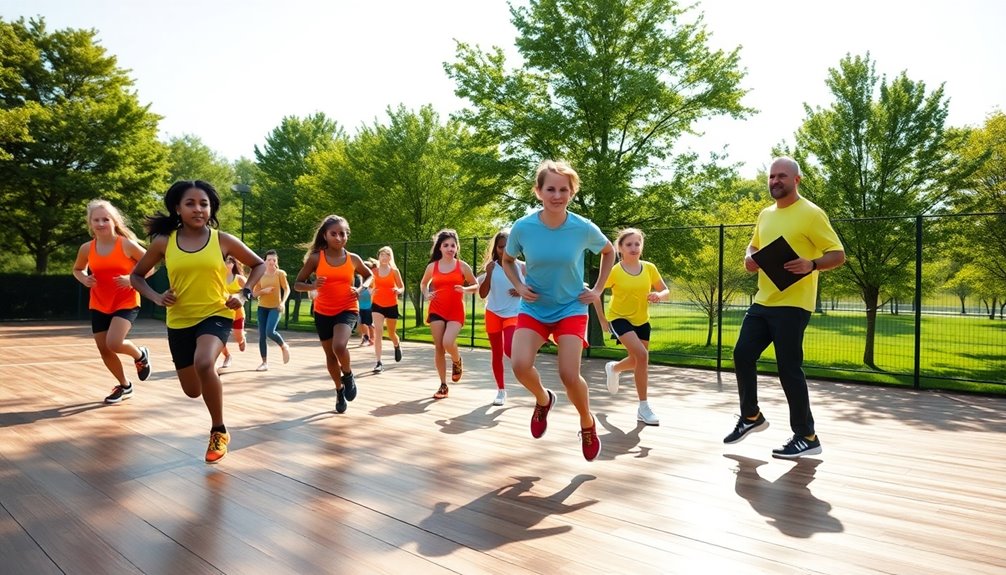
Footwork Drills for New Players
May 1, 2026Footwork drills are essential for new players like you, as they build agility, balance, and coordination. Start with basic principles, focusing on maintaining balance and lightness on your feet. Incorporate agility ladder and cone drills to enhance quickness and change of direction. Shadowing drills can improve spatial awareness, while tracking your progress helps identify areas for growth. Avoid common mistakes, and you’ll see significant improvements. Stick around, and you’ll discover more tips to elevate your footwork skills.
Why Footwork Is Essential for New Players
Footwork is the foundation of any sport, and mastering it can elevate your game to new heights. For new players, developing solid footwork isn’t just about looking good; it’s about enhancing your balance training and movement efficiency.
When you focus on footwork, you learn to position yourself better, allowing for quicker reactions and smoother shifts during play. This foundational skill helps you maintain stability and control, which are essential in any competitive setting. Additionally, strong footwork can significantly improve your cardiovascular endurance, ensuring you can keep up with the demands of the game.
Basic Footwork Principles to Understand

Understanding the basic principles of footwork is essential for any new player keen to improve. First, focus on your balance. Solid footing helps you react quickly and maintain control. Incorporate balance exercises into your routine; they’ll enhance stability and support your overall movement.
Next, practice lateral movement. This skill is vital in many sports, allowing you to shift side-to-side effectively. Start with small steps, ensuring your weight is centered. As you get comfortable, increase your speed and distance.
Always remember to stay light on your feet, as this will help you pivot and adjust quickly. Additionally, incorporating agility drills into your training can further enhance your footwork skills.
Agility Ladder Drills for Quickness

Agility ladder drills are a fantastic way to boost your quickness on the field.
You’ll start with basic ladder exercises to build your foundation, then progress to advanced techniques that challenge your coordination and speed. Incorporating finishing drills can further enhance your overall performance by improving your decision-making under pressure.
Let’s explore how these drills can transform your footwork!
Basic Ladder Exercises
Incorporating basic ladder exercises into your training routine can greatly enhance your quickness and foot coordination. Start with simple ladder variations like the one-foot hop, where you step into each square with one foot, then switch to the other. Focus on your foot placement—landing softly and accurately in each box.
Next, try the two-foot in-and-out drill, where both feet land in each square before moving to the next. This helps build speed and rhythm. Don’t forget to challenge yourself by increasing your pace or adding lateral movements.
Advanced Agility Techniques
While mastering basic ladder exercises lays a solid foundation, advancing your skills with agility ladder drills can greatly boost your quickness on the field.
Focus on lateral movement by incorporating side-to-side drills that enhance foot placement and improve your reaction time. Combine these with balance drills to strengthen core stability, which is essential for efficient movement.
Integrate speed training into your routine by increasing the tempo of your drills. Include plyometric exercises that emphasize explosive movements, helping you shift quickly between tasks.
Finally, practice visual tracking during reaction drills to sharpen your awareness and decision-making on the field.
Cone Drills to Improve Change of Direction
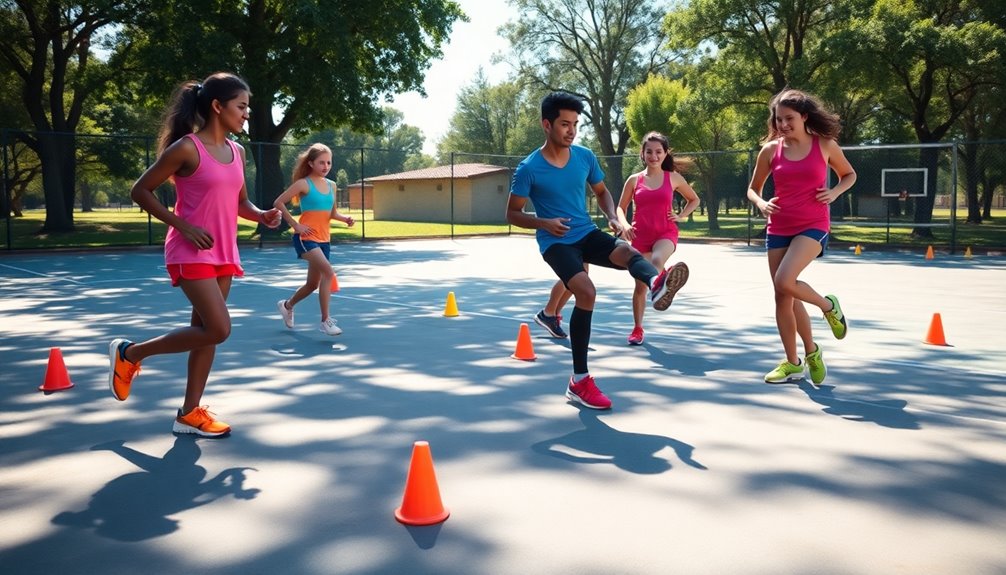
Mastering change of direction is essential for any new player, and cone drills are an effective way to sharpen this skill. Start by setting up cones in various patterns to enhance your obstacle navigation.
Focus on cone placement to encourage lateral movement and speed variations. As you approach each cone, practice pivot techniques to quickly switch directions while maintaining balance.
Incorporate balance drills to strengthen your stability during these movements. By adjusting your speed and challenging yourself with different drills, you’ll improve your agility and responsiveness on the field. Additionally, these drills help develop quick decision-making skills, which are crucial for maintaining possession under pressure.
Shadowing Drills for Better Spatial Awareness
To enhance your spatial awareness on the field, shadowing drills are an invaluable tool for new players. These drills help you develop a better understanding of your positioning relative to teammates and opponents.
By practicing various shadowing techniques, you can improve your ability to anticipate movements and react quickly. Start by pairing up with a partner; one player leads while the other shadows their movements. Focus on staying close without making contact.
This exercise sharpens your awareness of the space around you, enabling quicker decision-making during gameplay. As you progress, increase the speed and complexity of movements. Regularly incorporating these drills into your training will greatly boost your spatial awareness and overall game performance, ultimately enhancing your defensive skills in crucial situations.
Jump Rope Exercises for Rhythm and Coordination
Jump rope exercises can be a game-changer for new players looking to enhance their rhythm and coordination. These workouts offer numerous jump rope benefits, helping you develop a steady tempo while improving foot speed.
Jump rope exercises are essential for new players aiming to boost rhythm and coordination while enhancing foot speed.
As you jump, focus on keeping your knees slightly bent and your movements light. Start with basic jumps, then progress to variations like single-leg hops or crisscrosses to challenge your coordination further.
Incorporating jump rope drills into your routine not only boosts your cardiovascular fitness but also sharpens your reflexes. You’ll notice significant rhythm enhancement as you practice, allowing you to move more fluidly during gameplay. Additionally, this improves reaction time and helps you make quicker decisions on the field.
Make jump rope exercises a regular part of your training, and watch your footwork improve dramatically.
Partner Drills to Enhance Reaction Time
While practicing footwork alone is important, engaging in partner drills can greatly enhance your reaction time.
Start with simple partner exercises like shadowing, where you mirror your partner’s movements. As they change direction, try to keep up; this builds both agility and quickness.
Next, incorporate reaction drills using a tennis ball. Have your partner randomly toss the ball towards you, forcing you to react and move quickly to catch it. This not only improves your footwork but also sharpens your reflexes.
Additionally, practice two-on-one drills, where one partner tries to evade while you attempt to stay close. These drills will elevate your footwork, making you more responsive on the field or court. Consistent practice of closeout fundamentals will further enhance your overall defensive skills.
Footwork Drills for Different Sports
Here’s how different sports focus on unique movements:
- Basketball footwork helps with quick pivots and defensive slides.
- Soccer footwork emphasizes agility and precision for dribbling and passing, enhancing passing efficiency through dedicated practice.
- Tennis footwork trains you for swift lateral movements and positioning.
- Volleyball footwork enhances jumping and quick shifts to the ball.
- Martial arts footwork focuses on balance and fluidity in striking and dodging.
From hockey footwork to track footwork, each sport demands practice.
Find the drills that resonate with you and watch your skills improve!
How to Track Your Progress in Footwork Development
Improving your footwork is just the beginning; tracking your progress is key to becoming a better player. Start by setting clear goals for your footwork drills. Use a journal or app for progress tracking, noting your daily or weekly achievements.
Record your speed, agility, and accuracy during practice sessions. This self-assessment helps you identify areas for improvement and keep you motivated.
Consider filming yourself during drills to visually assess your techniques. Reviewing these videos can pinpoint specific movements that need work.
Additionally, ask a coach or experienced player for feedback on your footwork. Regularly revisiting your goals and progress will guarantee you stay focused and committed to enhancing your skills. Incorporating structured practice into your routine can further accelerate your progress.
Keep pushing yourself, and you’ll see growth!
Common Mistakes to Avoid When Practicing Footwork
When practicing footwork, it’s easy to fall into common pitfalls that can hinder your progress. Avoid these mistakes to enhance your skills and reduce the risk of common injuries:
- Neglecting proper foot placement, which can throw off your balance and timing.
- Skipping balance training, leading to instability during movements.
- Practicing in a distracting practice environment, hindering your mental focus.
- Ignoring the importance of timing issues, causing your movements to be out of sync.
- Failing to incorporate varied drills, which can limit your adaptability on the court.
Additionally, remember that consistent practice of foundational skills, such as dribbling under pressure, is crucial for overall development and mastery of footwork.
Tips for Incorporating Footwork Drills Into Your Routine
To make footwork drills a regular part of your training, start by setting specific goals that keep you focused.
Having a consistent practice schedule will help you build those skills over time.
Set Specific Goals
Setting specific goals for your footwork drills can dramatically enhance your training routine. By using goal setting techniques, you’ll focus your efforts and track your progress through performance metrics.
Here are some emotional goals you might consider:
- Mastering a new footwork pattern each week
- Reducing your reaction time in drills
- Increasing your agility score by a specific percentage
- Completing drills without errors for a full month
- Achieving a personal best in speed during practice
These goals not only motivate you but also create a clear path for improvement.
Consistent Practice Schedule
Regularly incorporating footwork drills into your routine is essential for developing your skills. Start by establishing a practice frequency that fits your schedule—aim for at least three times a week.
Use motivation strategies, like rewarding yourself after each session, to keep you engaged. Keep your session duration manageable, around 30 minutes, to maintain focus.
After each practice, conduct a skill assessment to identify areas for improvement. Set up your environment with the right equipment essentials, like cones or agility ladders, to maximize efficiency.
Don’t forget recovery techniques, such as stretching, to prevent injuries. Finally, track your progress to celebrate milestones and adjust your drills as needed.
Consistency and reflection will lead to noticeable improvements in your footwork.
Conclusion
So, now that you know footwork is as essential as your morning coffee, don’t skip it! Embrace those drills like they’re the latest TikTok dance trend—because, honestly, who doesn’t want to look good while tripping over their own feet? Remember, practice makes perfect, and if you mess up, just blame it on the wind. So lace up, get moving, and soon you’ll be dodging defenders like a pro—or at least not face-planting every time you sprint!