
How to Hit a Backhand Volley
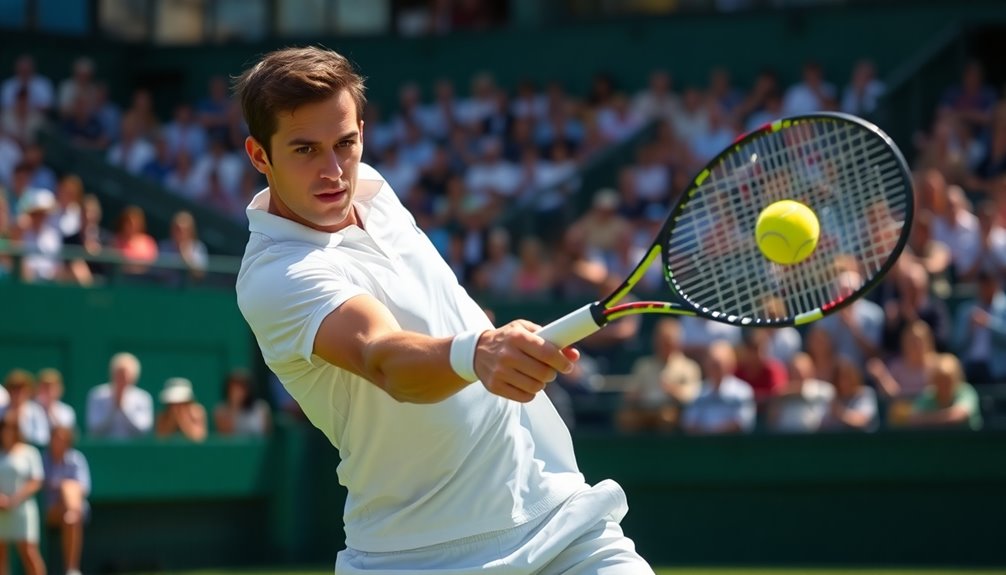
April 27, 2026To hit a backhand volley effectively, use a continental grip and keep your wrist firm. Position yourself with feet shoulder-width apart, staying light on your feet. Anticipate your opponent’s shot, aligning your body for ideal weight transfer. Focus on the racket angle, meeting the ball with a slightly closed face. Practice different variations like slice and flat volleys to enhance your game. Mastering these techniques can give you the edge you need to dominate the court; keep exploring to sharpen your skills.
Understanding the Importance of the Backhand Volley
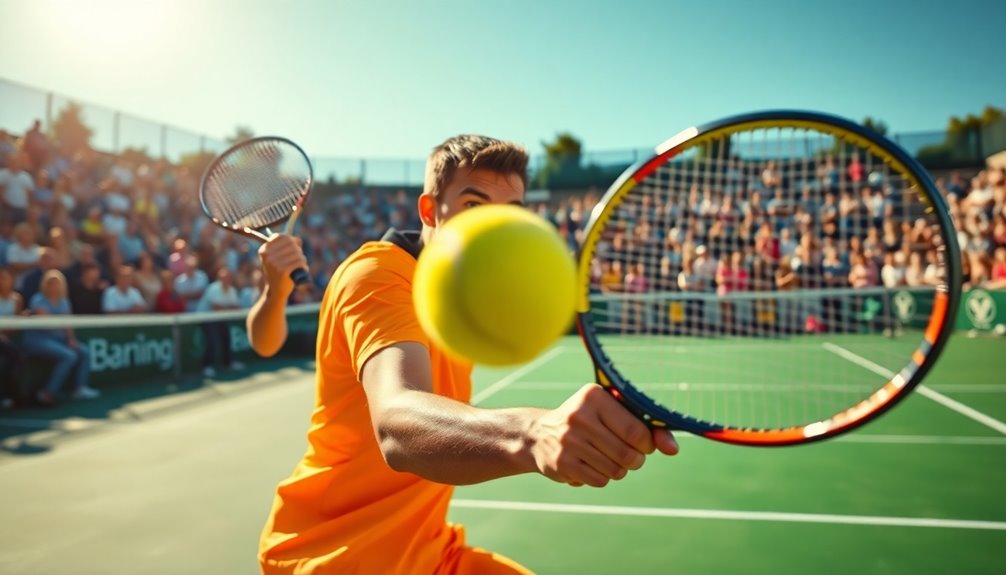
A solid backhand volley can be a game-changer on the court. Understanding its importance is essential for elevating your overall performance.
The backhand volley benefits you in several ways; it allows you to respond quickly to your opponent’s shots and maintain control during rallies. By mastering technique, you can effectively counterattack and put pressure on your opponent, creating opportunities to win points.
A well-executed backhand volley can catch your opponent off guard, forcing them into defensive positions. It also enhances your court coverage, making you a more versatile player. Additionally, mastering techniques like sportsmanship and respect can significantly impact your overall game strategy and performance.
Key Grip Techniques for a Solid Backhand Volley

Mastering your grip is key to executing an effective backhand volley. Start with a continental grip, which allows for versatility. Confirm your grip pressure is firm but relaxed; too tight can hinder your control, while too loose may lead to mishits.
Adjust your racket angle to meet the ball effectively—aim for a slightly closed face to impart depth and control. As you prepare for the volley, keep your wrist firm to stabilize the racket. Additionally, understanding soccer field dimensions can enhance your spatial awareness on the court, improving your overall game.
Positioning Yourself for the Perfect Shot

While you may have a solid grip, positioning yourself correctly is essential for executing the perfect backhand volley. Start by adopting a proper backhand stance; your feet should be shoulder-width apart, ready for tactical movement.
Maintain court awareness to anticipate your opponent’s shots and make smart shot selections. As the ball approaches, focus on body alignment to guarantee your weight shifts properly. This will enhance your racket control, allowing for precise angle adjustments.
Make sure you’re near the net, as effective net positioning will give you the advantage. Remember, every volley requires you to be agile and responsive, so staying light on your feet is key. Incorporating effective communication in your practice will also improve your overall game dynamics.
Master these elements, and you’ll elevate your backhand volley game considerably.
How to Approach the Net With Confidence
Here are some tips for confidence building as you close in on the net:
Here are essential strategies to boost your confidence as you approach the net for a successful volley.
- Visualize Success: Imagine yourself making that perfect volley. Positive imagery can boost your confidence.
- Focus on Footwork: Quick, agile movements towards the net enhance your balance and readiness.
- Stay Relaxed: Tension can hinder your performance. Breathe deeply and maintain a calm demeanor.
- Incorporating drills that enhance cardiovascular endurance can further improve your overall performance as you approach the net.
Timing: When to Execute Your Backhand Volley?
To execute a solid backhand volley, you need to anticipate your opponent’s shot well in advance. Positioning yourself correctly not only sets you up for success but also helps you react swiftly. Mastering this timing can make all the difference in your performance at the net. Incorporating finishing drills into your training can enhance your reaction time and decision-making skills, further improving your ability to execute shots under pressure.
Anticipate Opponent’s Shot
Anticipating your opponent’s shot is essential for executing an effective backhand volley. By honing your shot anticipation skills, you can improve your reaction time and make vital defensive adjustments.
Pay attention to your opponent’s behavior and start reading cues early. Here are three key elements to focus on:
- Mental Preparation: Stay focused and ready to react to changes in your opponent’s positioning.
- Tactical Awareness: Understand your opponent’s tendencies and shot selection to anticipate their moves better.
- Positioning Strategy: Maintain a balanced stance and adjust your position based on the cues you observe.
Positioning For Success
Timing your backhand volley is essential for maximizing effectiveness on the court. To achieve this, maintain a solid backhand stance and focus on court awareness.
As you watch your opponent, analyze their movements for visual cues that signal their shot selection. This will help you anticipate where to position yourself strategically.
When you see an opening, adjust your racket angle to prepare for the incoming ball. Mental focus is vital; stay engaged with the match and ready to react.
Footwork Fundamentals for Effective Volleys
Effective footwork is essential for nailing your backhand volley, and mastering a few key principles can elevate your game. Focus on these fundamentals to enhance your performance:
- Foot placement: Position your feet correctly to maintain balance control and stability.
- Lateral movement: Develop your agility through drills that improve your reaction speed and stride length.
- Stance variation: Experiment with different stances to find what works best for your footwork and pivot techniques.
Incorporate leg strength exercises and rhythm development in your training to facilitate smoother shifts on the court. Additionally, improving your core strength can significantly enhance your balance and stability during volleys.
By honing these skills, you’ll not only improve your volleying but also boost your overall game.
The Role of Body Rotation in Your Volley
When you prepare for a backhand volley, your body rotation plays an essential role in generating power and control. Engaging your core and timing your shoulder turn can make all the difference in your shot placement. Let’s explore how these elements can elevate your game. Additionally, leg strength is crucial for maintaining balance and stability during your volleys, enhancing your overall performance on the court.
Importance Of Core Engagement
Core engagement is essential for mastering a backhand volley, as it directly influences your body rotation and overall balance.
When you activate your core, you achieve better core stability, which allows for a more precise and powerful shot.
Here are a few key benefits of focusing on dynamic engagement during your volley:
- Improved Balance: Engaging your core helps maintain stability as you move and swing.
- Enhanced Power: A strong core generates force, translating into a more powerful volley.
- Better Control: Core engagement allows for smoother body rotation, leading to improved shot accuracy.
Timing Your Shoulder Turn
Engaging your core sets the foundation for the next essential element: timing your shoulder turn. Proper shoulder alignment is vital as you prepare for the volley. As the ball approaches, rotate your shoulders while maintaining a balanced body posture. This movement guarantees that your upper body leads the shot, generating power and precision.
Focus on initiating the turn early, allowing your shoulders to align with your target. Avoid rushing; instead, let your body naturally follow the rhythm of the ball.
A well-timed shoulder turn not only enhances your volley but also helps in transferring energy from your core through to your arms. Practice this coordination, and you’ll find your backhand volley becoming more effective and consistent.
Different Types of Backhand Volleys Explained
Mastering backhand volleys opens up a world of strategic options on the court. You can choose from various types based on your position and the ball’s trajectory.
Here are a few key backhand volleys to evaluate:
- Slice Volley: Ideal for low balls, this volley adds spin and control.
- Topspin Volley: Great for aggressive plays, it brings the ball down quickly.
- Flat Volley: Perfect for finishing points with power, delivering a quick, direct shot.
Additionally, you’ll encounter high volleys, low volleys, crosscourt volleys, angled volleys, and both defensive and offensive volleys. Practicing passing accuracy can also enhance your overall performance during matches.
Adapting your shot selection to your opponent’s position and the game’s flow can elevate your overall performance.
Common Mistakes to Avoid When Vollying
When you’re vollying, poor footwork and incorrect racket positioning can really hold you back.
It’s essential to stay light on your feet and maintain the right grip to make clean shots. Effective communication with your teammates can also enhance your overall game performance and strategy.
Let’s look at how to correct these common pitfalls for better performance on the court.
Poor Footwork Techniques
Poor footwork can sabotage even the best attempts at a backhand volley. If you want to improve, watch out for these common mistakes:
- Poor balance: Without stability, your shots will lack control.
- Rushed movements: Speeding through your footwork leads to an incorrect stance and uncoordinated steps.
- Minimal knee bend: A stiff upper body can hinder your ability to generate power and precision.
Focus on proper weight transfer and stay aware of your positioning.
Inadequate recovery and hesitation habits can also hold you back.
Make sure to maintain a fluid, balanced approach to your footwork for better volleys.
Incorrect Racket Positioning
Footwork directly influences racket positioning, yet many players overlook the importance of holding the racket correctly during a backhand volley. An incorrect racket angle can lead to mishits and lost points.
Make sure your racket face is slightly open, which helps direct the ball where you want it to go. Additionally, grip pressure plays a vital role; too tight can restrict your movement, while too loose might cause a lack of control.
Find a comfortable balance—firm enough to maintain control but relaxed enough to allow for fluidity. By adjusting both your racket angle and grip pressure, you’ll improve your backhand volley considerably, enhancing your overall game and giving you a competitive edge on the court.
How to Read Your Opponent’s Shots?
- Body Language: Pay attention to your opponent’s stance and grip. These can reveal their shot tendencies.
- Visual Focus: Keep your eyes on the ball and your opponent. This enhances your shot prediction and reaction speed.
- Opponent Patterns: Notice any recurring strategies or plays. Match awareness helps you anticipate their next move.
Additionally, understanding correct basketball size can improve your overall athletic performance, as it emphasizes the importance of proper equipment in developing skills.
Drills to Improve Your Backhand Volley
To sharpen your backhand volley, incorporating targeted drills into your practice routine can make a significant difference.
Start with partner drills, where you and a teammate hit volleys back and forth. Add wall volleys to improve your control and consistency.
Incorporate reaction drills that enhance your ability to respond quickly in pressure situations. Consistency exercises help you maintain accuracy, while footwork drills guarantee you’re always in the right position.
To simulate match scenarios, practice target practice by aiming for specific areas on the court.
Finally, rhythm drills can help you develop a smooth, fluid motion.
Incorporating the Backhand Volley Into Your Game
To effectively incorporate the backhand volley into your game, you need to master your timing and positioning.
Focus on practicing drills that enhance your precision, allowing you to respond quickly during matches.
With consistent effort, you’ll find this shot becoming a powerful tool in your arsenal.
Mastering Timing And Positioning
- Timing Drills: Practice with a partner to refine your reaction speed and guarantee you’re hitting the ball at the right moment.
- Positioning Strategies: Always stay light on your feet, ready to move into the ideal spot as the ball approaches.
- Anticipation: Read your opponent’s shots to position yourself correctly and prepare for the volley.
Practice Drills For Precision
Incorporating the backhand volley into your game requires targeted practice drills that sharpen your precision.
Start with solo exercises focusing on grip adjustments and footwork. Use visual aids to help you see the ideal swing path.
Then, engage in partner drills that create consistency challenges, pushing you to improve under pressure.
Integrate accuracy techniques by aiming for specific targets on the court during practice routines.
To simulate match conditions, set up simulated matches where you prioritize backhand volleys.
Finally, hold feedback sessions with your partner to discuss strengths and areas for improvement.
This well-rounded approach will enhance your skills, ensuring you’re ready to execute precise backhand volleys when it matters most.
Strategies for Winning Points With Your Volley
Winning points with your volley can elevate your game considerably, and mastering a few key strategies can make all the difference. Focus on these essential tactics to boost your effectiveness:
- Tactical Awareness: Always be aware of your opponent’s positioning and tendencies. Analyze their weaknesses to exploit them.
- Shot Selection: Choose the right volley variation based on the situation. Whether it’s a drop volley or a powerful strike, knowing when to use each can turn the tide.
- Mental Preparation: Stay calm under pressure situations. Use focus techniques to maintain concentration and execute your game strategy.
Incorporate these practices into your training routines, simulating match scenarios to build confidence.
Analyzing Professional Players’ Backhand Volleys
When you watch professional players execute their backhand volleys, you’ll notice a blend of technique and strategy that sets them apart.
Player comparisons reveal how different technique variations can influence performance in various match situations. For instance, some players maintain a compact swing, while others favor a more extended stroke, showcasing distinct style differences.
Mental focus is vital, especially in pressure scenarios where shot selection can make or break a game. You’ll see how their training routines emphasize these aspects, allowing them to adapt quickly during critical moments.
Conclusion
Mastering the backhand volley can transform your game, turning you into a fierce competitor on the court. As you blend technique with confidence, imagine yourself gliding like a hawk, effortlessly swooping in to seize every opportunity. Keep practicing those drills, and soon, you’ll not only incorporate the volley into your play but also outsmart your opponents with strategic finesse. Embrace the challenge, and watch your skills soar to new heights!