

How to Hit a Forehand Volley
April 26, 2026To hit a forehand volley, start by mastering your grip—use either Eastern or Continental for comfort. Position your feet shoulder-width apart and stay light on the balls of your feet. Watch the ball closely to time your shot perfectly, and don’t rush; take your time to steady yourself. Follow through by extending the racket forward and upward for accuracy. Avoid common mistakes like incorrect positioning and neglecting your grip for a more effective volley. Explore more tips to enhance your game!
Mastering the Grip for a Forehand Volley
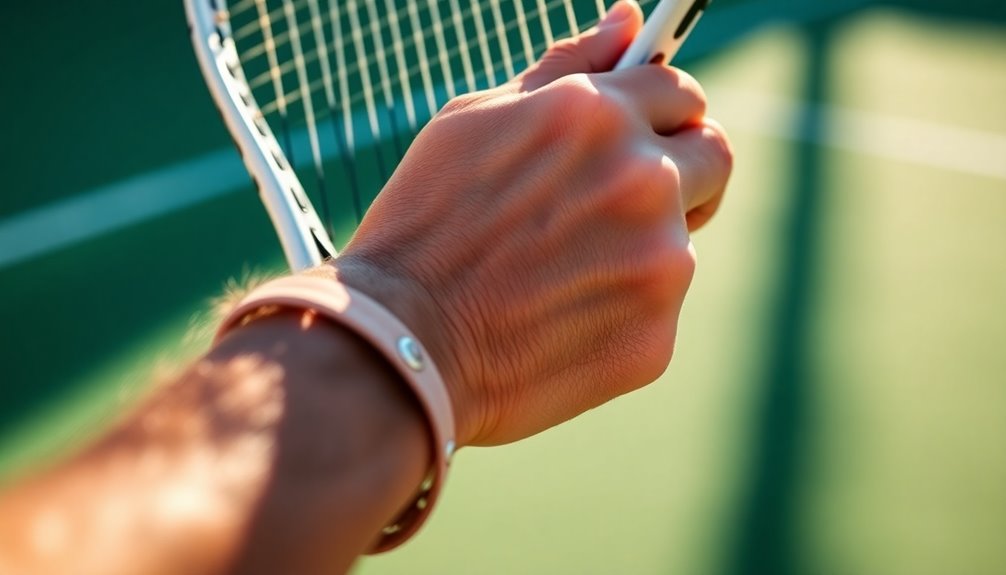
To effectively hit a forehand volley, you need to master the grip. Start by experimenting with grip variations, like the Eastern or Continental grip, to find what feels comfortable.
Your hand placement is essential; make sure your grip isn’t too tight, allowing for fluid movement. When you hold the racket, keep your thumb against the back for stability, while your fingers wrap around the handle. This positioning helps generate the power and control you need.
As you practice, focus on adjusting your grip based on the incoming ball’s height and speed. Remember, a solid grip sets the foundation for a successful volley, so invest time refining it, and you’ll see improvements in your overall game. Additionally, field dimensions play a role in how you position yourself for the volley, as understanding the space can enhance your technique.
Finding the Right Stance and Positioning

While you’re preparing to hit a forehand volley, finding the right stance and positioning is essential for success. Start by positioning your feet shoulder-width apart to guarantee stability and balance. Bend your knees slightly and stay on the balls of your feet, ready to move quickly.
Maintain court awareness by keeping your eyes on the ball and your opponent’s position. This will help you anticipate the shot and adjust your stance accordingly. If the ball approaches, pivot on your back foot and step forward with your front foot, allowing for a fluid transfer of weight. Additionally, constant communication with your partner can enhance your overall responsiveness on the court.
Timing: When to Execute the Forehand Volley?

When’s the right moment to execute a forehand volley? Timing’s essential, and it often hinges on your court awareness.
Look for opportunities right after your opponent’s approach shots. This is when they’re most vulnerable, and you’ll want to seize that moment.
Seize the moment right after your opponent’s approach shots; that’s when they’re most vulnerable for a decisive volley.
- Feel the adrenaline as you anticipate their shot.
- Experience the thrill of taking control of the point.
- Let the tension build as you read their body language.
- Embrace the satisfaction of a well-timed volley.
- Share the joy of winning the point with every successful execution.
Additionally, understanding field dimensions can help you better anticipate your opponent’s position and shot trajectory.
Perfecting Your Follow-Through Technique
Mastering your follow-through technique is essential for executing a successful forehand volley. The follow-through importance can’t be overstated; it guarantees you’re not only hitting the ball cleanly but also maintaining control and power.
After making contact, extend your racket forward and upward, allowing for a smooth motion. This helps in directing the ball accurately and generating spin. Keep your eyes on the ball throughout, and don’t rush the movement—let it flow naturally.
A proper follow-through positions you well for the next shot, enhancing your overall game. Remember, consistency in your follow-through will elevate your performance and make each volley more effective. Additionally, just as in soccer, where stoppage time allows for crucial moments to unfold, your follow-through can create opportunities in your game.
Focus on this aspect, and you’ll see significant improvements on the court.
Common Mistakes to Avoid With the Forehand Volley
One of the biggest pitfalls players encounter with the forehand volley is failing to position themselves correctly. Without solid footwork fundamentals, you’re setting yourself up for failure.
Keep your feet light and ready to move. Also, don’t underestimate the importance of eye coordination; your gaze should be on the ball, not wandering off.
Avoid these common mistakes:
- Not moving your feet: Planting yourself limits your reach.
- Rushing your shot: Take a moment to steady yourself.
- Ignoring your grip: A wrong grip can lead to mishits.
- Overextending your arm: Keep your swing compact for control.
- Lacking follow-through: A proper finish can enhance accuracy.
Additionally, effective communication with your teammates can significantly improve your overall game performance.
Conclusion
In summary, mastering the forehand volley can greatly elevate your game. Did you know that players who effectively use volleys win approximately 70% of the points played at the net? By refining your grip, stance, timing, and follow-through, you’ll not only avoid common pitfalls but also harness the power of this vital shot. So, get out there, practice, and watch your confidence—and your score—soar!