
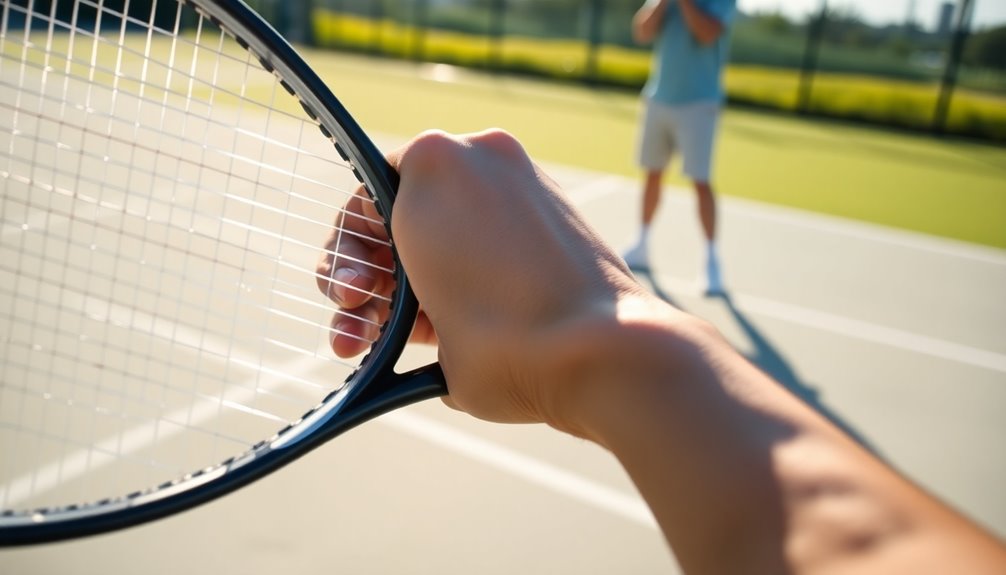
Serving Grip for Beginners
April 23, 2026Mastering your serving grip is key to improving control and precision on the court. Start with the Continental Grip for flat serves or the Eastern Grip for topspin. Make sure your fingers are comfortably spread and avoid gripping too tightly to maintain flexibility. Regular practice is essential, so focus on grip adjustments and muscle memory. With these tips in mind, you’ll find ways to refine your technique further and elevate your game.
Understanding the Basics of Tennis Grips
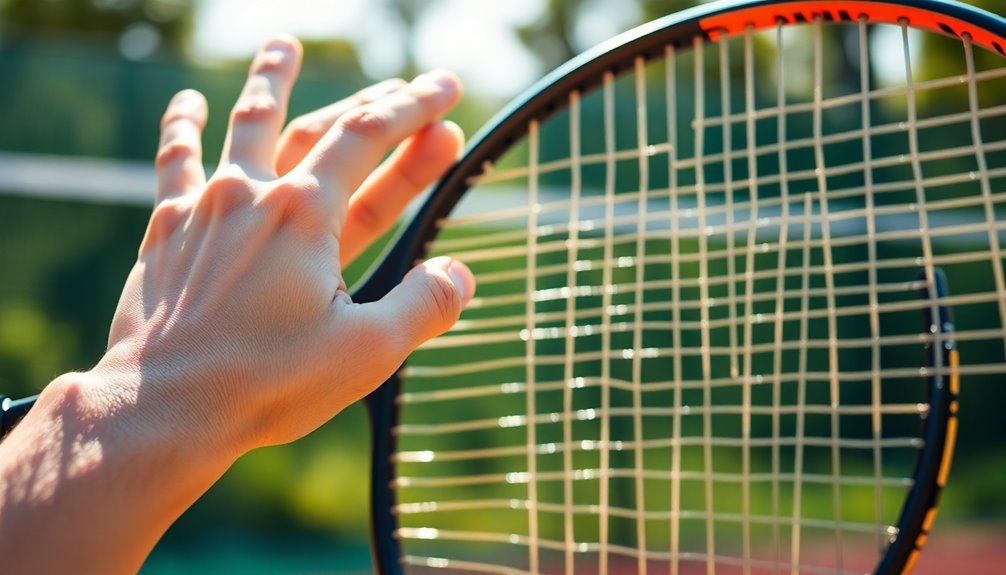
You’ll notice that grip evolution has transformed how players handle the racket, leading to various styles that suit different playing techniques.
When you experiment with grips, pay attention to grip psychology—how your choice influences your confidence and shot execution. A comfortable grip helps you feel connected to your racket, enhancing your control and precision.
Start with the fundamental grips: Eastern, Western, and Continental, each serving a unique purpose. Soccer fields measure between 100-120 yards in length, illustrating the importance of dimensions in sports equipment.
As you refine your skills, adapting your grip to match your playing style will become second nature, ultimately improving your overall game.
The Importance of a Good Serving Grip
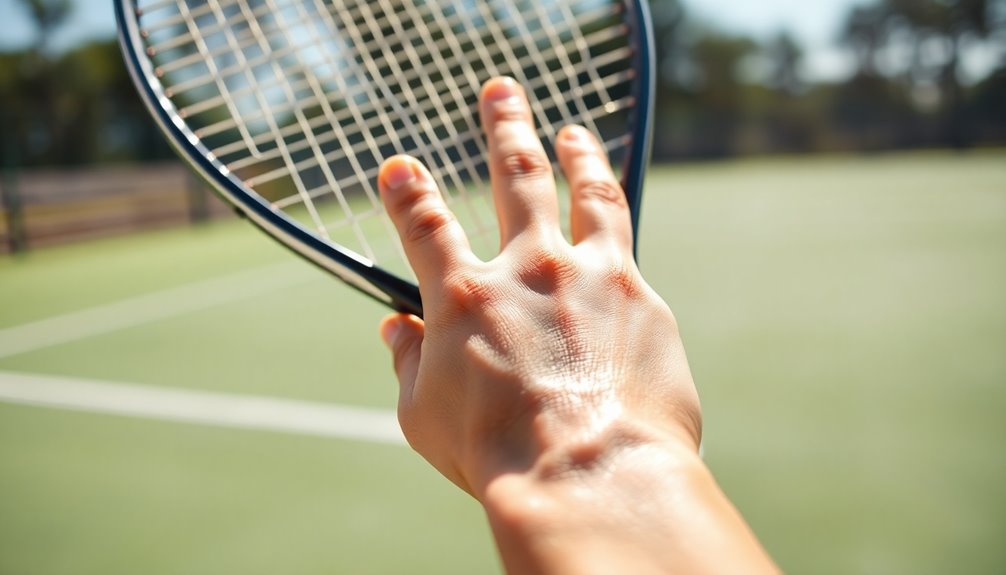
Having a solid serving grip is essential for your game. It gives you enhanced control and precision, allowing you to place your serves exactly where you want them. Plus, the right grip can reduce your risk of injury, keeping you on the court longer. A good grip also ensures proper body alignment for stability during the serve.
Enhanced Control And Precision
A solid serving grip is essential for achieving enhanced control and precision on the court. When you master grip dynamics, you’ll notice a significant improvement in your serve accuracy.
Here’s how to refine your grip for better performance:
- Find the Right Grip: Experiment with different grips to see which feels most comfortable and offers control.
- Focus on Tension: Maintain a relaxed grip; too much tension can hinder your fluidity.
- Adjust Your Angle: The grip affects the angle of your racket, influencing the ball’s trajectory.
- Practice Consistently: Regular practice with your chosen grip will help solidify your muscle memory.
Reduced Risk Of Injury
Using the right serving grip not only enhances your game but also greatly reduces your risk of injury. When you maintain grip stability, your wrist and arm are less likely to experience strain, which is essential for injury prevention.
A proper grip aligns your body mechanics, allowing for smoother movements and less tension in your joints. If you find yourself gripping too tightly or awkwardly, you may put unnecessary stress on your muscles and tendons, increasing the chance of sprains or strains.
Common Types of Serving Grips for Beginners
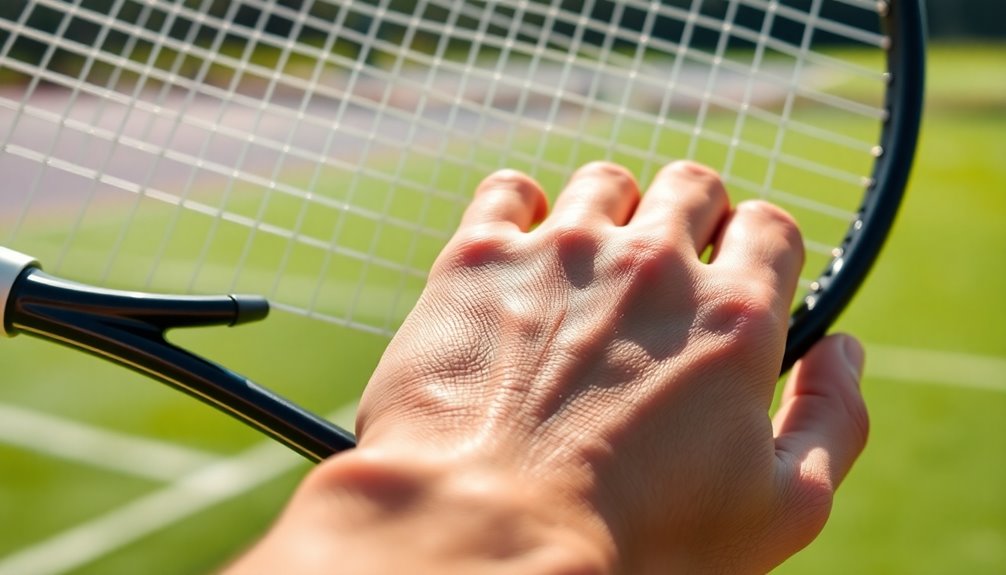
Mastering the right grip can make all the difference in your serving technique. As a beginner, you’ll want to familiarize yourself with common grip variations that can enhance your game.
Here are four popular grips to examine:
- Continental Grip: This is versatile, allowing for effective flat serves and spin shots.
- Eastern Grip: Great for generating topspin, this grip offers a more natural hand position.
- Grip Adjustments: Minor tweaks can help refine your serve and adapt to different situations.
- Grip Changes: Learning to switch grips during play can improve your overall strategy.
Incorporating high-intensity sprints into your training can also enhance your overall athletic performance, complementing your serving skills.
Understanding these grips through grip analysis and practicing grip drills will provide you with essential grip benefits as you develop your serving skills.
How to Choose the Best Grip for Your Serve?
How can you determine which grip suits your serving style best? Start by experimenting with different grip types, like the Continental or Eastern grip. Each grip offers unique advantages, so it’s essential to find what feels comfortable.
Pay attention to how the ball responds with each grip; does it spin well, or is it flat? As you practice, consider making grip adjustments based on your preferences and playing style.
Observe how the ball reacts with each grip; whether it spins or stays flat can guide your adjustments and enhance your play.
For instance, if you’re aiming for more power or precision, slight tweaks can lead to significant improvements. Don’t hesitate to ask for feedback from coaches or peers, as they can provide valuable insights.
Ultimately, trust your instincts and choose a grip that enhances your confidence and performance on the court. Additionally, remember that proper finger placement is critical for achieving optimal control over your serve.
Tips for Practicing Your Serving Grip
Once you’ve found a grip that feels right for your serve, practicing it consistently is key to developing muscle memory. Here are some tips to help you refine your grip and enhance your serving techniques:
- Use a Mirror: Practice in front of a mirror to observe your grip adjustments and guarantee you’re holding the racket correctly.
- Drill Repetitions: Set aside time for repetitive serves focusing solely on your grip. This helps reinforce muscle memory.
- Record Yourself: Video your practice sessions; review them to analyze your grip and serving form.
- Seek Feedback: Work with a coach or an experienced player who can provide insights on your grip adjustments and overall technique.
Understanding the importance of practice will help you develop confidence and precision in your serve!
Troubleshooting Common Grip Issues in Serving
When you’re serving, grip issues can really throw off your game.
You might find your grip placement feels off, or you struggle with tension in your hands.
Let’s tackle common problems like finger positioning, so you can serve with confidence. Additionally, focusing on passing accuracy can help you develop a more stable grip during your serve.
Grip Placement Mistakes
Are you struggling to find the right grip for your serve? You’re not alone! Many beginners make common grip placement mistakes that can hinder their performance.
Here are four key issues to watch out for:
- Incorrect Grip Size: Using a grip that’s too big or small can affect your control.
- Excessive Grip Pressure: Holding the racket too tightly can lead to tension and decreased finesse.
- Poor Hand Position: Your hand should be positioned correctly on the handle to maximize power and spin.
- Inconsistent Grip: Changing your grip from one serve to another can disrupt your rhythm.
Paying attention to these factors will help improve your serving game and enhance your overall performance on the court!
Tension and Relaxation Balance
Finding the right balance between tension and relaxation is essential for mastering your serve. If you grip the racket too tightly, you risk losing fluidity and control.
Use tension techniques like squeezing the grip just before contact to enhance power, but remember to release that tension immediately afterward.
Conversely, relaxation exercises can help you stay loose and agile. Try shaking out your hands and arms between serves to reduce stiffness.
Focus on your breathing; deep breaths can signal your body to relax, making it easier to maintain a natural grip.
Finger Positioning Issues
Mastering finger positioning is essential for a successful serve, and many beginners struggle with it. If you find your grip lacking, consider these tips to improve your finger strength and grip flexibility:
- Adjust Your Hold: Confirm your fingers are spread comfortably around the racquet handle.
- Check Your Pressure: Avoid gripping too tightly; a relaxed grip enhances flexibility and control.
- Strengthen Your Fingers: Incorporate finger exercises, like squeezing a stress ball, to boost strength.
- Practice Consistently: Regularly serve with focus on finger positioning to develop muscle memory.
Conclusion
In summary, mastering your serving grip is essential for elevating your game. Did you know that about 70% of points in a match start with a serve? With the right grip, you can make those points count. Keep practicing, stay patient, and don’t hesitate to experiment with different grips until you find your perfect fit. Remember, a solid grip not only boosts your confidence but also enhances your overall performance on the court.