
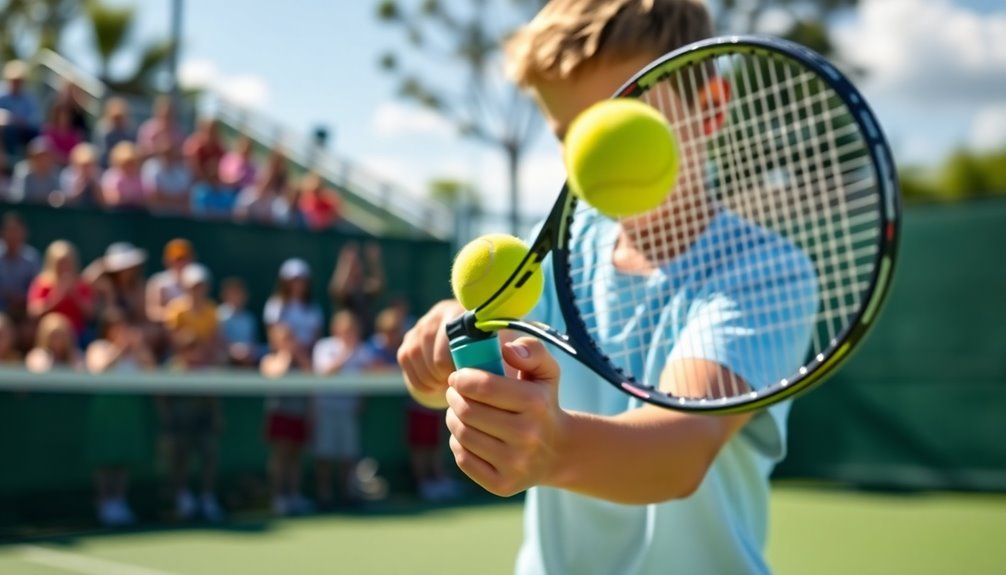
Two-Handed Backhand for Beginners
April 19, 2026To master the two-handed backhand, start by gripping your racket correctly with your dominant hand at the bottom and your non-dominant hand above. Position your feet shoulder-width apart and bend your knees for balance. As you prepare, shift your weight onto your back foot and rotate your shoulders. Remember to follow through high for better accuracy and power. Keep practicing with drills to see improvement. Next, you’ll discover tips for adding spin and knowing when to use this shot.
Understanding the Two-Handed Backhand Basics
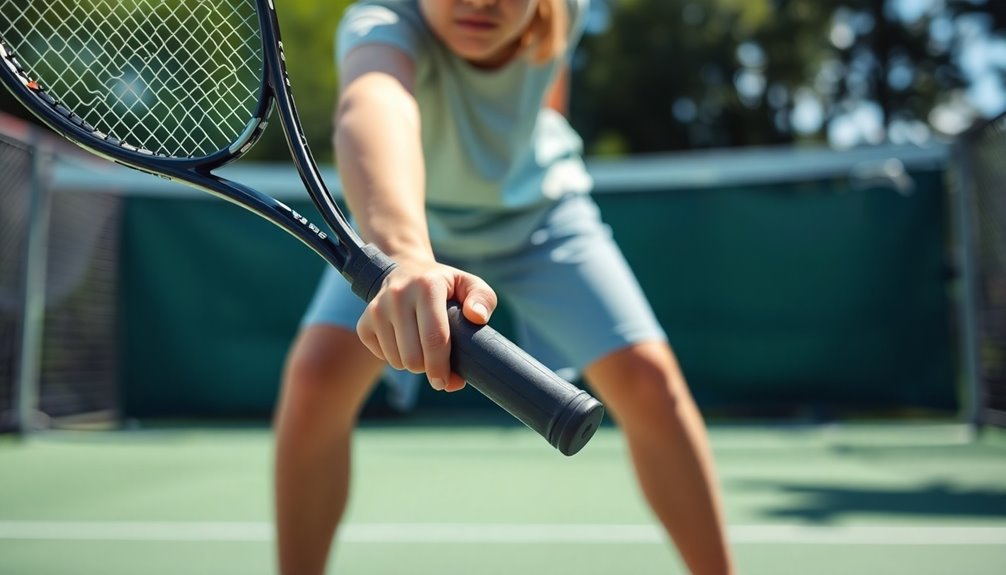
To master the two-handed backhand, you’ll need to grasp its fundamental elements.
Start by familiarizing yourself with backhand terminology, such as grip, stance, and follow-through. Your grip typically involves placing your dominant hand at the bottom and your non-dominant hand just above it.
Next, focus on your stance; a balanced position allows for better power and control. When executing the shot, you’ll notice various shot variations, including topspin and slice. Each variation serves different tactical purposes, so practice them to build versatility.
Make sure you’re engaging your core and transferring weight from back to front for maximum impact. By understanding these basics, you’ll set a solid foundation for improving your two-handed backhand technique. Additionally, remember that player conduct is essential in maintaining sportsmanship during practice and matches.
Benefits of Using a Two-Handed Backhand
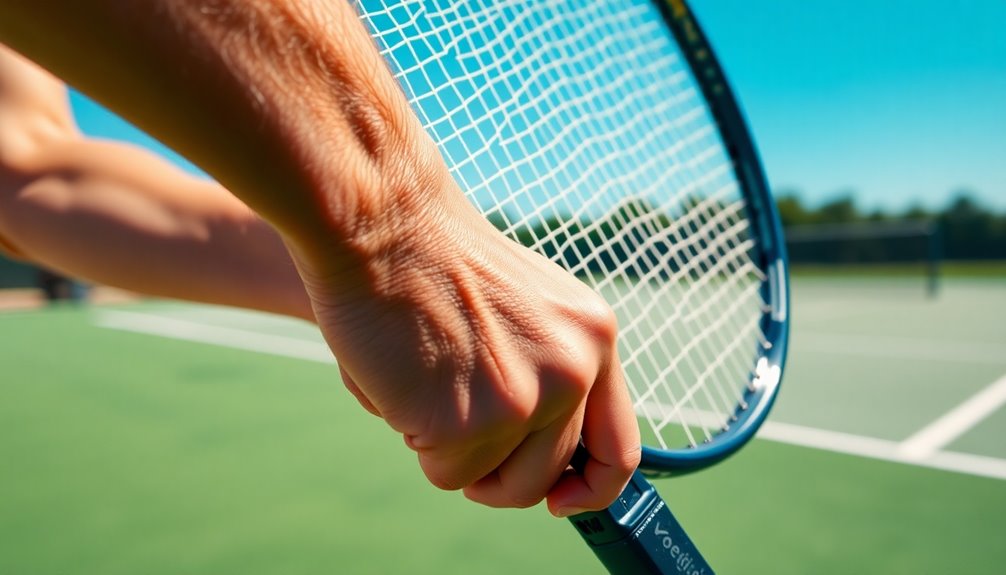
While many players opt for a one-handed backhand, the two-handed backhand offers several distinct advantages that can enhance your game.
First, this technique provides a significant power advantage, allowing you to generate more force behind your shots. With both hands on the racket, you’ll find it easier to hit deep, aggressive returns, putting pressure on your opponent.
Additionally, the two-handed backhand can aid in injury prevention. By distributing the workload between both arms, you reduce the strain on your dominant arm, which can lead to fewer overuse injuries.
This balance not only improves your performance but keeps you on the court longer. Embracing the two-handed backhand could be a game-changer for your overall tennis strategy. Moreover, practicing various shot types can further enhance your adaptability in different match situations.
The Grip: How to Hold Your Racket Properly
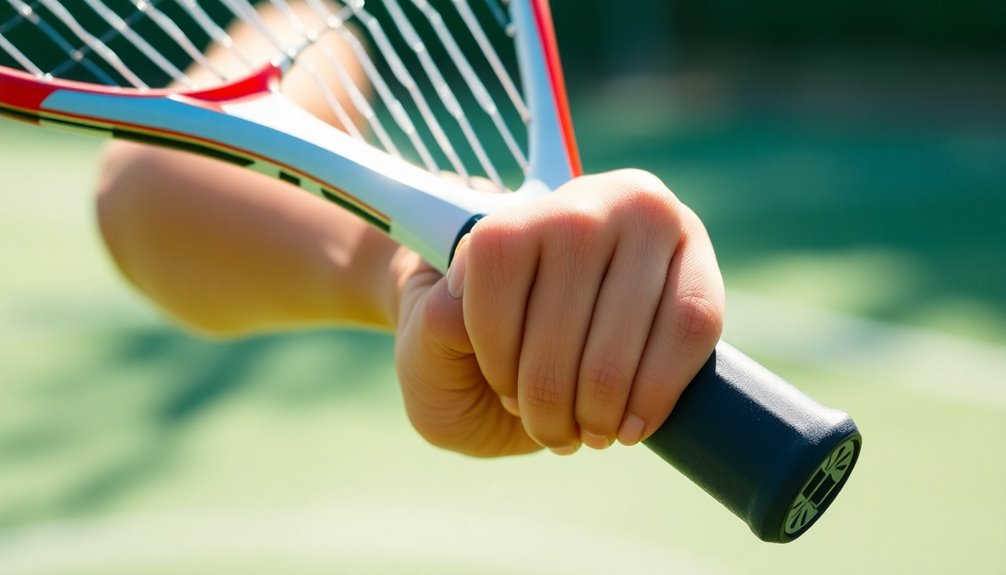
Mastering your grip is vital for executing a solid two-handed backhand. Start by choosing the right grip type; the Eastern or Semi-Western grips are popular for beginners.
Place your dominant hand on the racket’s handle, using the base knuckle to find the right position. Your non-dominant hand should sit just below it, fingers spread for support.
Position your dominant hand on the racket, using the base knuckle for placement, while your non-dominant hand supports just below.
Make sure both hands are relaxed but firm, allowing for flexibility during your swing. Hand positioning is critical; your non-dominant hand should guide the racket while your dominant hand provides power.
Keep your grip firm enough to maintain control, but loose enough to avoid tension. Practice this grip until it feels natural, setting a strong foundation for your backhand technique. Remember, just like in soccer, proper execution is key to kickoff rule compliance.
Stance and Footwork for a Solid Backhand
To hit a solid two-handed backhand, your stance and footwork are essential.
You’ll want to position your feet correctly and move efficiently to set up for the shot.
Mastering these elements will help you generate power and control in your backhand. Additionally, incorporating leg strength training into your routine can significantly enhance your stability and power during the shot.
Proper Stance Positioning
A solid two-handed backhand starts with the right stance and footwork. You’ll want to position your feet shoulder-width apart, ensuring proper stance alignment. Bend your knees slightly to stay low and maintain balance. Keep your weight centered over your feet to help with balance maintenance as you prepare to hit the ball.
Your non-dominant foot should be slightly forward, creating a stable base. When you anticipate the shot, pivot on your back foot and rotate your hips, aligning your upper body with the net.
This stance not only helps you generate power but also sets you up for an accurate shot. Remember, a strong foundation makes all the difference in executing that perfect two-handed backhand.
Effective Footwork Techniques
While executing a two-handed backhand, effective footwork is essential for both power and accuracy. Start by confirming your foot placement is ideal; position your feet shoulder-width apart for balance.
As the ball approaches, use lateral movement to quickly shuffle into position, allowing you to face the net squarely. Keep your knees slightly bent to maintain a low center of gravity, which enhances stability.
When you strike the ball, push off with your back foot to generate momentum. This explosive movement helps transfer energy into your shot.
The Backswing: Preparing for Your Shot
As you prepare for your two-handed backhand, the backswing is essential for setting up a powerful shot. Focus on your backswing mechanics to guarantee you’re ready to make contact with the ball. Start by turning your shoulders and bringing the racket back, keeping it at a comfortable height. This motion helps generate momentum and power.
Your non-dominant hand should assist in guiding the racket back, while your dominant hand maintains control. Remember to keep your eyes on the ball during this shot preparation phase.
A smooth, controlled backswing allows you to anticipate the ball’s placement and prepares you effectively for the swing that follows. Mastering this step will greatly enhance your overall performance on the court.
The Swing: Executing the Two-Handed Backhand
Now that you’ve set up your backswing, it’s time to focus on the swing itself.
You’ll want to grip your racket properly, position your body correctly, and master your follow-through.
Each of these elements plays an essential role in executing a powerful two-handed backhand. Additionally, developing core strength can enhance your stability and power during the swing.
Grip Your Racket Properly
To execute a successful two-handed backhand, you need to grip your racket correctly. Start by placing your dominant hand on the bottom of the handle, using an eastern or semi-western grip. Your non-dominant hand should rest above it, providing support.
Make sure your fingers wrap around the handle, maintaining proper racket alignment with the ball.
Grip pressure is vital—hold the racket firmly, but don’t squeeze too tightly. A relaxed grip allows for better control and fluidity in your swing.
Body Positioning Essentials
Body positioning is essential for executing a two-handed backhand effectively, since the right stance can greatly influence your power and accuracy.
Start by aligning your body sideways to the net, guaranteeing your feet are shoulder-width apart for stability. Shift your weight onto your back foot as you prepare for the shot.
As you swing, engage your shoulder rotation; this helps generate momentum and adds strength to your stroke. Confirm your hips and shoulders move in sync, promoting proper body alignment throughout the swing.
Remember, a balanced stance not only improves your shot but also prepares you for the next move.
Follow-Through Techniques Explained
While the follow-through might seem secondary, it plays an essential role in executing a two-handed backhand effectively. A strong follow-through enhances your shot’s accuracy and power, allowing you to maintain control over the ball’s trajectory.
As you finish your swing, your arms should extend naturally, with your racket moving across your body. This motion not only looks fluid but also helps in generating topspin.
To practice the follow-through importance, incorporate follow-through drills into your routine. For example, hit against a wall, focusing solely on your follow-through.
You can also work with a partner, emphasizing the finish of your swing after each shot. By mastering the follow-through, you’ll elevate your two-handed backhand to new heights.
Follow-Through Techniques for Consistency
Mastering the follow-through in your two-handed backhand is vital for achieving consistency in your shots. A proper follow-through not only guarantees better accuracy but also helps you generate power.
Focus on finishing your swing high, with your racquet above your shoulder, which promotes a smooth shift into your next shot. Incorporate follow-through drills into your practice routine; these can reinforce your muscle memory and improve your timing.
Finishing your swing high with the racquet above your shoulder ensures a smooth transition to your next shot.
Pay attention to the follow-through importance—it’s the final part of your stroke that can make or break your shot. As you practice, visualize your follow-through to build confidence. Additionally, understanding the importance of conditioning for peak performance can enhance your overall athletic ability, leading to improved shot consistency.
Consistency will come with time and dedication, so keep refining this key aspect of your game.
Common Mistakes to Avoid When Learning
As you begin learning the two-handed backhand, it’s essential to be aware of common mistakes that can hinder your progress. One major error is gripping the racket too tightly; excessive grip pressure can limit your swing and cause tension. Instead, maintain a relaxed hold to improve your control and fluidity.
Another frequent mistake is losing mental focus during practice. It’s easy to get distracted, but staying present helps you refine your technique. Make sure you’re paying attention to your footwork and positioning, as these are fundamental for a successful shot.
Lastly, avoid neglecting your non-dominant hand. It plays a key role in stabilizing the racket. By steering clear of these pitfalls, you’ll set yourself up for success. Incorporating agility training can also enhance your overall performance on the court.
Drills to Practice Your Two-Handed Backhand
To improve your two-handed backhand, you’ll want to focus on specific drills that build muscle memory. Shadow swings let you practice your form without the pressure of a ball, while partner rallies help you apply that technique in a real game scenario. Understanding the importance of muscle memory can significantly enhance your performance and consistency on the court. Let’s explore how these drills can boost your confidence and consistency on the court.
Shadow Swing Drills
Practicing shadow swings is a fantastic way to hone your two-handed backhand without the pressure of hitting a ball. Start by standing in your ready position and visualize an incoming shot.
As you perform your shadow swings, focus on your grip, stance, and footwork. Incorporate rhythm drills by counting out loud or using music to help maintain a steady tempo. This not only builds muscle memory but also enhances your timing.
Make sure to exaggerate your follow-through and guarantee your weight shifts correctly. You can also practice different angles and spins to diversify your movements.
Partner Rally Exercises
When you rally with a partner, you can effectively practice your two-handed backhand while also developing your timing and consistency.
Start by establishing a clear rally rhythm; this helps both of you stay in sync. Focus on your footwork and make sure you’re in the right position to hit each ball. Use partner communication to call out shots or adjust your positioning.
For variety, alternate between deep and short balls, challenging each other to adapt. You might also set specific targets on the court, encouraging precision in your strokes.
Remember to stay relaxed and maintain a natural grip. Regular practice with your partner won’t only improve your two-handed backhand but also enhance your overall game.
How to Add Spin and Power to Your Shot
Adding spin and power to your two-handed backhand can elevate your game considerably.
To start, focus on your grip and stance. Use a semi-western grip to incorporate effective spin techniques. As you swing, brush up on the ball to create topspin; this not only enhances control but also keeps the ball in play.
For power generation, engage your legs and core. Start your swing low and accelerate upward, transferring energy through your body.
Don’t forget to follow through; a complete motion adds both spin and power. Practicing these elements consistently will help you develop a more dynamic backhand, allowing you to hit with confidence during matches. Using the right basketball size can similarly enhance performance and comfort in sports.
Keep refining your technique, and you’ll see improvements!
When to Use the Two-Handed Backhand in Matches?
While you might prefer a forehand for certain shots, the two-handed backhand can be a game-changer in various match scenarios. It’s particularly effective when you’re under pressure or facing powerful opponents.
Use it when you need extra stability and control, especially on high balls or when returning serves. The two-handed grip allows for better shot selection, enabling you to generate more power and spin.
It’s also beneficial during long rallies, where endurance matters. When your opponent hits deep shots, this backhand provides the necessary reach and balance. Additionally, mastering key strategies for young players can enhance your overall performance on the court.
Tips for Transitioning From a One-Handed to a Two-Handed Backhand
Switching from a one-handed to a two-handed backhand can feel challenging, but with the right approach, you’ll find it rewarding.
Start by practicing your grip; place your dominant hand above your non-dominant hand on the racket. This change requires some mental adjustments, so be patient with yourself.
Focus on your footwork; positioning is key to making solid contact. Begin with slow, controlled swings before adding speed and power.
Don’t hesitate to record your practice sessions to spot any alteration challenges.
Finally, play with someone who can offer constructive feedback. By staying consistent and positive, you’ll gradually develop confidence in your new backhand, making it a valuable part of your game.
Assessing Your Progress: How to Know You’re Improving?
How can you tell if your two-handed backhand is improving? First, look for progress indicators like consistency in your strokes. Are you hitting more balls in the court during practice? That’s a strong sign!
Next, evaluate your performance benchmarks. Track your ability to rally with a partner—if you’re lasting longer in exchanges, you’re on the right path.
Evaluate your performance benchmarks by tracking your rally duration with a partner; longer exchanges signal progress in your game.
Additionally, pay attention to your shot placement; if you’re directing the ball more accurately, it shows your technique is solidifying.
Finally, consider feedback from coaches or peers. Their observations can provide valuable insights into your improvement.
Conclusion
Mastering the two-handed backhand can transform your game, just like a painter adding vibrant colors to a canvas. By focusing on grip, stance, and technique, you’ll build confidence and power in your shots. Remember to practice regularly and stay patient; improvement is a journey. As you integrate this skill into your matches, you’ll notice your performance soaring. Keep pushing yourself, and soon, your two-handed backhand will feel as natural as breathing.